


Paris Porcelain Statues
Paris porcelain statues bring nineteenth-century French elegance into a room through finely modelled figures and groups.
Paris Porcelain Statues
Paris porcelain statues encompass decorative figures, figural groups, and sculptural sculptures produced across the nineteenth century. These pieces range from biscuit porcelain figures to hard-paste porcelain works finished with enamel and gold leaf.
The selections on this page feature nineteenth-century and Victorian items, including Rococo Revival styles and French Second Empire designs. Buyers will frequently encounter figures depicting romantic subjects, street vendors, and allegorical characters.
Many works show direct inspiration from earlier factories such as Derby, Chelsea, or eighteenth-century French makers. Makers such as Samson of Paris, Bourdois & Bloch, and Letu & Mauger dominate the forms available.
Materials and manufacture
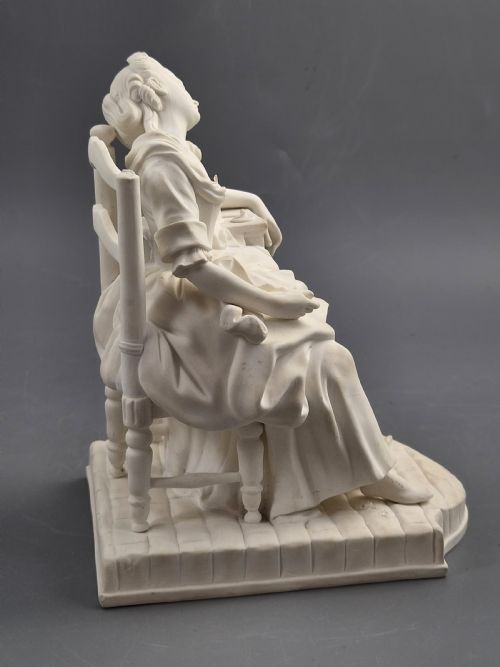
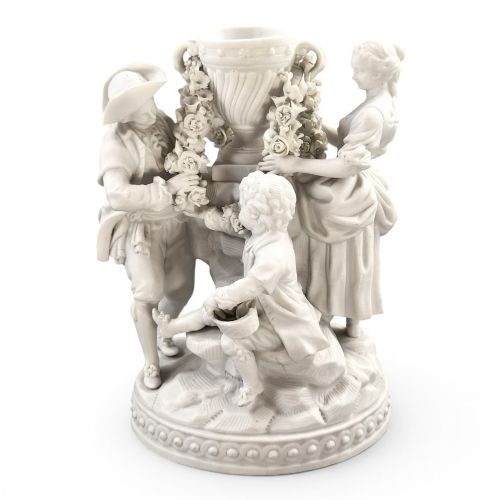
These pieces rely on hard-paste porcelain and biscuit porcelain, which offers an unglazed matte finish resembling marble. Makers shaped these materials into detailed figurines and sculptural groups using professional moulding techniques.
Enamel colours and extensive gilding or gold leaf enhance the decorated surfaces of glazed pieces. Finer details often include delicate elements such as applied porcelain lace or modelled floral garlands.
Several Victorian figures proudly depict whimsical Mansion House dwarves wearing oversized tricorn hats.
Factors of quality
Quality rests primarily on the crispness of the modelling and the precision of the hand-painted details. Superior pieces display finely rendered facial expressions, sharply defined fingers, and intricate drapery without blurring in the porcelain body.
The application of gilding and enamel work also distinguishes finer figures from simpler productions. Well-preserved gold leaf and neatly applied polychrome decoration indicate higher craftsmanship by the decorating studio.
Bourdois & Bloch·Letu & Mauger·Samson of Paris·La Coutille Factory·Eugene Clauss
The Paris Porcelain Statues Glossary
- Biscuit Porcelain
- Unglaved hard-paste porcelain fired to a matte, white finish resembling carved marble. This surface highlights fine sculptural detail without reflective glaze.
- Hard-paste Porcelain
- A durable ceramic composition fired at very high temperatures. It forms a dense, bright white body capable of holding sharp moulded details.
- Gilding
- The application of gold or gold leaf onto the porcelain surface for decorative enrichment. It is frequently seen highlighting borders, garments, and bases.
- Rococo Revival
- A nineteenth-century design movement reviving the ornate, asymmetrical curves and natural motifs of the eighteenth-century Rococo style. Figures in this style often feature scrolls and floral elements.
- Parian Porcelain
- A fine-grained type of biscuit porcelain developed in the nineteenth century to imitate white marble. It was widely utilised for sculptural figures and portrait busts.
Paris Porcelain Statues: Frequently Asked Questions
How do I identify Paris porcelain statues?
Look closely at the paste quality, modelling style, and decorative finishing such as enamel and gilding. Many pieces from this tradition reflect nineteenth-century French aesthetic movements and manufacturing methods.
Studying specific maker output, such as works by Samson or Letu and Mauger, helps clarify attribution. Comparing the piece against documented examples from the same period confirms its origin.
Are these pieces made of biscuit porcelain?
Many nineteenth-century examples utilise biscuit porcelain to achieve an unglazed, matte finish resembling carved marble. This material choice highlights the fine sculptural work of the modeller.
Other items feature glazed hard-paste porcelain enriched with enamel colours and gold leaf. Both finishes were common in Parisian workshops during the period.
What styles are common in Paris porcelain figures?
Rococo Revival and French Second Empire styles appear frequently among nineteenth-century pieces. These designs often incorporate flowing drapery, scrollwork, and romantic or allegorical themes.
Some workshops also produced figures inspired by earlier English factories like Chelsea and Derby. Pastoral scenes, musicians, and street vendors are typical subjects found within these styles.
How should I care for antique porcelain figures?
Dust the porcelain gently with a soft, dry brush to prevent the accumulation of dirt within intricate crevices. Avoid harsh chemical cleaners or abrasive materials that could damage delicate enamel or gilding.
Keep the pieces away from areas prone to sudden temperature changes or direct sunlight. Stable indoor conditions protect both the ceramic body and any applied gold leaf.