
Oriental Hardwood Side Table
An oriental hardwood side table brings dense timber, carved detail and low proportions into a room.
Oriental Hardwood Side Table
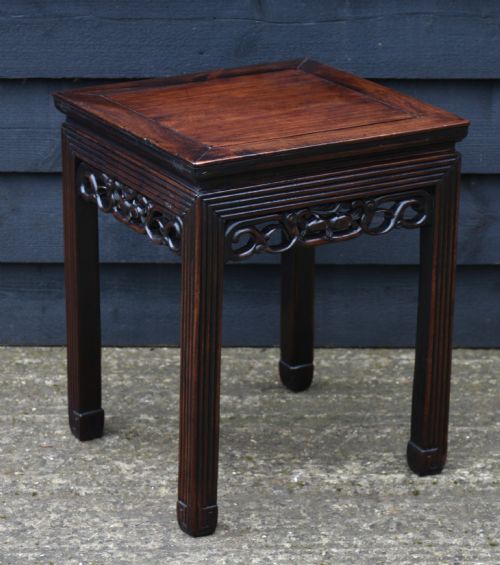
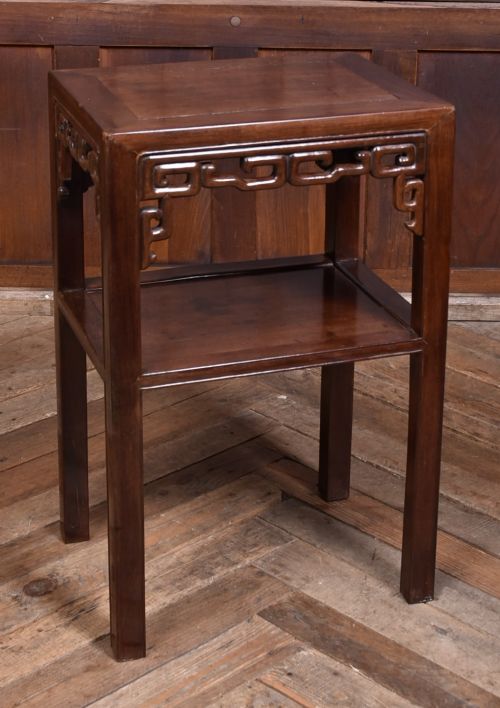
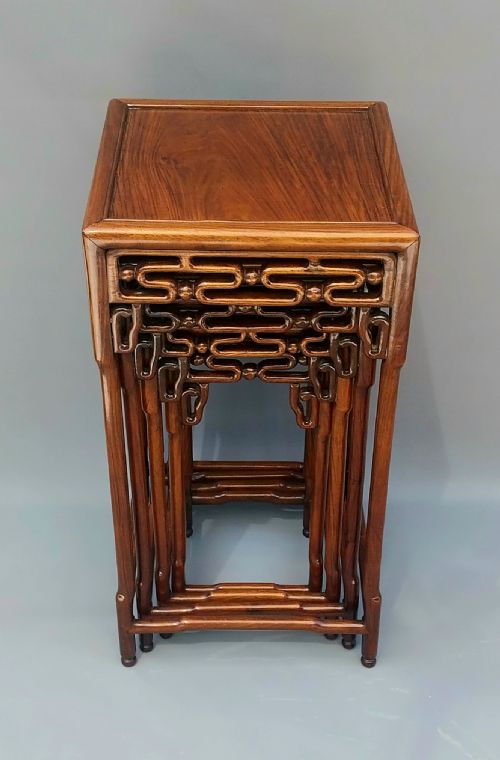
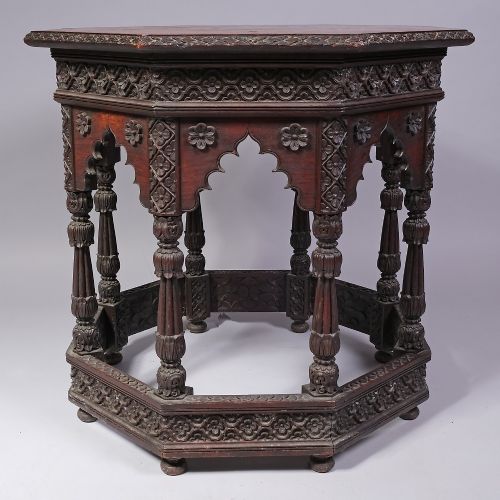
An oriental hardwood side table encompasses low tables, nests of tables, occasional tables and stands made from dense Asian timbers. These pieces emerge primarily from the nineteenth century, including the Victorian era and the late Qing Dynasty, reflecting traditional Chinese, Anglo-Indian and Japanese craftsmanship.
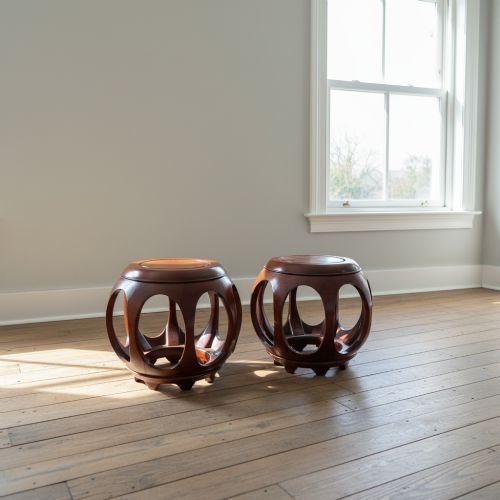
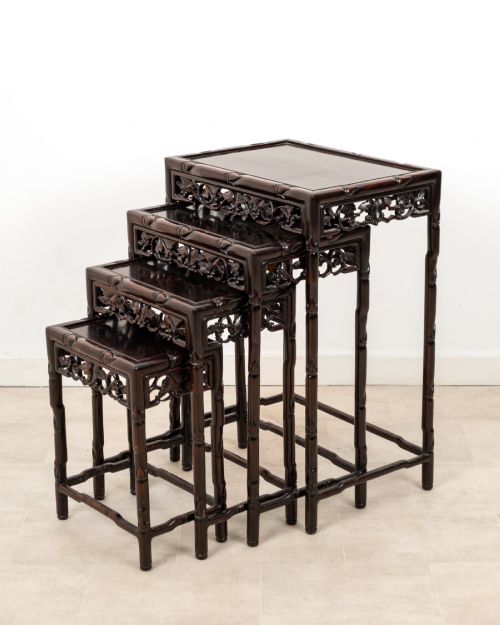
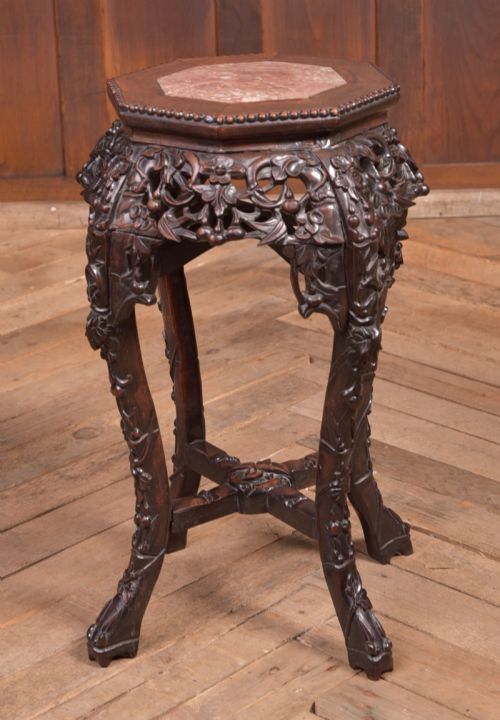
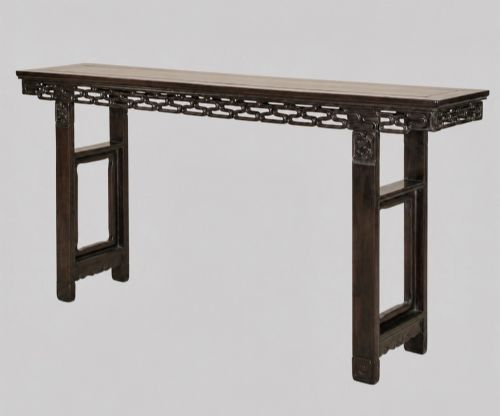
Buyers encounter forms ranging from circular marble-top pot stands and barrel stools to rectangular altar tables and nested sets. The selection spans compact plant supports to wider centre tables designed for display.
Origins stretch across Chinese workshops, Indian regional centres and Japanese makers, often arriving via nineteenth-century export trade channels.
How they were made
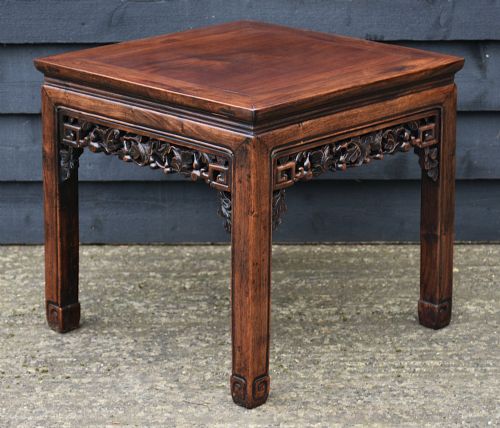
Joinery relies on dense hardwoods such as rosewood, hongmu, padouk and huanghuali, selected for weight and deep grain pattern. Workshops utilised traditional mortise and tenon construction to join frames without metal fasteners.
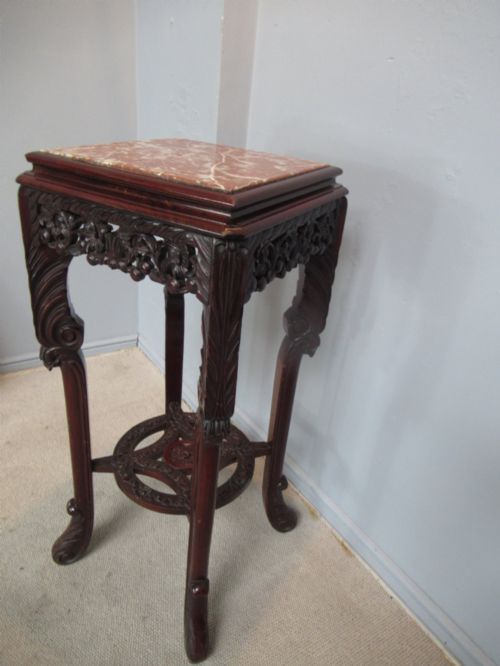
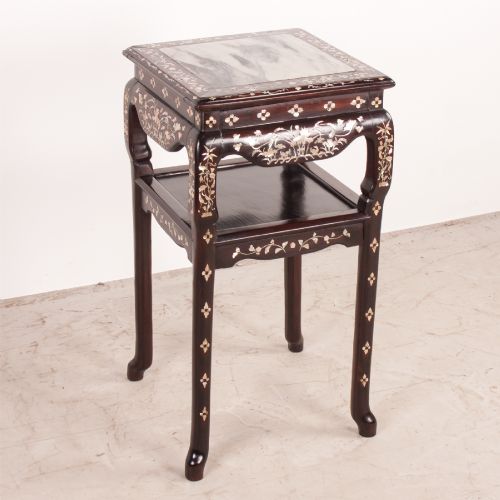
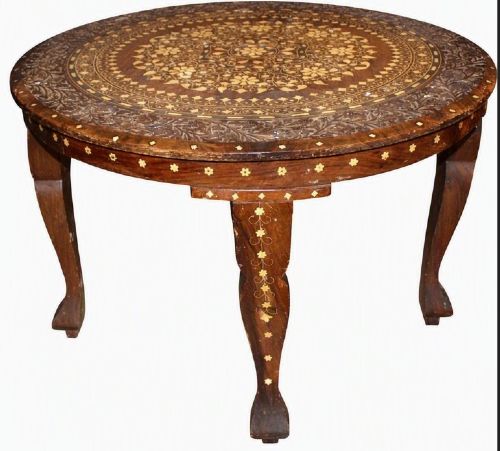
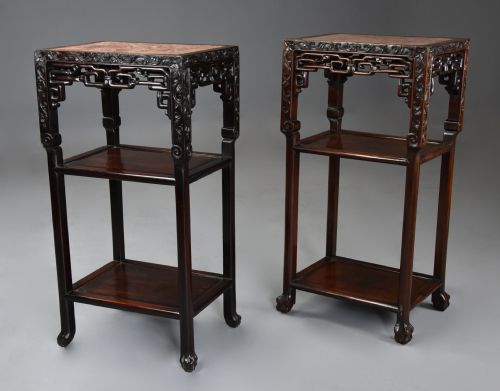
Carving, piercing and inlay define the surfaces, incorporating bone, mother-of-pearl, burr wood and amboyna panels. Marble inserts frequently provide cool, smooth surfaces set directly into wooden frames for jardiniere stands and low tables.
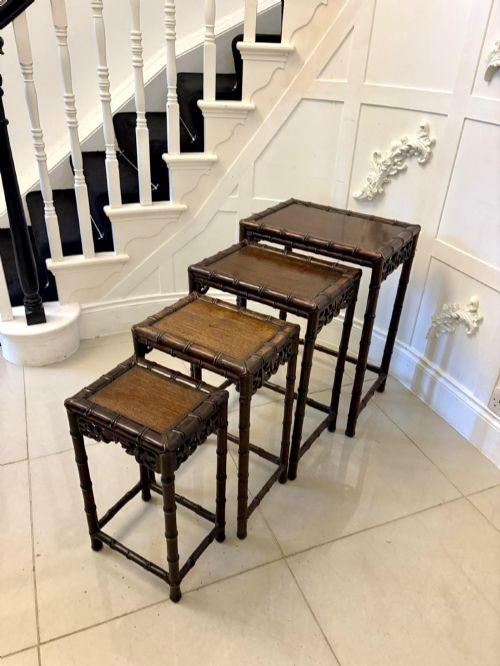
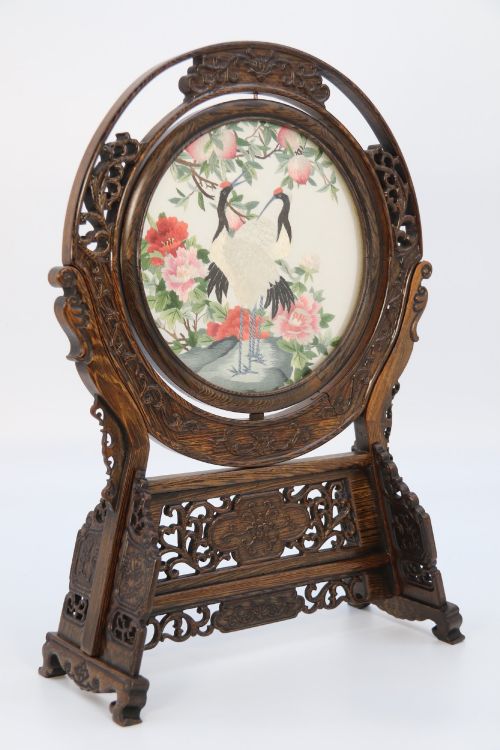
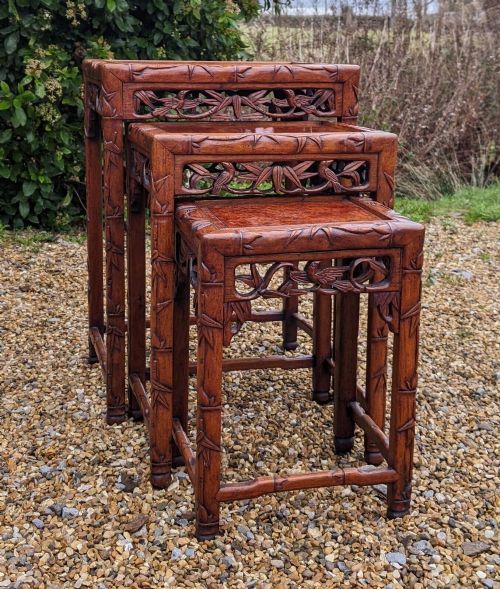
Form variations include rotating display stands, faux bamboo nests, elephant-headed occasional tables and multi-tiered pot stands.
What varies in quality
The weight and selection of the timber dictate much of the character, with dense rosewoods and hongmu displaying sharper carving edges than softer secondary woods. The depth and undercut of floral or figural carving separate standard production items from master-carved pieces.
Inlay work ranges from simple flush placement to intricate, tight-fitting bone or mother-of-pearl sections that remain level with the surrounding wood over time. The structural integrity of nested joints and the flawless fit of inset marble panels indicate the original maker's skill.
Liberty & Co·Liberty of London·Gabriel Viardot
The Oriental Hardwood Side Table Glossary
- Hongmu
- A traditional Chinese term denoting dense red-brown hardwoods. It covers several heavy timber species prized for furniture and stands.
- Jardiniere stand
- A tall, slender table designed to hold a ceramic plant pot or flower bowl. These often feature inset marble tops to resist moisture.
- Nest of tables
- A set of graduated tables designed to slide neatly beneath one another. They appeared frequently in nineteenth-century export workshops.
- Rouge marble
- A deep red marble variety with white or grey veining. It appears frequently as an inset panel in nineteenth-century Chinese table tops.
Oriental Hardwood Side Table: Frequently Asked Questions
How do I care for marble-top tables?
Wipe the marble surface with a damp cloth and mild soap, avoiding acidic cleaners that etch the stone. Keep the underlying hardwood conditioned with suitable wax to prevent the timber from drying out near joints.
Ensure heavy planters use protective pads underneath to prevent scratching the polished stone insert over years of daily use.
Where were these tables placed originally?
Owners positioned pot stands and jardiniere tables in parlours and reception rooms to elevate plants, vases or lamps. Nests of tables served living spaces for tea and needlework, easily pulled apart when guests arrived.
Low tables and altar tables stood against walls or beneath windows, acting as focal points for displayed decorative objects.
How do I identify Chinese export pieces?
Export pieces combine traditional Chinese mortise joinery with forms tailored to Western nineteenth-century interiors, such as nests and occasional tables. Carved motifs often blend familiar regional flora with dimensions suited to European rooms.
Look for dense rosewood or padouk timbers paired with standard Western furniture heights.
What is the difference between hongmu and rosewood?
Hongmu translates as red wood in Chinese and serves as a collective term for a group of heavy, dense tropical hardwoods. Rosewood is a specific botanical family included within that broader category.
Both materials share exceptional weight and dark grain patterns suited to intricate hand carving.