

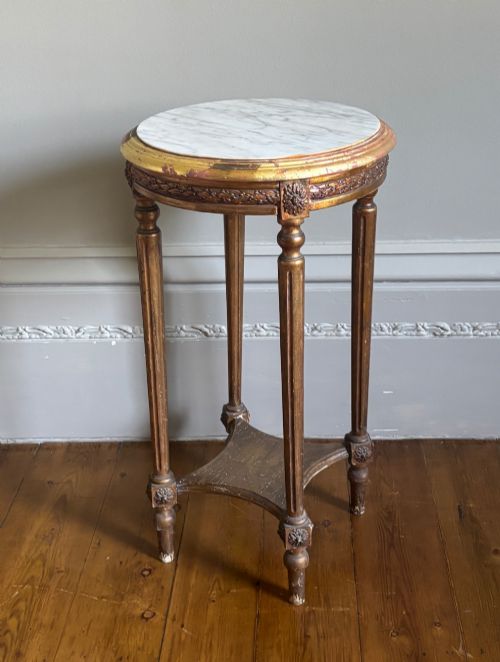
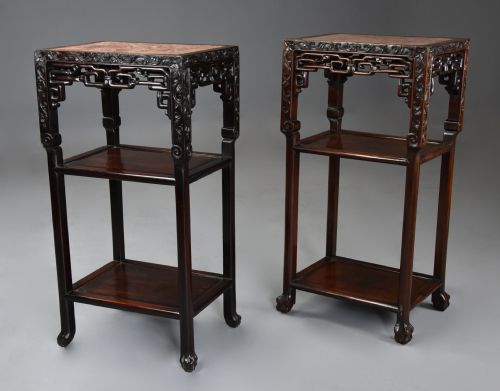
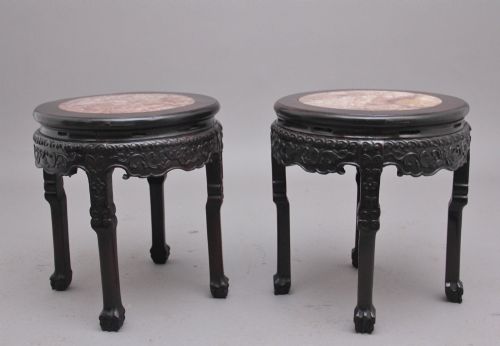
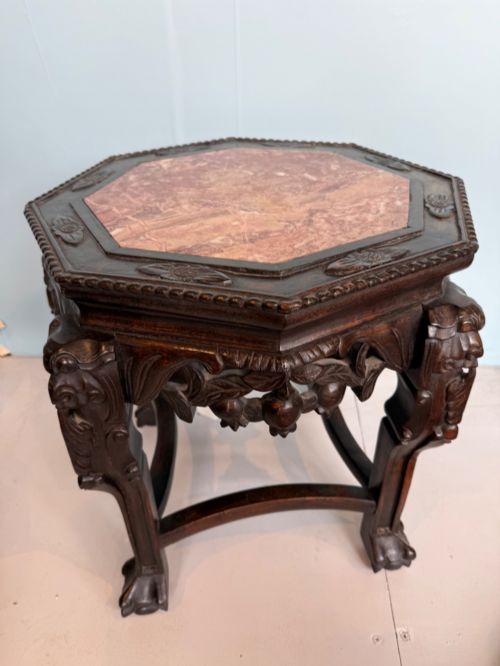
Carved Marble Top Stand
When you search for a carved marble top stand, you find sturdy surfaces built to hold heavy plants and urns.
Carved Marble Top Stand
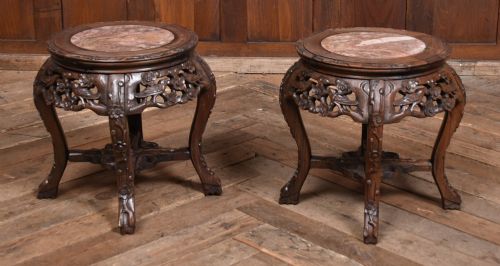
A carved marble top stand is typically a low table, plant stand, or jardiniere stand designed to elevate heavy ceramic pots and decorative objects.
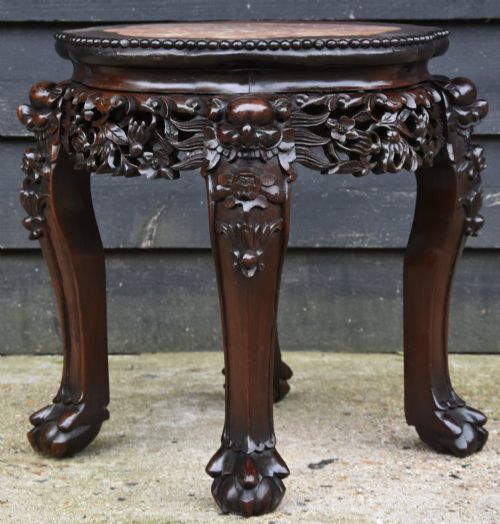
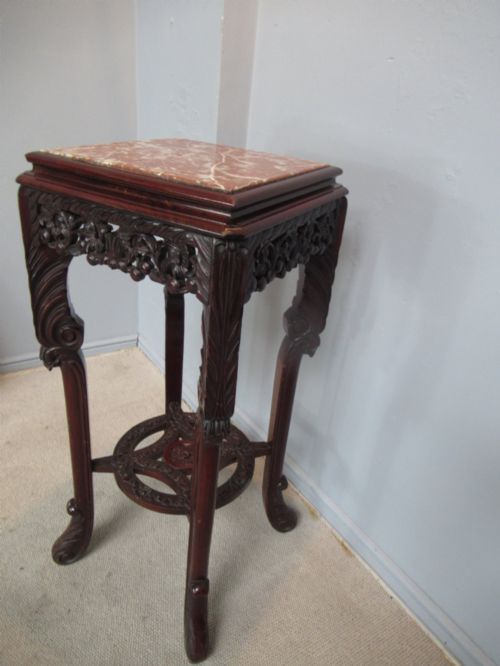
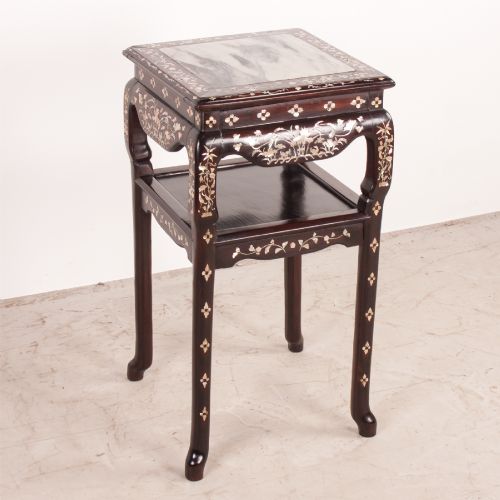
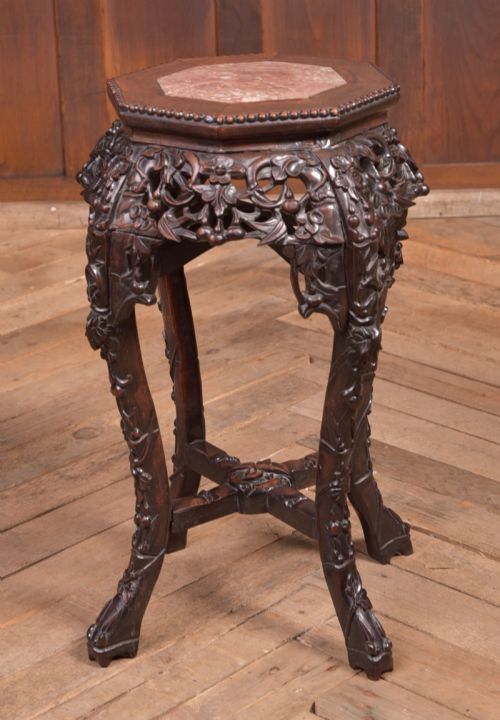
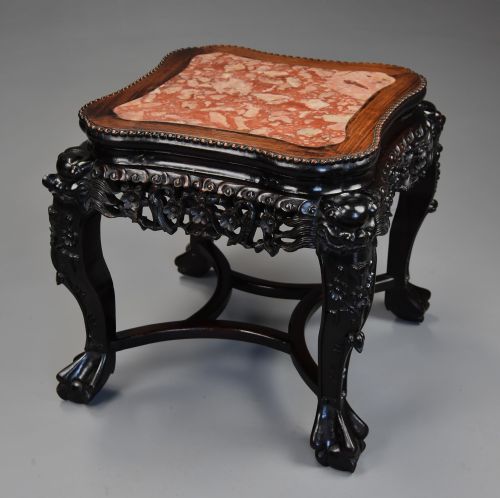
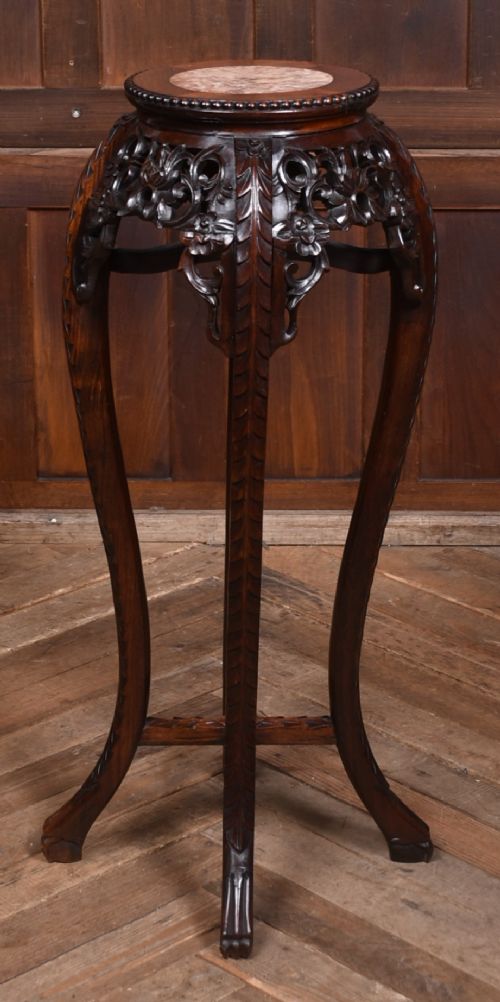
The pieces appearing most frequently in these records originate from 19th-century Chinese workshops, constructed as heavy hardwood stands with inset stone surfaces.
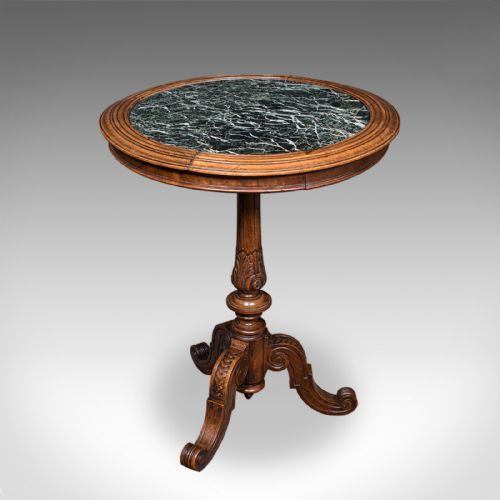
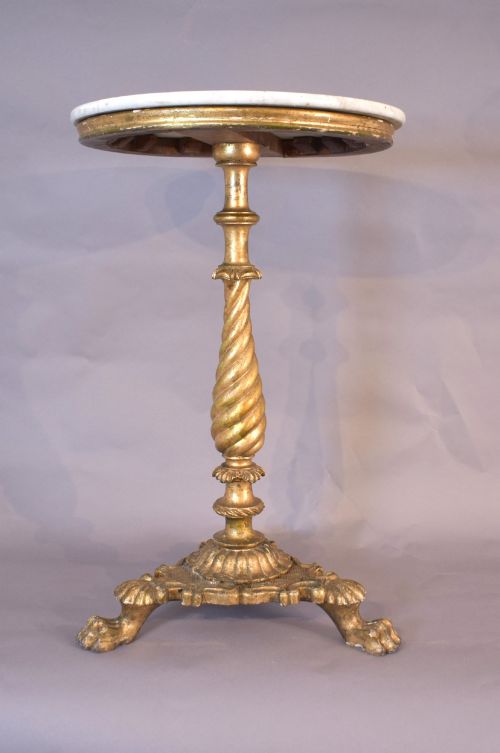
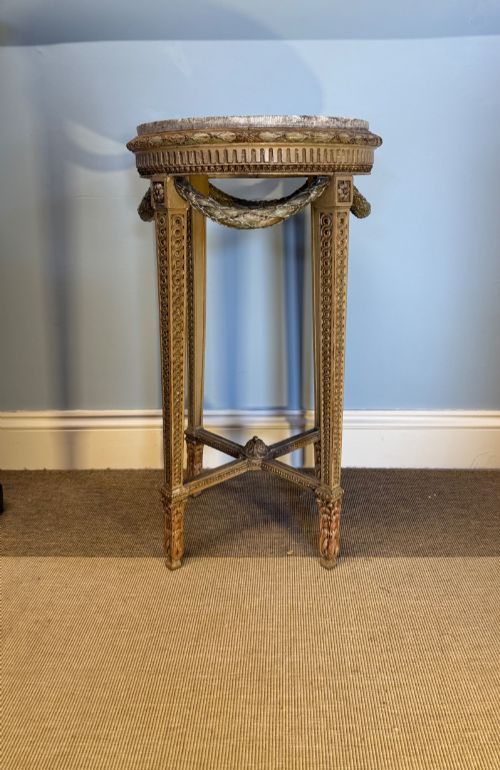
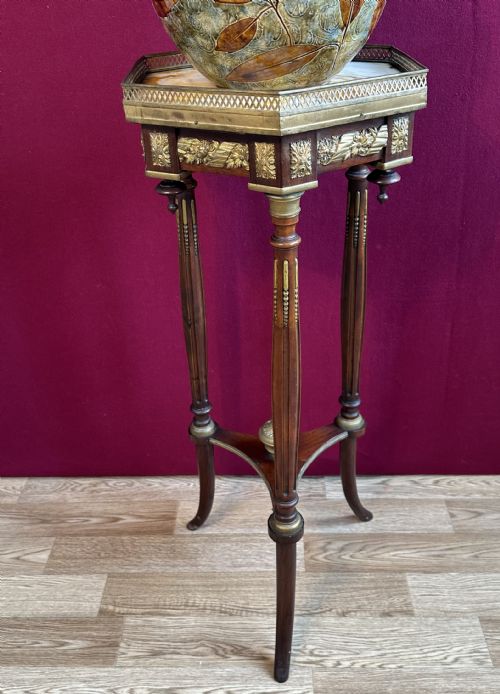
European variants also appear alongside these Oriental pieces, taking the form of French giltwood pedestals, Victorian mahogany tables, and occasional stands.
How They Were Made
Carpenters utilised dense hardwoods such as rosewood, padouk, and hongmu, often carving complex floral and scrolling motifs directly into the solid frame.
A polished inset slab of marble or rouge marble sits tightly within a rebated wooden channel to support heavy vessels without warping the timber.
Listings span the 19th century through the 1930s, featuring hardwoods, mahogany, oak, and marble.
What Varies In Quality
The depth and crispness of the hand-carving define the upper tier of pieces, distinguishing deeply undercut foliage from shallow, mechanical moulding.
The selection of the inset stone also separates standard examples from finer items, particularly where the marble shows striking natural veining or unusual quartz content.
The Carved Marble Top Stand Glossary
- Jardiniere stand
- A tall or low table specifically built to support a heavy ceramic plant container or flower bowl.
- Hongmu
- A dense, heavy Chinese hardwood, literally translating to red wood, commonly used for fine 19th-century furniture.
- Pedestal stand
- A raised single-column or multi-legged support designed to display a vase, urn, or sculptural piece.
- Rouge marble
- A decorative red limestone with white or grey veining frequently used for furniture insets during the 19th century.
- Rootwood
- Timber formed from the gnarled underground growth of a tree, chosen for its eccentric and natural organic shapes.
Carved Marble Top Stand: Frequently Asked Questions
What were carved marble top stands used for originally?
These pieces served primarily to elevate heavy Chinese porcelain fish bowls, large ceramic plant pots, and ornamental bronze urns. Raising the vessels protected wooden floors from dampness and placed the decorative plants at a better viewing height.
In European settings, similar tables held lamps, drinking decanters, or smaller flower vases in reception rooms and hallways.
How do I distinguish Chinese export stands from European pieces?
Chinese export stands usually employ dense tropical hardwoods like rosewood or hongmu and feature characteristic carving styles such as prunus blossom, bamboo motifs, or Greek key borders. The marble is typically dropped into a circular or shaped channel in the top.
European examples from the same period lean towards mahogany, walnut, or giltwood, utilising styles influenced by French rococo or Victorian revival designs.
Can these stands support heavy items safely today?
The original construction using dense hardwoods and heavy stone makes these stands exceptionally robust and structurally sound for holding substantial weight. Their frames were engineered specifically to bear the heavy load of water-filled ceramic jardiniere bowls.
Routine care requires only checking that the timber joints remain stable and avoiding harsh chemical polishes on the antique wood surface.
What is the difference between a jardiniere stand and a plant stand?
A jardiniere stand generally refers to a lower, sturdier table designed for wide, heavy bowls filled with earth and plants. Plant stands can encompass taller, narrower pedestals meant for single vases or smaller potted specimens.
Both types share the defining characteristic of an inset stone top to resist water damage from overflowing saucers.