

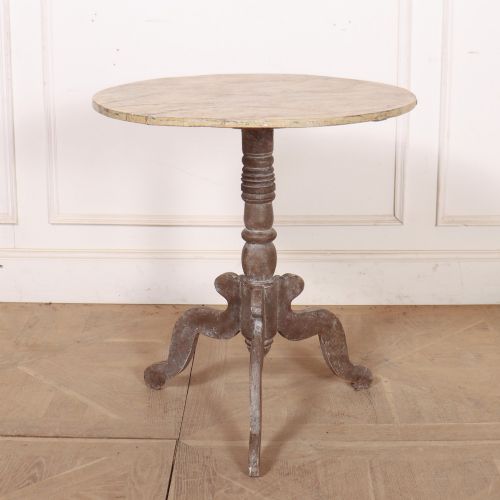
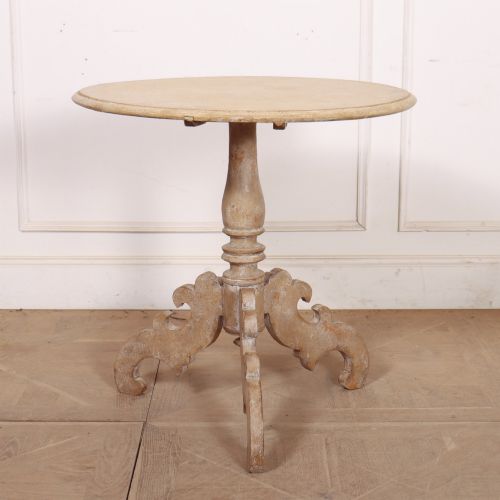
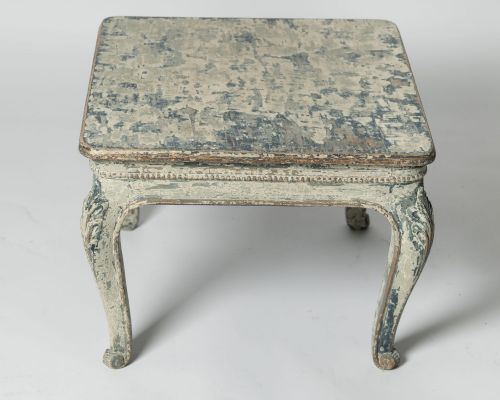
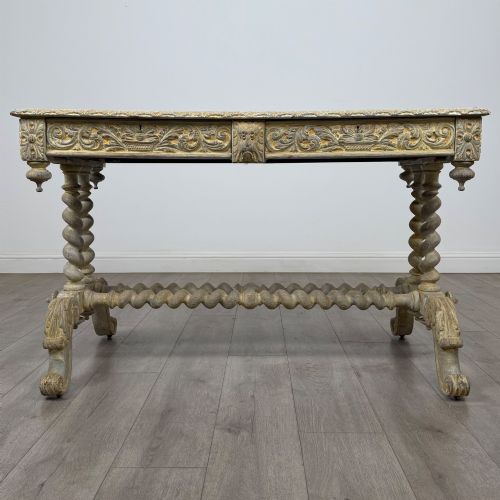
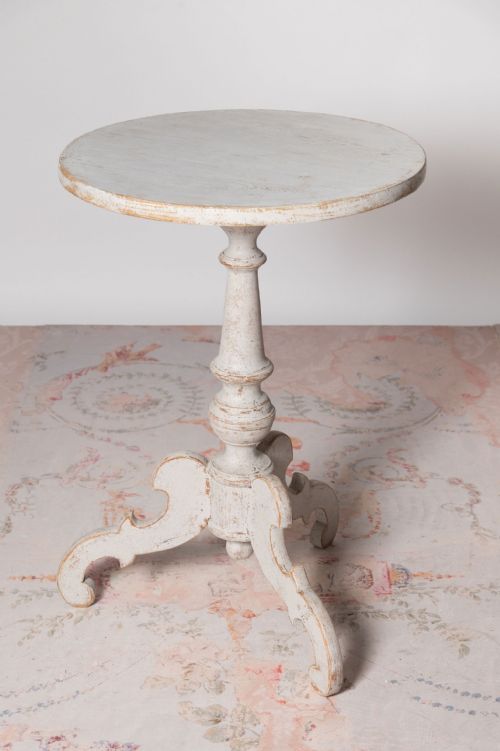


Distressed Grey Side Table
A distressed grey side table brings weathered charm and muted tone to a hallway or drawing room.
Distressed Grey Side Table
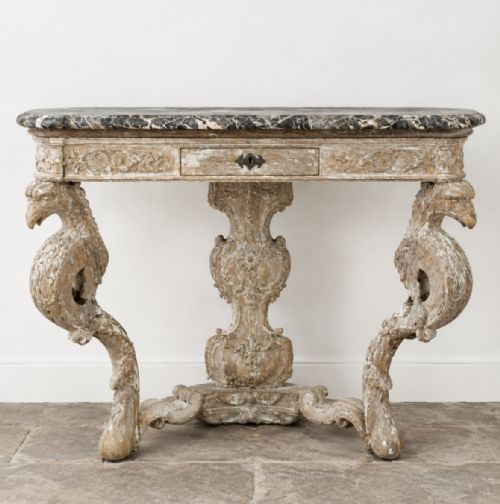
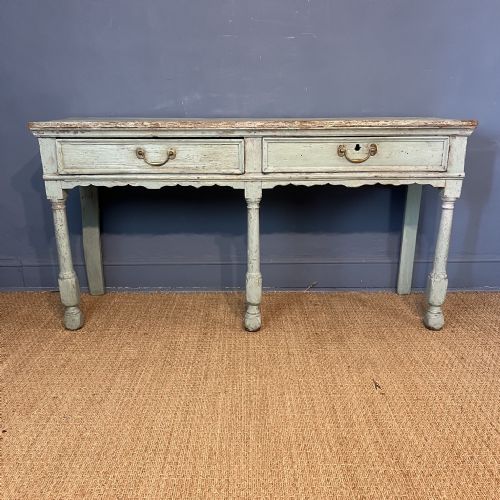
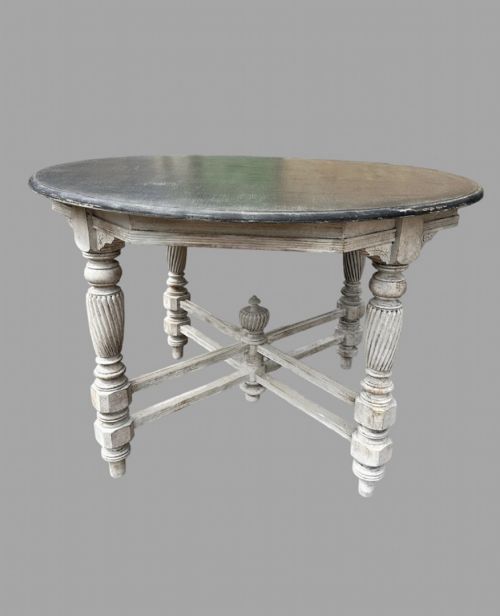
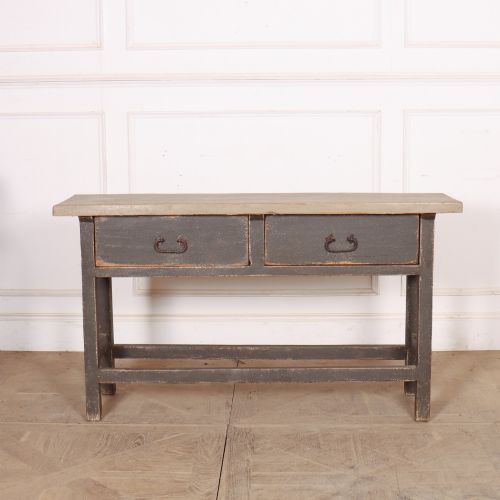
A distressed grey side table encompasses an array of painted occasional furniture, drawing principally on French provincial, Gustavian and English country traditions. When you search for a distressed grey side table, you encounter practical small tables designed for lamps, bedside use or hallway display rather than grand dining.
The pieces listed here span the eighteenth century through to the early twentieth century, taking the form of console tables, lamp tables, bedside cupboards and occasional tables. Swedish and French regional pieces dominate the selection, bringing lighter painted finishes to traditional timber forms.
Pine and softwood form the carcasses of these tables, frequently finished in layered paint schemes that show age and wear. Buyers choose these items to introduce texture and a softened palette into contemporary or traditional interiors without relying on heavy brown wood.
Materials and construction
Makers constructed these tables from solid timbers such as pine and softwood, occasionally pairing them with marble tops on more decorative French console tables. Joinery relied on traditional methods appropriate to the period, whether eighteenth-century pin construction or later nineteenth-century workshop assembly.
Surfaces received multiple coats of paint, often in grey or neutral tones, which over decades developed natural chipping, craquelure and distress through domestic use. Brass fittings and carved wooden details occasionally accent the painted woodwork, particularly on nineteenth-century continental examples.
Several Swedish bedside cupboards have spent more than a century hiding cold winter nights behind cheerful grey paint.
Assessing quality
Quality in these painted tables rests upon the integrity of the underlying timber structure and the authenticity of the surface finish. Superior examples display honest patination where paint has worn through natural friction rather than artificial distress applied to modern timber.
Proportion and decorative restraint set finer console and lamp tables apart from simpler utility pieces. Well-proportioned cabriole legs, subtle carved motifs and sound joints elevate a piece from a basic workshop item to a decorative focal point.
The Distressed Grey Side Table Glossary
- Gustavian
- Relating to the Swedish neoclassical style promoted by King Gustav III in the late eighteenth century, known for pale painted furniture and restrained classical carving.
- Demi-lune
- Half-moon shaped, describing console tables designed to sit flush against a wall.
- Console table
- A table fixed or placed against a wall, frequently featuring decorative legs and a marble or timber top.
- Cricket table
- A small, light three-legged table with a round top, traditionally used in English country settings.
- Washstand
- A piece of furniture designed to hold a basin and jug for washing, often constructed in pine during the Victorian era.
Distressed Grey Side Table: Frequently Asked Questions
How do I style a grey side table?
Pair the table with neutral walls and natural textiles to complement the weathered paint finish and muted tones.
Place a simple ceramic lamp or a stack of books on top to maintain the functional aesthetic of the piece.
Are these tables original antiques?
The selection includes pieces originating from the eighteenth, nineteenth and early twentieth centuries, constructed from period timbers.
The painted surfaces show age and wear acquired through decades of domestic use rather than modern factory distressing.
Can I use a console table in a small hallway?
Demi-lune and narrow console tables fit compactly against walls without obstructing narrow walkways or entryways.
Their shallow depth provides a convenient surface for keys and post while preserving floor space.
What is the difference between Swedish and French painted tables?
Swedish pieces often exhibit cleaner neoclassical lines and pale grey or white paint finishes influenced by Gustavian design.
French examples tend to feature more ornate carvings, serpentine fronts and occasional marble tops.