

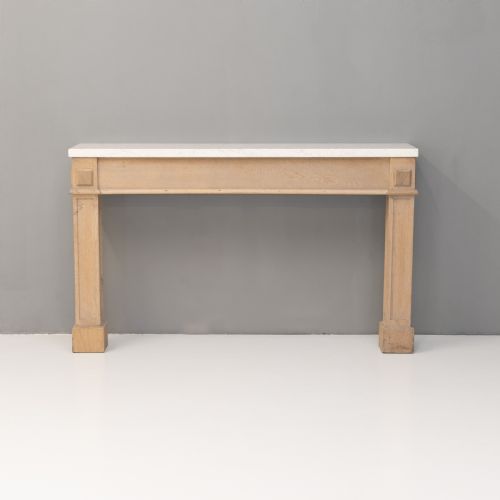


French Provincial Hall Table
A french provincial hall table brings rustic continental character to an entranceway, prized for its practical proportions and timeworn timber surfaces.
French Provincial Hall Table
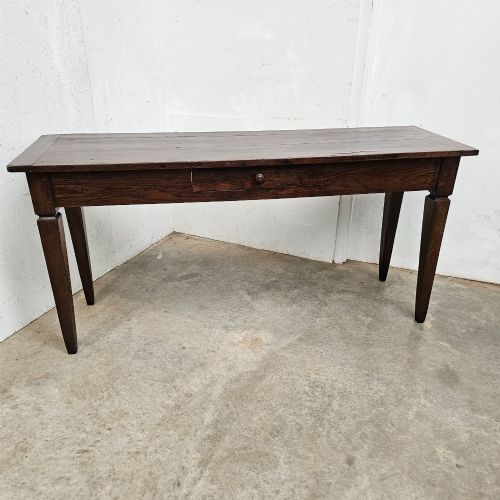
A french provincial hall table typically presents as a console, side, or serving table designed for narrow spaces, drawing upon regional continental traditions from the eighteenth and nineteenth centuries. These pieces appear in forms ranging from simple scrubbed oak trestles to serpentine front consoles with practical drawers.
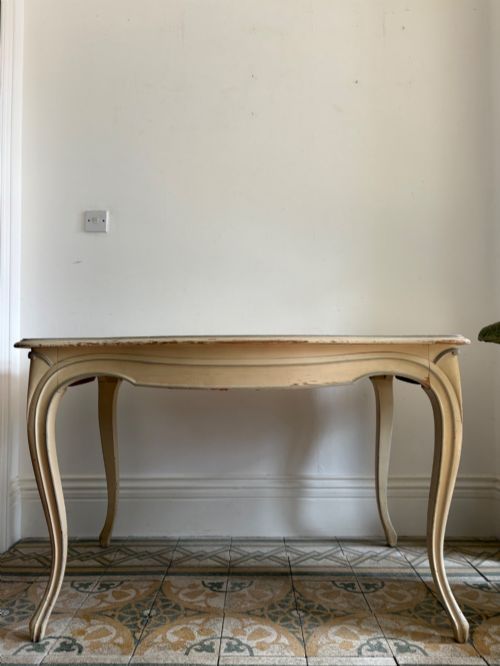
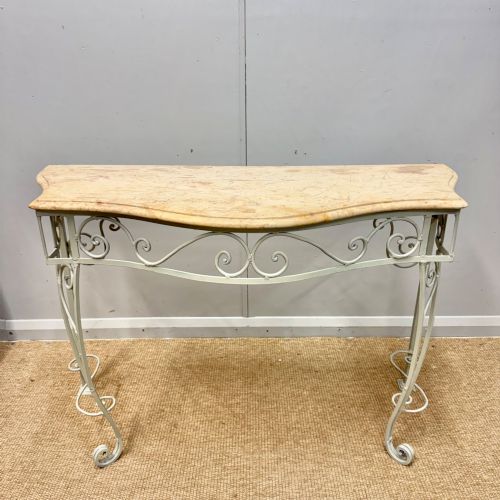
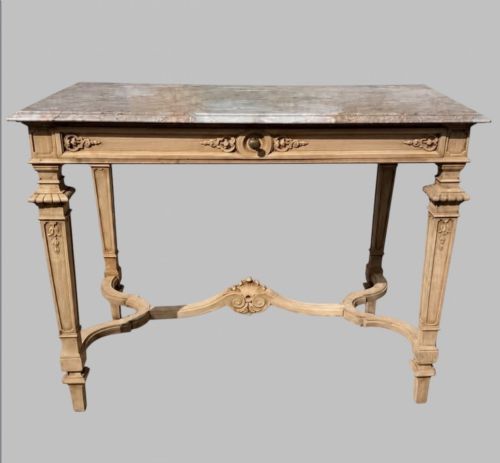
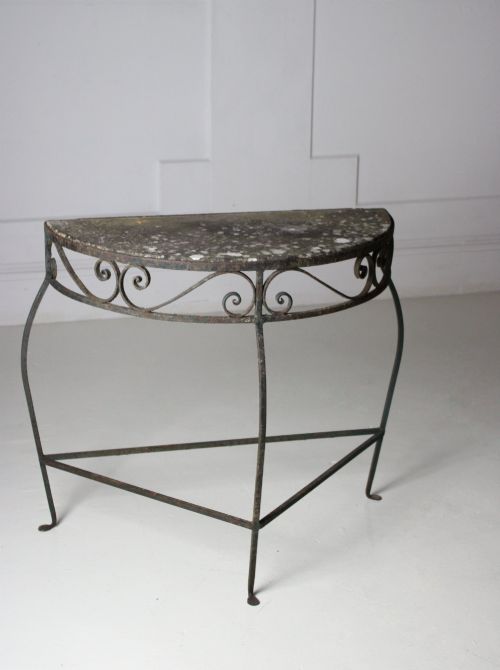
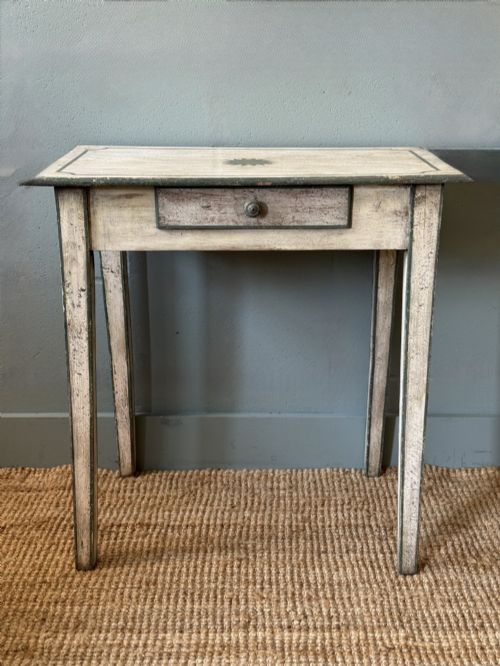
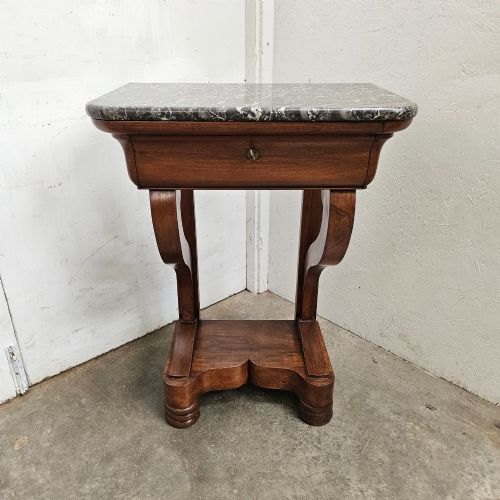
The version most commonly met on this page is the nineteenth-century cherrywood or oak side table, often retaining traces of old paint or a scrubbed finish. Alongside timber tops, numerous examples feature inset marble surfaces supported by wrought iron or carved wooden frames.
Makers working within the French country and provincial idiom also produced occasional tables, gueridons, and dresser bases suited to domestic hallways. Regional variations span styles from Louis Philippe simplicity to carved Louis XVI revival details.
Materials and Construction
Makers utilised solid regional hardwoods including oak, walnut, cherrywood, and fruitwood, alongside pine for secondary timbers and painted surfaces. Timbers were frequently joined with pegged mortise and tenon construction to withstand daily use in provincial homes.
Marble slabs were fitted directly into recessed wooden or wrought iron frames to create durable, heat-resistant surfaces for serving and display. Painted finishes, applied in cream or earth tones, were often layered over gesso or exposed through natural wear over generations.
Many an old cherrywood table bears the faint, indelible stain of spilled provincial cider from its past life in a farmhouse hall.
Distinguishing Quality
Quality rests in the integrity of the timber selection and the restraint of the carving, where hand-shaped cabriole legs and serpentine fronts display fluid curves rather than mechanical symmetry. Tables retaining their original drawer linings, brass hardware, and untouched patinated surfaces command greater regard from collectors.
Construction depth dictates daily utility, seen in the substance of heavy oak tops and the stability of stretcher bases. The harmony between proportion and material distinguishes simpler utility pieces from finer regional cabinet work.
The French Provincial Hall Table Glossary
- Console table
- A table designed to stand against a wall, frequently secured to it or supported by two front legs and rear brackets. These forms form the backbone of provincial hallway furnishings.
- Cabriole leg
- A furniture leg that bends outward in a convex curve at the top and inward in a concave curve at the bottom, finishing in a simple foot. This shape derives from animal limbs and typifies provincial revival pieces.
- Trestle table
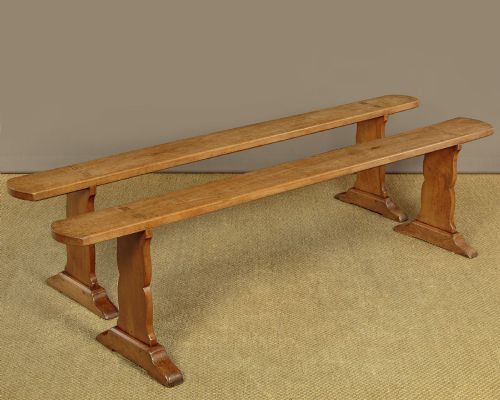
- A table consisting of two or more upright supports connected by a horizontal beam or stretcher, commonly found in rustic and country furniture. This design provides exceptional legroom beneath the top.
- Serpentine front
- A furniture front curving outward in the centre and inward at the ends, creating a flowing undulating line. This joinery technique requires precise hand shaping in solid timbers.
- Gueridon
- A small circular table on a central pillar or column, often topped with marble and utilised for display in continental interiors. The form originated in the seventeenth century before becoming a staple of provincial rooms.
French Provincial Hall Table: Frequently Asked Questions
What defines a provincial hall table?
A provincial hall table is a narrow surface built for regional French homes, combining domestic utility with regional woodworking traditions.
These pieces typically manifest as side tables, consoles, or serving tables featuring modest drawers and sturdy timber frames.
How do I care for a marble top?
Marble surfaces require gentle cleaning with mild soap and warm water to protect the stone from acidic stains and scratching.
Avoid harsh chemical cleaners that can dull the natural polish and patination accumulated over centuries of use.
Are these tables solid wood?
Provincial tables are constructed from solid regional timbers such as oak, cherrywood, walnut, and fruitwood rather than veneered panels.
Secondary woods like pine occasionally appear in drawer linings or structural interiors.
How can I date a piece?
Dating relies upon tool marks, construction methods, timber shrinkage, and the presence of period hardware or hand-cut joints.
Stylistic cues such as cabriole legs or turned supports further align pieces with eighteenth and nineteenth-century eras.