



Caned Shelf Side Table
A caned shelf side table brings lightness and texture to a room, offering practical tiers woven from natural materials alongside classic timber and marble.
Caned Shelf Side Table
A caned shelf side table combines traditional wood frames with woven plant materials to create multi-tiered surfaces for display and storage. These pieces bridge the gap between sturdy occasional tables and lighter, decorative etageres.
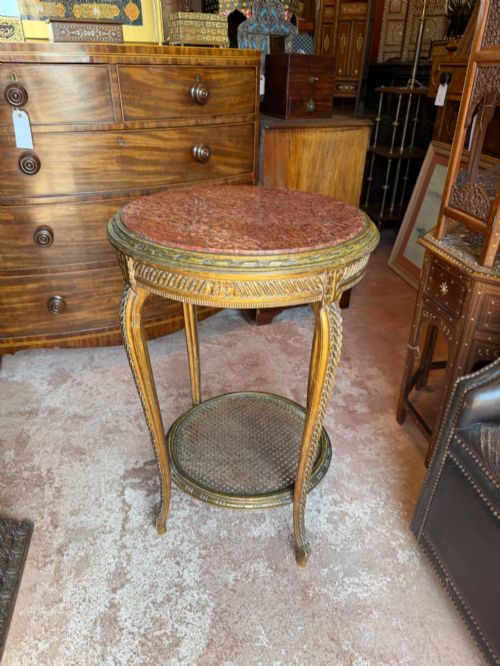
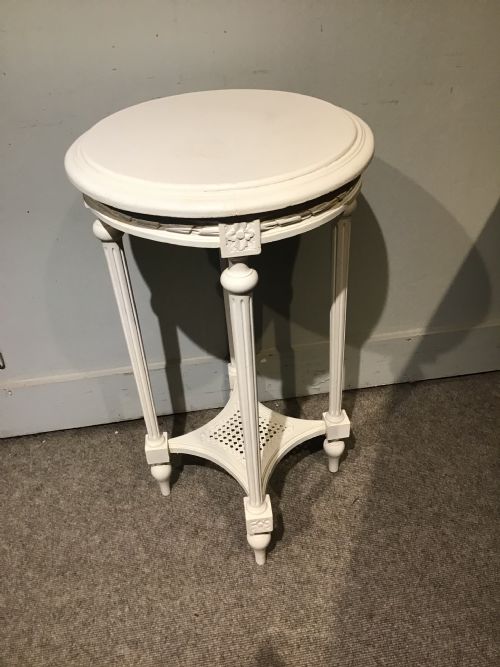
The selections available here span the nineteenth century through to the Edwardian period, with a strong emphasis on French provincial and revival styles. Formats range from two-tier gueridons to taller etageres and bamboo occasional pieces.
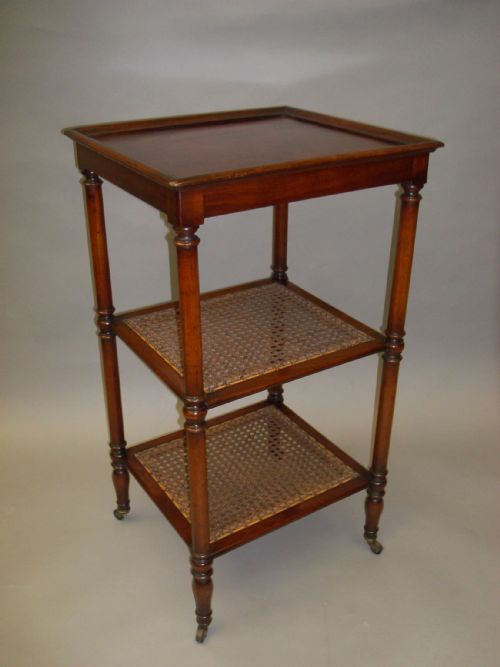
Makers and workshops across France and Britain favoured these materials for rooms requiring both structural stability and visual airiness. Buyers encounter round marble tops paired with lower woven shelves, as well as rectangular mahogany and oak frameworks.
How they were made
Construction relies on traditional timber framing using woods such as mahogany, oak, and painted finishes to support the upper tiers. Turnings, hand carving, and occasional giltwood accents provide the structural skeleton for these tables.
Insets of cane, rattan, and bamboo introduce flexible, woven textures that lighten the heavy appearance of stone and wood. Marble inserts frequently provide a cool, solid upper surface contrasted against the flexible lower canework.
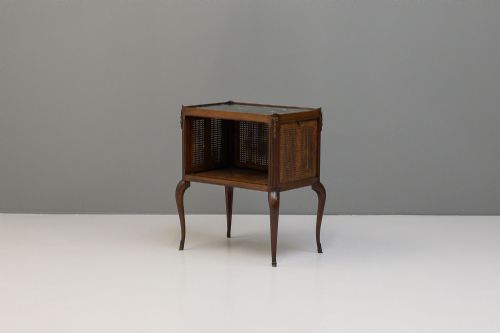
Brass mounts, galleries, and hinges appear on select models to secure the tiers and add refined metallic detail. Joinery techniques reflect the period of manufacture, from Regency mahogany structures to later Edwardian painted variations.
French design dominates the selection, including Louis XVI Revival, Empire style, and provincial etageres.
What varies in quality
The integration of varied media defines the upper echelon of these pieces, particularly where heavy stone meets delicate woven work. Precision in the joinery of the timber frame dictates how well the structure supports multi-tiered weight.
The tightness and regularity of the cane or rattan weaving reveal the skill invested in the lower shelves. Superior examples maintain tension across the mesh without sagging, while finer frames display crisp hand carving rather than mechanical stamping.
Liberty & Co.·KRIEGER of Paris
The Caned Shelf Side Table Glossary
- Etagere
- A set of open shelves for displaying small objects, typically standing on legs and featuring multiple tiers.
- Gueridon
- A small French table, often round and supported by a central pillar or multiple slender legs.
- Canework
- Woven plant material such as rattan or cane used to form breathable, decorative panels on furniture surfaces.
- Aesthetic Movement
- A late nineteenth-century design style that emphasised visual beauty and craftsmanship over heavy Victorian narrative.
- Louis XVI Style
- A neoclassical design vocabulary characterised by straight lines, symmetry, and classical architectural motifs.
Caned Shelf Side Table: Frequently Asked Questions
Where do I place a caned shelf side table?
These tables suit hallways, living rooms, and bedrooms where extra surface space is required without blocking light.
The lower caned shelf provides an ideal resting place for books or small decorative objects while keeping the room feeling open.
How do I care for the cane shelf?
Keep caned surfaces clean by dusting gently with a soft brush and avoiding excess moisture during cleaning.
Applying a damp cloth occasionally helps maintain the flexibility of the natural fibres over the years.
How do I distinguish nineteenth-century pieces?
Examine the timber joints, the type of screws or fixings used, and the specific style of hand carving.
Period pieces often display subtle tool marks and material patination consistent with their age.