




Chinese Rosewood Pedestal
A chinese rosewood pedestal is a carved hardwood support designed for plants and urns, bringing traditional craftsmanship into interiors.
Chinese Rosewood Pedestal
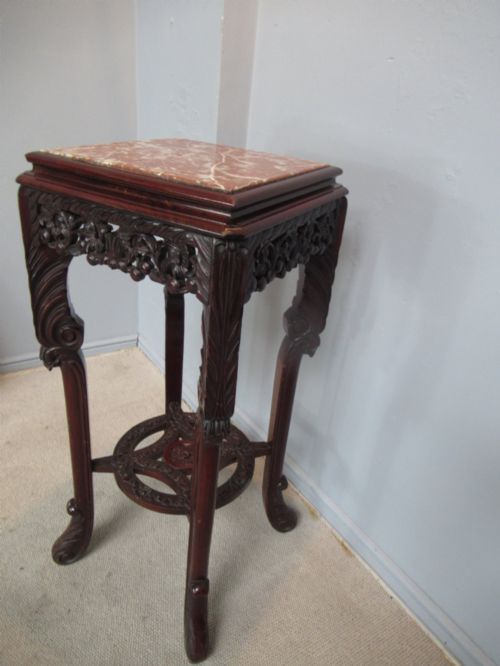
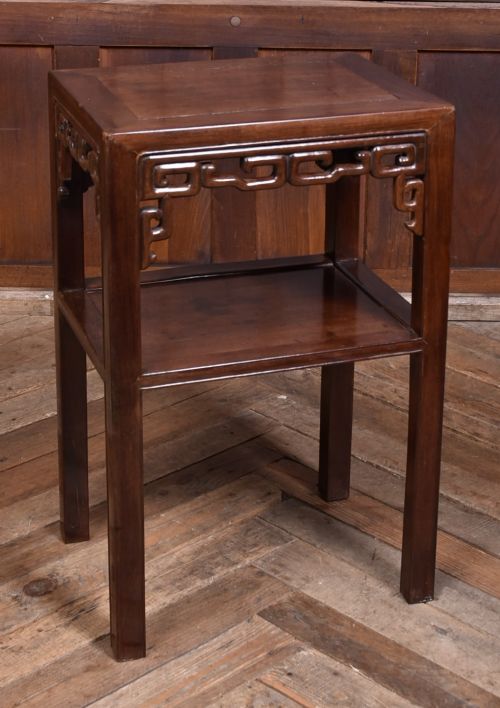
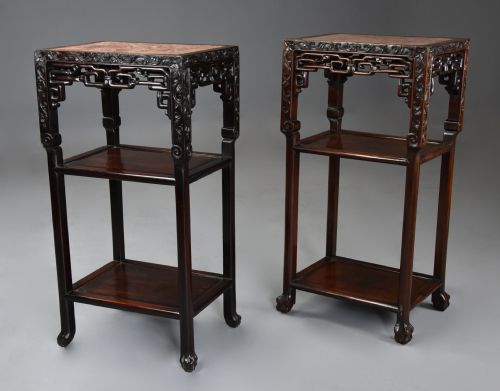
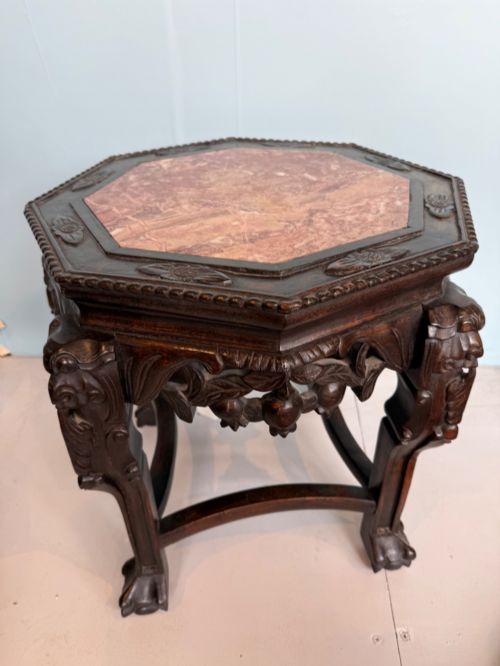
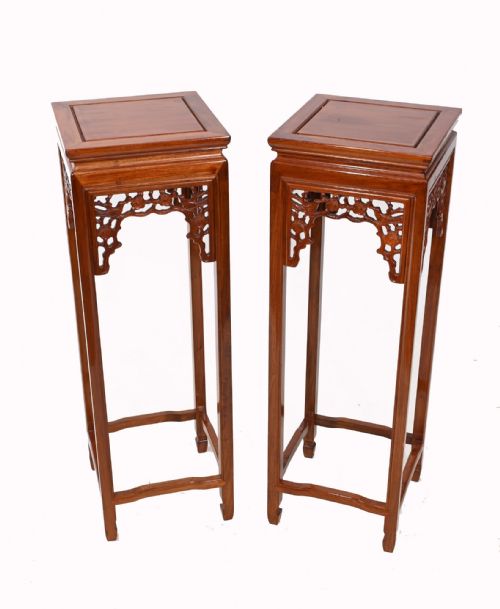
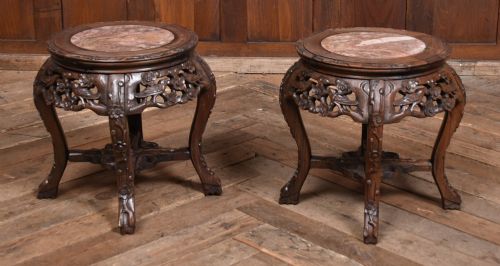
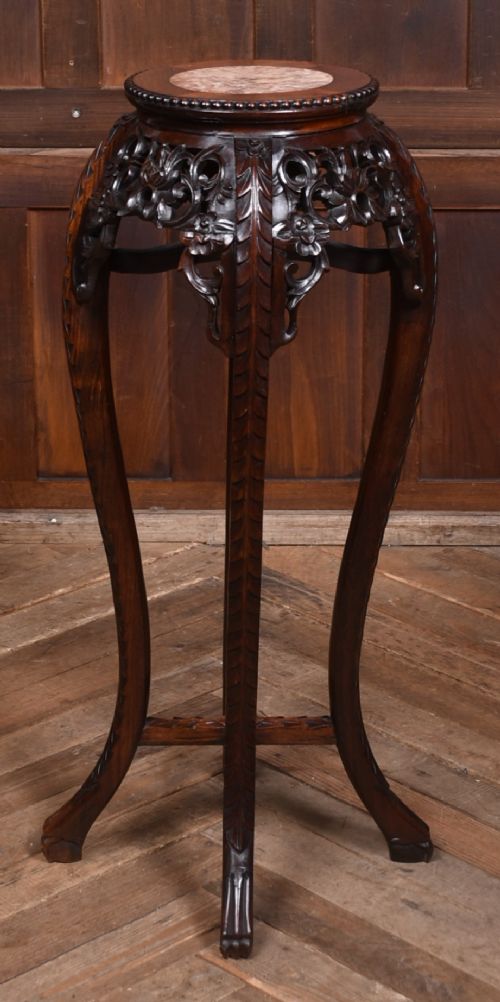
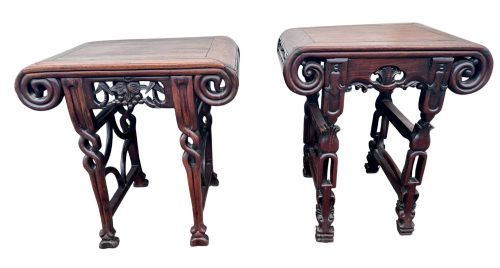
A chinese rosewood pedestal is typically encountered as a carved wooden support designed to elevate urns, vases, and jardiniere plants. These pieces take forms such as plant stands, side tables, and vase tables.
The selections span the nineteenth century and the Edwardian era, incorporating traditional Chinese styles alongside Victorian influences. Pieces often appear as matched pairs or individual stands with distinct profiles.
Makers utilised dense exotic timbers to create functional furniture that served domestic interiors, functioning both as pedestals and occasional tables.
How they were made
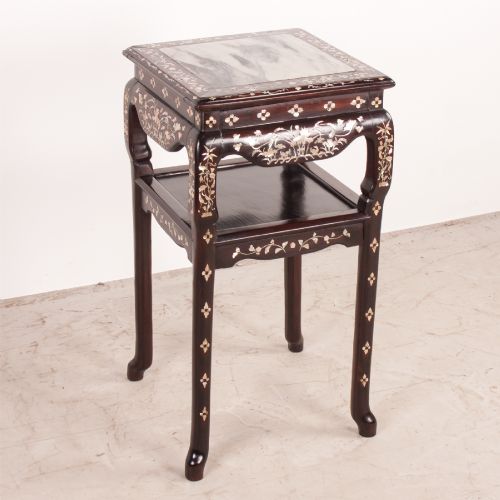
Construction relies upon dense timbers including rosewood, padouk, huali wood, and hongmu, often combined with inset marble tops. These hard woods provide the structural strength needed to support heavy ceramic vessels.
Carving and inlay techniques define the decoration, with artisans employing mother-of-pearl to ornament surfaces. Joinery is executed to handle the weight of marble inserts without warping the surrounding frame.
The listings span the Victorian and Edwardian periods, utilising materials such as rosewood, hongmu, padouk, and huali wood alongside inset marble.
What varies in quality
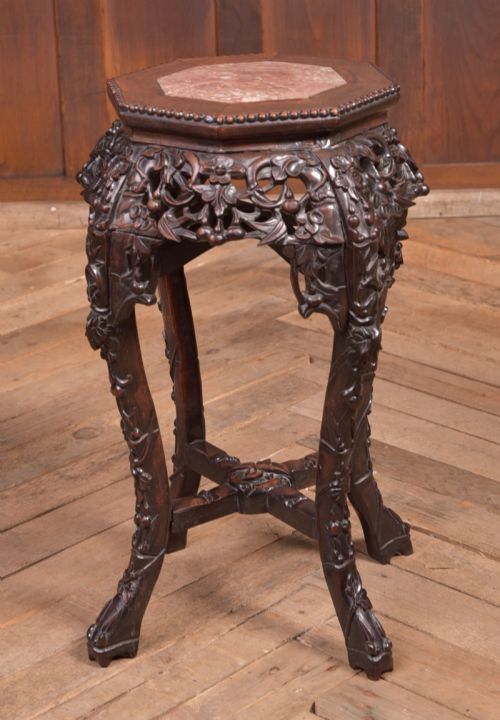
Depth and crispness of carving separate standard examples from finer works, where floral motifs and dragon designs exhibit pronounced relief. The quality of the timber selection also dictates the visual weight and resonance of the piece.
Integration of the marble insert into the wooden frame demonstrates the joiner's precision. Well-fitted stone and balanced proportions elevate a stand from a simple utility table to a considered decorative object.
The Chinese Rosewood Pedestal Glossary
- Jardiniere stand
- A tall furniture piece specifically built to hold indoor plant pots. These stands protect interior floors and elevate greenery to eye level.
- Torchere
- A tall stand or pedestal originally intended to carry a torch or candle lamp. In later periods, they serve to display tall vases or figures.
- Hongmu
- A category of dense, dark Asian hardwoods translating to red wood. It provides exceptional durability and a deep natural sheen.
- Huali wood
- A traditional Chinese hardwood prized for its variegated grain and resilience. It is frequently associated with Qing dynasty furniture production.
- Padouk
- A heavy tropical timber known for its reddish hue and stability. It allows for intricate, sharp carving without splitting.
Chinese Rosewood Pedestal: Frequently Asked Questions
What is a chinese rosewood pedestal used for?
These pieces were built to support heavy items such as ceramic fishbowls, bronze urns, and potted plants. Their elevated height allowed foliage and decorative vessels to catch the light.
Today, they function as standalone accent tables or lamp supports within domestic rooms. Their sturdy construction makes them suitable for displaying heavy decorative objects safely.
How do I identify the wood type?
Examining the weight, grain pattern, and natural colour helps distinguish between rosewood, padouk, and hongmu. These tropical hardwoods are exceptionally heavy and dense to the touch.
Closer inspection often reveals tight grain structures that darken with age and polishing. Lighter examination under natural light shows the distinct reddish or purplish tones characteristic of these species.
Why do many stands have marble inserts?
Inset marble slabs provided a cool, water-resistant surface that protected the wood from dampness leaking out of plant pots. This practical feature also added stability and a contrasting texture.
The stone used is typically rouge or grey marble, fitted flush into the wooden frame. It allowed owners to place wet jardiniere bowls indoors without damaging the timber structure.
How do I date a chinese pedestal?
Dating relies upon stylistic markers, construction methods, and material choices associated with the nineteenth century and Qing dynasty. Records frequently point to the late nineteenth century for carved hardwood stands.
Victorian export pieces often blend traditional Chinese joinery with Western aesthetic preferences. The presence of specific hardware or inlay styles helps narrow down the decade of manufacture.