


Oriental Enamel Platter
An oriental enamel platter brings nineteenth-century craftsmanship into a room through intricate metalwork and vibrant decorative scenes.
Oriental Enamel Platter
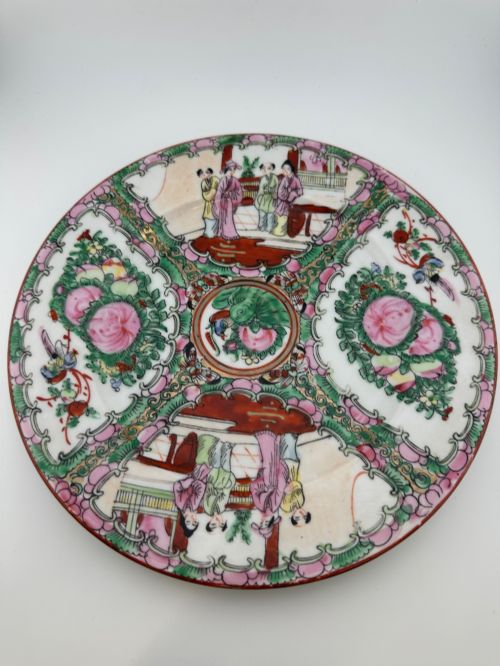
An oriental enamel platter is a large decorative dish or charger originating from nineteenth-century Japanese and Chinese workshops. These plates and trays serve primarily as display pieces rather than tableware.
The pieces on this page appear in various forms, including circular chargers, square trays, and octagonal dishes. Most examples belong to the Meiji period and late Edo period in Japan, alongside Chinese export wares.
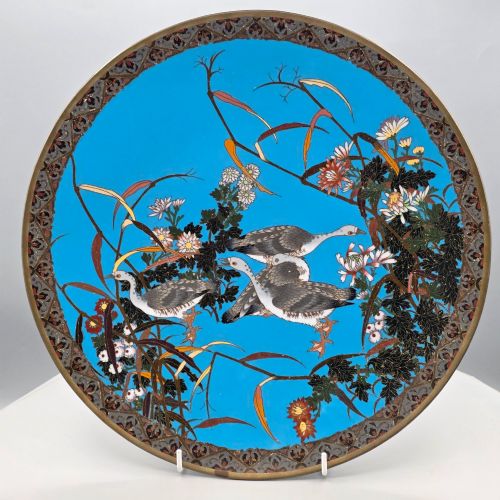
Motive work ranges from birds such as geese, ibises, and phoenixes to dragons, koi fish, and landscapes like Mount Fuji. The scale spans from modest plates to substantial chargers measuring fifty centimetres across.
Factors of execution and finesse
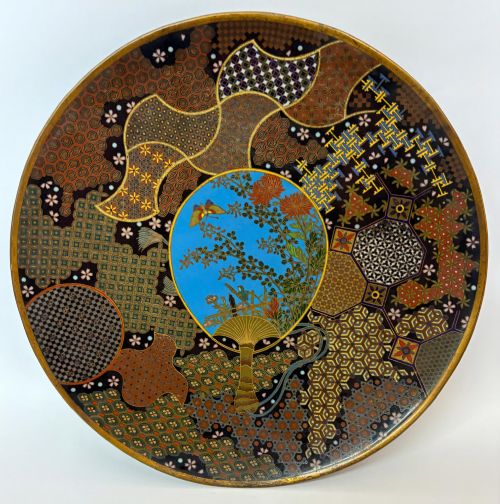
Quality rests upon the precision of the wirework and the control of the enamel during firing. Finer examples display microscopic detail in subjects like feathers, scales, and foliage without clouding in the coloured pastes.
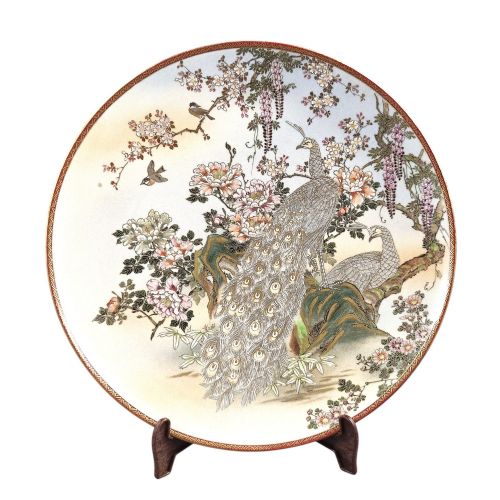
The presence of artist signatures or specific regional attributions, such as work from Nagoya or makers like Kinkozan, distinguishes standard production items from master-level achievements.
Several platters feature frogs sharing space with chrysanthemums and butterflies.
Kinkozan·Nagoya
The Oriental Enamel Platter Glossary
- Cloisonne Enamel
- A technique where metal wires form raised cells on a copper or brass body to contain coloured enamel pastes. These wire boundaries keep distinct shades separate during the firing process.
- Charger
- A large ornamental plate intended for display on a wall, cabinet, or stand rather than for serving food. These pieces form the primary canvas for elaborate pictorial designs.
- Totai Shippo
- A variation of cloisonne where enamel work is applied over a porcelain body rather than metal. This method fuses ceramic traditions with wirework decoration.
- Meiji Period
- The era of Japanese history spanning from 1868 to 1912, noted for technical mastery in decorative arts. Many chargers on this page date from these decades.
Oriental Enamel Platter: Frequently Asked Questions
How were oriental enamel platters used?
These platters were created primarily as ornamental display objects for homes and reception rooms. They were mounted on walls, placed on stands, or set upon tables to showcase wealth and artistic taste.
Because of their delicate wire and enamel construction, they rarely saw service as functional dining ware. Their primary purpose remained visual appreciation of nature and mythical motifs.
How do I display a charger safely?
Wall mounting requires specialised plate hangers with rubber-coated grips that distribute the weight evenly across the rim. Ensure the mounting hardware anchors securely into wall studs.
Alternatively, stable brass or wooden display stands support the base securely on flat surfaces. Keep them away from direct sunlight to preserve the vibrant enamel colours.
What motifs appear on these pieces?
Natural subjects dominate the designs, featuring birds like the phoenix, ibis, owls, and geese alongside botanical elements such as chrysanthemums, peonies, and wisteria. Mythological creatures including dragons and leaping koi also recur frequently.
Landscapes occasionally feature recognizable landmarks like Mount Fuji alongside auspicious symbols. These themes reflect traditional East Asian artistry from the nineteenth century.
How can I tell the period?
Dating relies on stylistic markers, framing techniques, and material composition. Pieces from the Meiji and late Edo periods display specific wire thicknesses and colour palettes characteristic of nineteenth-century workshops.
Signatures or impressed marks on the reverse offer further clues to the workshop origin and approximate decade of manufacture. Comparing the complexity of the subject matter helps narrow the era.