


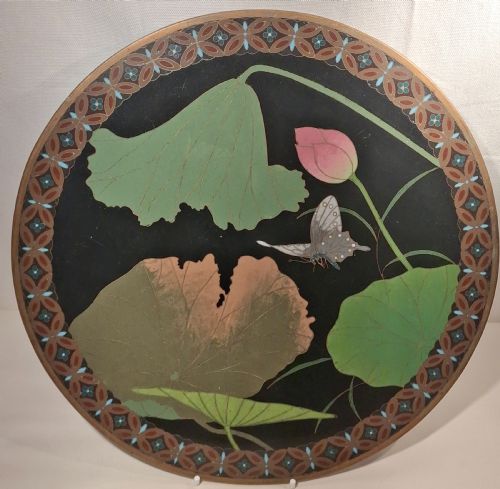

Vintage Cloisonne Dish
A vintage cloisonne dish brings intricate wirework and vibrant enamel into a room, offering both decorative presence and historical depth.
Vintage Cloisonne Dish
A vintage cloisonne dish encompasses decorative chargers, plates, bowls, plaques, and trays fashioned with patterned metal cells. Pieces span the 18th century, 19th century, Meiji period, Edo period, and Qing dynasty, reflecting origins in Chinese and Japanese workshops.
The most common formats found in this selection are medium and large Japanese plates and chargers decorated with natural motifs, birds, and mythical creatures. These items were produced across the nineteenth and twentieth centuries.
Objects range from lidded pedestal bowls and ashtrays with jade rims to large display chargers. Each piece relies on metal wire boundaries to contain coloured enamel pastes before firing and polishing.
Materials and construction methods
Artisans formed vessels using copper, brass, bronze, and copper alloy as the primary structural body. Fine ribbons of brass wire or silver wire were then soldered onto the surface to create intricate cellular compartments known as cloisons.
Workers filled these tiny wire cells with enamel paste before firing the metal base in a kiln. After cooling, the surface was ground and polished down until the metal wire rims and the hardened enamel rested in a smooth, continuous plane.
Some chargers feature fierce dragons and demons sharing cabinet space with tiny, serene singing birds.
Judging execution and detail
Quality rests upon the precision and thinness of the wirework, alongside the complexity of the subject matter. Finer examples depict detailed dragons, koi, owls, and landscapes with exceptional control over colour gradation.
The uniformity of the polished surface and the absence of pitting in the enamel distinguish masterworks from standard production pieces. Signatures from established makers often accompany superior execution.
Kinkozan
The Vintage Cloisonne Dish Glossary
- Cloisonne enamel
- A technique where metal wires form raised cells on a metal body to hold coloured glass paste. The vessel is then fired and polished to a smooth finish.
- Charger
- A large ornamental plate or dish intended for display on a wall, cabinet, or stand rather than for serving food.
- Meiji period
- A Japanese historical era spanning from 1868 to 1912 noted for exceptional advancements in decorative arts and metalwork.
- Edo period
- A Japanese historical era lasting from 1603 to 1867 preceding the Meiji era, associated with early developments in cloisonne production.
- Qing dynasty
- The final imperial dynasty of China, lasting from 1644 to 1911, known for distinctive enamelled vessels and plaques.
Vintage Cloisonne Dish: Frequently Asked Questions
How do I display a large charger safely?
Large chargers and plaques require sturdy wall brackets or dedicated plate stands designed to support their weight securely. Position them away from direct sunlight to protect the coloured enamel from fading.
Ensure the mounting hardware grips the rim firmly without putting undue pressure on the metal body or wirework.
Can I use these dishes for serving food?
These historical vessels are intended purely for display rather than functional dining use. The metal and enamel surfaces are susceptible to scratching and chemical wear from utensils or acidic foods.
Keep them as decorative centrepieces or wall art to preserve the integrity of the antique enamel.
How do I clean a vintage cloisonne dish?
Dust the surface gently with a dry, soft microfibre cloth to remove everyday particles. Avoid liquid cleaners, harsh abrasives, or soaking, as moisture can affect vulnerable metal joints.
Professional conservation is recommended if deeper cleaning becomes necessary for older or fragile pieces.
How do I tell Japanese and Chinese pieces apart?
Japanese items from the Meiji period often feature fine silver or brass wires outlining highly naturalistic birds, flowers, and Mount Fuji scenes. Chinese works from the Qing dynasty frequently employ heavier bronze or copper bodies with bold turquoise grounds and distinct auspicious symbols.
Examining the palette, wire thickness, and underlying metal alloy helps clarify the origin of each item.