
Oriental Bronze Urns
Oriental bronze urns are substantial Japanese Meiji period vessels that bring striking patinated metalwork and intricate inlay into a room.
What oriental bronze urns are
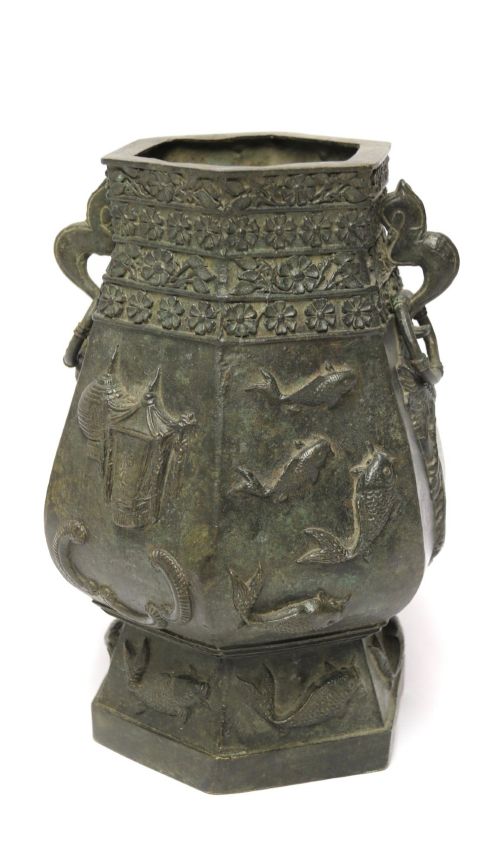
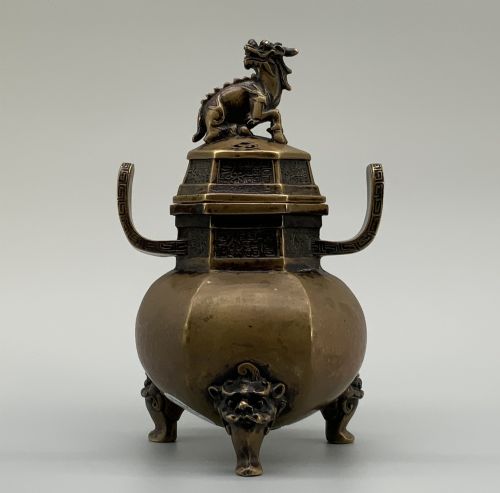
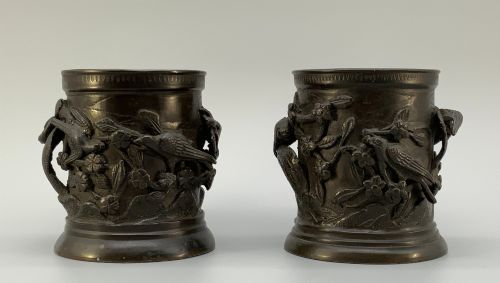
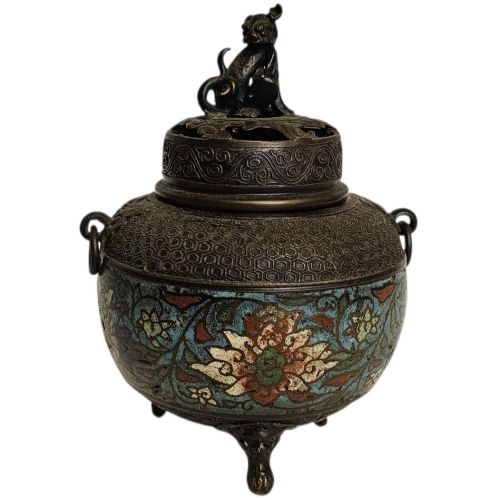
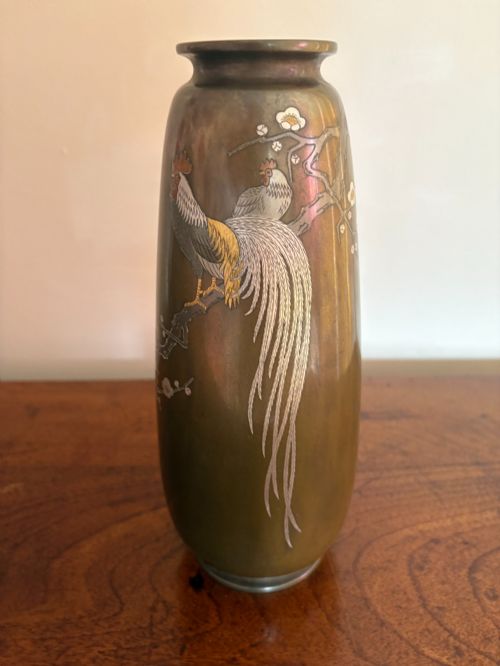
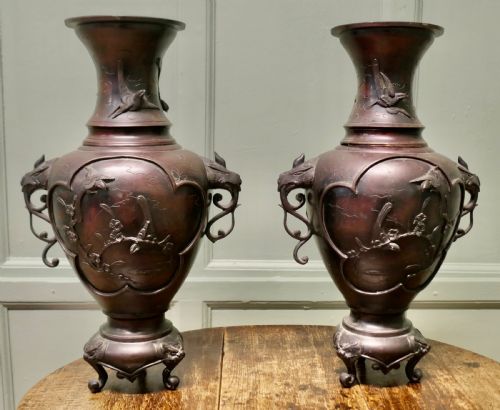
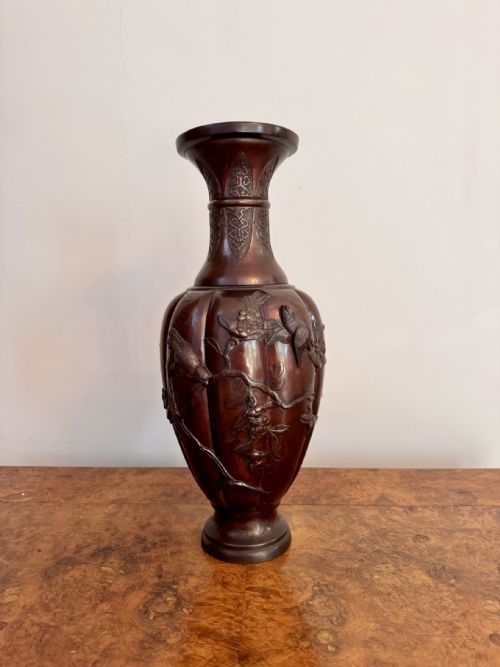
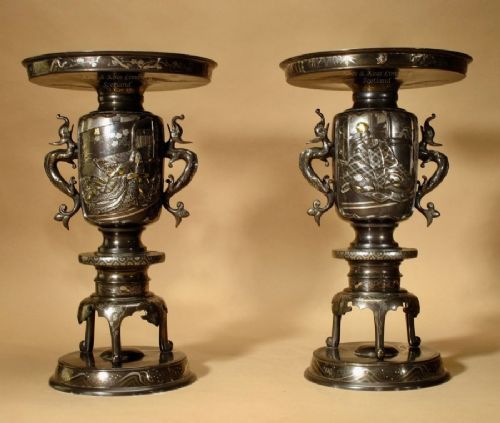
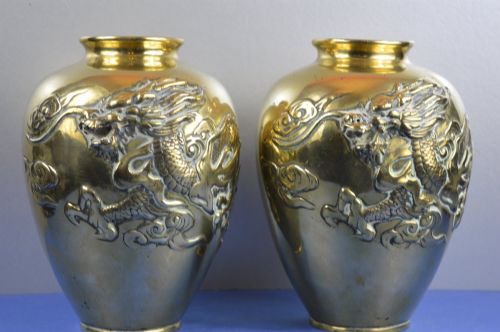
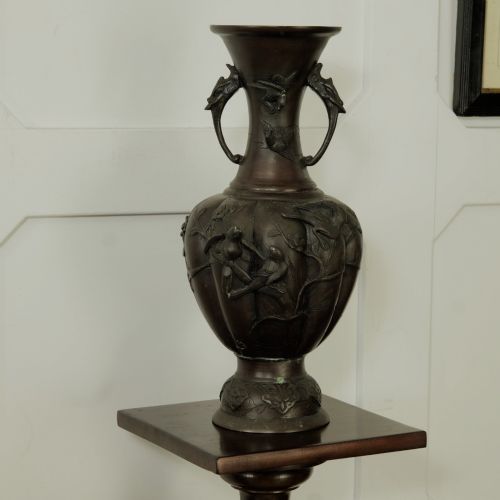
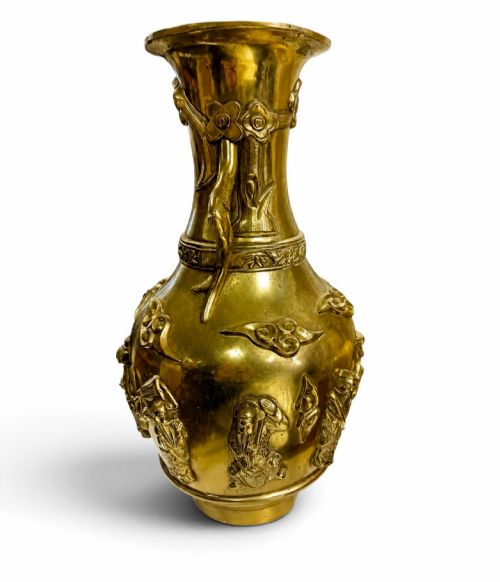
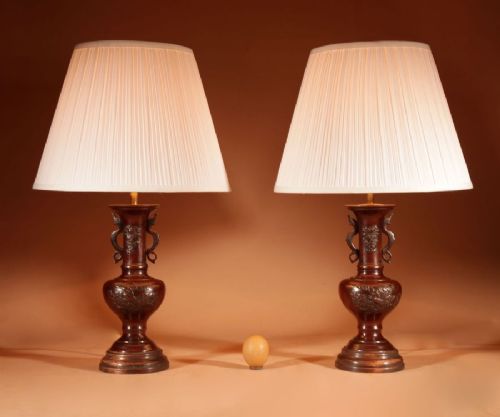
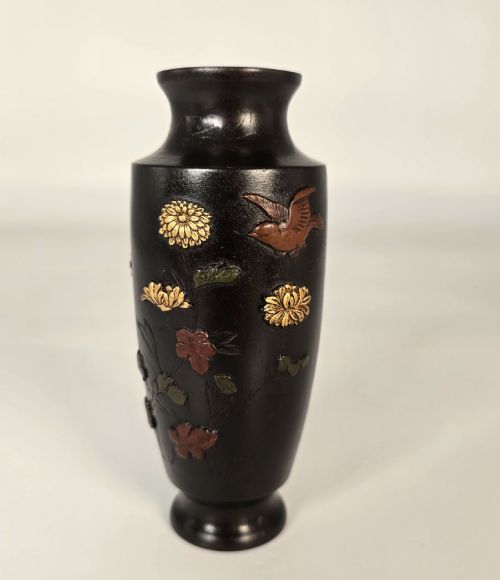
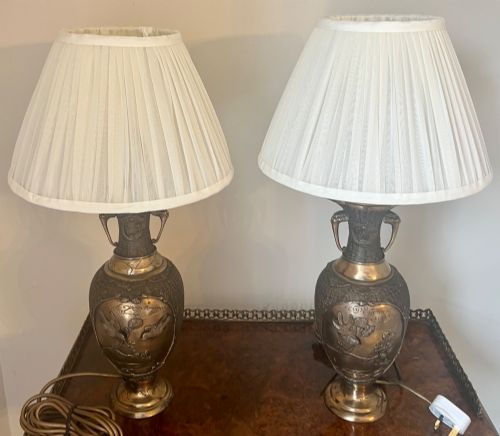
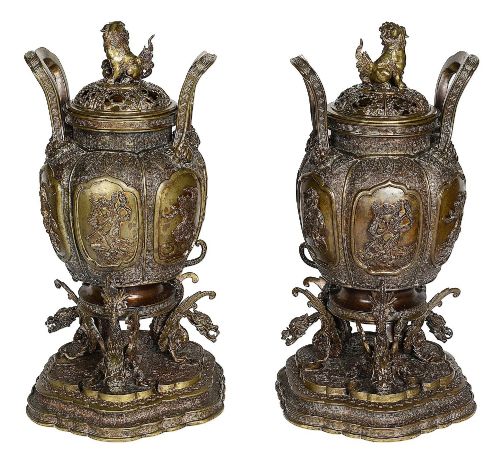
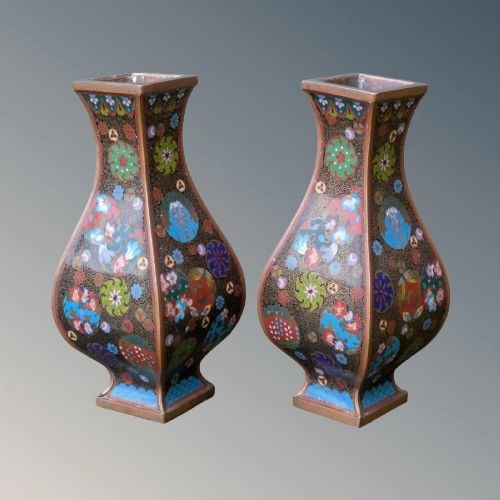
Oriental bronze urns encompass large Japanese bronze vases produced during the Meiji period and the nineteenth century. These pieces frequently appear in matched pairs featuring twin handles and commanding proportions. The available examples span the Victorian era up to the early twentieth century.
Makers shaped these vessels as decorative vases rather than utilitarian urns, drawing on traditional Japanese metalworking techniques. Buyers encounter them decorated with patinated surfaces and contrasting metallic inlays. The forms remain remarkably consistent across the nineteenth century and nineteen-hundreds periods.
How they were made
Artisans cast these items primarily in bronze, occasionally utilising copper or mixed metal compositions. The manufacturing process relied on skilled foundry work to achieve substantial, heavy vessels capable of supporting complex decorative schemes.
Workshops applied gold inlay and silver inlay directly onto patinated bronze surfaces to create detailed pictorial and geometric motifs. Many pieces received deliberate chemical patination to alter the base colour of the metal before inlay work commenced.
Retail Price Guide 2026
Typical UK retail prices for oriental bronze urns, calculated from the Sellingantiques database of over a million retail prices indexed since 2003. This retail price guide relies exclusively on Sellingantiques data; no external sources or auction records are used, so the figures do not describe the wider market.
Several makers could not resist signing their heavy bronze vessels, ensuring stubborn nineteenth-century artists get the final word.
What varies in quality
The distinction between standard production and superior examples lies in the precision and complexity of the metal inlay. Top-tier items demonstrate meticulous execution where gold and silver work integrates seamlessly with the patinated bronze ground.
Scale and proportion also define the better examples, particularly in large matched pairs where both vessels exhibit identical casting quality and balanced twin handles. Signed pieces carry greater artistic weight through the individual artisan's recorded mark.
The Oriental Bronze Urns Glossary
- Meiji Period
- The era in Japanese history spanning from eighteen sixty-eight to nineteen twelve, which produced the vast majority of these decorative bronzes. This period marked a massive surge in metalwork destined for Western export.
- Patinated Bronze
- Metal treated with chemical solutions to produce a specific surface colour or aged appearance. This treatment forms the dark background that makes gold and silver inlay stand out.
- Mixed Metal
- A technique combining bronze, copper, and other metallic alloys within a single decorative scheme. Artisans used this method to create naturalistic colour variations in the design.
- Gold Inlay
- The process of hammering thin gold wire or foil into recessed channels carved into the bronze body. This meticulous decoration elevates the visual richness of the vase.
Frequently Asked Questions
How do I date oriental bronze urns?
Dating relies primarily on stylistic markers associated with the Japanese Meiji period and nineteenth-century manufacturing techniques. Reference points include the specific application of gold and silver inlay alongside recorded signature marks.
Changes in patination styles and the incorporation of mixed metal elements also help narrow down the decade of production between eighteen eighty and nineteen ten.
Where should I display large bronze vases?
These substantial vessels require sturdy surfaces such as heavy sideboards, floor pedestals, or large mantels. Their weight demands stable placement away from high-traffic household areas.
Positioning them where natural light strikes the patinated bronze and metallic inlay will highlight the fine details of the surface decoration.
Are these vases always found in pairs?
Many surviving examples were created and kept as matched pairs since their initial production in nineteenth-century Japan. These paired sets typically share identical dimensions, handle configurations, and decorative motifs.
Single vessels do appear, but matched pairs remain a prominent feature among surviving Meiji period metalwork.
How do I clean patinated bronze safely?
Dusting with a dry, soft cloth is the only regular maintenance required for these antique metal surfaces. Avoid using commercial metal polishes, water, or abrasive cleaners which will strip away the historic patination.
Preserving the original chemical finish protects both the bronze body and the delicate gold or silver inlay.