
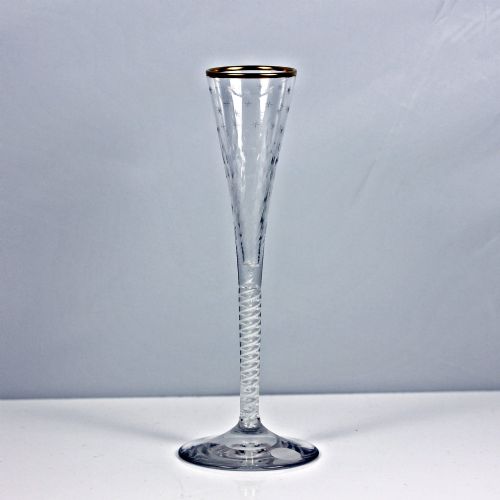
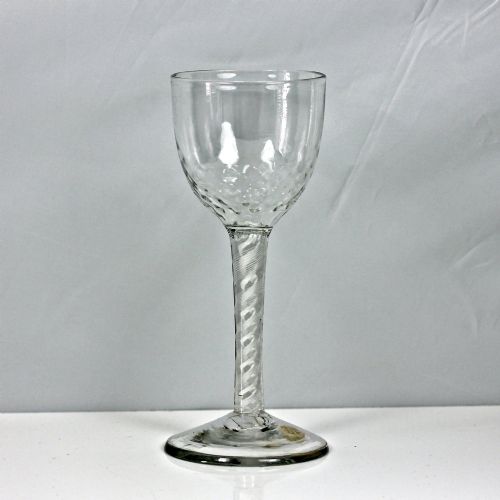
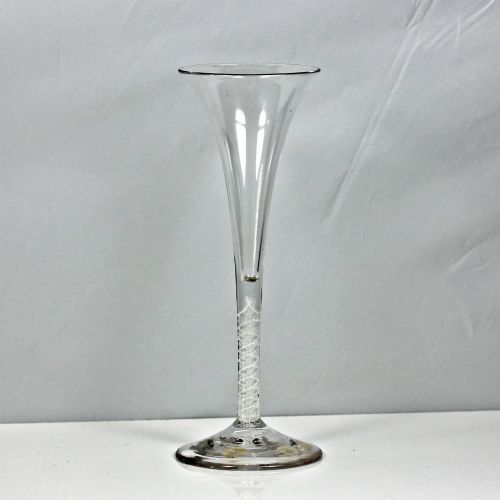
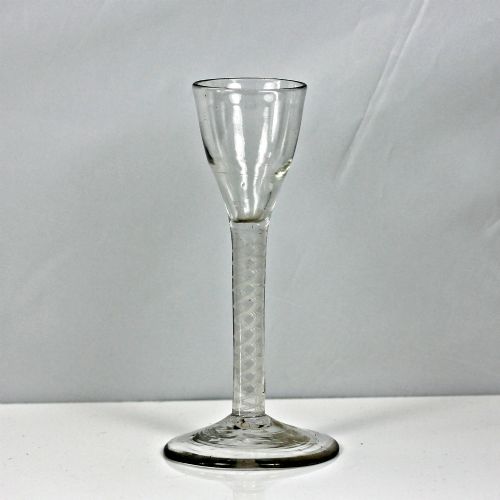


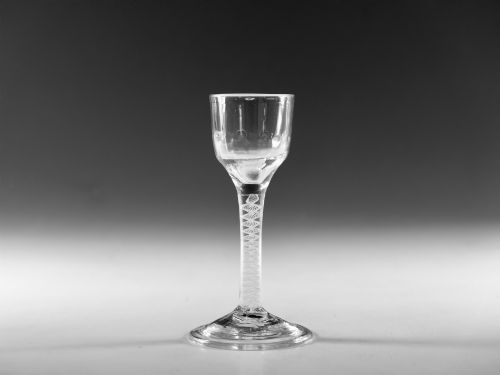
Opaque Twist Wine Goblets
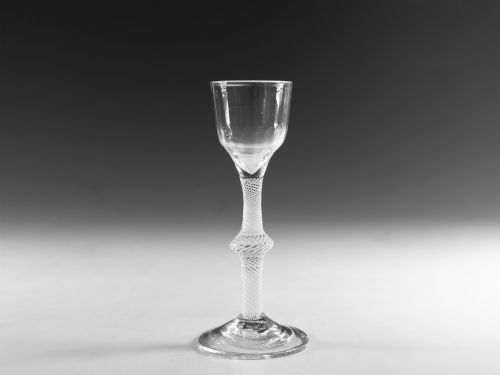
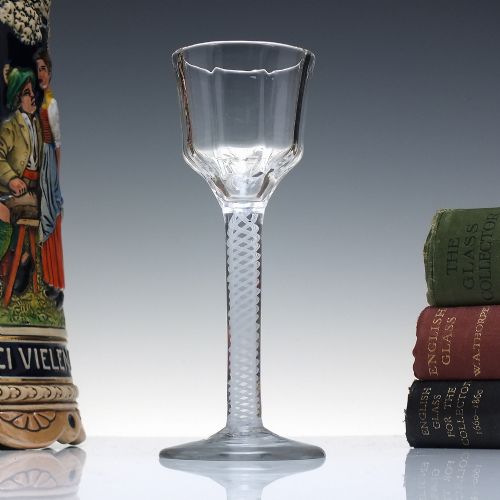
Opaque twist wine goblets are eighteenth-century drinking vessels defined by milky white enamel threads spun within clear lead glass stems.
Opaque Twist Wine Goblets
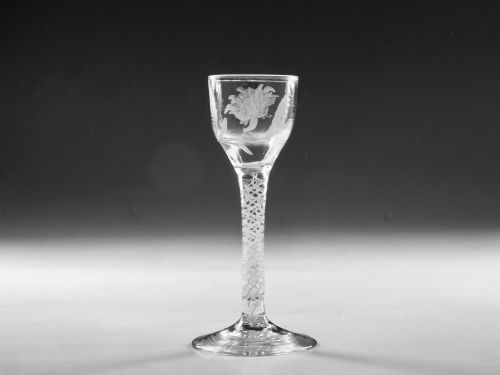
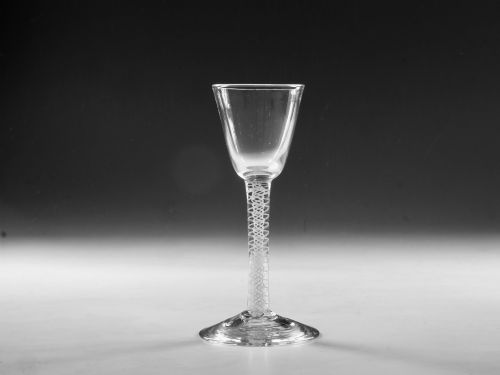
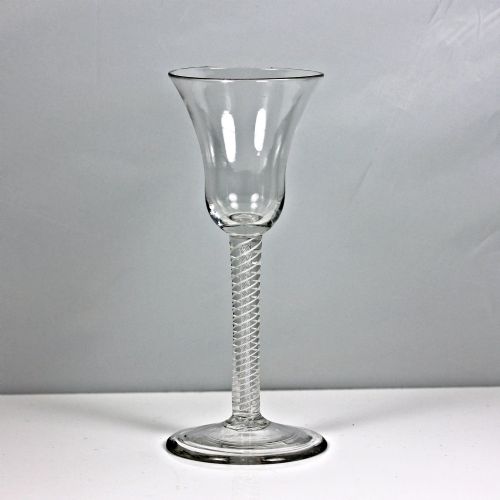
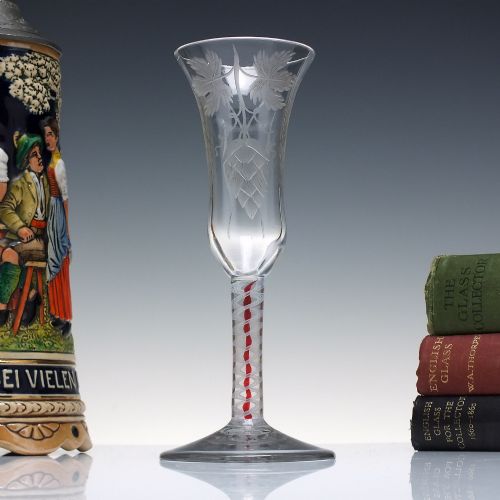
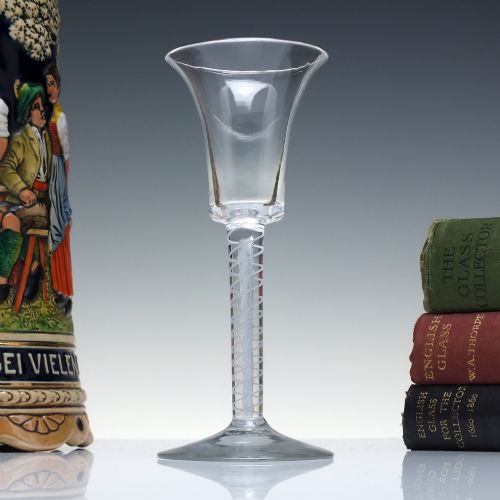
When you search for opaque twist wine goblets, you encounter drinking vessels originating predominantly in the eighteenth century during the Georgian period. These glasses combine clear lead glass bowls with stems enclosing opaque white enamel threads, occasionally accompanied by red colour twists.
The most common examples on this page take the form of wine glasses with trumpet, ogee, or flared bucket bowls, alongside champagne flutes, cordial glasses, and sweetmeat glasses. Most pieces date from around seventeen-fifty to seventeen-seventy, though Victorian interpretations also appear.
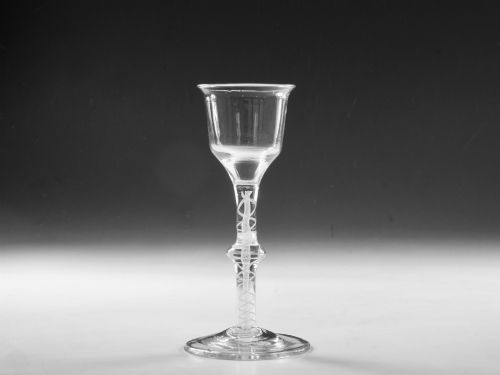
Moulded bowls, double knops, and composite stems further diversify the forms. Collectors encounter single series, double series, and multi-spiral thread configurations within the stems.
Materials and Manufacture
These pieces are fashioned from lead glass and lead crystal, which provide the clarity and weight necessary for detailed stem manipulation. Enamel glass and white enamel are introduced into the core of the stem while hot, forming the opaque twists.
Glassmakers draw and twist the molten material to create single or multiple spirals before attaching the stem to the bowl and conical foot. Flint glass and clear glass complete the structural body of the vessels.
Distinctions in Quality
The refinement of the internal enamel threads dictates much of the visual appeal, where tightly wound and evenly spaced spirals command greater attention than irregular formations. The complexity of the stem construction, such as triple or quadruple knops and composite designs, adds to the sophistication of the piece.
Bowl forms also influence the character of the glass, with flute-moulded ogee bowls and full ribbed profiles demonstrating advanced manipulation during blowing. The preservation of the lead glass surface and the stability of the conical foot complete the assessment.
The Opaque Twist Wine Goblets Glossary
- Opaque twist
- A stem formation enclosing milky white enamel threads within clear glass. These threads are manipulated into single, double, or multi-spiral patterns.
- Double series
- A stem containing two distinct sets of enamel twists, often combining a central gauze with an outer spiral.
- Ogee bowl
- An S-profile bowl curving inward at the rim and outward near the base. This shape appears frequently on Georgian drinking vessels.
- Knop
- A knob or swelling on the stem of a glass. Multiple knops provide grip and decorative punctuation.
- Cordial glass
- A small vessel designed for strong liqueurs. These feature narrower bowls than standard wine glasses.
Opaque Twist Wine Goblets: Frequently Asked Questions
What is an opaque twist?
An opaque twist is a decorative stem created by encasing white enamel threads inside clear lead glass. The glassmaker spins and draws the molten metal to form intricate spirals.
These twists replaced earlier air bubble stems in mid-eighteenth-century English drinking vessels, offering a brighter contrast within the stem.
How old are these wine glasses?
Most pieces originate in the Georgian period, specifically between seventeen-fifty and seventeen-seventy. A small number of later Victorian interpretations also exist.
Dating relies on stylistic markers such as bowl shape, foot formation, and the specific configuration of the enamel threads within the stem.
What are single and double series twists?
A single series twist contains one set of enamel threads, usually arranged as a pair of spirals around a central axis. A double series twist incorporates two distinct pairs of elements, such as a corkscrew twist surrounding an inner gauze.
Double series stems require greater technical skill from the glassmaker and create a denser visual pattern inside the lead glass.
How were these glasses used?
These vessels served for consuming wine, champagne, cordials, and sweetmeats during eighteenth-century dining and social gatherings. Their varied bowl shapes accommodated different beverages and quantities.
Today, collectors appreciate them both as historical examples of English glassmaking and as usable tableware with careful handling.