


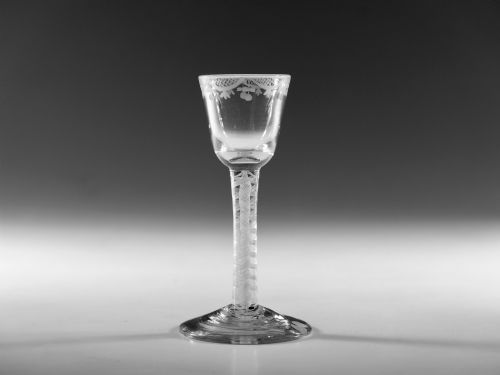


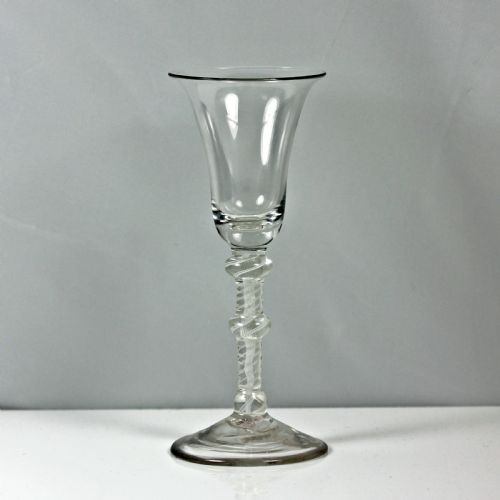


Opaque Twist Stem Glass
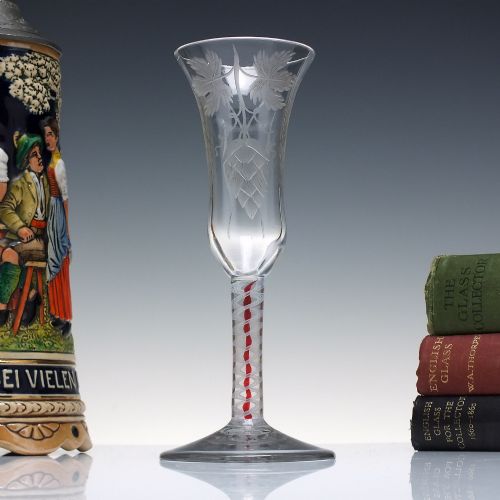
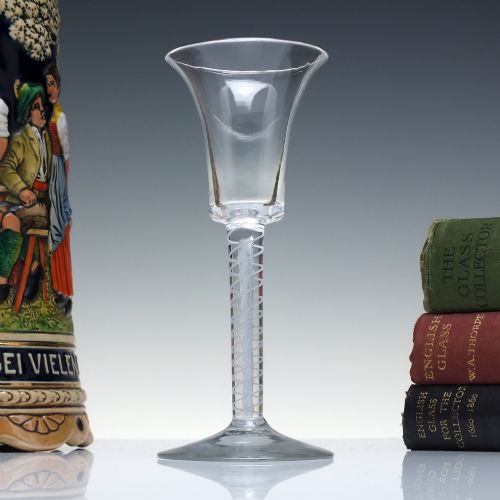
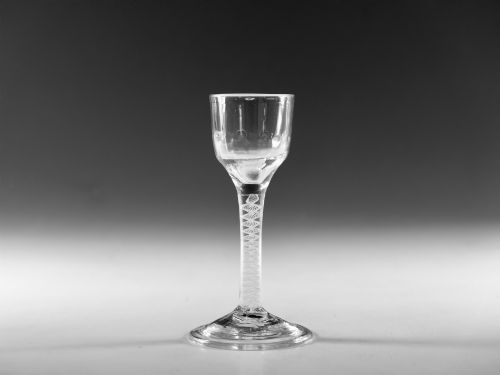
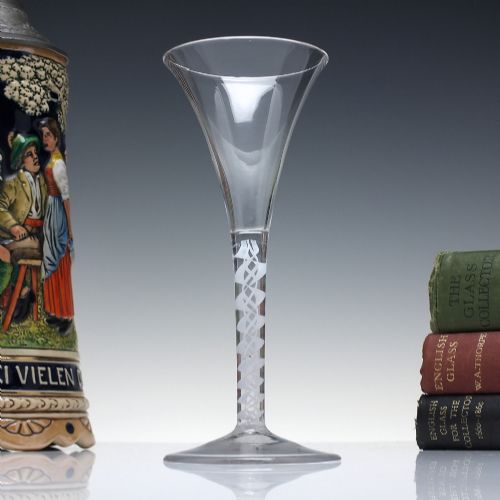
An opaque twist stem glass brings eighteenth-century Georgian elegance to the table with its brilliant lead glass and milky white enamel threads.

Opaque Twist Stem Glass
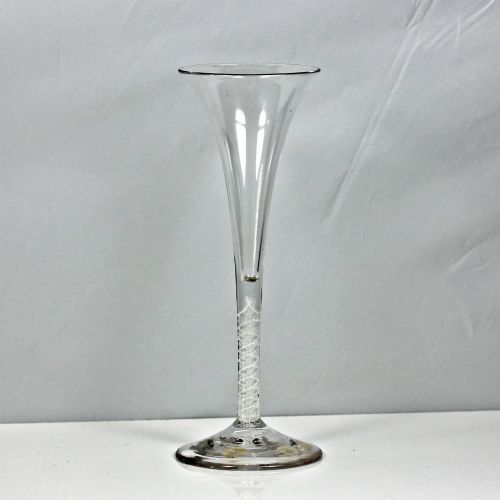
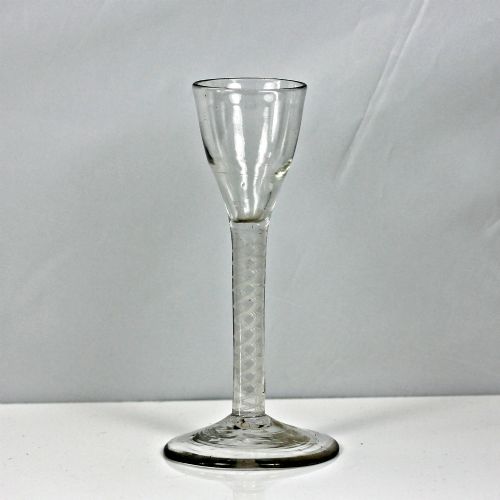
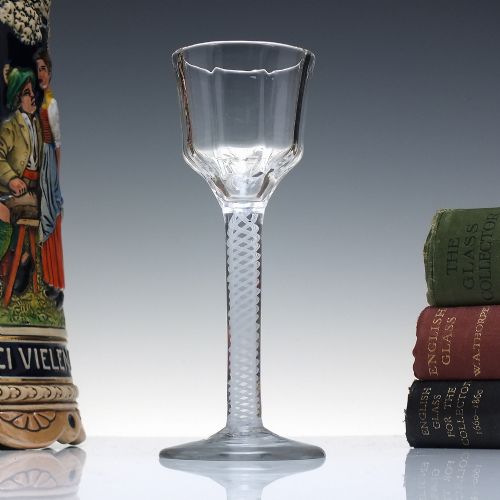
When you search for an opaque twist stem glass, you enter the sophisticated world of Georgian drinking vessels produced during the eighteenth century. These pieces combine clear lead glass bowls with stems enclosing delicate white enamel threads drawn into intricate spirals and twists.
The versions you meet most frequently on this page take the form of wine glasses, cordials and champagnes with trumpet, ogee or flared bucket bowls. English makers shaped these drinking glasses to satisfy a Georgian preference for refined glass manufacturing.
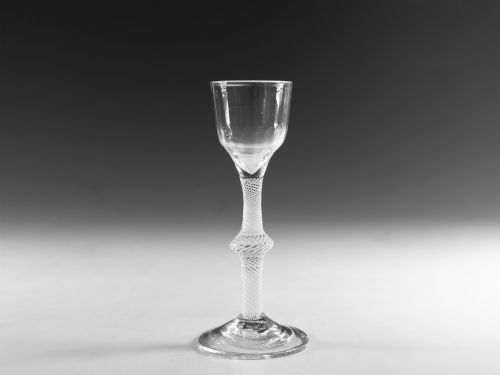
The selection ranges from simple single series threads to complex double and mixed twists featuring multiple spirals, corkscrews and knops. Each piece reflects the high standard of eighteenth-century glassmaking traditions.
Materials and methods of construction
These vessels rely on lead glass and flint glass, materials prized for their clarity, weight and capacity to hold brilliant light. Craftsmen melted batches of high-purity metal to form the clear glass bowls and feet that give each piece structural stability.
Workers incorporated white enamel inside the molten glass to create the distinctive opaque twist stems. By drawing, twisting and cooling the glass rod, makers produced precise optical patterns before fusing the stem to the bowl and foot.
Opaque Twist Stem Glass Retail Price Guide 2026
Typical asking prices for opaque twist stem glass among the pieces listed under this phrase on Sellingantiques today, from the lower quarter to the upper quarter. They describe what is for sale here now, not the wider market.
Georgian drinkers trusted that a well-twisted stem kept the toast lively even after the wine ran dry.
Factors that distinguish individual examples
Quality depends upon the precision and complexity of the enamel twist imprisoned within the stem. Tighter, more regular spirals demonstrate superior glasshouse execution compared to looser or irregular arrangements.
The harmony between bowl proportion and stem configuration defines the better examples. Fine pieces display crisp moulding on ogee or flute-moulded bowls and balanced conical feet without distracting surface distortions.
The Opaque Twist Stem Glass Glossary
- Opaque twist
- A stem containing threads of white enamel glass drawn into spiral patterns. This technique superseded the earlier air twist style.
- Double series
- A stem construction featuring two distinct sets of opaque white enamel twists, often an outer cable surrounding inner threads.
- Ogee bowl
- An S-profile drinking vessel shape curving outward at the rim and inward at the base. This form appears frequently on Georgian drinking glasses.
- Knop
- A swollen or bulbous decorative projection on a glass stem. Some stems feature multiple knops for added visual weight.
- Sweetmeat glass
- A wide-bowled vessel designed for serving small confectionery items or sweet preserves. These pieces share the characteristic opaque twist stems of wine glasses.
Opaque Twist Stem Glass: Frequently Asked Questions
What is an opaque twist stem glass?
An opaque twist stem glass is an eighteenth-century drinking vessel featuring a clear lead glass bowl atop a stem containing white enamel threads.
These pieces date from the Georgian period and represent a major development in English table glass design.
How were these glasses used originally?
Georgian households utilised these vessels for serving wine, cordials, ale and sweetmeats during formal dining and social gatherings.
The smaller bowls suited potent fortified wines and liqueurs, while larger trumpet and ogee bowls held table wines.
How do I care for an antique glass?
Wash the glass gently by hand in warm water using mild soap, avoiding sudden temperature changes that can stress old lead metal.
Dry it carefully with a soft linen cloth and store it upright on a stable surface away from direct vibrations.
How can I tell single and double series apart?
A single series stem contains one set of enamel threads, usually arranged as a pair of opposing spirals.
A double series stem adds a second internal component, often a central gauze or pair of threads enclosed by an outer spiral.