
Octagonal Carved Tea Table
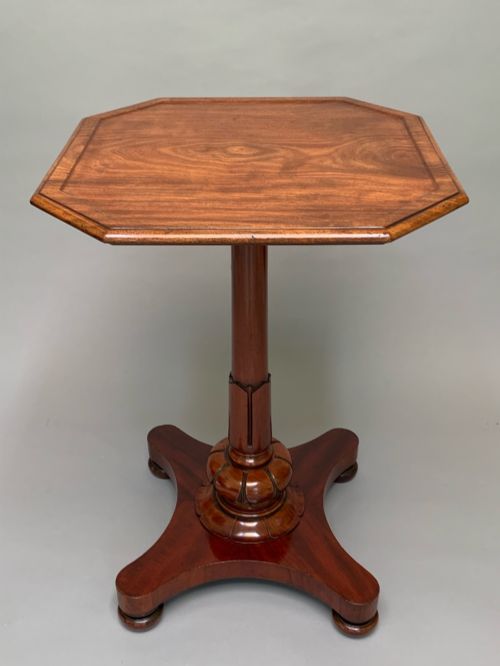
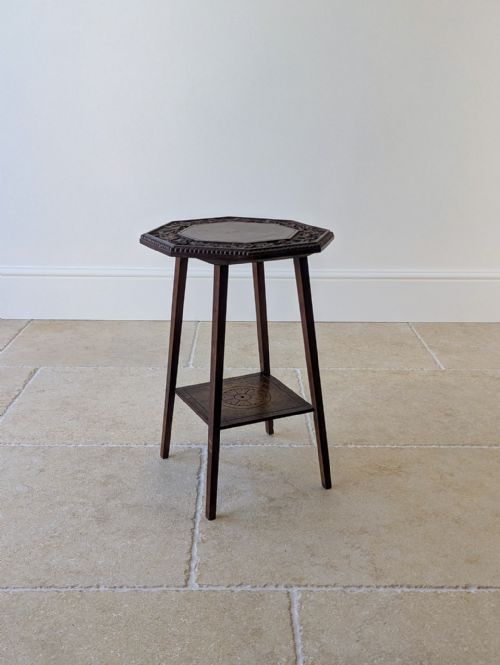
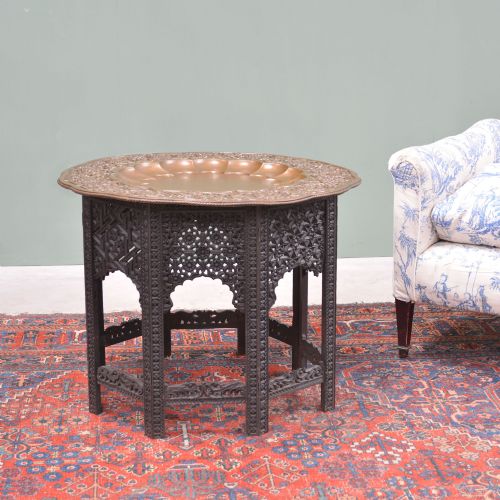
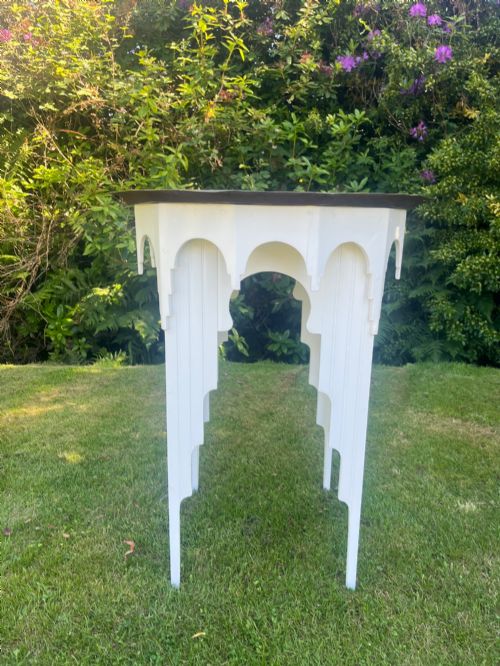
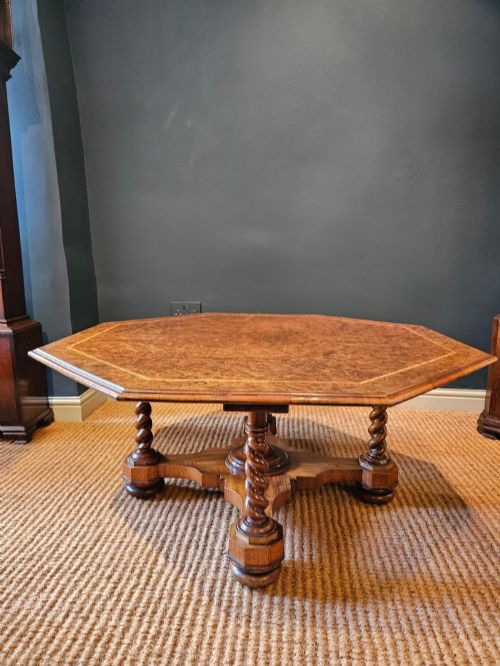
An octagonal carved tea table is a folding occasional piece bringing intricate colonial craftsmanship and rich timber into a room.
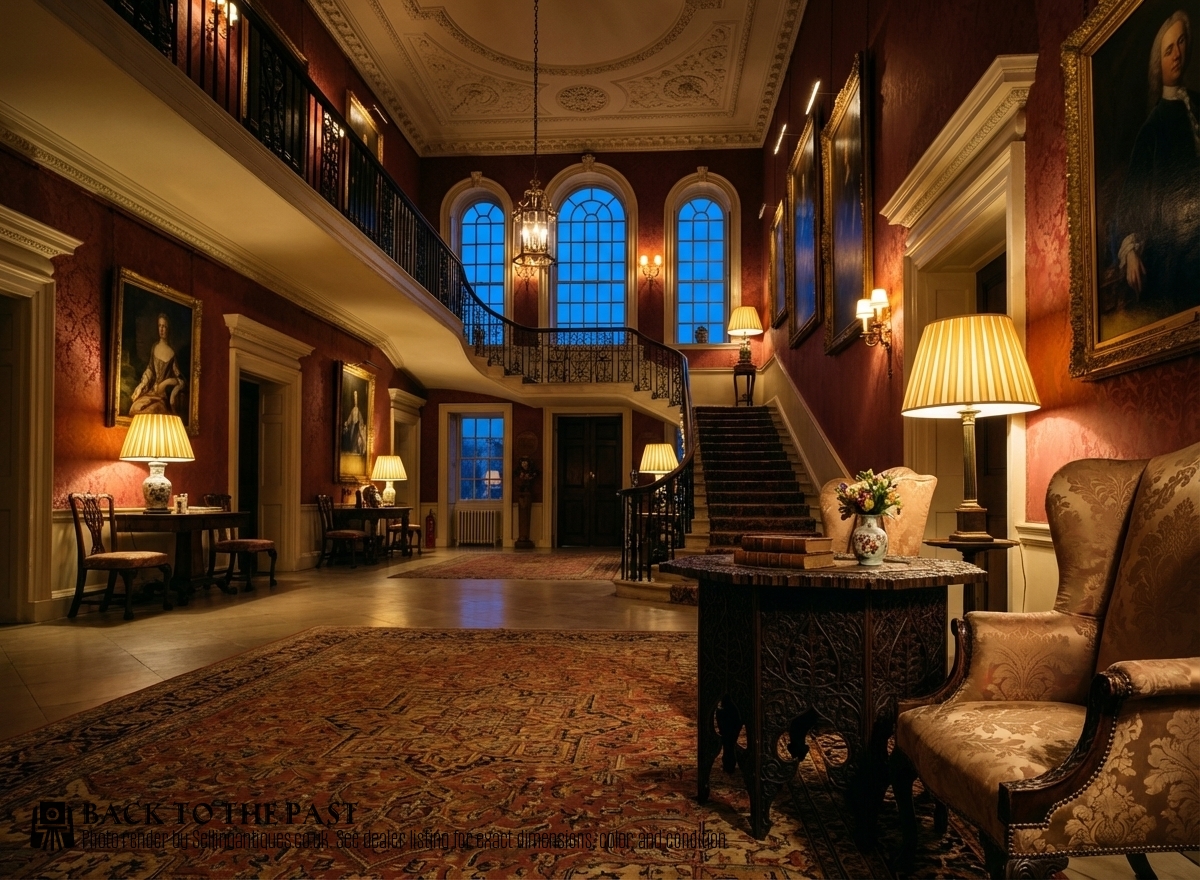
Identifying your octagonal carved tea table
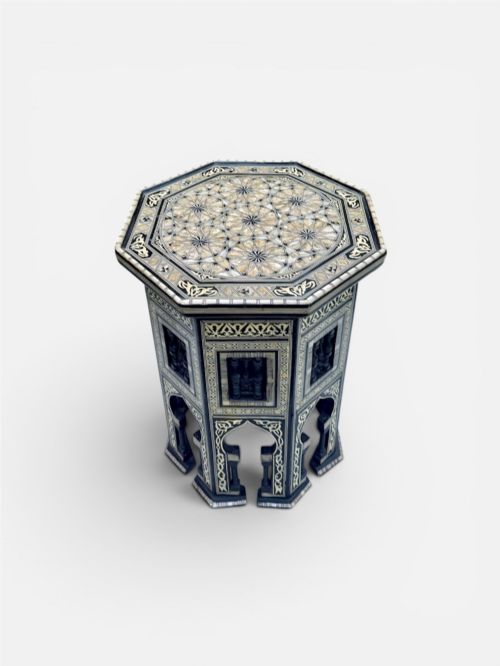
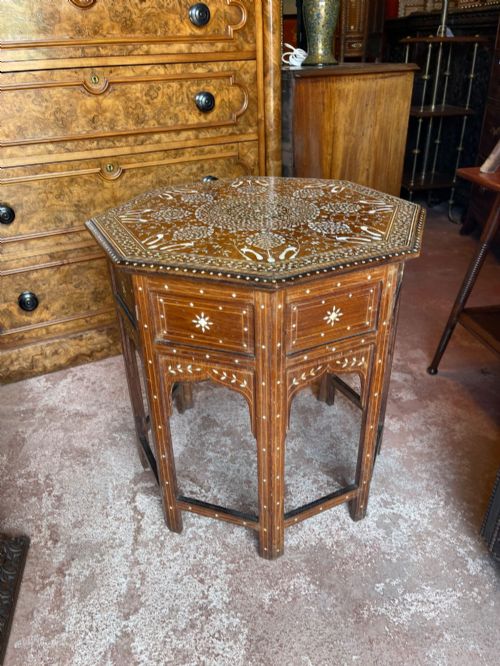
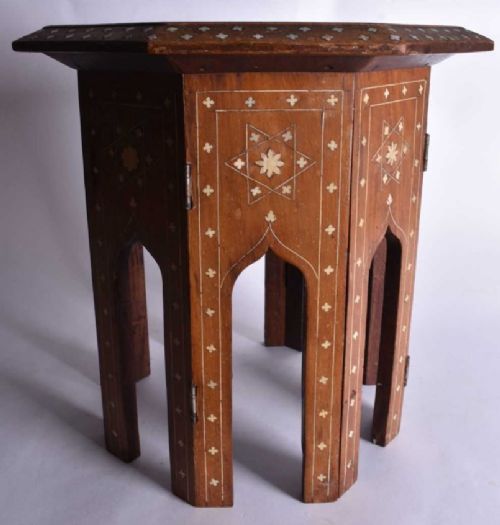
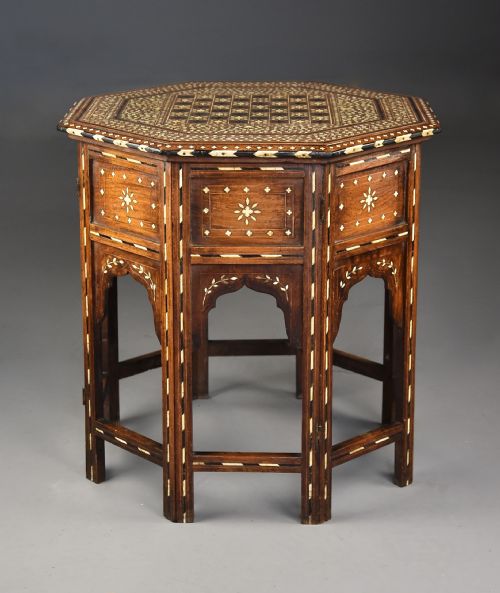
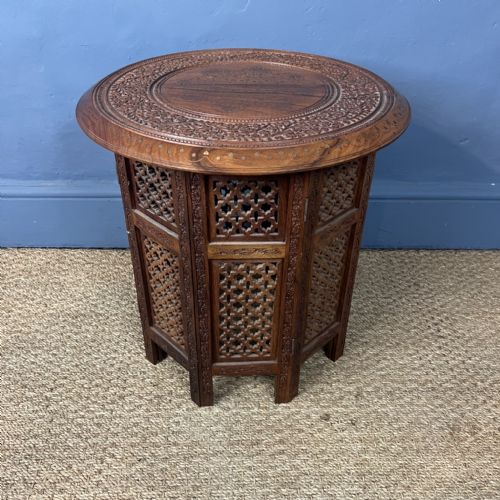
An octagonal carved tea table is primarily an Anglo-Indian or Bombay Presidency occasional or side table made in the nineteenth and early twentieth centuries. These tables feature eight-sided tops supported by hinged and folding bases, making them practical for movement and storage.
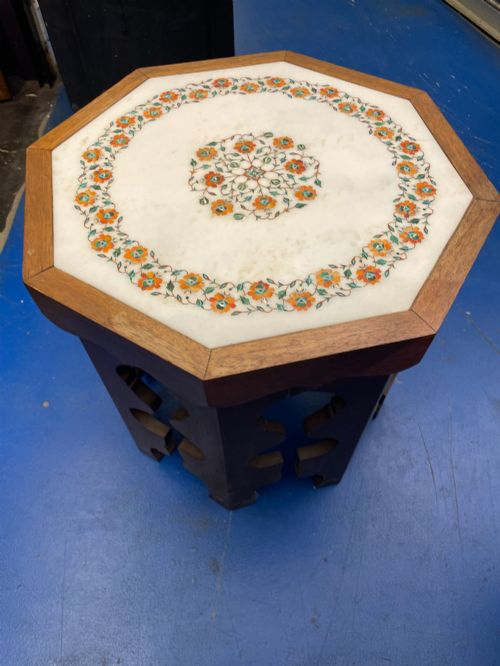
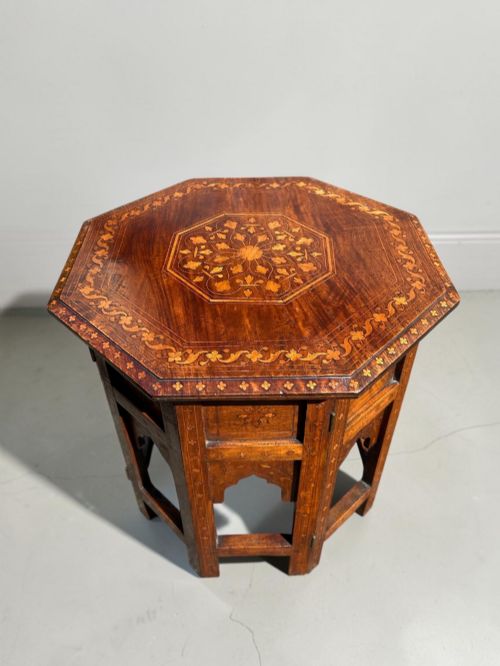
Alongside plain carved timber tops, the evidence shows surfaces enhanced by inlay work using bone, copper, brass, and mother-of-pearl. Some examples incorporate removable copper trays or feature Moorish stylistic influences within the carved decoration.

Construction and materials
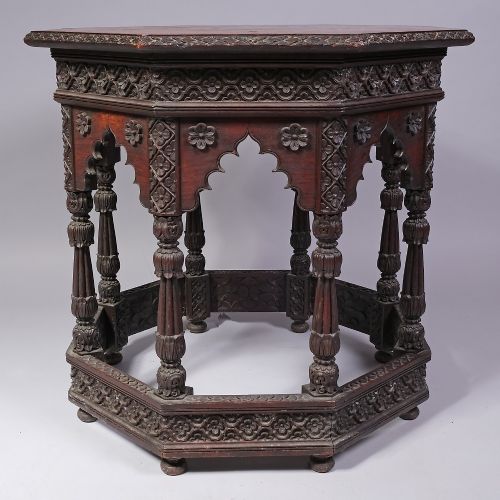
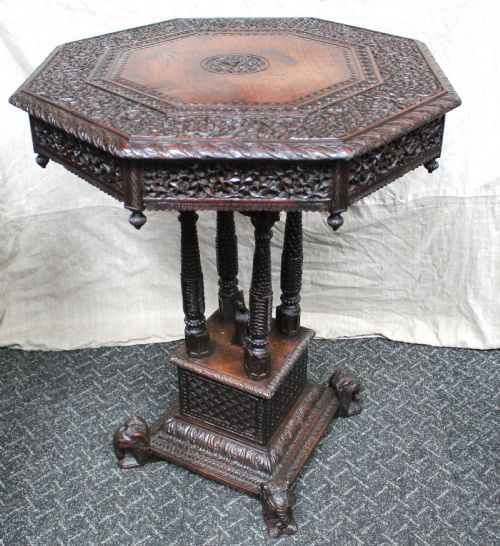
The structural framework relies on solid teak and dense tropical hardwoods selected for stability and suitability for deep carving. Artisans carved the tops and bases with intricate foliage, geometric patterns, and pierced fretwork.
Surfaces are frequently embellished with contrasting materials pressed or inlaid into the timber. Bone, copper, brass, and mother-of-pearl form delicate linear and floral motifs across the octagonal tops.
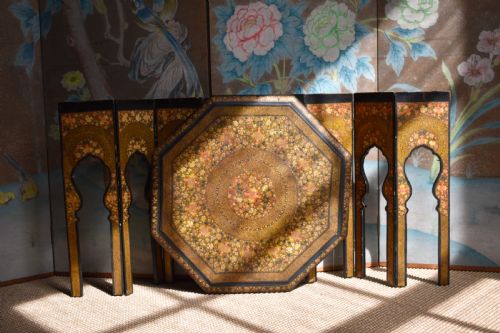
Portability is built into the design through hinged and folding wooden bases that allow the support to collapse neatly beneath the removable tray top.
Retail Price Guide 2026
Typical UK retail prices for octagonal carved tea table, calculated from the Sellingantiques database of over a million retail prices indexed since 2003. This retail price guide relies exclusively on Sellingantiques data; no external sources or auction records are used, so the figures do not describe the wider market.
Several tables in the archive rely on little wooden hinges that fold flat like a book, proving that flat-pack convenience is over a century old.
Judging quality and execution
Quality rests in the depth, crispness, and precision of the hand carving across the timber surface. Finer examples display deeply undercut foliage and intricate pierced work that remains sharp and well-defined.
The incorporation of supplementary materials elevates the decorative complexity of a piece. The presence and condition of bone, copper, brass, or mother-of-pearl inlay distinguish simpler carved tables from more elaborate productions.
Hoshiarpur·Bombay Presidency
The Octagonal Carved Tea Table Glossary
- Anglo-Indian
- A descriptive term for decorative arts produced during the British period in India, blending British furniture forms with local craftsmanship. These pieces often utilise traditional regional carving styles.
- Hoshiarpur
- A town in Punjab known for its distinct woodcarving and inlay traditions. Tables from this centre feature dense geometric patterns often incorporating bone or metal wire.
- Bombay Presidency
- A historical administrative division of British India associated with specific regional furniture workshops. Pieces from this origin frequently showcase robust carved hardwood and figural motifs.
- Fretwork
- An ornamental design created by piercing wood with a fretsaw to produce openwork patterns. This technique appears on the folding bases of occasional tables.
- Occasional table
- A small, light table designed for flexible use in a reception room or parlour. The folding mechanism on these examples enhances their practical mobility.
Frequently Asked Questions
What rooms suit an octagonal carved tea table?
These pieces function well as compact occasional tables beside seating in a drawing room or study. Their eight-sided tops and portable frames allow them to sit comfortably in smaller spaces where a rigid table might crowd the room.
Because many examples feature folding bases, they can also be stored flat when not in use or moved easily between rooms as needed.
How do I distinguish Hoshiarpur tables from Bombay pieces?
Hoshiarpur tables are recognised by their dense geometric and floral carving, which frequently incorporates intricate inlay work using bone, brass, or copper. The woodwork often covers every available surface in tight, repeating patterns.
Bombay Presidency tables tend to feature bolder carving, sometimes including figural elements such as elephants, alongside deep relief work in solid teak or hardwood.
How do I care for inlaid wood surfaces?
Inlaid teak and hardwood benefit from gentle dusting with a soft, dry cloth to prevent dirt from settling into the carved recesses and inlay joints. Avoid excessive moisture or harsh cleaning products, which can damage bone, metal, and mother-of-pearl elements.
Occasional application of a suitable natural wax helps maintain the lustre of the timber without dulling the contrasting inlay materials.