
Oak Lowboy Side Table
An oak lowboy side table combines compact provincial elegance with practical drawer storage, making it a versatile surface for halls and living spaces.
Oak Lowboy Side Table
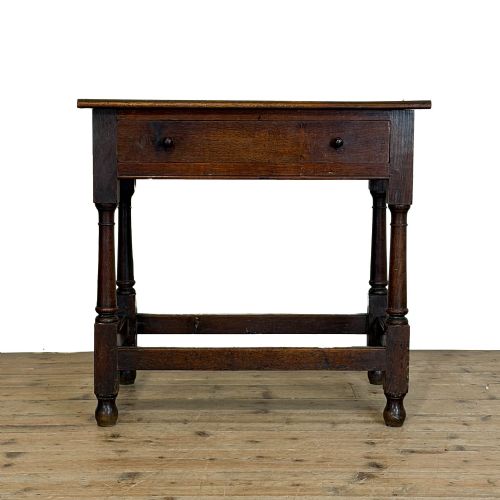
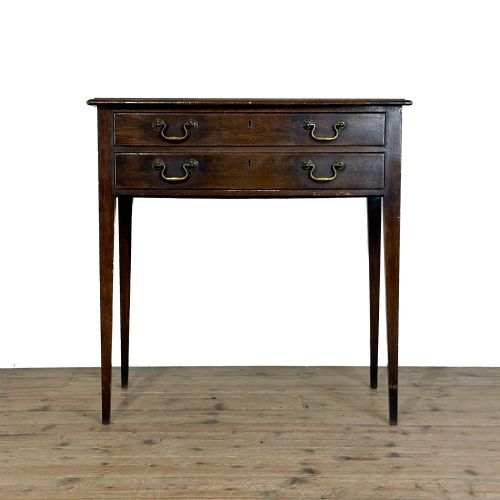
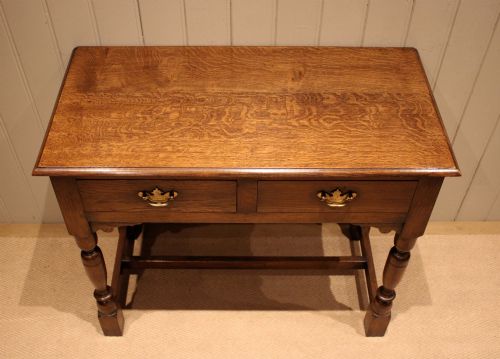
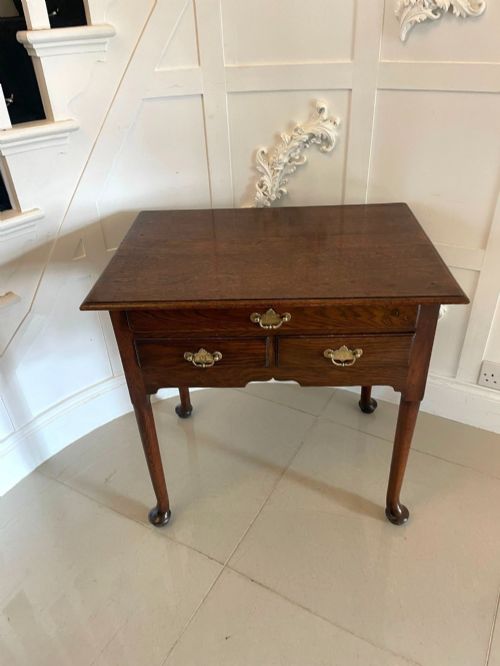
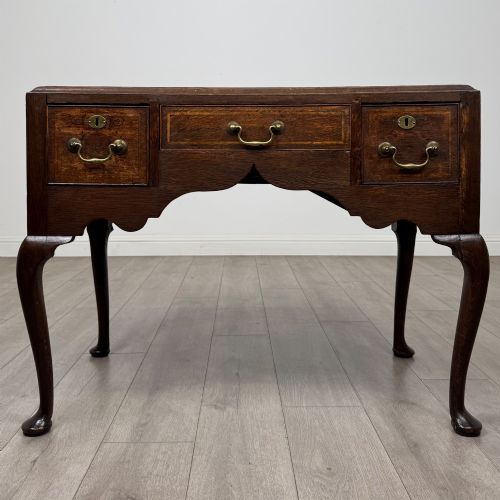
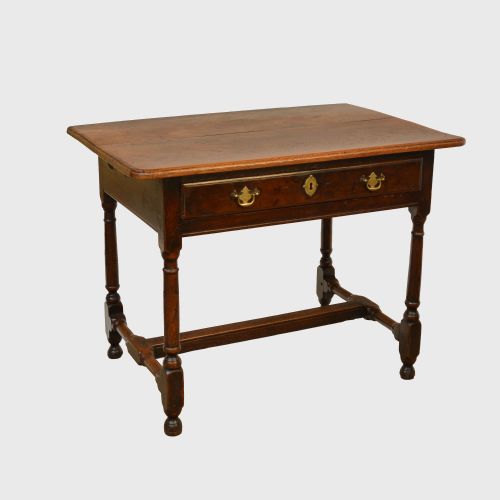
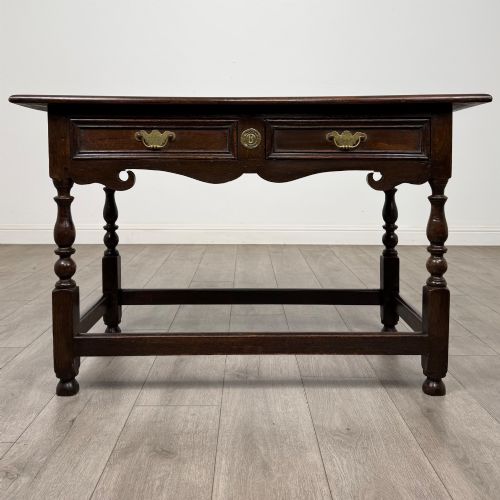
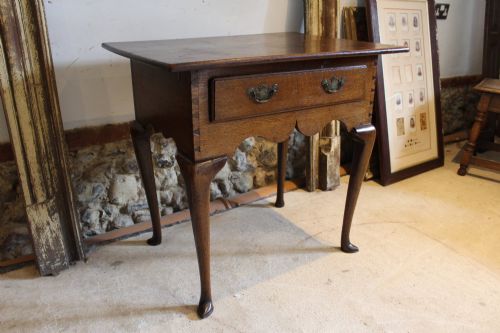
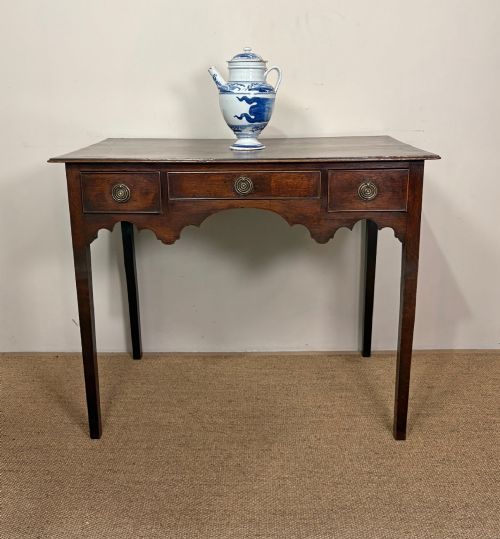
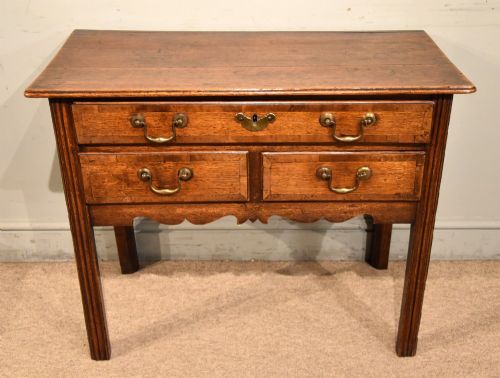
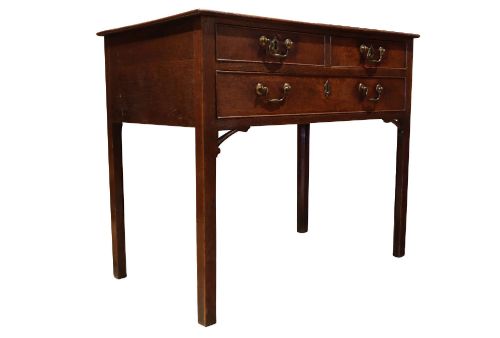
An oak lowboy side table is a low freestanding provincial table featuring one to three drawers beneath the top surface. These versatile pieces function historically as dressing tables, writing surfaces or serving tables in country houses and town residences alike.
The selections span from the late seventeenth century through the Georgian era into later revival periods. Most examples encountered here date from the eighteenth century, showing regional British craftsmanship in solid oak.
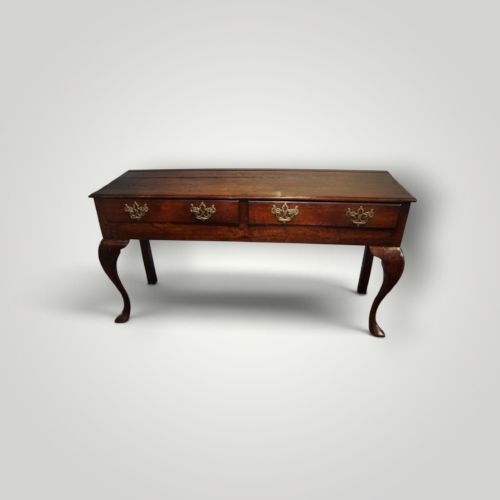
Related forms appearing alongside standard lowboys include narrow side tables, dresser bases and console tables. These share similar proportions and timber construction while offering variations in drawer configuration and leg style.
How They Were Made
Cabinet makers built these tables primarily using solid oak timbers, occasionally incorporating secondary woods such as yew, elm, ash or mahogany. Timber selection often reflected regional availability in workshops across England and Wales.
Construction techniques combine pegged mortise and tenon joinery for the frame with hand-cut dovetails for the drawer construction. Surfaces display traditional hand planing and finishing methods appropriate to provincial cabinet work.
Many an eighteenth-century lowboy drawer still smells faintly of ancient beeswax and old oak timber.
What Varies in Quality
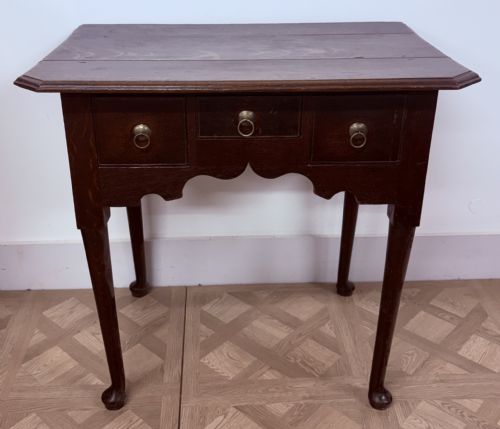
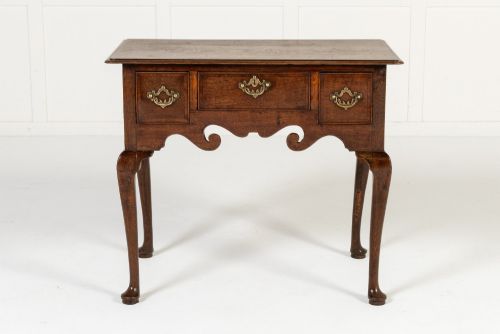
Quality rests upon the proportion and grace of the design, particularly in the shaping of the apron and the stance of the cabriole or straight legs. Finer examples display more considered proportions and subtle moulding details around the drawer edges and top.
The integrity of the timber and the retention of original surface patination distinguish superior pieces from later alterations. Original brass hardware, uncompromised drawer linings and honest signs of age elevate an example's desirability.
The Oak Lowboy Side Table Glossary
- Lowboy
- A small low table with drawers, typically used as a dressing table or side table during the seventeenth and eighteenth centuries.
- Dresser Base
- The lower section of a kitchen or dining room dresser, often featuring multiple drawers and used as a sideboard or serving table.
- Cabriole Leg
- A furniture leg that curves out and then in, resembling the leg of an animal and commonly found on Georgian pieces.
- Mortise and Tenon
- A traditional woodworking joint where a projecting tongue fits securely into a corresponding cavity for structural strength.
- Dovetail
- A joint formed by interlocking wedge-shaped fingers, used primarily in drawer construction to resist pulling forces.
Oak Lowboy Side Table: Frequently Asked Questions
What room works best for a lowboy?
These compact tables fit naturally into entrance halls, living rooms or bedrooms where surface space is needed without a heavy footprint. Their shallow depth allows them to sit comfortably against walls in narrow circulation areas.
They also serve effectively as writing desks or dressing tables when paired with an appropriate chair. The lower height relative to standard dining tables keeps sightlines open in smaller rooms.
How do I date an oak lowboy?
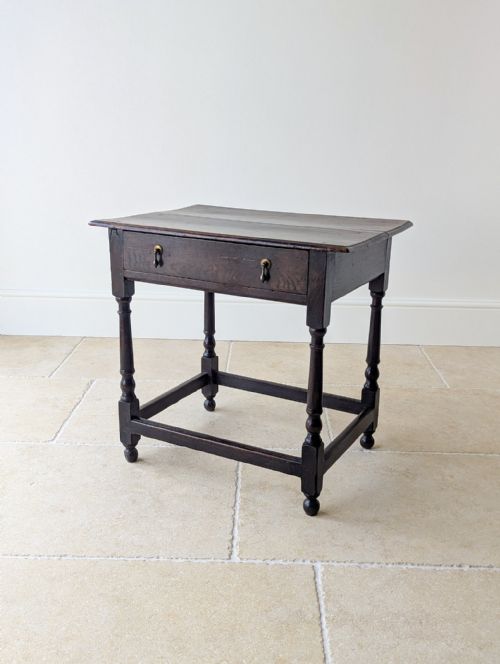
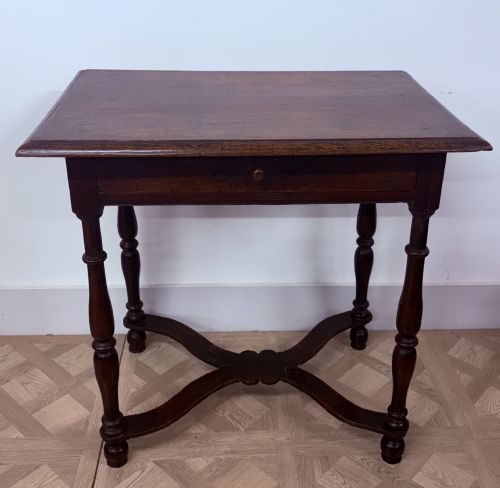
Dating relies on examining construction methods, timber characteristics and leg styles relative to known periods. Seventeenth-century examples often display turned legs and straighter stretchers, while mid-eighteenth-century pieces frequently feature cabriole legs and shaped aprons.
Drawer construction provides further clues, as hand-cut dovetails and side-hung drawers indicate earlier periods of manufacture. Secondary woods used inside the drawers can also point toward specific regional traditions and eras.
Were lowboys used as dressing tables?
Historical records and contemporary inventories confirm that many lowboys functioned as dressing tables in bedchambers. Their drawer arrangements held small personal items, powders and grooming tools.
When utilised in this manner, they were frequently paired with tabletop dressing mirrors. Over time, their utility expanded into hallways and reception rooms as general occasional surfaces.
How do I care for antique oak?
Maintaining antique oak involves keeping the timber away from direct heat sources and sudden humidity changes to prevent splitting. Regular dusting with a dry, soft cloth preserves the accumulated wax finish and natural patination.
Applying a traditional beeswax polish occasionally helps nourish the wood and protects the surface from minor scuffs. Avoid silicone-based sprays, which can penetrate the pores and alter the historical finish over time.