
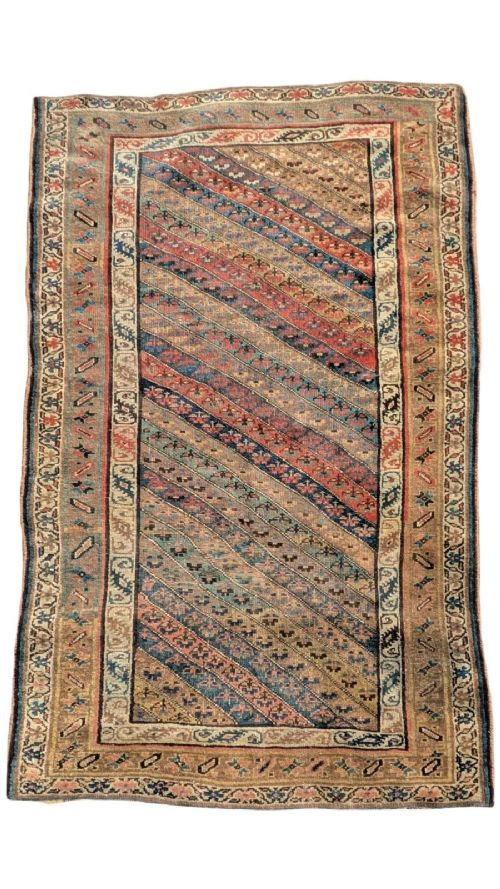


Multicolour Tribal Rug Runner
A multicolour tribal rug runner brings warmth and geometric rhythm to a long hallway, woven by village and nomadic hands.
Multicolour Tribal Rug Runner
A multicolour tribal rug runner is a narrow, elongated textile traditionally woven by nomadic and village communities in regions such as the Caucasus, Persia, Anatolia, and Central Asia. These pieces often feature bold geometric motifs, medallions, and repeated patterns that served both decorative and symbolic purposes for the makers. When searching this phrase, buyers encounter formats designed specifically for corridors, staircases, and gallery spaces.
The pieces available here span from the mid-nineteenth century to the early twentieth century, originating from specific tribal groups including the Kurdish, Qashqa'i, and Uzbek. Formats range from flatwoven kilims to pile-woven runners and long rugs, each displaying regional palettes of rich wool colours. Surviving examples demonstrate the utilitarian roots of these textiles, adapted over generations for domestic use.
Most examples meet the criteria of traditional runner dimensions, prioritising length over width to suit narrow architectural spaces. The designs rely on tribal and nomadic iconography, such as latch hooks, boteh motifs, and diagonal stripes, rendered in various regional wools. This selection represents the diverse weaving traditions of nineteenth and early twentieth-century village workshops and nomadic camps.
How they were made
These textiles rely primarily on wool for both the pile and the foundation structure, sometimes combined with cotton for structural stability in specific regional workshops. Weavers knotted or flatwove the materials by hand on traditional vertical or horizontal looms set up in nomadic camps or village homes. Natural dyes derived from local plants and minerals provided the distinctive palette that ages with characteristic depth.
Construction techniques divide broadly between pile weaving, which creates a soft surface, and flatweaving methods like kilim construction where no pile is formed. Weavers incorporated supplementary weft wrapping and slit-tapestry techniques to produce sharp geometric colour transitions and graphic motifs. The resulting fabric is dense and resilient, designed to withstand heavy foot traffic in domestic corridors.
The listings span the period from eighteen-fifty to nineteen-twenty, featuring wool and cotton materials across Caucasian, Persian, Anatolian, and Central Asian styles.
What varies in quality
The structural integrity of the foundation and the tightness of the weave determine the durability and overall calibre of the runner. Finer knotting or precise flatweave tension allows for sharper definition in geometric medallions and repeat patterns. Superior examples maintain structural straightness along the edges and consistent pile or flatweave thickness throughout the entire length.
Visual balance and the artistry of the colour palette separate ordinary production from exceptional weaving. The harmonious saturation of natural dyes and the confident execution of traditional motifs reflect the skill and experience of the individual weaver or tribal group. Original proportions and minimal structural alteration preserve the historical integrity that defines a superior specimen.
The Multicolour Tribal Rug Runner Glossary
- Kilim
- A flatwoven textile produced without a pile by tightly interlacing warp and weft threads. This technique creates a lightweight rug with identical patterns visible on both sides.
- Boteh
- A stylised almond or pear-shaped motif of Persian origin, often interpreted as a curved leaf, bush, or flame. It appears frequently in tribal and village weaving.
- Latch hook
- A geometric motif featuring stepped or hooked corners projecting from a central medallion or border. This design element is common in Caucasian and Kurdish rugs.
- Warp
- The stationary vertical threads stretched onto a loom that form the structural foundation of the textile. Weft threads are interlaced across these parallel foundation lines.
Multicolour Tribal Rug Runner: Frequently Asked Questions
Where should I place a runner?
These narrow formats suit hallways, corridors, entryways, and narrow gallery spaces where length is required. They add warmth and colour to transitional zones in a home without overwhelming floor areas.
Ensure the dimensions leave a visible border of bare floor around the edges to frame the textile properly. Underlay helps prevent slipping on hard surfaces and protects the wool foundation from premature wear.
How do I clean an antique wool rug?
Gentle, regular vacuuming without a rotating brush roll removes surface dirt and prevents dust accumulation in the wool fibres. Avoid beating or shaking older textiles, as this stresses the aged foundation threads.
Professional specialist cleaning is recommended for deeper maintenance to protect natural dyes and fragile wool. Promptly blot liquid spills with a clean, dry white cloth without rubbing the affected area.
What is the difference between kilim and pile runners?
Kilim runners are flatwoven without any raised pile, resulting in a thin, lightweight textile that lies completely flat on the floor. They are reversible and suited for areas where clearance beneath doors is limited.
Pile runners feature knotted wool tufts that create a plush, textured surface with greater underfoot cushioning. This construction provides additional warmth and resilience in high-traffic corridors.
How can I identify the tribal origin?
Specific design motifs, colour palettes, and weaving structures often point towards particular geographic regions and tribal groups. For instance, Caucasian pieces frequently display bold geometric medallions, while Persian tribal runners may use repeated shrub or stripe patterns.
Border designs and selvedge finishes also offer clues to the workshop or nomadic community responsible for the textile. Comparing structural details helps narrow down the probable origin within nineteenth-century traditions.