




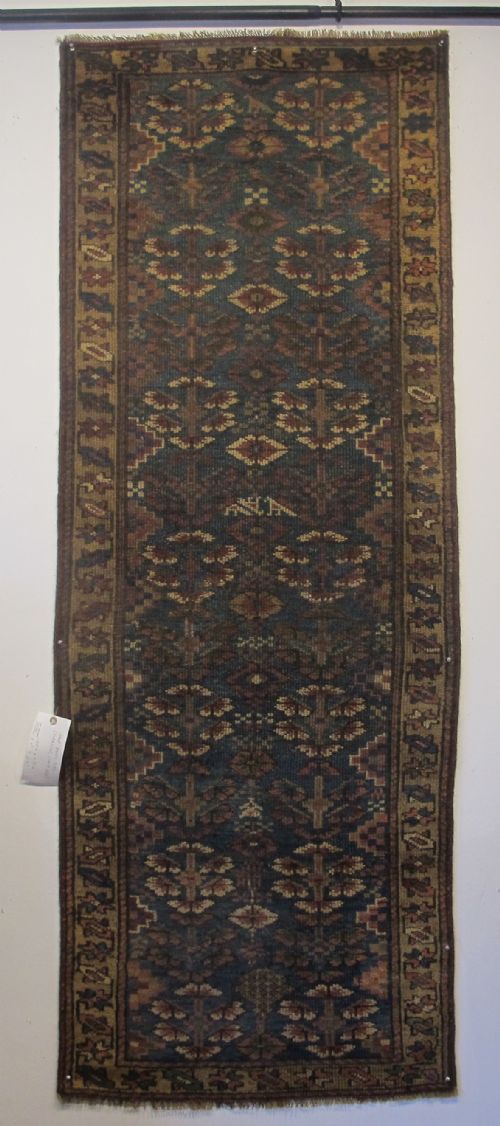

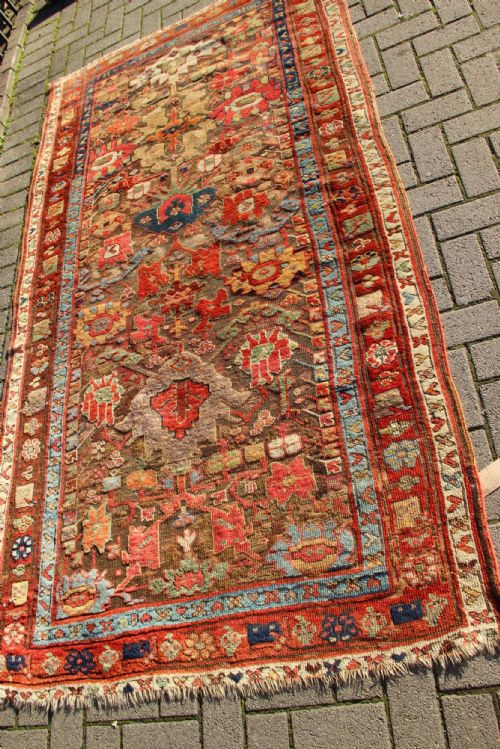
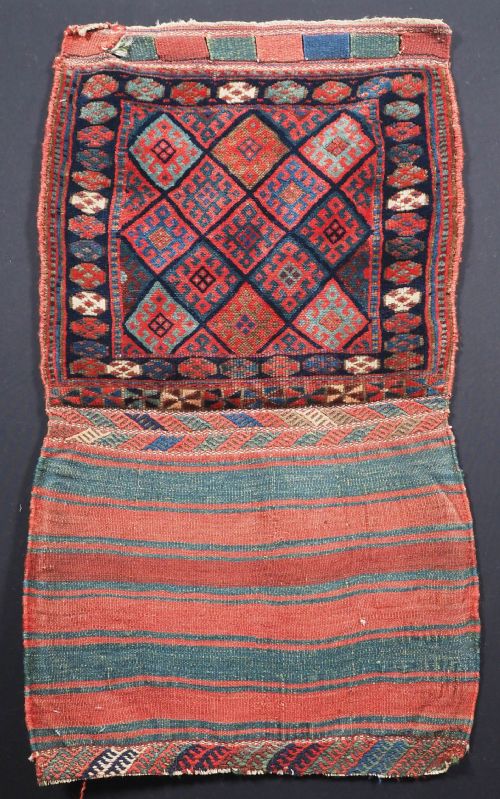


19th Century Kurdish Rug
A 19th century kurdish rug brings genuine tribal character and robust hand-spun wool into a room through geometric motifs and saturated colour.
19th Century Kurdish Rug
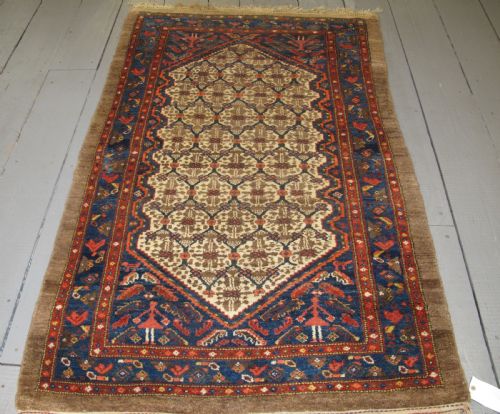
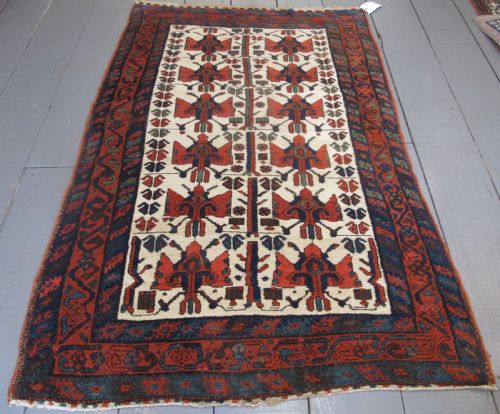
A 19th century kurdish rug encompasses tribal weavings created by nomadic and village weavers across Persia, Anatolia, and the Caucasus. These textiles range from small bagfaces and cushions to long runners and room-sized carpets.
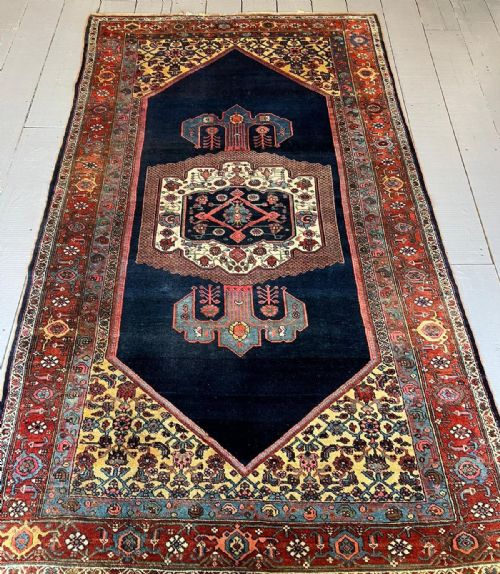
The most common formats on this page are floor rugs and runners produced during the decades between the middle and the end of the nineteenth century. Village groups such as the Jaf, Kolyai, Seneh, and Bidjar produce distinct regional variations within this tradition.
Materials and Construction
Weavers construct these pieces primarily using wool on wool or cotton foundations, frequently employing hand-spun wool for the pile to achieve deep saturation and durability. The natural yarns absorb dye unevenly over time, creating subtle shifts in tone known as abrash.
Nomadic and village workshops utilise sturdy knotting techniques and stout wool warps to withstand heavy floor use. Flatweave techniques appear on bagfaces and backs, combining pile and plain-weave structures within a single textile.
Listings feature items dated across the nineteenth century, ranging from the 1850s through to 1900.
Assessing Quality and Execution
Quality rests in the handling of the wool, the crispness of the tribal geometry, and the depth of the dye palette. Finer examples display tightly packed knots and precise latch-hook medallions or shrub designs.
The balance of proportion and the integrity of the original borders dictate visual success. Superior pieces maintain structural soundness in the foundation while retaining rich, undiminished pile.
The 19th Century Kurdish Rug Glossary
- Abrash
- Natural variation in wool colour caused by differences in dye batches or hand-spun yarn lots. This tonal shading appears as horizontal bands across the rug.
- Jaf
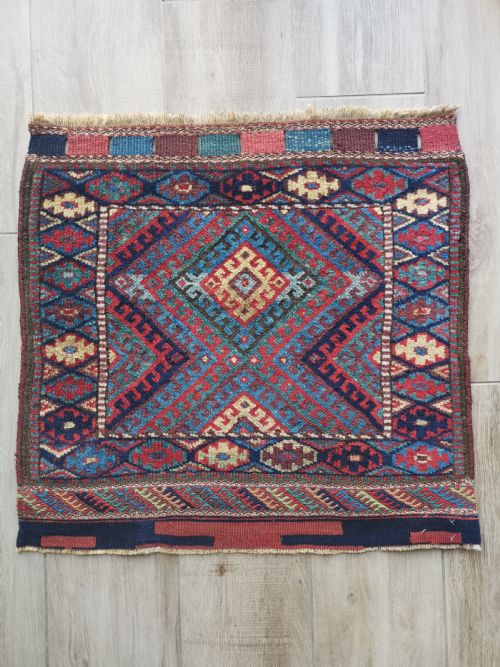
- A Kurdish tribal group known for producing distinctive small bags and bagfaces with repeated geometric patterns. These items were traditionally used for pack transport in nomadic camps.
- Kelleh
- A large format carpet of extended rectangular proportions, traditionally suited for specific room layouts. These pieces often feature bold central medallions or all-over field designs.
- Bidjar
- A town and surrounding district in West Persia known for exceptionally heavy, dense Kurdish carpets. The weavers pack the foundation down firmly using a special metal comb.
- Latch hook
- A stepped geometric motif commonly found projecting from medallions or borders in tribal weavings. This ancient symbol recurs frequently in Caucasian and Kurdish textiles.
19th Century Kurdish Rug: Frequently Asked Questions
Where were these rugs made?
Weavers produced these textiles across Western Persia, Anatolia, and the Caucasus within tribal encampments and rural villages. Different districts developed distinct structural habits and drawing styles.
Specific sub-groups like the Jaf and Kolyai worked within defined territorial boundaries, resulting in recognisable regional palettes and motif arrangements.
How do I care for a antique rug?
Protect the textile by placing a quality underlay beneath it to prevent slipping and reduce friction against the floorboards. Vacuum gently with the suction attachment rather than a rotating brush bar.
Rotate the rug periodically to ensure even exposure to foot traffic and sunlight. Professional cleaning by a specialist in antique textiles is essential when washing is required.
What is a bagface?
A bagface is the decorative pile-woven front of a utilitarian pack animal bag made by nomadic weavers. These panels were separated from their plain-weave backs when the sacks wore out.
Collectors prize them today as small-format decorative art objects that display the full skill of the weaver in miniature.
How can I tell regions apart?
Distinguishing regions relies on examining the foundation materials, knot density, and structural rigidity. Bidjar pieces feel notably heavy and stiff, while Seneh carpets often utilise cotton warps and finer knotting.
Colour combinations and border structures also provide clues to origin, as tribal groups maintained specific repertoires of traditional motifs.