



Antique Tribal Saddlebag
An antique tribal saddlebag brings the nomadic artistry of Persia, Anatolia and the Caucasus directly into a modern interior through rich wool and natural dyes.
Antique Tribal Saddlebag
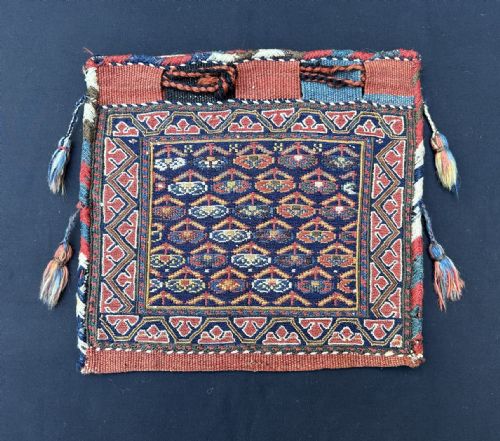
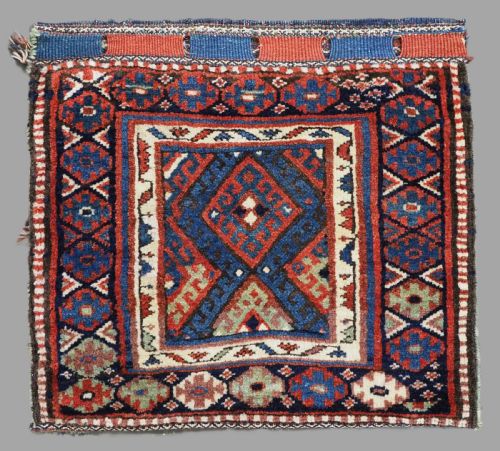
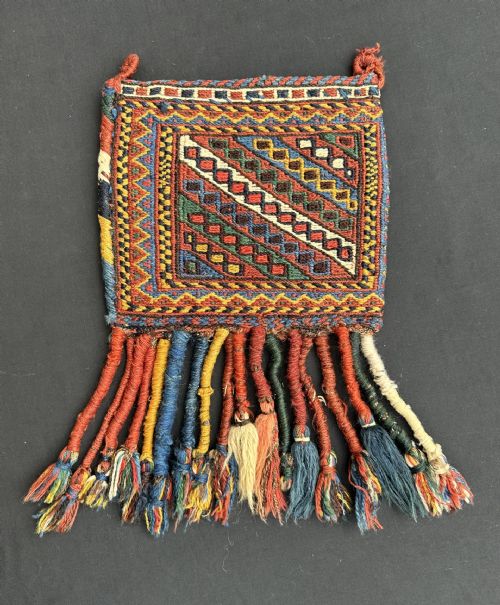
An antique tribal saddlebag represents the utilitarian weaving of nomadic and village groups, created to carry belongings across rugged terrain by horse, donkey or camel. These textiles take several forms on this page, appearing as complete double saddlebags, paired sets, single bag faces, half-khorjins and smaller vanity or storage bags.
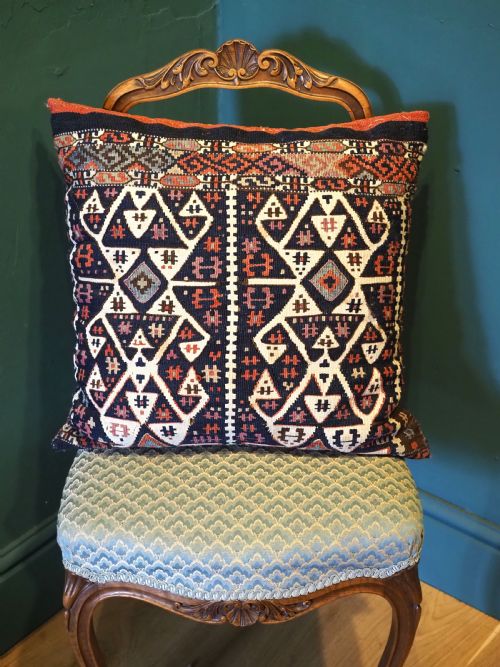
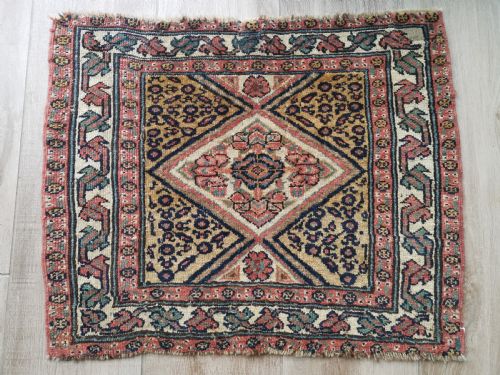
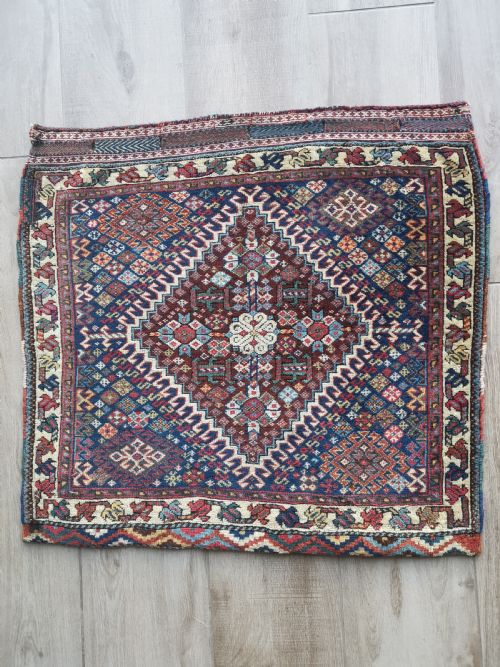
Most examples originate from nineteenth and early twentieth century tribal confederations such as the Qashqai, Shahsavan, Afshar, Jaf Kurd and Luri. Buyers most frequently encounter single bag faces where the original plain weave back has worn away, though complete pieces with intact backs and kilim cushions also emerge from the weave.
The regional variety spans from the distinctive geometric patterns of Northwest Persia and Azerbaijan down to the southern provinces of Fars and Kerman. Each piece reflects the specific visual vocabulary and cultural heritage of the weaver's tribe, translated into practical everyday utility.
How they were made
Weavers constructed these textiles primarily using hand-spun wool for the pile and foundation, often reinforced with cotton foundations and occasional leather details. Natural dyes provided the deep colour palette, yielding rich tones that settled and matured over decades of exposure.
The construction techniques vary between symmetrical or asymmetrical knotting for plush pile surfaces and flatwoven weft-faced structures like sumac and kilim. Artisans combined these methods to create sturdy structures capable of withstanding the rigours of nomadic transport.
Nomadic weavers occasionally tucked tiny protective amulets directly into the wool foundation to guard their pack animals against the evil eye.
What varies in quality
Quality rests upon the handled quality of the wool, where lustrous, luminous fleece with high lanolin content holds its structural integrity and visual depth far better than dry or brittle fibre. The precision and density of the hand-knotting or flatweaving dictate the clarity of the tribal motifs and overall handle of the textile.
The preservation of original structural elements, such as complete Jaf Kurd plain weave backs or paired double-bag configurations, elevates a piece above fragments. Additionally, the vibrancy and saturation of the natural dyes, combined with a balanced, harmonious composition of the central medallion or boteh design, separate standard weaving from masterwork production.
The Antique Tribal Saddlebag Glossary
- Khorjin
- The traditional Persian term for a double-sided saddlebag used by nomadic tribes for transport and storage.
- Bag face
- The decorative front panel of a saddlebag, which is the portion most commonly surviving intact after the plain weave back has perished.
- Sumac
- A warp-wrapping flatweave technique that creates a durable, textured surface with distinctive ridged patterns.
- Boteh
- An almond-shaped or paisley motif representing a floral spray or cypress tree, frequently seen in Afshar and Persian tribal weaving.
- Kilim
- A tapestry-woven flat textile utilised for the backs and structural portions of saddlebags as well as standalone cushions.
Antique Tribal Saddlebag: Frequently Asked Questions
How were saddlebags used by nomads?
Nomadic tribes utilised these double-sided bags to pack and transport personal belongings, household goods and provisions on pack animals during long journeys across difficult terrain. The sturdy construction ensured the contents remained secure while the animals moved.
Smaller variants, such as vanity bags and storage bags, held personal items inside the tent. When families settled or updated their belongings, the bags often saw secondary use for domestic storage until separated or repurposed.
How do I live with a tribal saddlebag?
These textiles adapt well to modern interiors when displayed as wall hangings, laid flat on tables, or converted into small cushions and floor rugs. Their rich natural dyes and geometric patterns complement both traditional and contemporary living spaces.
Protecting them from prolonged direct sunlight and heavy foot traffic preserves the hand-spun wool pile and delicate flatweave structures. Gentle vacuuming without a rotating brush bar helps maintain the cleanliness of the fibres.
How do I tell different tribal types apart?
Distinguishing tribal origins involves examining the specific colour palette, structural weave and iconographic motifs unique to each confederation. For instance, Shahsavan pieces often feature crisp sumac work and geometric panels from Azerbaijan, while Afshar bags from Kerman frequently display boteh designs and lustrous wool.
Qashqai weaving from Fars typically incorporates rich madder reds and deep indigos with stylized animal and plant forms. Comparing these regional characteristics helps identify whether a piece originates from Northwest Persia, Anatolia or the southern provinces.