



Khamseh Confederacy Rug
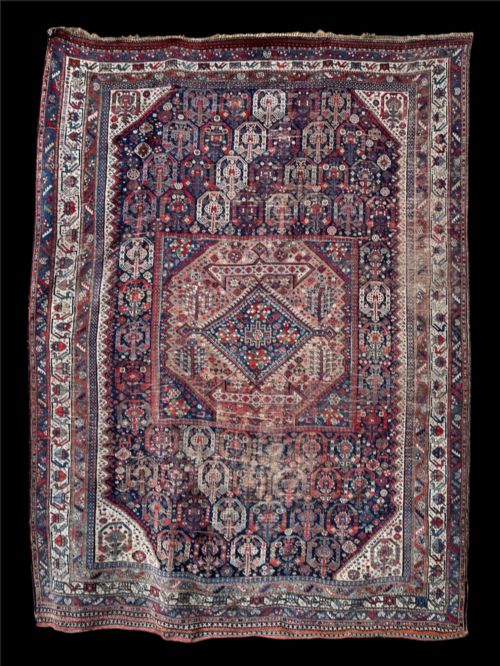
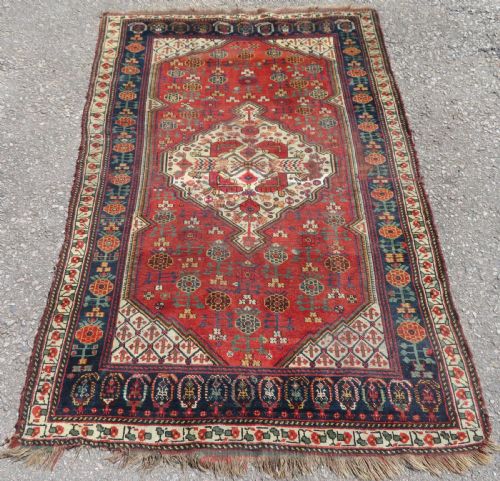
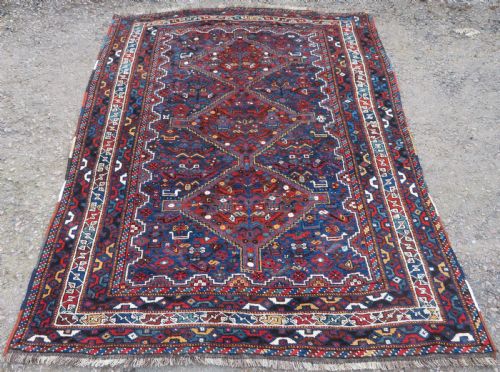
These khamseh confederacy rug examples are woven by the nomadic tribes of south-west Persia, offering rich tribal patterns for any floor.
Khamseh Confederacy Rug
A khamseh confederacy rug originates from the Fars province in south-west Persia, produced by various tribes grouped together in the nineteenth century. These pieces include larger carpets, area rugs, and utilitarian saddlebags created for nomadic life.
The styles seen are firmly Persian tribal, reflecting the visual traditions of specific sub-tribes such as the Baharlu and the Arab Ghani. Surviving examples date from the late nineteenth century, specifically across the 1870s, 1880s, and 1890s.
Materials and construction
Every khamseh confederacy rug recorded in the evidence is constructed from wool, utilised for both the pile and the foundational structure. This animal fibre provides the durability required for nomadic use and everyday foot traffic.
Weavers knotted the wool by hand on vertical looms, creating dense surfaces that held geometric and figurative motifs. The resulting textiles demonstrate the traditional hand-weaving skills passed down through generations of south-west Persian tribal groups.
Khamseh Confederacy Rug Retail Price Guide 2026
Typical asking prices for khamseh confederacy rug among the pieces listed under this phrase on Sellingantiques today, from the lower quarter to the upper quarter. They describe what is for sale here now, not the wider market.
Every listed piece in this category is made entirely from wool.
What separates the grades
Quality in a khamseh confederacy rug rests on the fineness of the knotting and the precision of the tribal geometry. Tighter structures allow intricate motifs, such as the distinctive pecking chickens pattern, to render with sharper detail.
Condition and scale also create clear distinctions across the range. Smaller saddlebags and well-preserved rugs from the 1870s differ markedly in visual impact from larger, heavily worn carpets dating towards 1890.
The Khamseh Confederacy Rug Glossary
- Khamseh confederacy
- A coalition of five distinct tribes in south-west Persia that produced distinctive woven textiles. This alliance included groups like the Baharlu and Arab tribes.
- Fars province
- The geographical region in south-west Persia where these tribal rugs were traditionally made. It remains a historic centre of nomadic and village carpet production.
- Kelleh
- A long, narrow format of carpet used traditionally in Persian domestic interiors. This specific room format provides a runner-like appearance on a grander scale.
Khamseh Confederacy Rug: Frequently Asked Questions
Where were these rugs made?
These textiles were woven in the Fars province of south-west Persia by various nomadic and confederated tribes.
Production centres on specific groups like the Baharlu and Arab Ghani sub-tribes living in that region during the nineteenth century.
How do I date a piece?
Dating relies on stylistic indicators, structure, and wool characteristics typical of late nineteenth-century Persian tribal weaving.
Surviving examples generally fall between the 1870s and the 1890s, often recorded as nineteenth century overall.
What are saddlebags used for?
Saddlebags served as practical transport containers for nomadic tribes travelling across south-west Persia.
Today, collectors appreciate these functional pieces as smaller textile art forms or wall hangings.
Are these pieces Persian tribal?
Yes, they belong entirely to the Persian tribal style category, distinct from urban city workshop carpets.
Their designs showcase folk motifs and local tribal iconography rooted in nomadic daily life.