
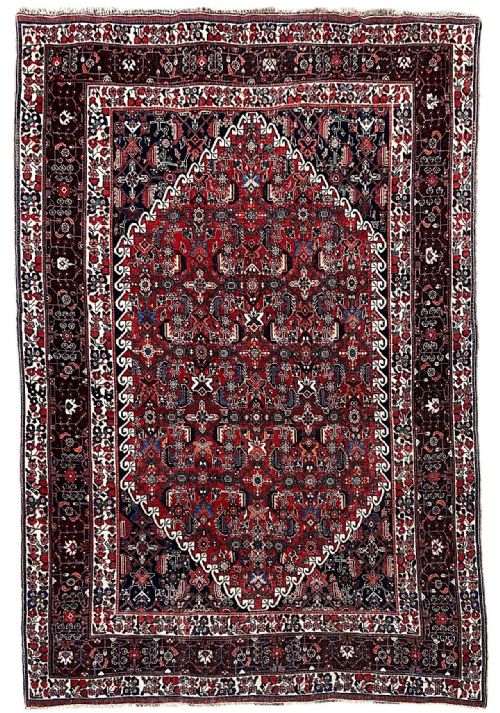
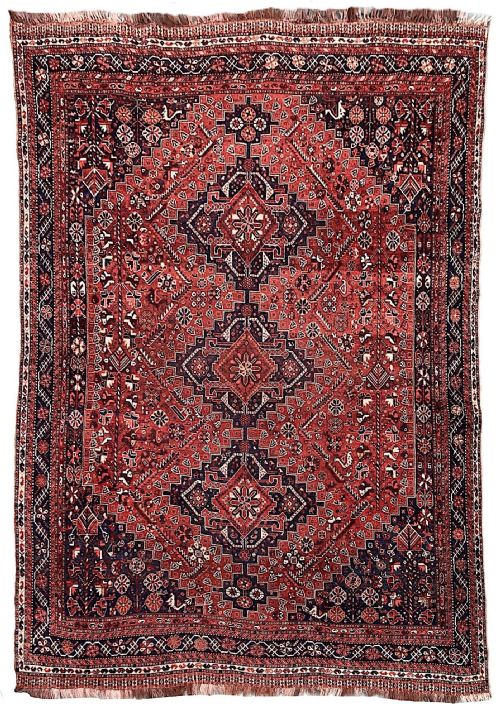


Antique Qashqai Carpet
An antique qashqai carpet brings the expressive tribal artistry of South West Persia into a modern interior.
Antique Qashqai Carpet
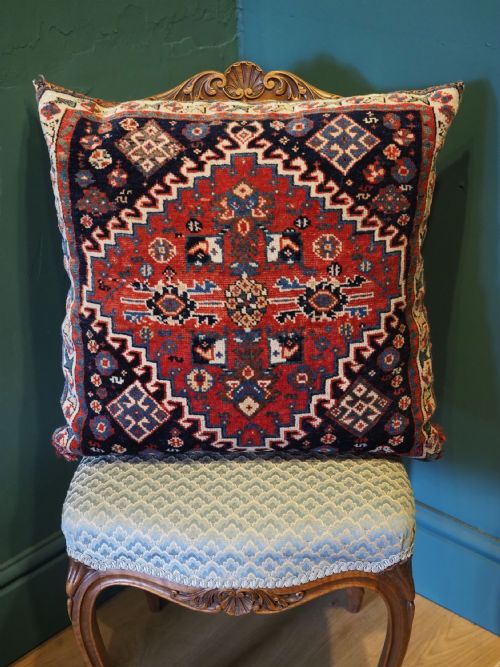
When you search for an antique qashqai carpet, you are looking at woven floor coverings created by the nomadic and village tribes of South West Persia. These pieces range from substantial room-sized carpets down to smaller rugs, kelims, and functional items like saddle bag cushions.
The versions you are most likely to meet on this page date from the late nineteenth century through to the early decades of the twentieth century. They often appear alongside related tribal formats such as Gabbeh, Khamseh, Shekarlu, and Luri pieces sharing the same regional aesthetic.
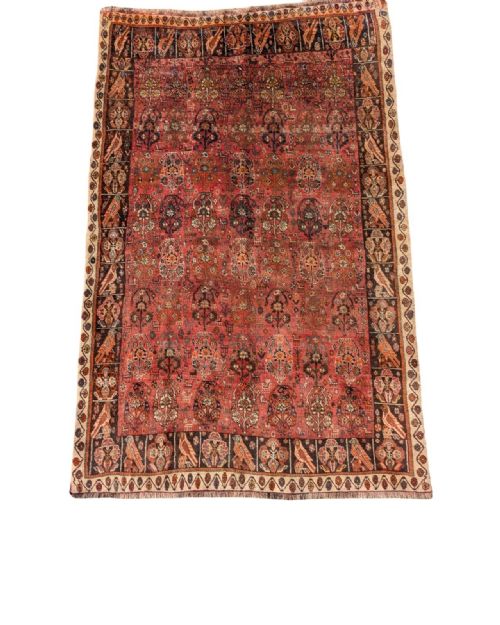
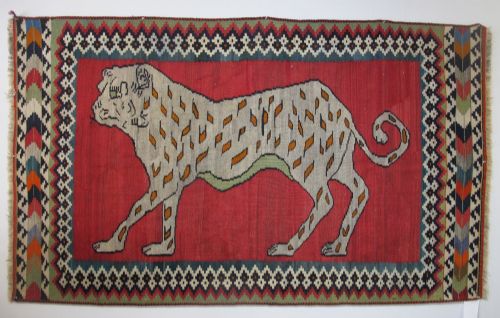
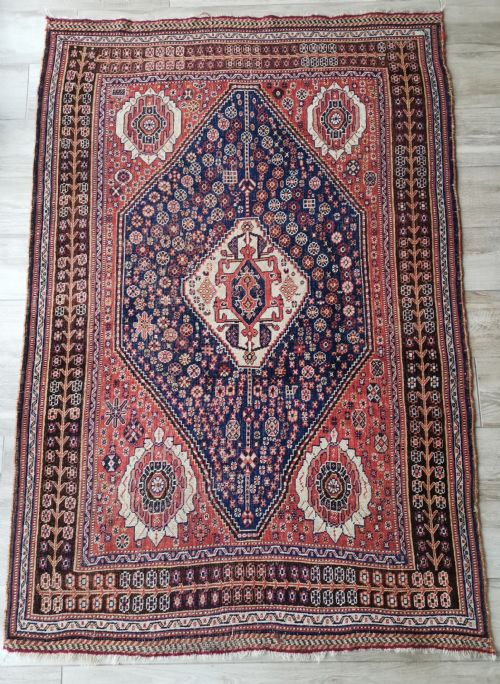
The designs draw directly from tribal life, frequently incorporating geometric medallions, tree of life motifs, lions, and stylised birds. Each piece reflects the independent weaving traditions handed down through generations of nomadic families.
How they were made
The weavers utilised hand-spun wool for the pile, set against sturdy cotton or wool foundations that gave the textiles their enduring structure. Natural dyes provided the deep palette of earthy tones, building rich colour variation across the surface over time.
Every piece was handwoven on portable horizontal looms set up in camps or villages, relying entirely on the skill of the weaver rather than mechanical aids. The resulting texture ranges from heavily piled carpets down to flat-woven kelims and thick, minimalist gabbeh rugs.
Antique Qashqai Carpet Retail Price Guide 2026
Typical asking prices for qashqai carpet among the pieces listed under this phrase on Sellingantiques today, from the lower quarter to the upper quarter. They describe what is for sale here now, not the wider market.
The listings span from the nineteenth century through to the 1930s, constructed entirely from wool and natural dyes.
What varies in quality
Quality in these textiles rests upon the density of the weave, the precision of the tribal motifs, and the clarity of the natural dyes. Tightly packed knots allow intricate geometric designs to remain crisp and legible across the field.
The depth and brilliance of the palette also separate standard examples from exceptional ones. Rich, saturated hues derived from natural dye sources create a luminous quality that flat chemical dyes simply cannot replicate.
The Antique Qashqai Carpet Glossary
- Kilim
- A flat-woven carpet or rug produced without a pile. These pieces rely on interlocking weft threads to create sharp geometric patterns.
- Gabbeh
- A thick, coarsely knotted rug woven by tribal groups. They typically display sparse, large-scale designs with fields of solid colour.
- Khamseh
- A confederation of tribes from South West Persia sharing overlapping weaving styles with their neighbours. Their rugs often employ dark grounds and dense patterning.
- Medallion
- A central ornamental motif placed in the middle of the rug field. It forms the primary focal point of the composition.
- Kelleh
- A long, narrow format of Persian carpet traditionally used in specific areas of a room. These formats offer elongated proportions compared to standard area rugs.
Antique Qashqai Carpet: Frequently Asked Questions
Where were these carpets made?
These textiles originated in the South West region of Persia, produced by nomadic confederations and village weavers. The Qashqai tribes moved seasonally across this landscape, carrying their horizontal looms with them.
Their surroundings, local flora, and tribal mythology directly influenced the motifs and colour choices woven into each individual carpet.
How do I care for an old rug?
Protect the wool pile by placing the rug in a low-traffic area or using a breathable underlay to prevent slipping. Regular gentle vacuuming without a rotating beater bar keeps dust from settling into the foundation.
Keep the piece out of direct, harsh sunlight to protect the natural dyes from fading over the years. Professional cleaning should only be handled by specialists experienced in antique textiles.
What is a tribal carpet?
A tribal carpet is a handwoven textile produced by nomadic or semi-nomadic peoples for their own daily use or local exchange. Unlike urban workshop carpets, these pieces rely on memory and traditional motifs rather than formal paper cartoons.
This freedom of design results in spontaneous variations, asymmetrical details, and a deeply personal expression of the weaver's craft.
How do I tell different tribes apart?
Distinguishing between Qashqai, Khamseh, and Luri weaving involves looking closely at the specific palette, knotting structure, and recurring motifs. Qashqai work often highlights bright indigo blues and warm terracottas alongside stylised birds and quadrupeds.
Khamseh pieces tend to lean towards darker grounds and distinct repeating patterns, while Luri textiles often display bold, uncluttered geometric arrangements.