

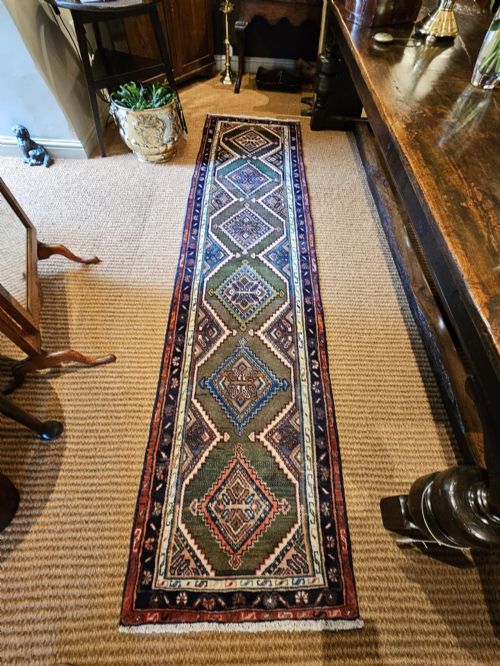



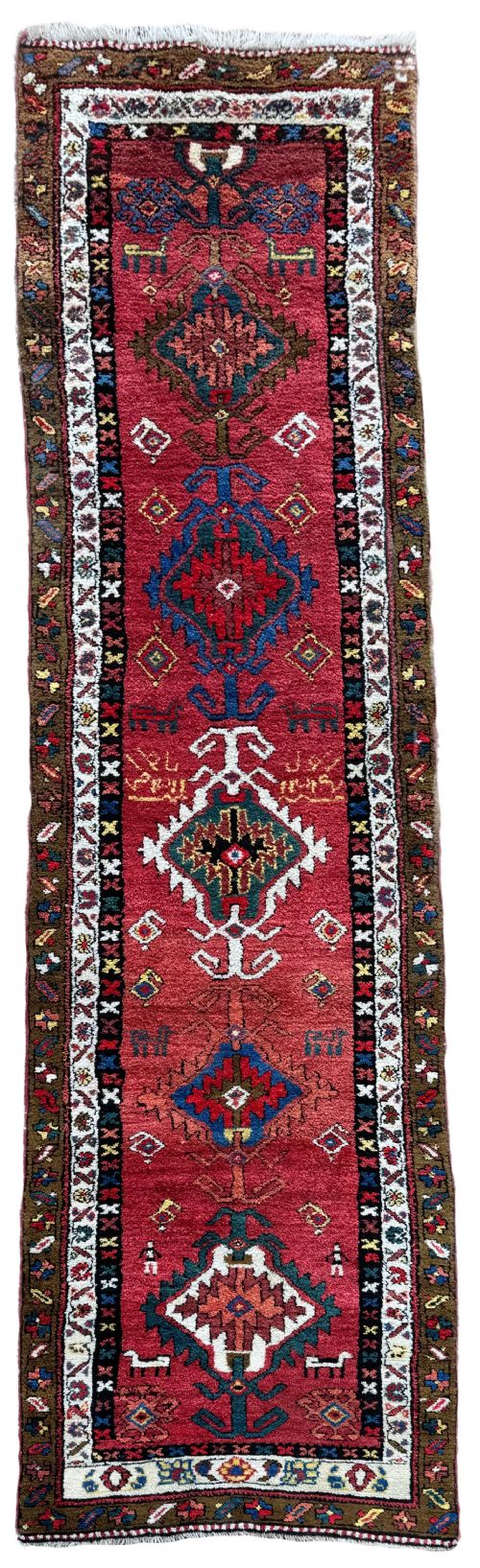
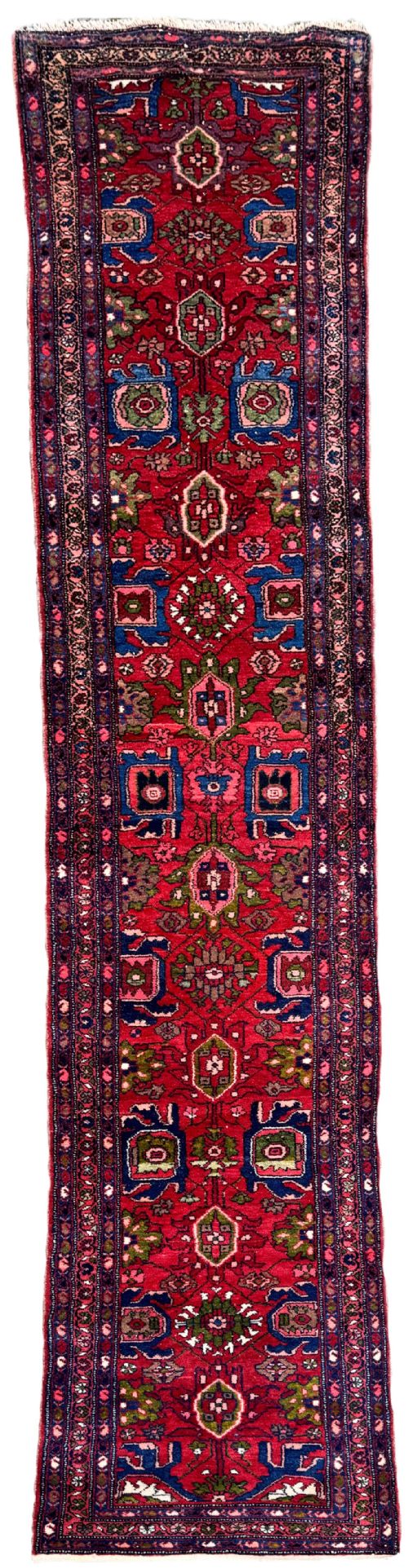
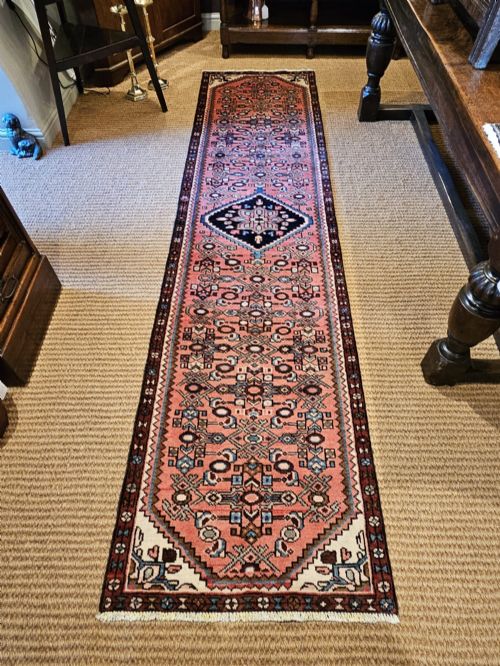
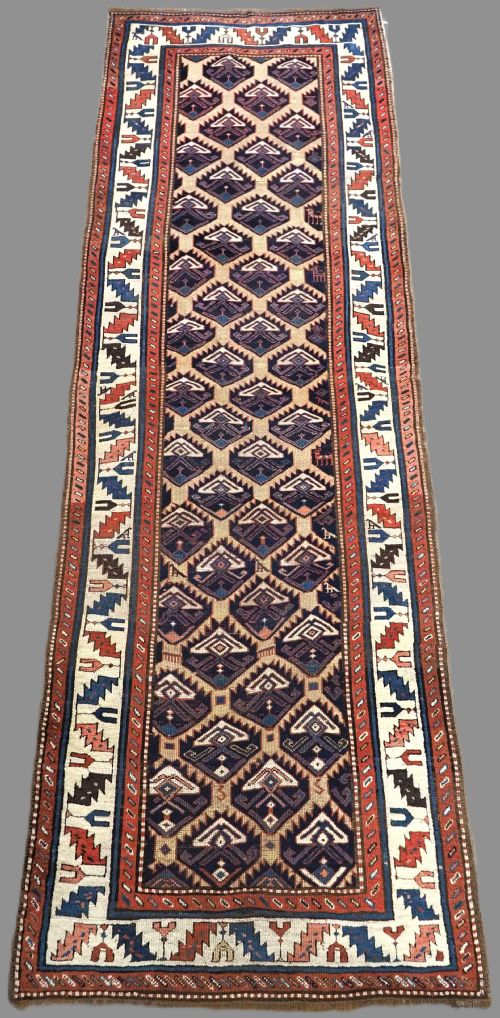
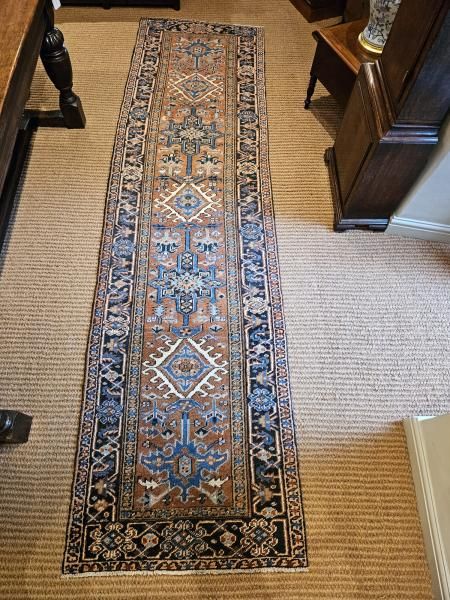

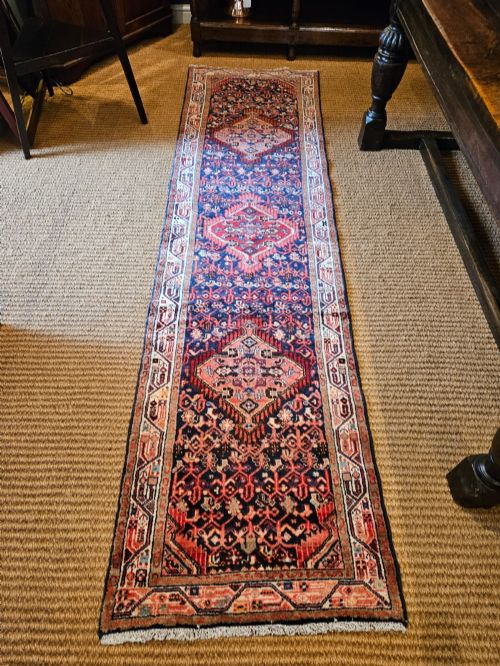
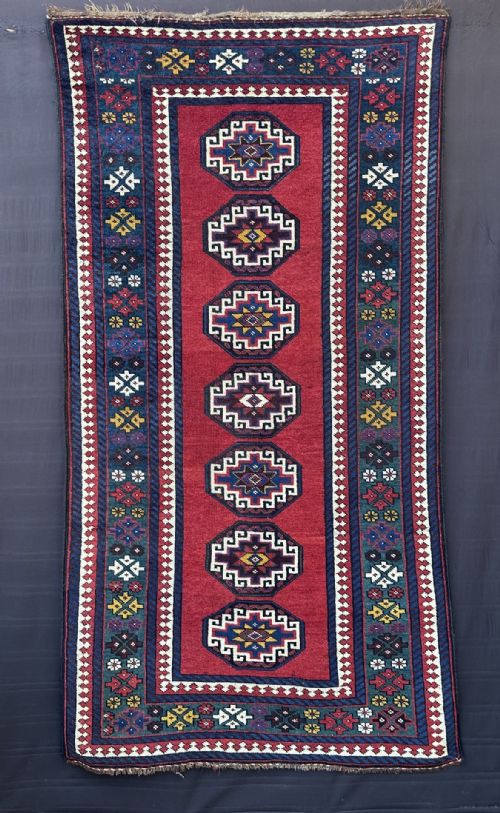
Persian Hallway Rug
These persian hallway rug examples bring enduring linear warmth and traditional weave to a long interior space.
Persian Hallway Rug
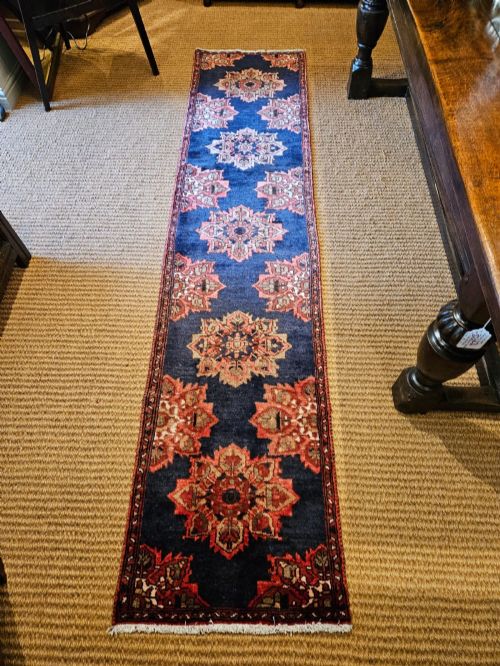
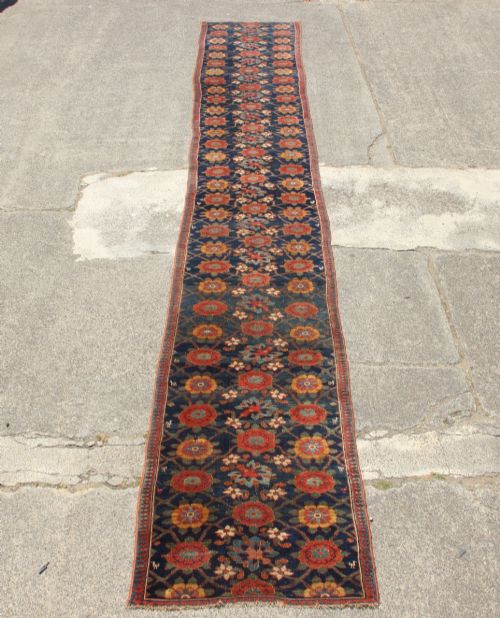
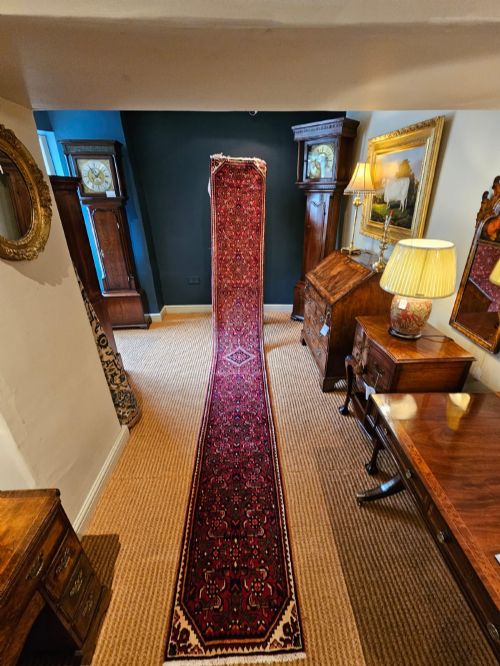
A persian hallway rug takes the form of an elongated runner or narrow corridor carpet designed specifically for long, narrow spaces within a home. These floor coverings bridge rooms while adding traditional texture and distinct regional patterning to passageways.
The versions met on this page span from the late nineteenth century into the early decades of the twentieth century. They originate from specific Persian weaving centres and tribal districts, including Heriz, Bakhtiari, Kurdish, and Hamadan regions.
Buyers encounter formats that range from long Heriz runners with substantial dimensions to narrow Kurdish tribal pieces and country house Hamadan rugs. Each piece displays the characteristic proportions and repeat motifs suited to narrow floors.
How they were made
These textiles rely on natural fibres, combining wool and cotton to achieve both pile durability and structural foundation. Wool provides the resilient surface pile, while cotton typically forms the warp and weft threads that hold the weave tight.
Weavers knotted the pile by hand onto stretched foundations, producing dense surfaces designed to withstand heavy foot traffic in corridors. The structural integrity depends on careful tension and secure selvedges characteristic of traditional Persian workshops and tribal tents.
Persian Hallway Rug Retail Price Guide 2026
Typical asking prices for persian hallway rug among the pieces listed under this phrase on Sellingantiques today, from the lower quarter to the upper quarter. They describe what is for sale here now, not the wider market.
Listings feature pieces dated across four distinct decades: 1880, 1900, 1910, and 1920.
What varies in quality
Quality rests in the precision of the knotting and the complexity of the regional design, distinguishing standard utility runners from exceptional tribal or workshop commissions. Tighter knot counts allow for sharper geometric or floral definition across the narrow field.
The handling of wool also dictates the tactile and visual grade, where superior greasy wool retains rich lustre and ages with a deeper patina. The integrity of the original dimensions and the balance of the border proportions further elevate the standing of a piece.
The Persian Hallway Rug Glossary
- Runner
- A long, narrow carpet format designed for corridors, hallways, and stairs. These pieces measure significantly longer than they are wide.
- Warp
- The stationary vertical threads stretched on the loom that form the structural skeleton of the rug. Cotton is frequently used for this purpose.
- Weft
- The horizontal threads passed across and interlaced between the warp threads to lock the rows of knots in place. This contributes to the firmness of the textile.
- Pile
- The upright cut or looped wool surface of the rug that receives the wear from foot traffic. It determines the softness underfoot and the depth of the design.
- Selvedge
- The finished side edges of a rug formed by wrapping the outermost warp threads. Good finishing prevents the structure from fraying.
Persian Hallway Rug: Frequently Asked Questions
Where should I place a persian hallway rug?
These runners suit narrow domestic spaces such as entrance halls, long corridors, and bridging passages between principal rooms.
Their elongated proportions allow them to soften hard floorboards while directing movement gracefully down a hallway.
What materials make up these runners?
Traditional construction relies on a combination of wool and cotton fibres.
Wool forms the soft, resilient pile on the surface, while cotton provides the strong foundational support in the warp and weft.
How do I identify a Heriz runner?
Heriz runners typically present bold geometric medallion structures and robust traditional styling originating from north-west Persia.
They generally offer substantial dimensions and durable wool construction suited to heavy corridor use.