



Meiji Period Japanese Pottery
Meiji period japanese pottery brings together Satsuma earthenware, Imari porcelain and Sumida Gawa wares shaped during late nineteenth and early twentieth century Japan.
Meiji Period Japanese Pottery
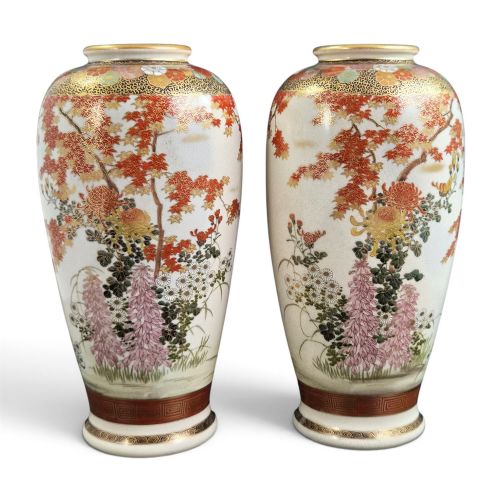
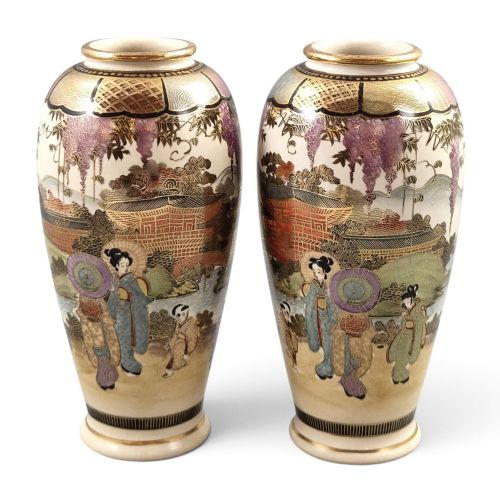
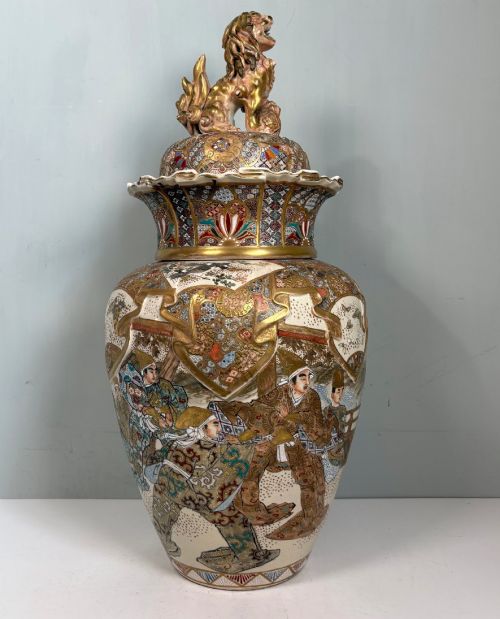
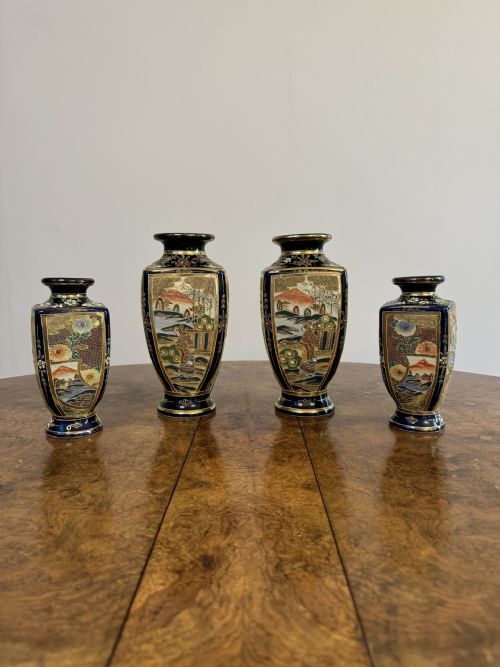
Meiji period japanese pottery encompasses decorative vases, bowls, plates, figures and tea caddies produced across the Meiji and transitional Meiji to Taisho periods. These items reflect traditional Japanese ceramic forms made for both domestic use and export during a time of significant industrial and cultural change.
The selection centres heavily on Satsuma earthenware vessels painted with figures and natural scenes, alongside vibrant Imari porcelain dishes and tactile Sumida Gawa pieces. Buyers frequently encounter baluster vases, ginger jars and decorative plates bearing signatures of prominent Kyoto and Tokyo workshops.
How they were made
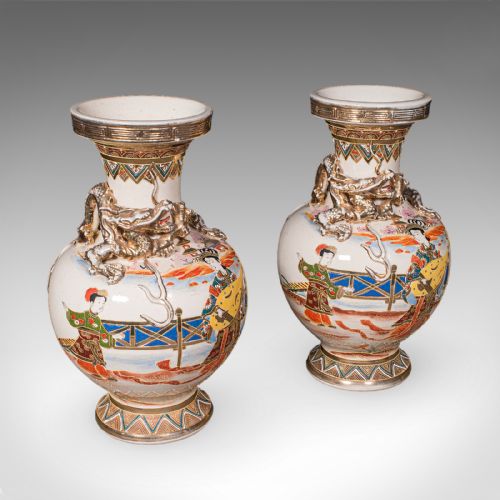
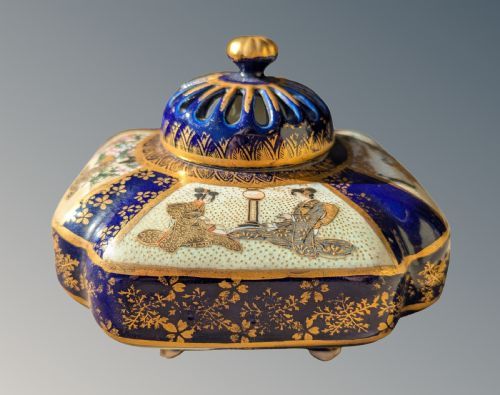
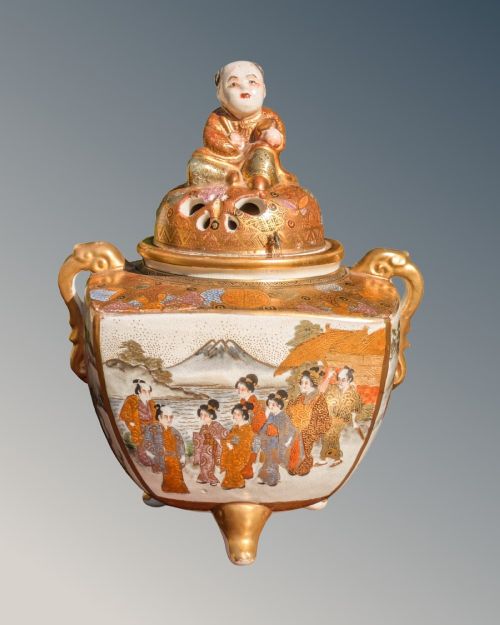
Makers utilised earthenware, stoneware and porcelain bodies, applying intricate coloured enamels, gilt and gold leaf across the surfaces. Many Satsuma pieces combine a finely crackled cream earthenware glaze with dense hand-painted pictorial decoration.
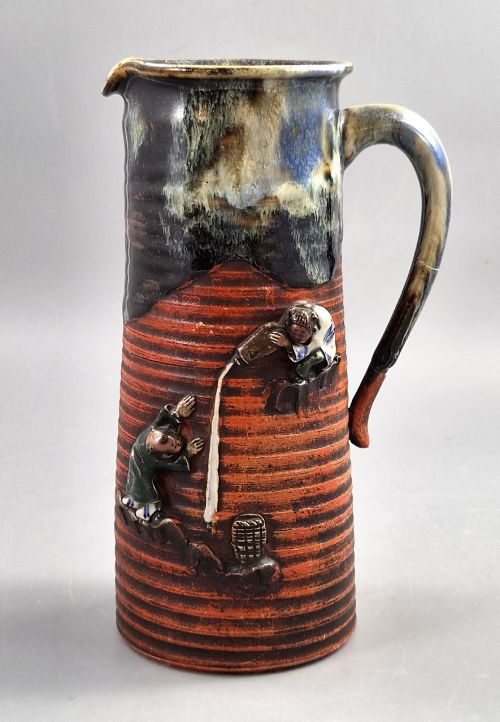
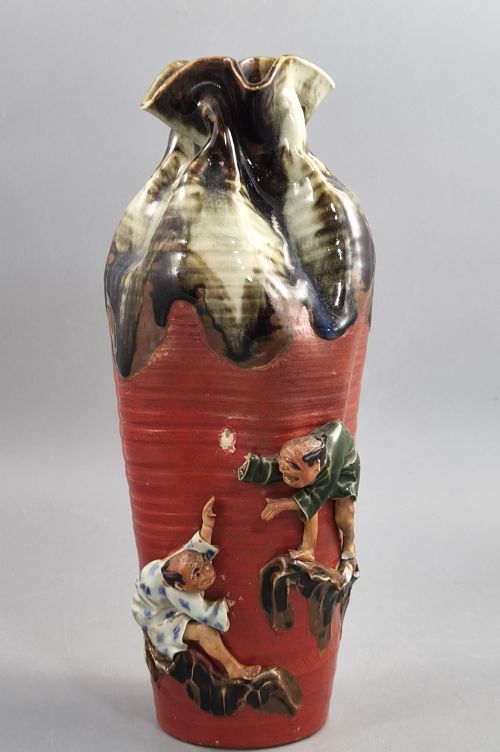
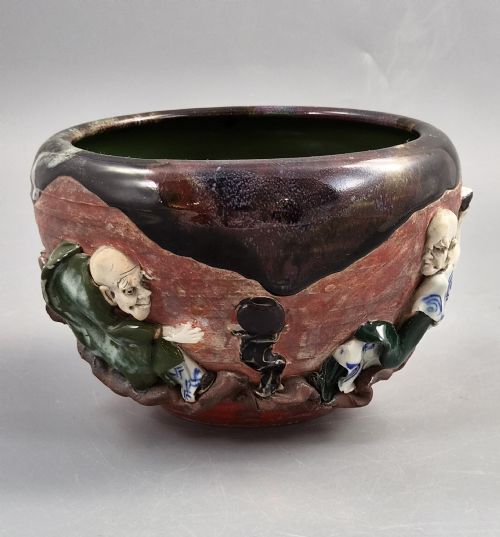
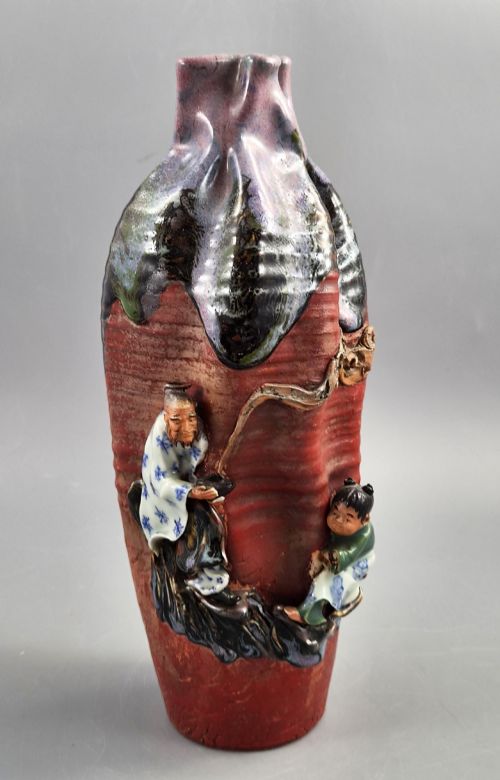
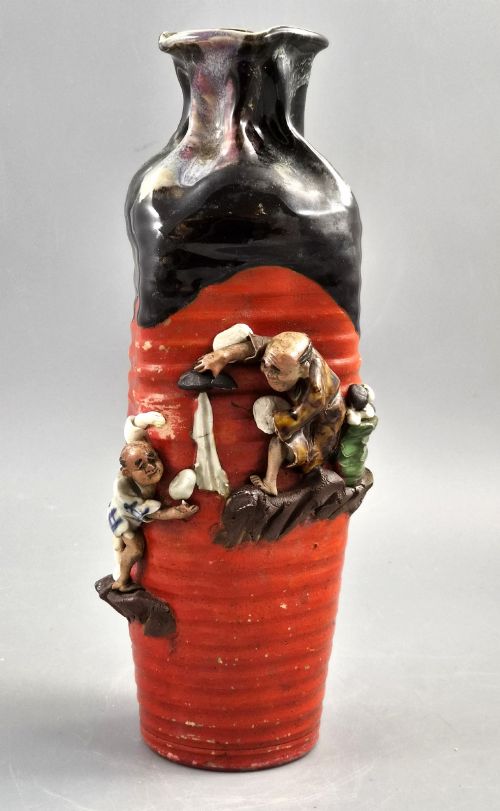
Sumida Gawa works employ distinctive flambe glazes and sculptural clay figures modelled directly in relief onto the vessel walls. Porcelain pieces such as Imari plates rely on underglaze blue and overglaze iron red pigments, sometimes augmented with enamel highlights.
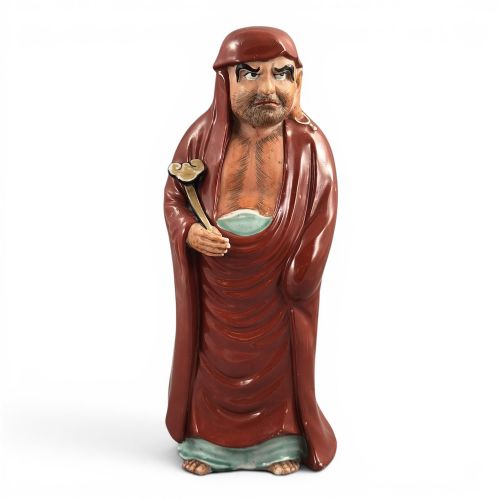
Listings feature earthenware, porcelain and stoneware forms, including baluster vases, scalloped plates, ginger jars and okimono figures.
What varies in quality
Quality rests in the precision of the hand-painting, the control of the glaze and the reputation of the maker or workshop. Signed pieces from established Kyoto houses like Kinkozan or individual artists such as Inoue Ryosai display superior draughtsmanship and more refined potting.
The complexity of the modelled relief work and the crispness of the gilding separate standard export items from ambitious exhibition-grade pieces. Heavier, more sculptural vessels with deep flambe effects and well-defined figures represent the upper tier of production.
Koshida·Maruni Kobe·Shozan·Inoue Ryosai·Kizan·Ban ni·Kozan·Kinkozan·Hotoda·Makuzu Kozan·Kinzan
The Meiji Period Japanese Pottery Glossary
- Satsuma
- A type of Japanese earthenware originating from Satsuma Province, characterised by an ivory crackle glaze and elaborate polychrome and gilt decoration. Most surviving examples date from the Meiji period and were produced in Kyoto.
- Imari
- A style of Japanese porcelain named after the port from which it was shipped, featuring cobalt blue underglaze and iron red overglaze, frequently enhanced with gold leaf. These wares were widely exported to European markets.
- Sumida Gawa
- A distinctive type of Japanese pottery featuring dripped or flambe glazes combined with high-relief modelled figures, animals or landscapes applied to the body. Pieces are strongly associated with workshops in Tokyo.
- Okimono
- A small Japanese freestanding carved or modelled decorative figure designed for display on a shelf or in a tokonoma alcove. They depict deities, sages, animals and daily life.
- Natsume
- A small Japanese tea caddy used in the chanoyu tea ceremony, traditionally holding powdered matcha and named after its resemblance to a jujube fruit.
Meiji Period Japanese Pottery: Frequently Asked Questions
How do I identify Satsuma pottery?
Satsuma pottery is recognised by its characteristic ivory-coloured earthenware body covered in a fine network of transparent crackle glaze. The surfaces are typically decorated with dense enamel paintings depicting figures, flowers and historical scenes, often highlighted with heavy gilding.
Many pieces carry artist signatures or workshop seals on the base, frequently originating from Kyoto or Satsuma Province. The style evolved during the Meiji period to cater specifically to Western export tastes.
What is Sumida Gawa pottery?
Sumida Gawa pottery refers to distinctive ceramic wares produced near the Sumida River in Tokyo during the late Meiji and Taisho periods. These pieces are easily identified by their thick, dripped flambe glazes in shades of blue, green and lavender.
Another defining feature is the inclusion of unglazed or coloured clay figures, animals and landscape elements modelled in high relief directly onto the vessel exterior. Master potters like Inoue Ryosai popularised this tactile, sculptural style.
Are Meiji period ceramics marked?
Many Meiji period ceramics feature painted, impressed or incised signatures, studio marks or manufacturer seals on the underside. These marks can identify specific artists, prominent workshops like Kinkozan, or regional production centres.
However, some export pieces bear spurious or imitation marks intended to honour earlier dynasties or famous potters. Evaluating the overall quality of the painting and the ceramic body remains essential alongside any visible signature.
How should I care for antique Japanese pottery?
Antique Japanese pottery requires gentle handling to protect delicate overglaze enamels, gilt highlights and raised relief elements from abrasion. Dusting with a dry, soft cloth is generally sufficient for regular maintenance.
Keep these ceramic pieces away from direct sunlight to prevent fading of the coloured enamels. Avoid using water or chemical cleaners, particularly on earthenware bodies with absorbent crackle glazes.