



Japanese Satsuma Display Pottery
Japanese Satsuma display pottery brings intricate hand-painted earthenware into rooms, offering collectors rich historical scenes and vibrant gilt detailing.
Japanese Satsuma Display Pottery
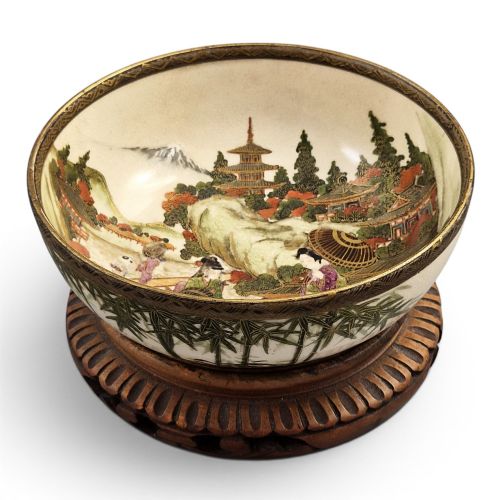
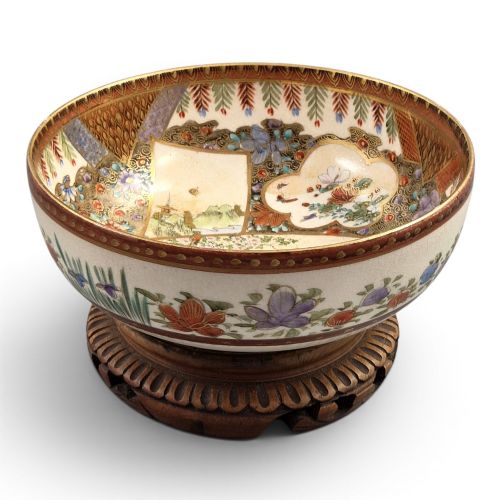
Japanese satsuma display pottery comprises highly decorative earthenware vessels and plates created primarily during the Meiji and Taisho periods. These items range from miniature vases and tea caddies to monumental bowls and pairs of hexagonal vases.
The objects frequently depict traditional subjects such as Rakan, samurai battles, court figures, flowers, and birds. Collectors often encounter pieces featuring the Shimazu mon, marking a direct connection to historical Japanese patronage and craftsmanship.
Vessels on this page span the late nineteenth century into the early twentieth century, encompassing Victorian and Edwardian eras. The selection showcases diverse forms including garnitures, tea jars, and bowls with saucers.
How these ceramics were constructed
Potters shaped these items from earthenware, applying crackle glazes that created a distinctive textured surface beneath the painted decoration. Artisans then added detailed hand-painted designs using rich enamel pigments.
Makers integrated gold leaf, gold gilt, and heavy gilt highlights to accentuate figures, panels, and intricate floral patterns such as the thousand flowers motif. Raised moriage work provided tangible relief on the vessel walls, adding depth to court figures and religious panels.
The inventory includes forms ranging from miniature tea caddies to monumental landscape vases and matched garnitures.
Distinctions in quality and execution
The refinement of the hand-painted brushwork dictates the division between standard and superior pieces. Signed works by recognised makers such as Kinkozan or Hododa display exceptional precision in rendering human expressions and complex landscape scenes.
The application of gold leaf and the density of enamel work determine visual impact. Monumental scale and the survival of matching pairs or garnitures elevate the standing of individual items.
Koshida·Gyokkō·Kozan·Chosei·Seiko-en Chokei·Hododa·Tokyo Taizan·Kinkozan
The Japanese Satsuma Display Pottery Glossary
- Earthenware
- Porous pottery fired at lower temperatures, forming the structural base for Satsuma wares.
- Moriage
- A technique of applying slip in raised dots or lines to create textured relief decoration on ceramics.
- Shimazu mon
- The heraldic crest of the Shimazu clan, frequently found on high-quality Satsuma pottery.
- Rakan
- Depictions of enlightened disciples of Buddha, commonly painted across Meiji period vessels.
- Garniture
- A matching set of ceramic vases designed to be displayed together on a mantelpiece or cabinet.
Japanese Satsuma Display Pottery: Frequently Asked Questions
What is Japanese Satsuma pottery?
Japanese Satsuma pottery is a distinct type of earthenware featuring a characteristic crackled glaze decorated with intricate hand-painted enamels and gold gilt.
Originating from Satsuma province, these decorative items evolved into elaborate export wares during the Meiji period, depicting traditional figures and landscapes.
How do I identify a Meiji period piece?
Meiji period pieces are generally identified through historical styles, signature marks, and specific decorative motifs associated with late nineteenth and early twentieth-century Japanese craftsmanship.
Examining the finesse of the moriage work and the presence of artist signatures helps confirm the era of production.
What are the common motifs on these vases?
Common motifs include court figures, samurai warriors, religious panels depicting Rakan, and dense floral arrangements like the thousand flowers pattern.
These subjects reflect traditional Japanese narratives and botanical studies favoured by Meiji period artists.
How should I display Satsuma pottery at home?
Satsuma pottery is best displayed in secure cabinets or on sturdy surfaces where the detailed gold leaf and enamel work can catch ambient light.
Pairing items as matching sets or garnitures creates a balanced focal point within a traditional or eclectic interior.