
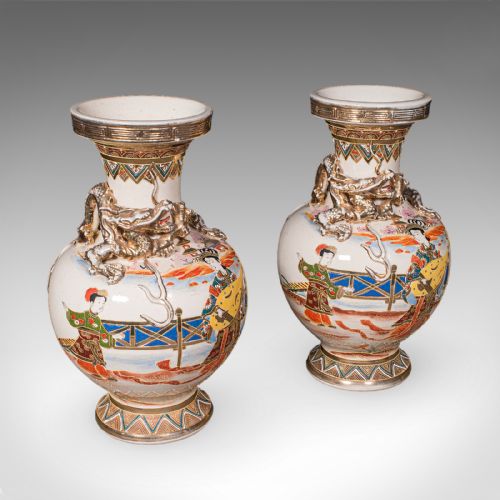

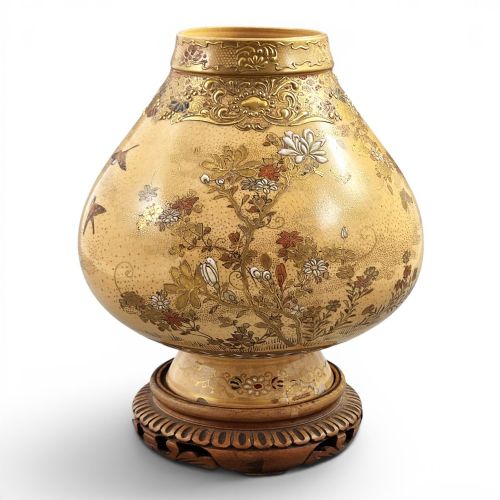


Gilt Satsuma Earthenware Urns
These gilt satsuma earthenware urns bring intricate Japanese ceramic artistry into your home through finely detailed gold leaf and hand-painted scenes.
Gilt Satsuma Earthenware Urns
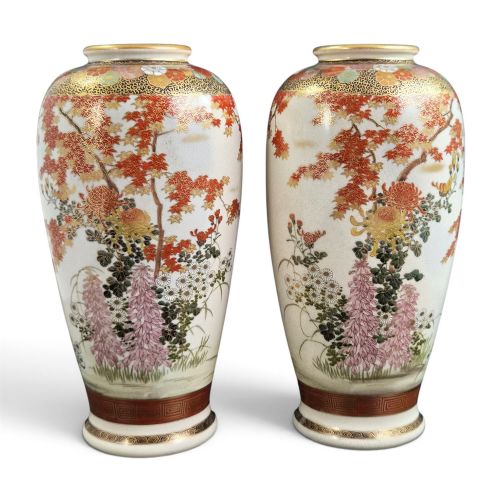
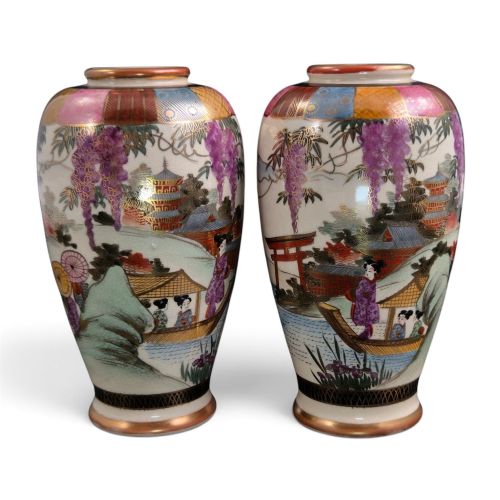
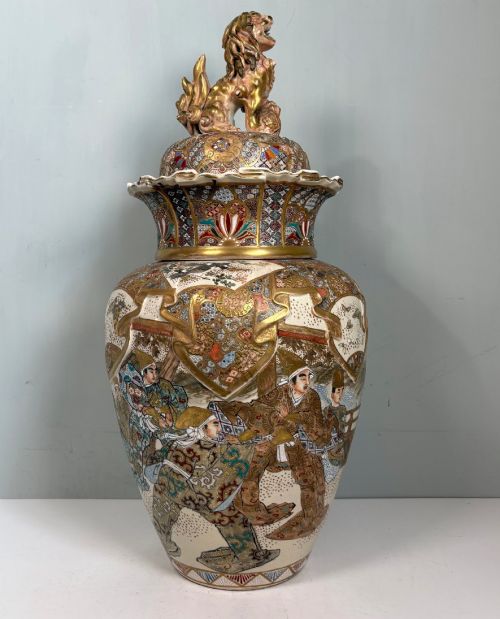
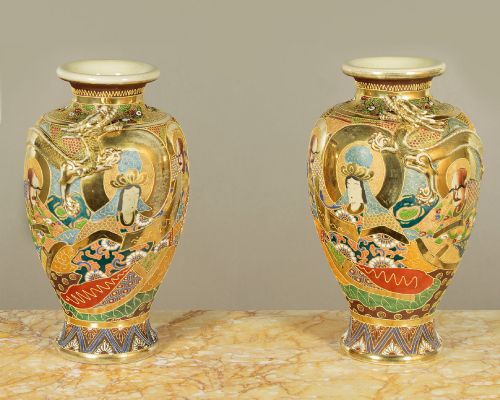
Gilt satsuma earthenware urns comprise ceramic vessels and decorative vases created primarily during the Meiji and Taisho periods, alongside later twentieth-century examples. These pieces frequently manifest as pairs or single monumental and miniature forms, occasionally incorporating lidded designs and incense burner configurations.
Makers shaped these objects using earthenware bodies decorated with detailed enamel work and extensive gold leaf detailing. The surfaces display court figures, landscapes, flora like wisteria, and religious figures such as arhats and Rakan.
Originating largely from workshops in Kyoto and other centres in Japan, these items reflect the stylistic shifts of the late nineteenth and early twentieth centuries. Buyers encounter baluster profiles, hexagonal shapes, and polygon forms among the selections on this page.
Materials and construction
Potters formed these pieces using earthenware clay, applying a characteristic crackle glaze as the foundation for subsequent decoration. Artisans then built up surface designs utilising enamel pigments and rich gold gilt or gold leaf.
Many workshops employed raised moriage techniques to give dimensionality to robes, figures, and floral elements. Skilled painters executed minute figural processions, landscapes, and crests such as the Shimazu mon by hand across the ceramic body.
Listings feature earthenware vessels employing gold leaf, enamel, and bronze elements across the Meiji and Taisho periods.
Assessing quality
The precision of the hand-painted brushwork distinguishes superior examples from simpler production pieces, particularly in the rendering of facial expressions and architectural details on court figures. Richness and density of the gold leaf application also signal higher ambition in the workshop.
Complexity of form influences the standing of a piece, with hexagonal and bamboo-handle shapes requiring greater technical skill than standard baluster profiles. Signed works from documented Kyoto workshops demonstrate the highest standards of Meiji period craftsmanship.
Maruni Kobe·Kinkōzan·Chosei·Nanzan·Seiko-en Chokei·Kizan·Hakusan·Hododa
The Gilt Satsuma Earthenware Urns Glossary
- Moriage
- A decorative technique using slip applied in raised dots or lines to create a tactile, three-dimensional effect on the ceramic surface. This method frequently outlines robes and foliage.
- Earthenware
- Porous pottery fired at relatively low temperatures, serving as the traditional body for satsuma ware before glazing and decoration. It provides a stable base for intricate enamel work.
- Koro
- A traditional Japanese incense burner featuring a perforated lid or cover, often supported on three or more feet. These forms frequently incorporate handles and intricate crests.
- Mon
- A Japanese heraldic badge or crest used to identify families or clans, such as the Shimazu crest found on specific satsuma pieces. These crests appear in gold on high-status items.
- Baluster
- A vertical architectural form characterised by a swelling lower body tapering to a narrow neck, commonly utilised for ceramic vases. This shape accommodates large figurative panels.
Gilt Satsuma Earthenware Urns: Frequently Asked Questions
How do I care for gilt satsuma vases?
Dust these ceramic pieces gently with a dry, soft cloth to protect the delicate enamel and gold leaf surfaces from abrasion.
Keep them away from direct sunlight and moisture to preserve the integrity of the earthenware body and the crackle glaze over time.
What periods do these pieces date from?
The listings span the late nineteenth century through the Meiji, Taisho, and Showa periods, extending into the Edwardian era.
Most marked examples originate from the late nineteenth to early twentieth centuries, reflecting traditional Kyoto workshop production.
Are these urns meant to hold water?
These earthenware vessels function primarily as decorative art objects rather than practical containers for cut flowers.
The porous nature of the traditional body and the delicate enamel decoration make them unsuitable for holding liquids.
How do signatures help identify Satsuma ware?
Signatures and marks painted or impressed on the base often name the specific workshop or artist, such as Kinkozan or Chosei.
These calligraphic marks connect the vessel to particular Kyoto kilns and help establish the date of creation.