
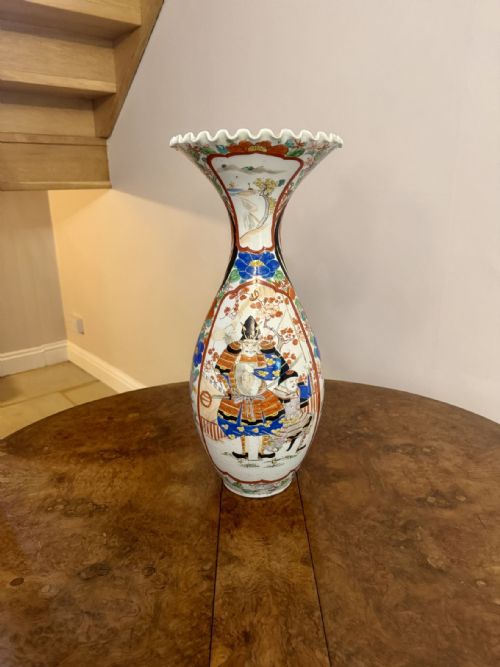
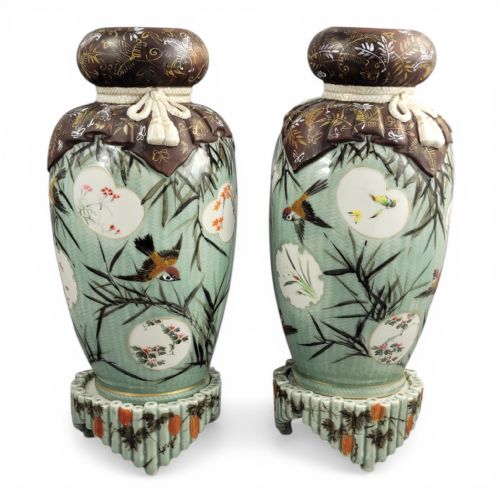


Meiji Period Floor Vases
Meiji period floor vases bring commanding scale and intricate hand-painted detail to a room, offering a striking focal point for collectors of historic Japanese craft.
Meiji Period Floor Vases
Meiji period floor vases encompass large-scale vessels created in Japan during the late nineteenth and early twentieth centuries, spanning the Victorian era through the early nineteen-twenties. These substantial objects serve as major decorative statements, often standing well over a metre in height and demanding significant floor space.
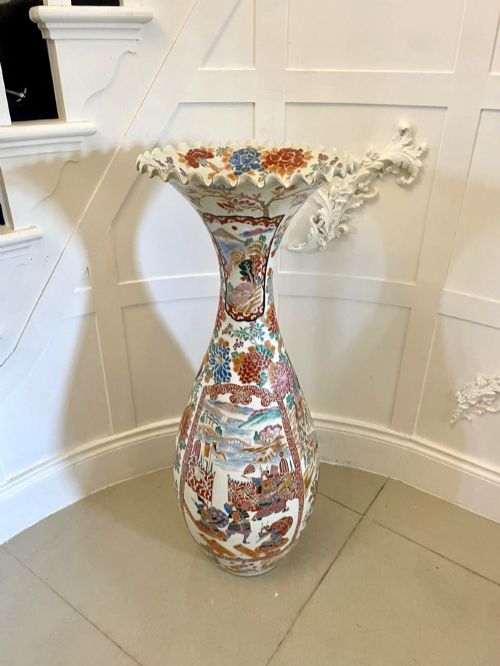
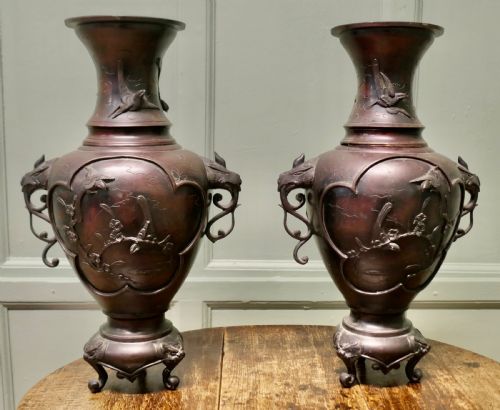
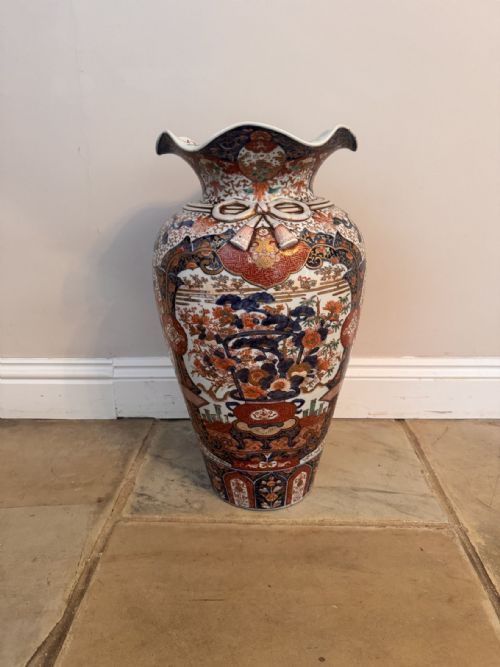
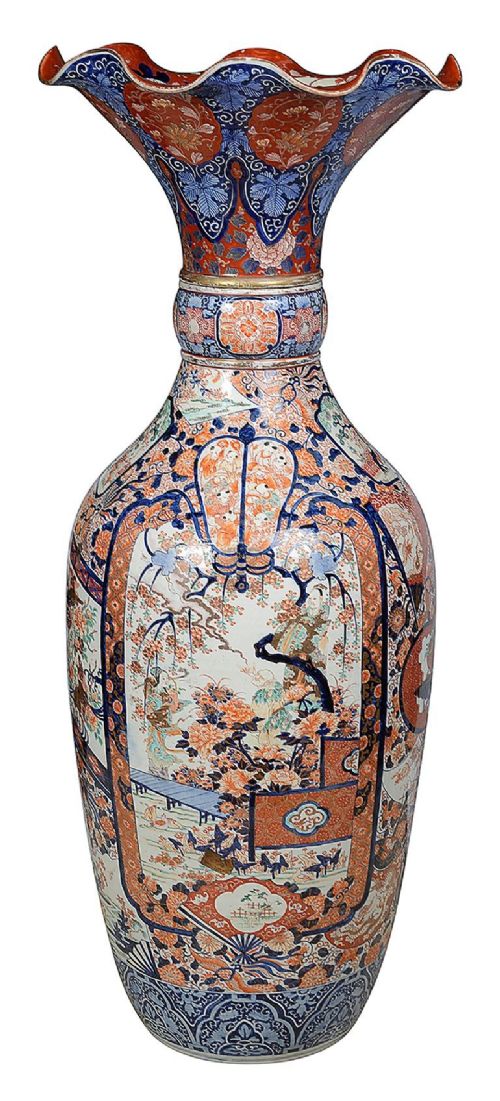
Imari porcelain and Satsuma earthenware dominate the selections seen here, frequently appearing in matched pairs alongside substantial bronze and cloisonné enamel examples. Many pieces incorporate specialised elements such as wooden components, lacquer panels, gold leaf accents, and original porcelain stands.
The objects originate from notable production centres and export workshops of the Meiji era, capturing a period of intense artistic ambition aimed at international markets. Buyers encounter everything from blue and white porcelain to heavily gilded polychrome designs.
How They Were Made
Potters shaped massive clay bodies for earthenware and porcelain vessels on large wheels or via specialised moulding techniques before firing them at high temperatures to achieve structural stability. Artisans then applied complex decorative programmes utilising cobalt underglazes, polychrome enamels, and heavy gilding.
Bronze vessels required sophisticated lost-wax casting methods to produce thick walls and intricate relief details, often finished with patination. Cloisonne enamel pieces relied on fine metal wire soldered to a metal base to create cellular compartments filled with coloured enamel paste before multiple firings and polishings.
Additional decorative layers involved applied lacquer over black paint and fitted wooden elements, combining multiple traditional Japanese crafts into single monumental objects.
Several giant koi fish swim permanently across the surface of a heavy cloisonne enamel cylinder.
What Varies in Quality
The precision and density of the hand-painted ornament separate standard export goods from masterworks, with superior examples displaying microscopic brushwork, complex narrative scenes, and heavy application of gold leaf. Mastery of the enamel palette and depth of glaze colour dictate visual impact.
Structural ambition defines the upper tiers of production, particularly where massive porcelain bodies, bronze castings, or cloisonne works maintain perfect symmetry and stability without distortion during high-temperature firing. Original matching porcelain stands and lidded components intact with the main vessel elevate a piece.
The hand of specific named makers, such as Kato Sanhei or Kinkozan, introduces documented workshop provenance that distinguishes standard decorative items from significant historical art.
Kato Sanhei·Kinkozan
The Meiji Period Floor Vases Glossary
- Imari
- A traditional style of Japanese porcelain decorated in underglaze blue, iron red, and gold. This palette creates high-contrast geometric and floral compositions.
- Satsuma
- A type of Japanese earthenware featuring a yellowish, ivory-coloured cracked glaze that provides a stable ground for polychrome and gilt enamel painting.
- Cloisonne
- An enamel technique where metal wires form raised barriers on a bronze or metal foundation to contain coloured pastes. Artisans fire and polish the surface until smooth.
- Kutani
- Japanese porcelain or pottery known for bold pictorial designs, often incorporating a predominant green, red, yellow, purple, and blue palette.
- Meiji Period
- The era in Japanese history spanning from eighteen sixty-eight to nineteen twelve, characterised by the opening of trade with the West and prolific export art.
Meiji Period Floor Vases: Frequently Asked Questions
How do I spot Satsuma?
Satsuma earthenware is identified by its characteristic cream-coloured or ivory crackle-glaze ground, which acts as a textured canvas for detailed polychrome and gold leaf painting.
These pieces typically depict figurative scenes, flowers, or birds, and often carry maker marks on the base associated with specific workshops from the period.
Were these made for export?
The vast majority of large Meiji period floor vases were produced specifically for Western export markets, where European and American buyers prized monumental Japanese decorative arts.
This international demand influenced the grand scale, heavy gilding, and ambitious narrative imagery seen on these vessels today.
What is Fukagawa porcelain?
Fukagawa porcelain originates from the Arita region and is distinguished by fine ceramic bodies and precise underglaze blue or polychrome painting.
Vases from this maker often demonstrate superior technical refinement in both the potting and the clean application of traditional motifs.