
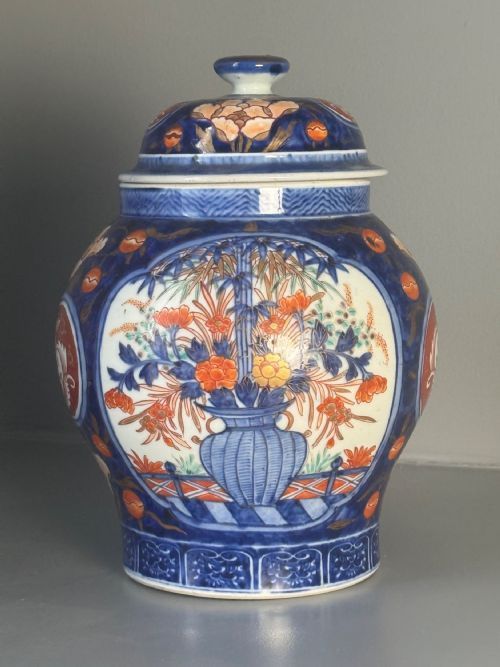
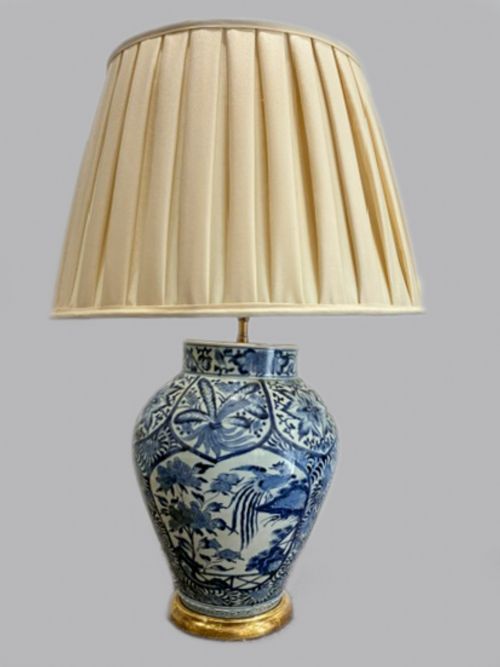


Blue White Imari Vase
A blue white imari vase brings together rich hand-painted palettes and crisp ceramics that anchor a room with centuries of history.
Blue White Imari Vase
A blue white imari vase is a ceramic vessel defined by distinct cobalt underglaze work combined with iron-red and enamel detailing, alongside occasional gold leaf highlights. When you search for a blue white imari vase, you encounter pieces originating from Japanese Arita kilns as well as English adaptations by makers such as Spode and Mason's. The forms range from lidded temple jars and baluster bodies to wine bottles and vessels later converted into table lamps.
Most examples met on this page date from the seventeenth century through to the Edwardian period and nineteen-hundreds. Japanese Edo and Meiji period pieces sit alongside Georgian ironstone productions that emulate the distinct aesthetic. These vessels function as striking decorative centrepieces, mantel ornaments or substantial floor-standing displays.
Materials and Construction
Makers shaped these vessels from high-fired porcelain, ceramic, and ironstone, applying a smooth glaze over the body before firing. Cobalt blue pigment provided the underglaze foundation, whilst enamel colours and gold leaf were added in subsequent low-temperature firings.
Some vessels incorporate fitted brass hardware or silk elements, particularly when adapted into lamps or paired with lids and covers. Ironstone pieces relied on durable refined earthenware clay bodies suited to transfer printing and rich hand-painted overglaze decoration.
Several centuries ago, European nobility displayed these vases in porcelain cabinets so crowded that floors occasionally groaned.
Assessing Quality and Execution
The distinction between standard domestic wares and top-tier pieces lies in the precision of the hand-painted brushwork and the vibrancy of the enamel palette. Superior examples display crisp cobalt definition beneath the glaze alongside sharply registered iron-red and gilt highlights that remain intact across the surface.
Form and proportion also dictate standing, with monumental pairs, baluster silhouettes with original covers, and well-executed bamboo or landscape patterns commanding greater visual weight. The integration of period brass mounts or successful conversion work further separates exceptional decorative items from routine production.
Spode·Mason's
The Blue White Imari Vase Glossary
- Imari
- A style of Japanese porcelain originating from Arita, traditionally characterised by a palette of underglaze blue, iron-red, and gold. The name derives from the port from which these goods were shipped to Europe.
- Arita
- The Japanese town and surrounding region where the production of porcelain first began in the seventeenth century. Kilns in this area created the foundational blue and white and polychrome wares exported globally.
- Baluster
- A vase shape characterised by a rounded lower body that tapers towards a narrow neck and flaring rim. This profile provides stability and a balanced canvas for wrap-around decoration.
- Ironstone
- A type of durable heavy earthenware developed in nineteenth-century England as a robust alternative to porcelain. It readily accepted transfer printing and heavy enamel painting.
- Pot Pourri
- A decorative vase or jar featuring a pierced or perforated cover designed to diffuse scent from dried flower petals and spices placed within the body.
Blue White Imari Vase: Frequently Asked Questions
How do I date a blue white imari vase?
Dating relies on examining the clay body, glaze texture, and painting style. Seventeenth and eighteenth-century pieces often show coarser potting and deeper cobalt tones, whereas Meiji period and nineteen-hundreds pieces exhibit tighter control.
English ironstone versions from the Georgian period carry specific maker marks on the base. Comparing the potting weight and edge finish helps distinguish original antique production from later decorative copies.
Were these vases made for export?
The majority of Japanese imari pieces were produced specifically for the European trade market via Dutch and other Western merchants. Kilns adapted traditional forms and patterns to suit Western interior tastes.
English potteries subsequently observed these imports and created their own ironstone interpretations to satisfy domestic demand for the aesthetic.
Can I use an antique vase as a lamp?
Many historical vessels were converted into table lamps during the twentieth century or earlier to suit modern interiors. Some retain their original porcelain bodies with drilled bases or fitted brass hardware added to secure electrical components.
When living with a converted lamp, ensure the wiring meets current safety standards whilst preserving the antique ceramic structure.
What is the difference between Arita and Imari?
Arita refers to the actual manufacturing centre and kiln sites in Japan where the porcelain was fired. Imari was simply the shipping port through which these finished wares travelled to reach international markets.
Collectors use Arita to denote the regional origin and early period style, whilst Imari describes the decorative colour scheme.