
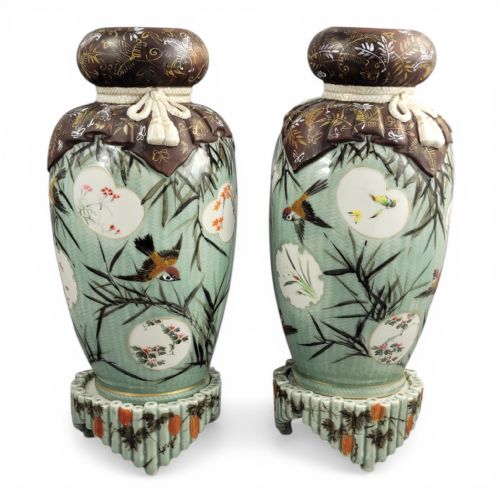


Antique Floor Standing Vases
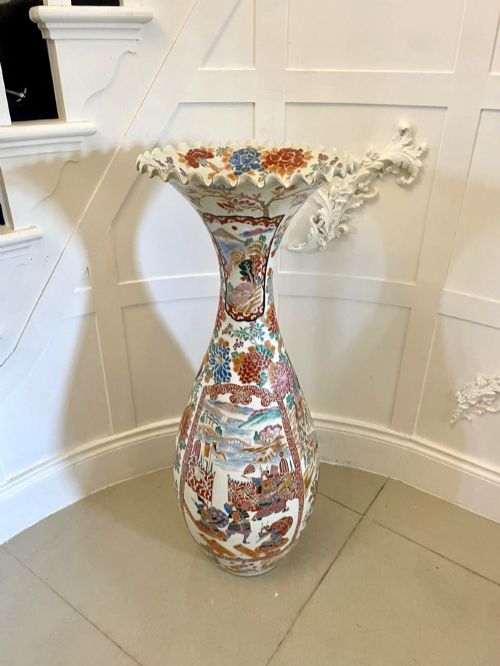
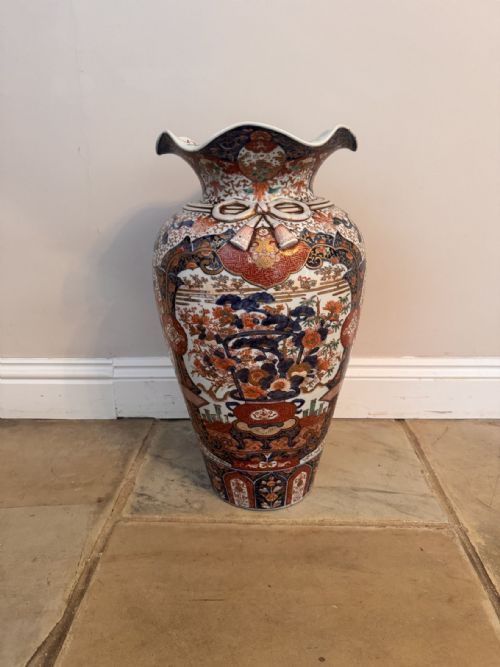
These antique floor standing vases bring scale and presence to a room, standing directly on the floor to anchor large spaces.
Antique Floor Standing Vases
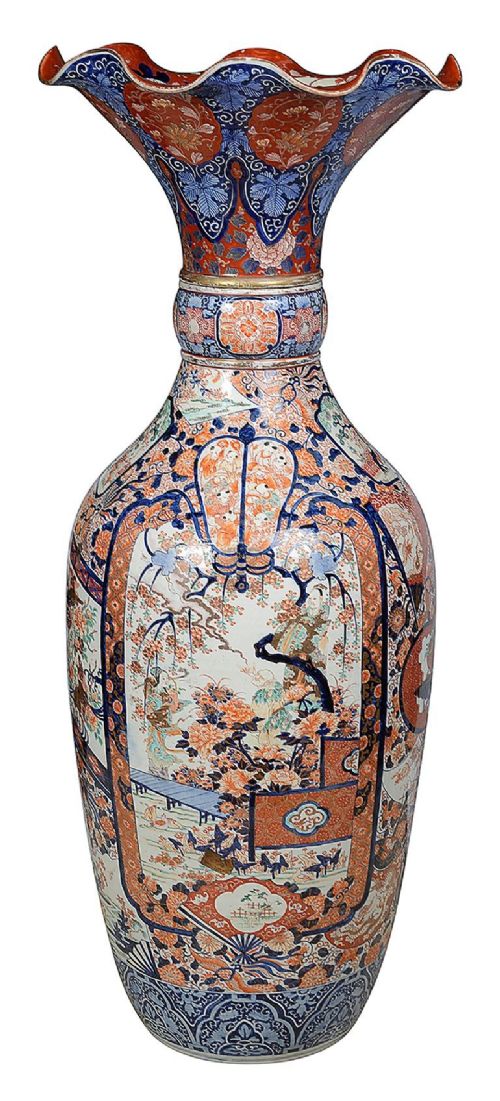
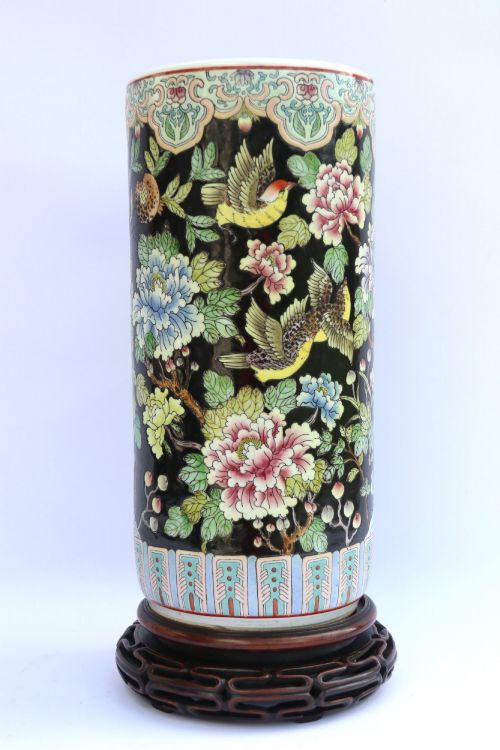
The antique floor standing vases category comprises substantial vessels designed to stand directly on the ground rather than upon furniture. These pieces span the nineteenth century through the early decades of the twentieth century, encompassing various global traditions.
Japanese Imari and Chinese Export porcelain dominate the selection, often accompanied by massive temple vases, cloisonné enamel, and occasional metallic or glass examples. Many pieces reach exceptional heights, sometimes presented upon matching original stands.
Originating from periods such as the Meiji era and Qing dynasty alongside Victorian and Art Deco movements, these vessels serve as prominent architectural focal points in interior settings.
How they were made
Potters and artisans utilised traditional ceramic techniques, applying hand-painted overglaze enamels, intricate glazes, and gold leaf onto porcelain and stoneware bodies. Larger vessels required specialised kiln firing and often utilised multiple sections joined securely together.
Metalworking traditions involved bronze casting and silver plating, whilst lacquer and carved wood provided surfaces and companion stands. Artisans combined these durable materials to support the tremendous weight and height characteristic of floor-standing forms.
Listings feature nineteenth-century porcelain, stoneware, and bronze alongside twentieth-century champagne coolers and standard lamps.
What varies in quality
The distinction between standard production and superior examples rests upon the ambition of the design and the execution of hand-painted detail. Monumental scale combined with original matching stands elevates certain pieces significantly above simpler forms.
The clarity of glaze work, precision of overglaze enamel application, and preservation of delicate gilt elements define the upper tier of the selection. Master workshops demonstrated superior control over massive clay bodies during firing.
Kato Sanhei·Fukagawa
The Antique Floor Standing Vases Glossary
- Imari
- A style of Japanese porcelain featuring distinctive underglaze blue and overglaze red, gold, and other colours. This decorative scheme became widely exported during the Meiji period.
- Cloisonné
- A metalwork technique where enamel is applied within compartments created by soldered wire strips. These vases display rich coloured patterns across heavy metallic surfaces.
- Meiji Period
- A Japanese historical era lasting from 1868 to 1912 noted for ambitious craftsmanship intended for international export markets. Works from this time often achieve monumental heights.
- Qing Dynasty
- The final imperial dynasty of China, spanning from 1644 to 1912, known for producing large temple vases and intricate decorative arts.
- Torchere
- A tall stand or pedestal originally designed to carry a light fitting or vase. In later contexts, these adapt into standard lamps and display supports.
Antique Floor Standing Vases: Frequently Asked Questions
Can these vases hold water?
Most antique floor vessels function primarily as decorative architectural objects rather than receptacles for fresh flowers and water.
Using them dry preserves internal glazes and prevents moisture damage to older ceramic or lacquered structures.
How do I date an Imari floor vase?
Dating relies upon examining the intensity of the overglaze enamels, the weight of the porcelain body, and stylistic markers associated with late nineteenth-century production.
Documentation or signatures from specific potteries often clarify the exact historical period.
What is a temple vase?
Temple vases are monumental vessels traditionally manufactured in China for display within large ceremonial or domestic interiors.
Their substantial size and intricate decorative schemes distinguish them from standard tabletop ceramics.