
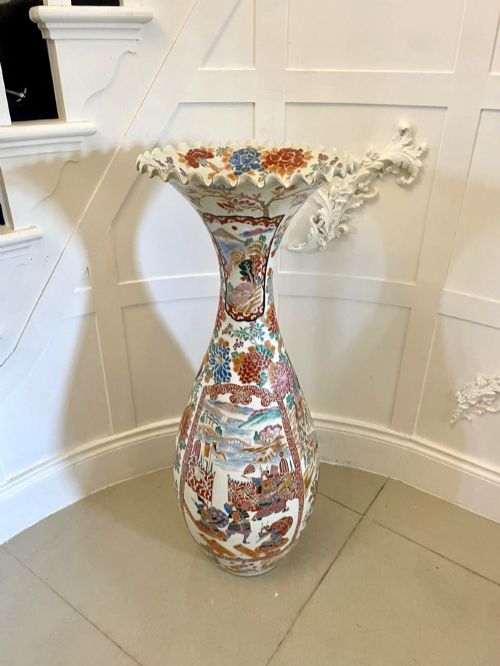
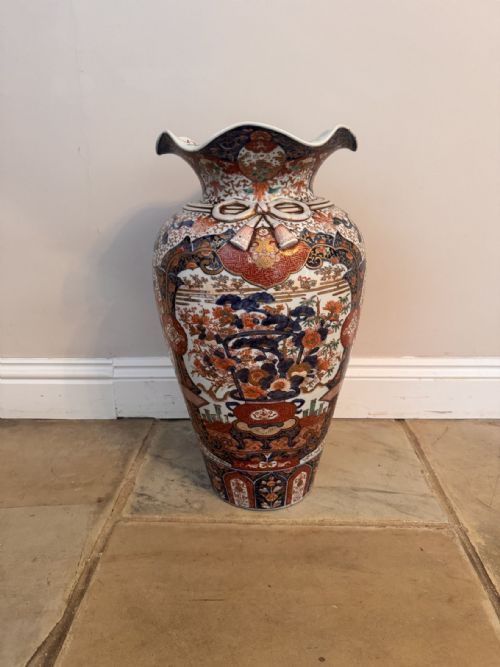
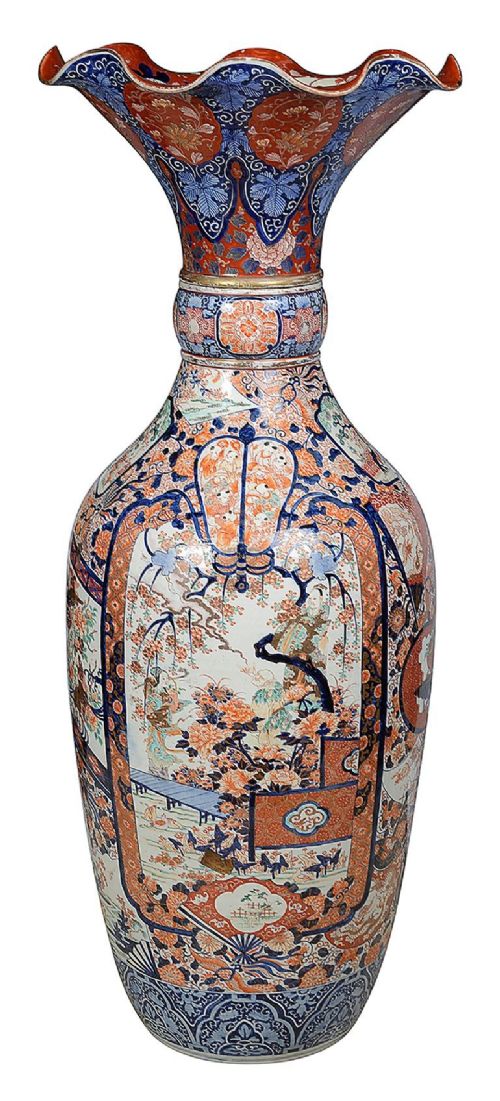
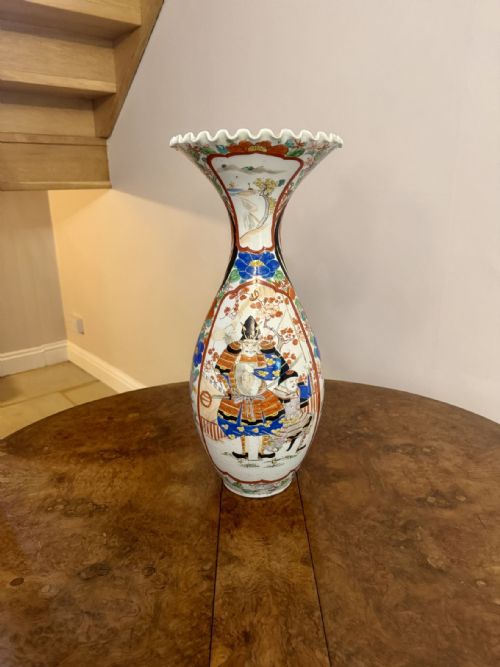


Japanese Imari Floor Vase
These large porcelain vessels, known as a japanese imari floor vase, bring striking scale and historic pattern to an interior.
Japanese Imari Floor Vase
A japanese imari floor vase stands as a substantial decorative object originating from the late nineteenth century, including the Meiji period. Buyers examining this category will most frequently encounter large standing examples, pairs, and monumental vessels designed for prominent placement in a room.
The objects listed range from simple tall bodies to lidded forms, spill vases, and two-handled variants. Most pieces belong to the nineteenth century, with specific dates clustering around the 1880s, 1890s, and the turn of the twentieth century.
Materials and construction methods
Makers formed each japanese imari floor vase from porcelain, applying characteristic glazes and enamel decoration. The traditional palette relies on underglaze blue and iron red, frequently enriched with gold leaf and gilt highlights.
Certain examples incorporate wood elements or dragon decoration alongside the standard porcelain body. These decorative techniques required precise kiln firing to achieve the distinctive colours associated with the style.
Every listed japanese imari floor vase in the current selection dates from the nineteenth century or the early twentieth century.
Judging quality in these vessels
Quality in a japanese imari floor vase rests upon the scale of the piece and the ambition of its painted decoration. Monumental height and the presence of intricate motifs, such as dragons or dense enamel work, distinguish the most commanding examples.
The crispness of the glaze and the skilled application of gold leaf separate standard production from superior output. Pairs and lidded variants also command attention for their completeness and visual balance.
The Japanese Imari Floor Vase Glossary
- Imari palette
- A distinct ceramic decoration style employing underglaze blue, iron red, and supplementary gold leaf. This combination defines the visual character of the wares.
- Meiji Period
- The historical Japanese era spanning from 1868 to 1912, corresponding to the date range of many large floor vases seen here.
- Spill vase
- A tall, slender vessel originally used to hold wooden spills for lighting fires or candles. Several examples in this category share this upright cylindrical form.
- Porcelain
- A hard, fine-grained ceramic material fired at high temperatures. It serves as the primary structural medium for all items in this selection.
Japanese Imari Floor Vase: Frequently Asked Questions
How were these large vases used historically?
A japanese imari floor vase was positioned directly on the floor in grand reception rooms or halls to display status and artistic taste.
Their substantial height made them ideal focal points in large domestic interiors during the late nineteenth century.
Where should I place a floor vase today?
These tall vessels suit empty corners, entrance halls, or flanking a fireplace where their height can be appreciated without obstructing movement.
Because many stand well over half a metre high, they require stable placement away from busy walkways.
How do I identify Meiji period pieces?
Meiji period porcelain is identified through stylistic markers such as dense enamel painting, the characteristic Imari palette, and the dating of the object to the late nineteenth century.
Many listings explicitly connect these decorative attributes to the Meiji era.
Are pairs common in these large vases?
Matching pairs appear regularly among larger nineteenth-century vessels, offering symmetrical display options for formal spaces.
Collectors prize matched sets for their decorative impact and relative scarcity compared to single items.