


Japanese Floral Ceramic Urn
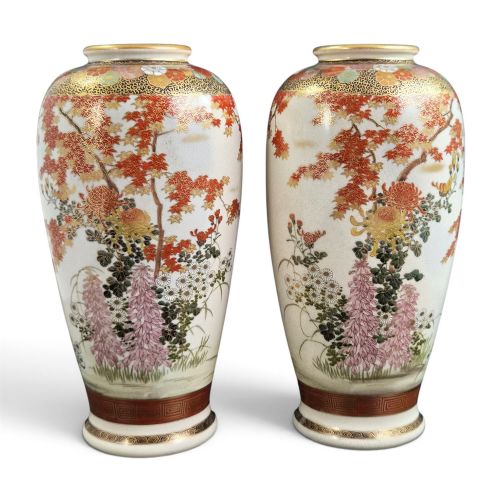
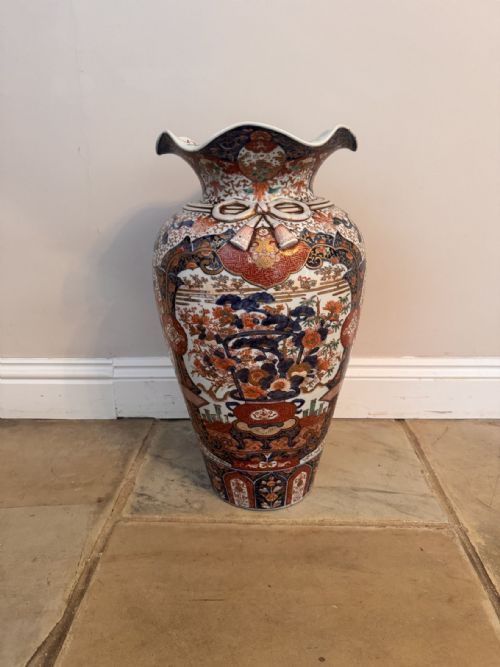
A japanese floral ceramic urn brings rich palette work and traditional forms into a room, spanning nineteenth-century Imari and Satsuma output.
Japanese Floral Ceramic Urn
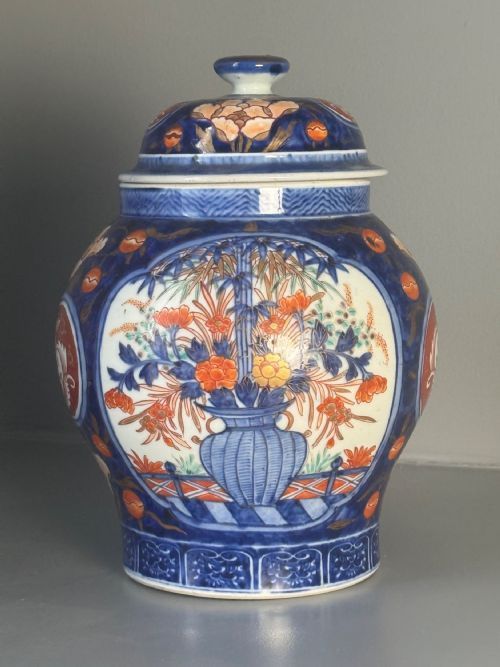
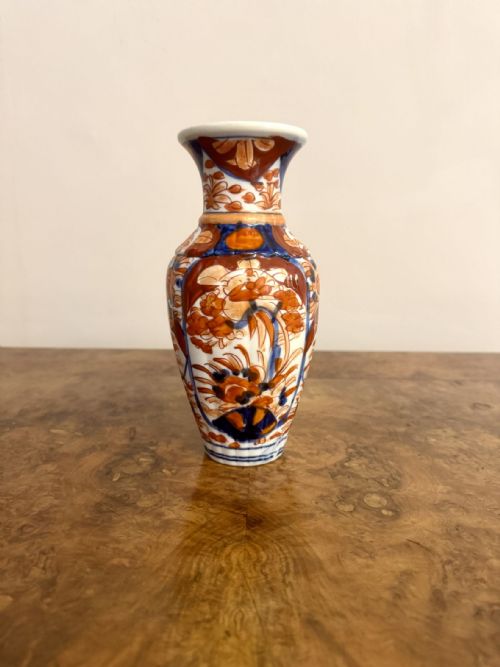
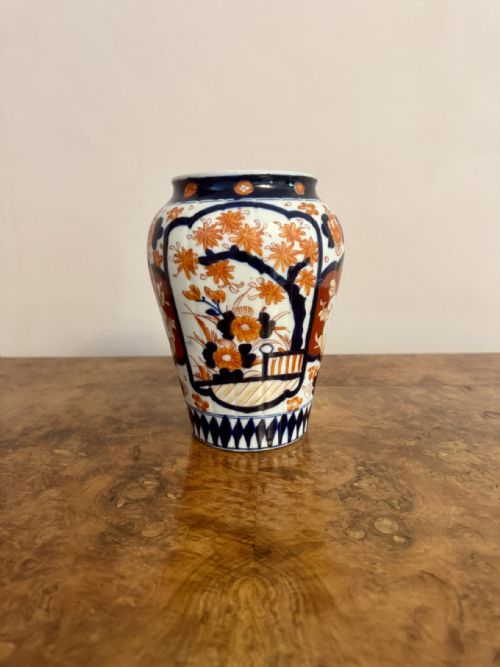
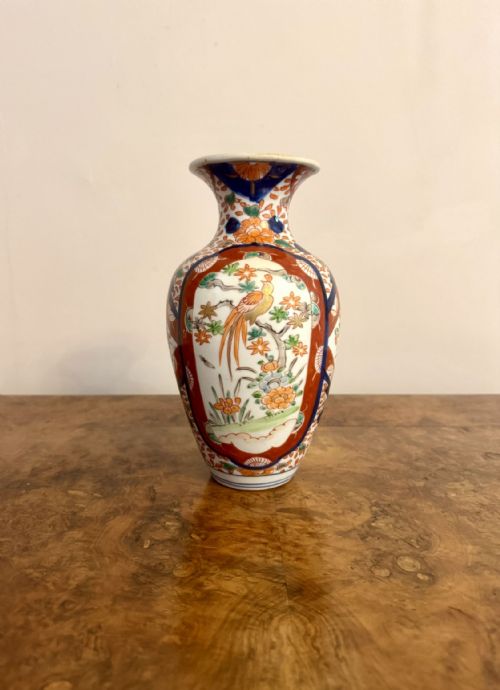
When you search for a japanese floral ceramic urn, you encounter vessels that originate primarily from the nineteenth century and the early decades of the twentieth. These pieces encompass forms such as ginger jars, double gourd vessels, lidded urns, and floor-standing or flared vases.
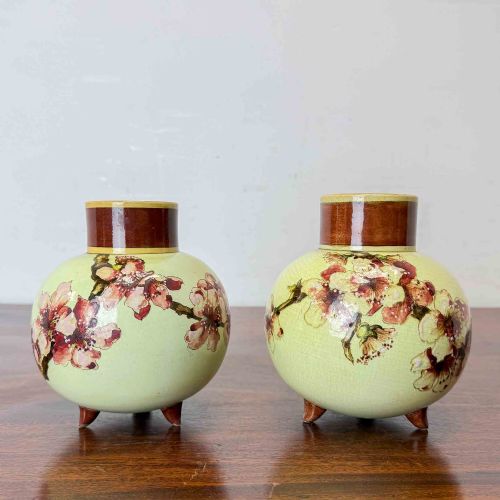
The objects recorded here bridge the late Edo, Meiji, Taisho, and early Showa periods, alongside select British interpretations like Doulton Lambeth faience. Imari and Satsuma styles dominate the selection, bringing distinct painted botanical motifs into domestic spaces.
Buyers meet everything from small cabinet pieces to large exhibition items standing over fifty centimetres tall. Pairs and garniture sets appear frequently among the listings, offering balanced display options for mantels and pedestals.
How They Were Made
Potters shaped these vessels from porcelain, earthenware, and glazed pottery, employing techniques refined across generations in production centres like Arita and Kyoto. Cobalt blue underglazes combine with iron red and applied gold leaf to establish the characteristic rich palette of Imari wares.
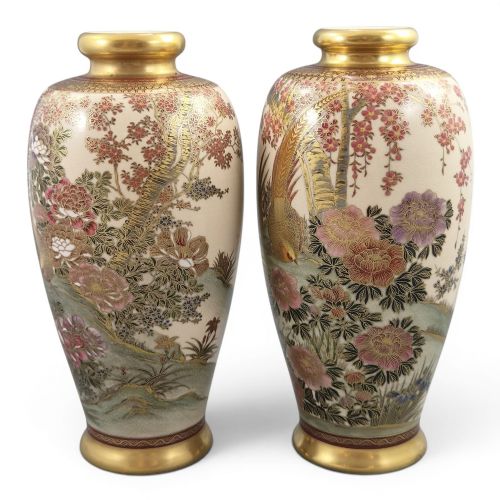
Satsuma pieces utilise a fine-crackled cream glaze painted with detailed enamel pigments and raised gilding. Artisans applied intricate floral patterns, geometric inset panels, and mon crests by hand, sometimes augmenting surfaces with lacquer over black paint.
The listings combine nineteenth-century porcelain and earthenware with early twentieth-century examples in Imari, Satsuma, and Kutani styles.
What Varies in Quality
The distinction between standard commercial output and exhibition quality lies in the discipline of the brushwork and the precision of the enamel application. Master workshops employed finer line work, denser floral compositions, and more generous applications of gold leaf.
Subtlety in the integration of cobalt blue underglaze with secondary enamel colours separates superior pieces from heavier, repetitive production. The weight of the porcelain, the symmetry of thrown or moulded bodies, and the clarity of painted signatures reflect the standing of the kiln.
Maruni Kobe·Manpei·Hakusan·Tagawa·Kinkozan·Hododa
The Japanese Floral Ceramic Urn Glossary
- Imari
- A style of Japanese export porcelain characterised by a palette of cobalt blue, iron red, and gold. This ware took its name from the port of shipment.
- Satsuma
- A type of earthenware originating from the Satsuma Province, featuring an ivory-coloured crackle glaze decorated with polychrome enamels and gilt. Kyoto makers later produced substantial quantities in this style.
- Garniture
- A set of three or more matching vases or jars designed to be displayed together on a mantelpiece or sideboard. These matched groupings were popular in nineteenth-century interiors.
- Mon
- A Japanese emblem or crest used to indicate family lineage or ownership. These badges frequently appear on high-grade Satsuma ceramics.
- Kutani
- A style of Japanese pottery and porcelain known for vibrant overglaze enamel colours, often depicting natural scenes. Production centred in the Kaga province.
Japanese Floral Ceramic Urn: Frequently Asked Questions
How do I display an urn?
Place larger floor-standing pieces in corners or on low stands where their height and painted surfaces can be appreciated without obstruction. Pairs look best flanking a fireplace or set symmetrically on heavy sideboards.
Ensure smaller lidded jars sit at eye level on tables or shelves. Keep them away from direct sunlight to protect the enamel and gold leaf details over time.
What is the difference between Imari and Satsuma?
Imari pieces are made from porcelain with a hard, resonant body, usually decorated in deep cobalt blue, iron red, and gold. They present crisp contrasts and geometric or floral motifs.
Satsuma ceramics use a softer earthenware body covered in a distinctive fine-crackled cream glaze. Their decoration relies on dense polychrome enamels and raised gilding, often illustrating gardens or figures.
How do I date these pieces?
Examine the base, glaze texture, and stylistic markers to determine the period of manufacture. Nineteenth-century examples often display the deeper cobalt tones and heavier bodies typical of the Meiji era.
Signatures, exhibition marks, and workshop labels provide further chronological clues. Edwardian and Showa pieces frequently show refined miniature painting and lighter earthenware construction.
Can I use these urns for fresh flowers?
Historic ceramic urns are porous or may contain hairline fractures from age, making them unsuited for holding water directly. Use a discreet inner glass or plastic liner if you wish to display fresh stems.
Dry botanical arrangements or simply leaving the vessels empty preserves the interior and protects the antique material from moisture damage.