


Arita Ware Vase
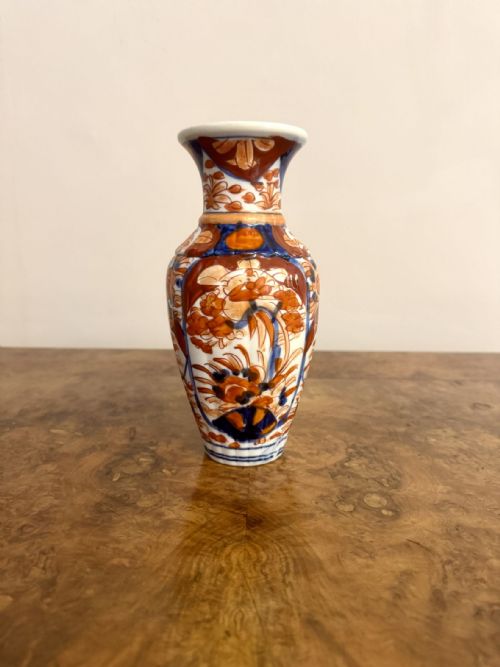
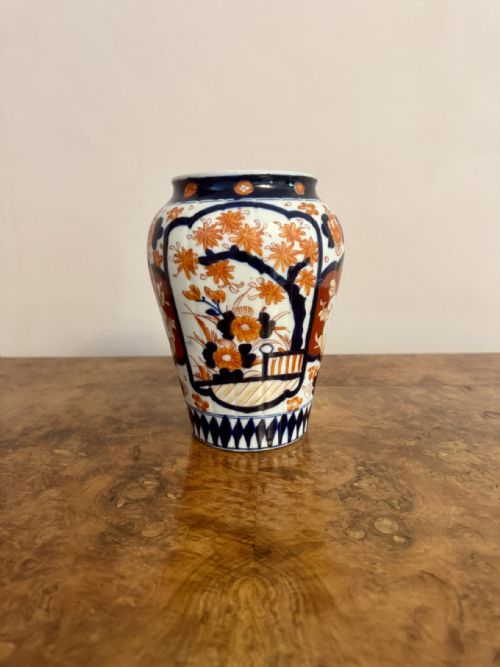
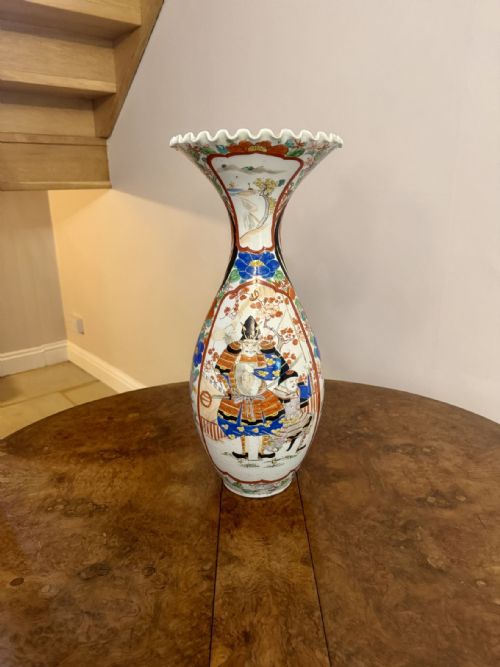
An arita ware vase brings the rich heritage of Japanese porcelain into a room, offering striking hand-painted palettes of blue and red.
Arita Ware Vase
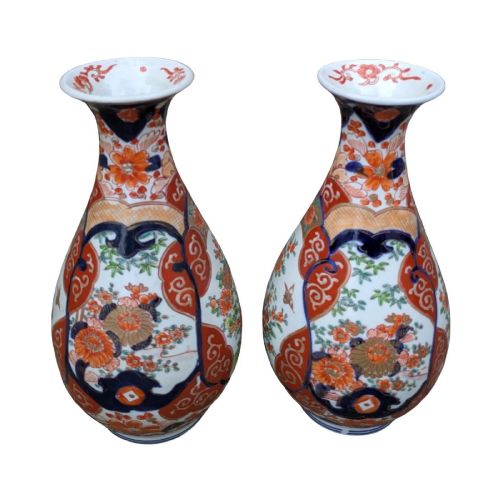
When you search for an arita ware vase, you are looking at Japanese ceramic pieces originating from the town of Arita, spanning periods from the late seventeenth century through to the early twentieth century. These vessels range from simple bottle shapes and hexagonal forms to grand garnitures of three.
The versions you are most likely to meet on this page belong to the Japanese Imari style and the Meiji period, featuring characteristic decorative palettes. Forms also include lidded vases and two-handled vessels produced for both domestic use and export.
Dated examples stretch from the Edo period down to the 1910s, showing a remarkable continuity in porcelain production across centuries. Each piece displays the distinct potting and painting traditions associated with the kiln sites in Hizen province.
Materials and production
These vessels are formed from hard-paste porcelain, painted with cobalt oxide under the glaze and enriched with enamel colours and gold leaf or gilt details. Kiln workers shaped the clay on the wheel or in moulds before applying the underglaze blue.
The characteristic Imari palette combines cobalt blue with iron red and gilt highlights, fired at high temperatures to achieve a durable finish. Some pieces also incorporate explicit glaze applications and complex enamel work over the fired porcelain body.
Some bottle-shaped vases have witnessed three different centuries of domestic dust.
Assessing quality
Quality in these pieces rests upon the crispness of the underglaze cobalt painting and the precision of the enamel and gold leaf application. Finer vessels show greater control in the brushwork and a more balanced composition across complex hexagonal or bottle shapes.
The weight of the porcelain body and the clarity of the white glaze also separate standard export items from exceptional workshop productions. Garnitures and paired sets show consistency in their throwing and decoration across multiple matching vessels.
Fukagawa porcelain
The Arita Ware Vase Glossary
- Imari palette
- A decorative scheme using cobalt blue and iron red, frequently accented with gilt or gold leaf. This combination defines the visual character of many Japanese export wares.
- Meiji period
- The era of Japanese history lasting from 1868 to 1912. Pieces from this time often exhibit elaborate enamel work and confident potting techniques.
- Edo period
- The period spanning from 1603 to 1868 in Japan. Early arita wares from this era display specific potting traits and historic cobalt tones.
- Garniture
- A matching set of three or more vases or jars designed to be displayed together on a mantelpiece or cabinet. These sets require uniform painting and proportion across all pieces.
- Cobalt oxide
- The mineral pigment used to create the deep blue underglaze decoration on porcelain. It is applied to the raw clay before the final glaze and firing.
Arita Ware Vase: Frequently Asked Questions
How do I date an arita ware vase?
Dating relies on stylistic clues, potting characteristics, and the historical period associated with the piece. Seventeenth-century examples differ visibly in clay body and cobalt tone from Meiji period or 1900s productions.
Examining the glaze consistency and the style of the Imari palette helps narrow down the era of manufacture.
What is the Japanese Imari style?
The Japanese Imari style refers to porcelain decorated in cobalt blue, iron red, and gold leaf. It originated in Arita and became immensely popular for export to Europe.
These pieces are easily recognised by their busy, vibrant floral and geometric panel designs.
How were garnitures displayed?
Garnitures of three or more vases were traditionally arranged symmetrically on mantelpieces or large pieces of furniture in grand interiors. They served as prominent decorative centerpieces in reception rooms.
Keeping a set together preserves its original decorative function.
What makes Fukagawa porcelain different?
Fukagawa porcelain comes from a specific kiln tradition known for fine potting and distinct artistic output during the Meiji period. These pieces often feature refined lidded designs and meticulous painting.
Collectors look for specific factory marks associated with the firm.