



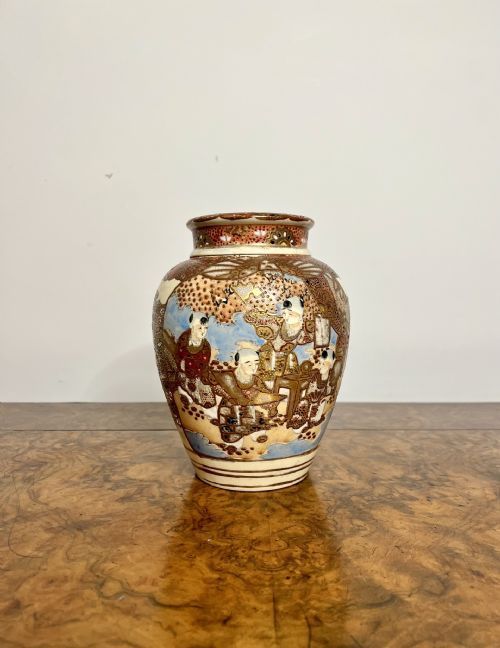
Meiji Japanese Earthenware
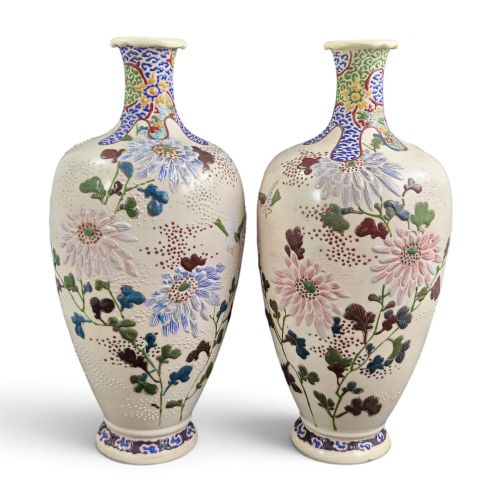
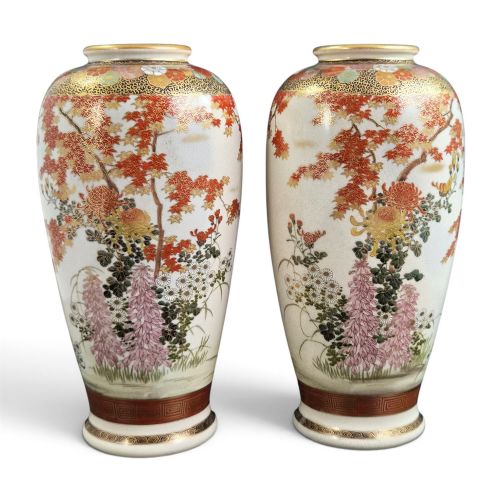
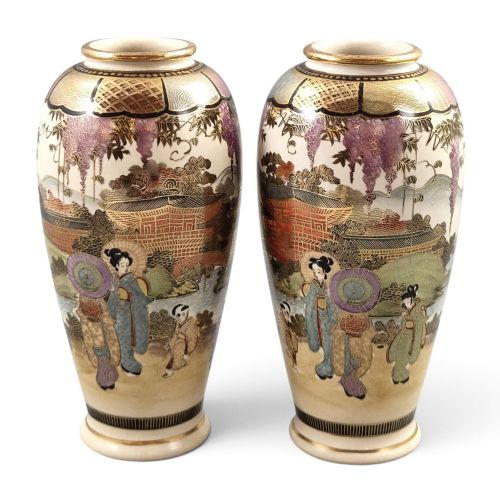
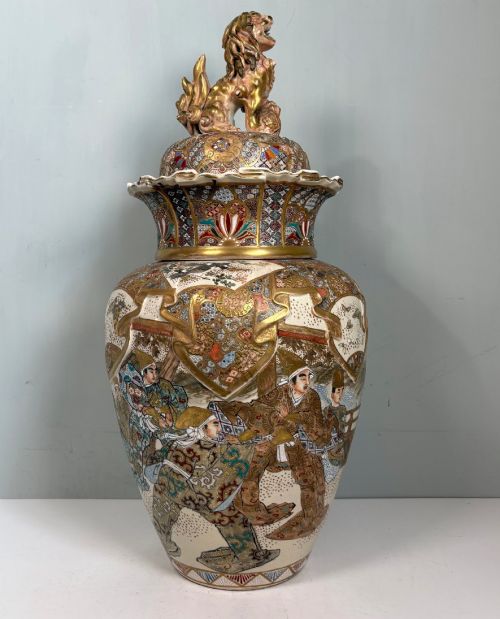
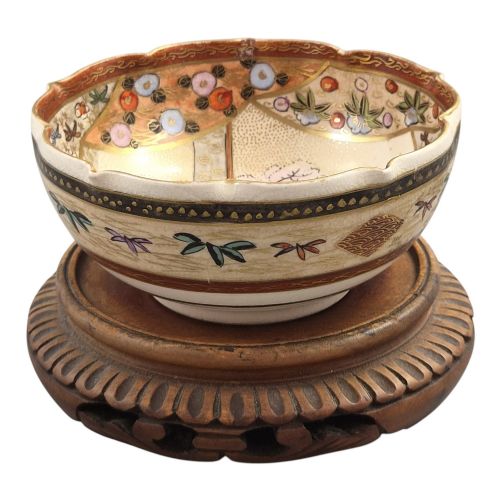
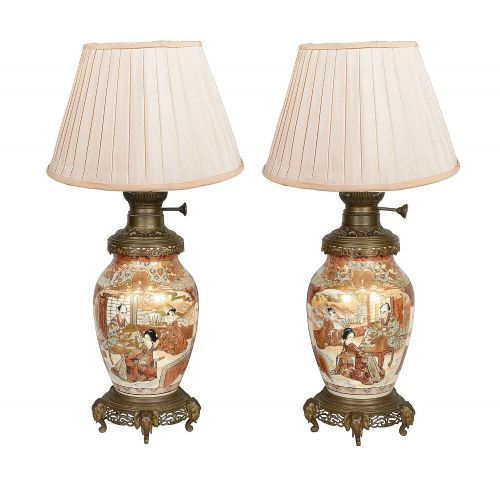
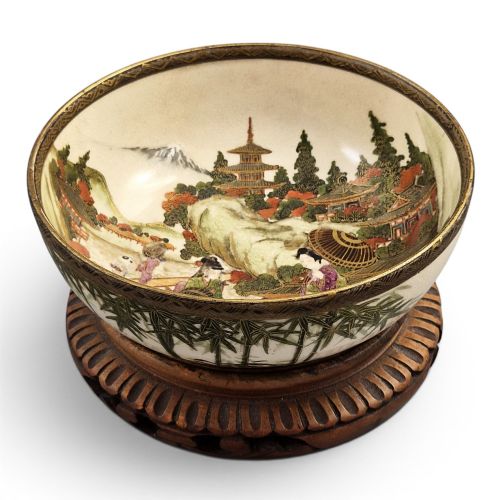
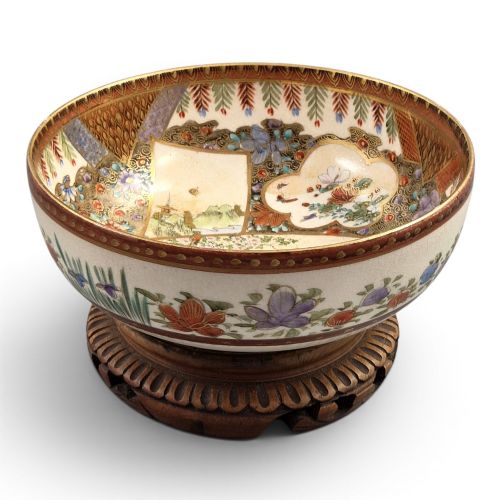
Meiji japanese earthenware brings finely painted Satsuma and textured Sumida Gawa ceramics into your home, offering intricate scenes of court figures and deities.
Meiji Japanese Earthenware
When you search for meiji japanese earthenware, you encounter works spanning the nineteenth century through the early twentieth century, encompassing the Meiji and Taishō periods. The selections centre heavily on Satsuma wares, alongside distinctive Sumida Gawa creations.
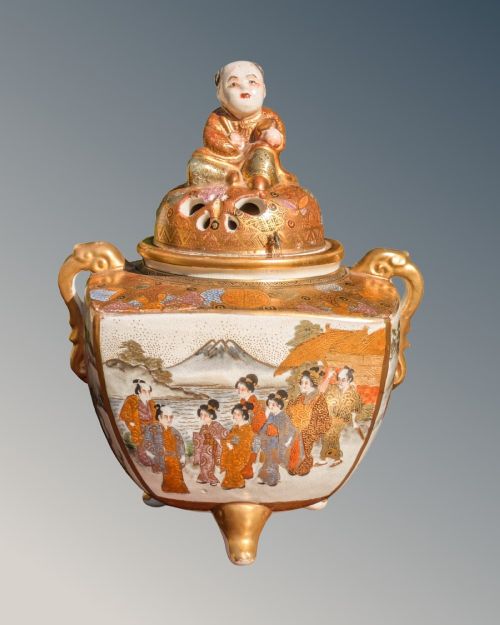
The forms available range from tall vases and large chargers to tea caddies, ginger jars, small bowls, and figurative mugs. You will frequently meet pieces decorated with figures such as arhats, sages, and women with children, or detailed patterns of butterflies, flowers, and dragons.
Originating from workshops in Kyoto and other centres, these ceramics reflect the decorative arts produced during a transformative era in Japan. The inventory here captures the distinct stylistic shifts from the nineteenth century into the Edwardian era.
What varies in quality
The degree of artistic execution in the painted figures and natural motifs dictates the distinction between standard items and superior works. Pieces bearing the signatures of renowned masters or prominent workshops demonstrate finer brushwork and more complex compositional balance.
The density and precision of the gilt work and raised moriage decoration also separate ordinary vessels from exceptional examples. Furthermore, the overall crispness of the moulded forms and the richness of the enamel palette determine the standing of an individual piece within the historical range.
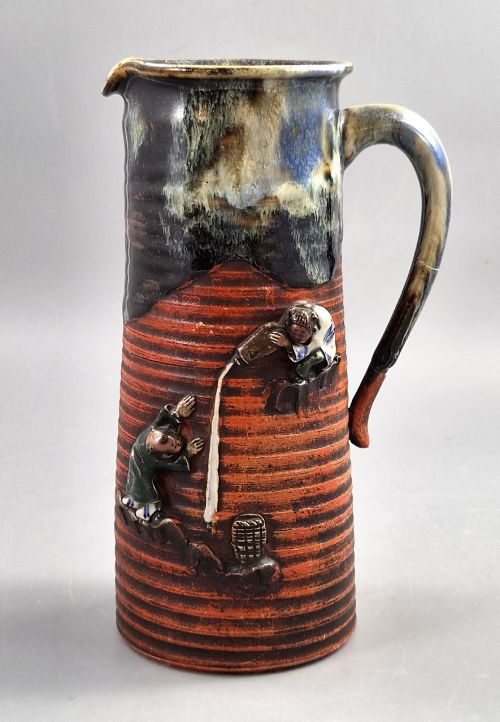
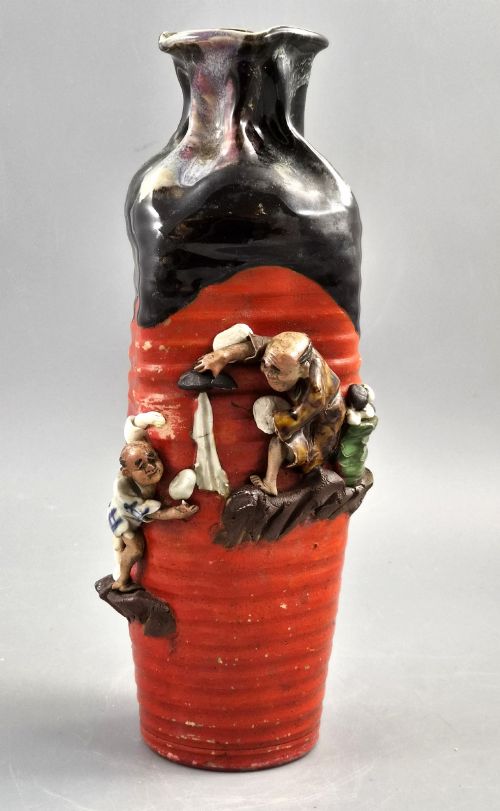
Several pieces feature tiny, earnest sages clinging stubbornly to the sides of mugs as if avoiding a sudden downpour.
Koshida·Maruni Kobe·Shozan·Inoue Ryōsai·Kizan·Gyokkō·Kozan·Kinkōzan·Kinzan·Hotoda·Shizan·Kōko·Toshozan·Makuzu Kozan II·Ryuzan·Chosei
The Meiji Japanese Earthenware Glossary
- Satsuma
- A type of Japanese earthenware featuring a crackle glaze and elaborate polychrome and gilt enamel decoration. It originated in Satsuma Province before production spread widely to Kyoto and other major urban centres.
- Moriage
- A decorative ceramic technique using piped clay to create raised patterns and textured surfaces. This method adds a tactile, three-dimensional element beneath the enamel and gold highlights.
- Sumida Gawa
- A distinct style of Japanese pottery characterised by heavily textured, often melting glazes and applied figurative elements in high relief. These pieces frequently depict figures such as sages or children modelled directly onto the vessel wall.
- Arhat
- An enlightened being or Buddhist sage frequently depicted in the detailed figural painting of Meiji period ceramics. They appear alone or in groups of one thousand across chargers and vases.
- Natsume
- A small tea caddy traditionally used in Japanese tea ceremonies, shaped similarly to a jujube fruit. These miniature vessels often feature delicate signature marks and fine floral or figural painting.
Meiji Japanese Earthenware: Frequently Asked Questions
What is Satsuma ware?
Satsuma ware is a distinct style of Japanese earthenware featuring a characteristic ivory-coloured crackle glaze. Artisans decorated these surfaces with detailed polychrome enamels and generous amounts of gold gilt.
Originally produced in the Satsuma Province, the style evolved significantly during the nineteenth century. Workshops in Kyoto adopted the aesthetic, creating sophisticated vases, bowls, and plates for international export.
How do I identify Sumida Gawa pottery?
Sumida Gawa pottery stands out through its rough, heavily textured bodies and melting coloured glazes. These pieces often incorporate distinct figures modelled in high relief directly onto the exterior wall.
Originating near Tokyo, this style differs greatly from the refined smoothness of Satsuma ware. Mugs, pitchers, and vases from this tradition showcase expressive, narrative scenes involving traditional figures.
What is moriage decoration?
Moriage is a decorative ceramic technique where liquid clay is piped onto the vessel before firing to create raised, three-dimensional patterns. This textured framework is then painted and gilded.
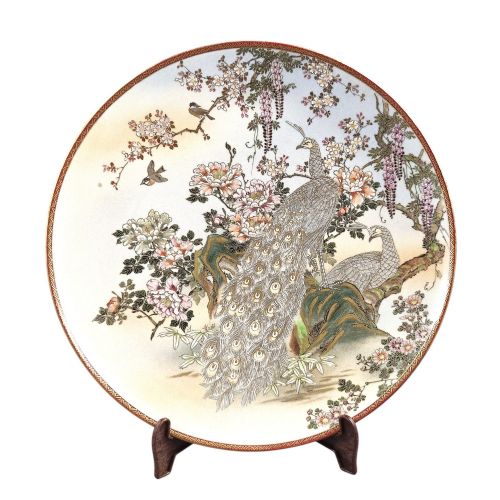
On Meiji period ceramics, you find moriage used to outline robes, frame floral panels, or highlight dragons and peacocks. It adds a tangible depth that contrasts with flat enamel painting.
How should I care for antique earthenware?
Antique earthenware requires gentle handling due to the porous nature of the ceramic body and the delicate nature of surface gilding. Keep pieces away from direct sunlight and areas prone to high moisture or sudden temperature shifts.
Dust the surface lightly with a dry, soft cloth rather than using liquid cleaners or abrasive materials. Because the enamel and gold leaf rest on top of the glaze, harsh rubbing will damage the decoration.