





Gilded Satsuma Ware
Gilded satsuma ware brings together intricate enamel painting and heavy gold leaf on earthenware pottery from Japanese and Meiji period workshops.
Gilded Satsuma Ware
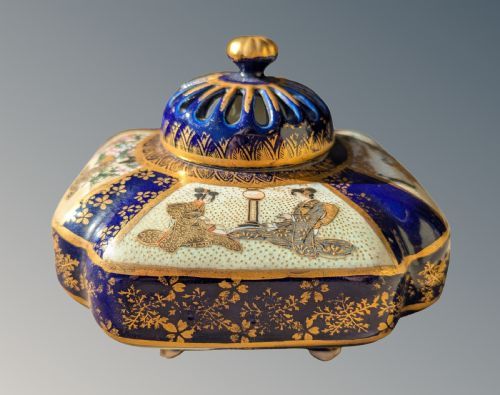
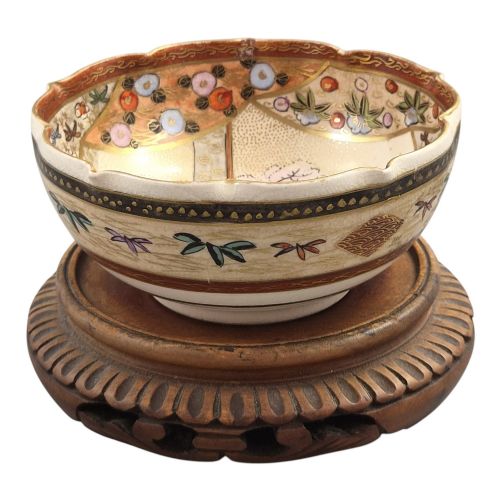
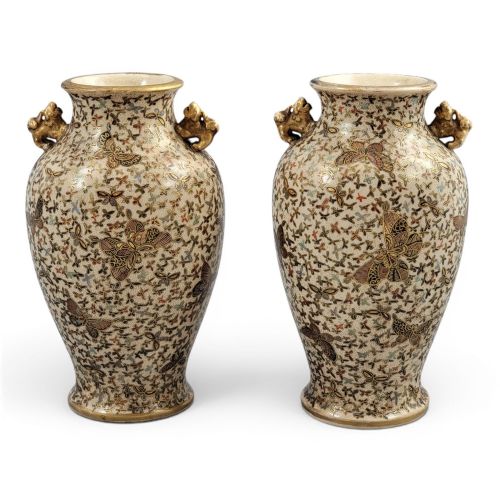
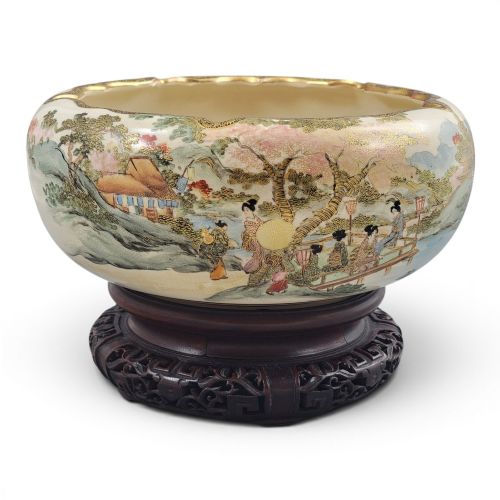
Gilded satsuma ware comprises earthenware pottery pieces decorated with fine enamel and gold gilt, originating principally from Japanese workshops during the nineteenth and early twentieth centuries. Collectors encounter forms ranging from large vases and decorative bowls to incense burners, tea jars, table lamps, and okimono figures.
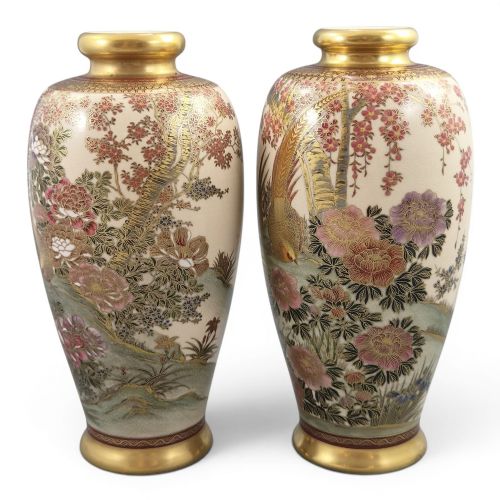
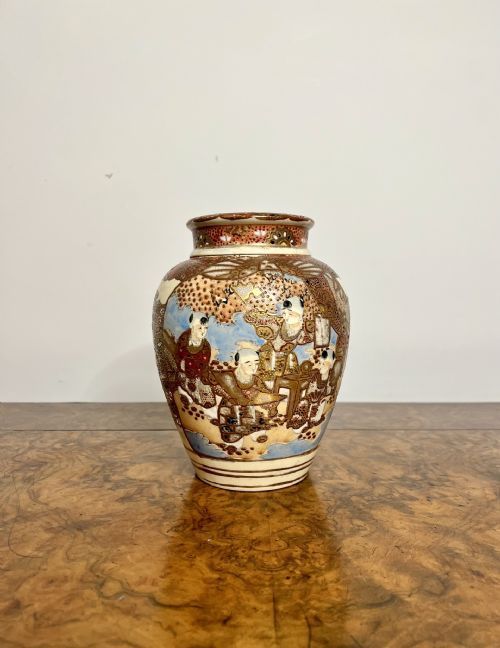
The majority of pieces date from the Meiji period, alongside examples spanning the Taisho and early Showa periods, reflecting production centres in Kyoto, Tokyo, Kobe, and Yokohama. Common pictorial subjects include landscapes, flowers, birds, butterflies, figures, and historical scenes rendered in rich palettes.
Vessels often bear signatures from renowned makers and studios, while some items display the Shimazu family crest. Buyers select these items for their dense decorative schemes and historical association with Japanese ceramic export production.
Materials and Construction
Makers formed these items using earthenware clay, applying a distinctive cream-coloured crackle glaze that provided a textured base for subsequent painting. Artisans built up surface designs using polychrome enamel colours combined extensively with gold leaf and gold gilt.
Decoration required careful hand-painting of complex motifs such as figures, thousands of butterflies, or floral patterns, finished with detailed gilt outlines. Selected pieces integrated supplementary materials like wood, brass, or fabric, particularly in mounted items and table lamps.
Materials recorded across the inventory include earthenware, enamel, gold leaf, wood, gold gilt, brass, and fabric.
Assessing Quality and Execution
Execution separates standard export items from masterwork production, visible in the precision and density of the hand-painted enamel and gold leaf work. Pieces signed by celebrated makers or produced in prominent Kyoto and Yokohama studios generally display superior artistic control over complex figural and landscape compositions.
The fineness of the crackle glaze and the crispness of the gilt detailing indicate the skill invested during manufacture. Larger monumental vases and detailed okimono sculptures demonstrate greater sculptural ambition than standard vessels.
Kinkozan·Manpei·Kinzan·Hotoda·Shizan·Kizan·Seiko-en Chokei·Yamashu·Shuzan·Yasuda·Tagawa·Hododa·Tokyo Taizan·Taniguchi·Shozan·Hattori
The Gilded Satsuma Ware Glossary
- Satsuma ware
- Japanese pottery originating from Satsuma Province, later produced widely in Kyoto and other centres with a characteristic crackle glaze and enamel decoration.
- Okimono
- A Japanese decorative sculpture designed for display on a shelf or tokonoma alcove rather than for practical utility.
- Mon
- A traditional Japanese heraldic emblem or badge, such as the Shimazu family crest frequently found on export ceramics.
- Millefleur
- A decorative pattern covering the entire surface with a dense multitude of painted flowers.
Gilded Satsuma Ware: Frequently Asked Questions
What is gilded satsuma ware?
Gilded satsuma ware is Japanese earthenware pottery finished with a characteristic crackle glaze, hand-painted enamel details, and abundant gold leaf. These pieces were produced primarily for export during the Meiji period and subsequent eras.
Artisans in centres like Kyoto and Yokohama decorated the surfaces with elaborate motifs including landscapes, figures, and floral arrangements.
How do I identify Meiji period pieces?
Meiji period pieces can be identified through historical stylistic markers, traditional Japanese motifs, and the presence of artist signatures or studio marks on the base. The era spans from 1868 to 1912, aligning with the height of Japanese ceramic export manufacturing.
Many high-quality items also display specific regional family crests, such as the Shimazu mon.
What forms do these ceramics take?
These ceramics appear in a wide variety of functional and decorative forms, including large vases, ginger jars, shallow dishes, and decorative bowls. Collectors also encounter specialised items such as incense burners, tea jars, tea sets, and sculpted animal figures.
Selected vessels have been adapted into table lamps using supplementary base materials.
How should I care for gilded ceramics?
Gilded ceramics require gentle handling to preserve the delicate enamel colours and applied gold leaf surfaces. Dusting with a soft, dry cloth is recommended to maintain the finish without introducing moisture or abrasive friction.
Keep pieces away from direct sunlight and areas prone to extreme temperature changes to protect the earthenware body and glaze.