





Meiji Imari Porcelain Plate
A meiji imari porcelain plate brings vibrant palettes and traditional forms to the table, offering a decorative piece crafted for display.
Meiji Imari Porcelain Plate
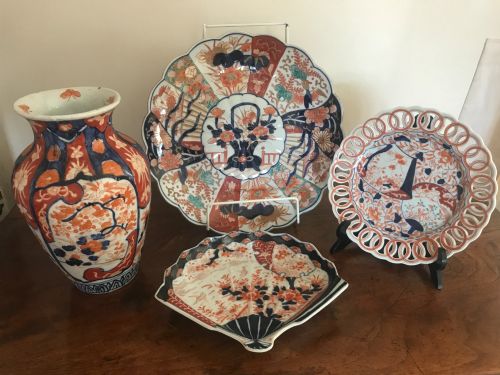
When you search for a meiji imari porcelain plate, you encounter decorative plates, dishes, and large chargers originating from Japan during the nineteenth and early twentieth centuries. The pieces on this page span the Meiji period, Victorian era, and surrounding decades, capturing a distinct phase of ceramic production.
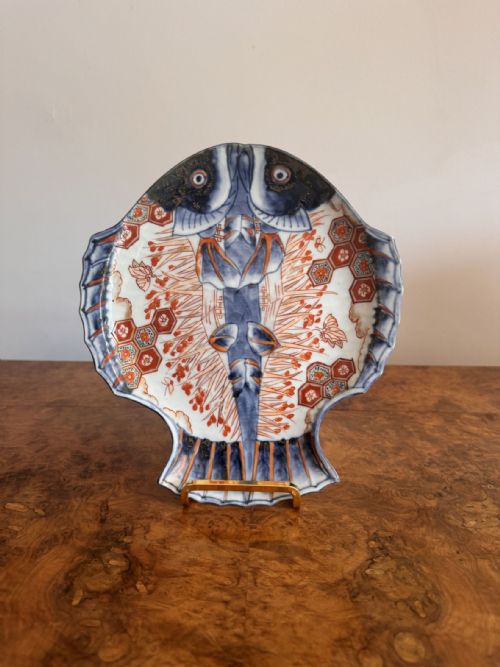
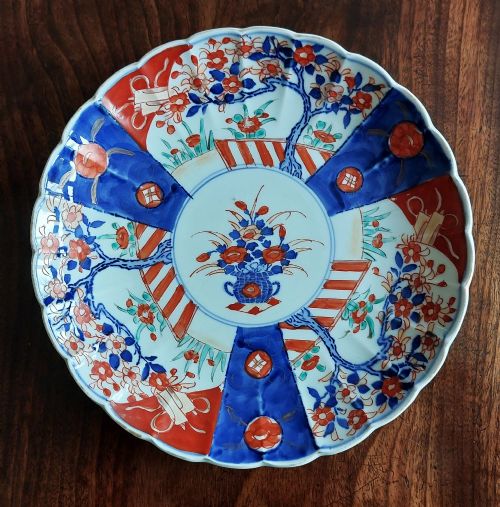
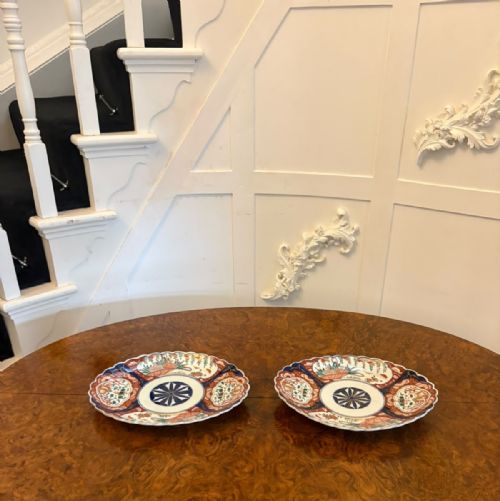
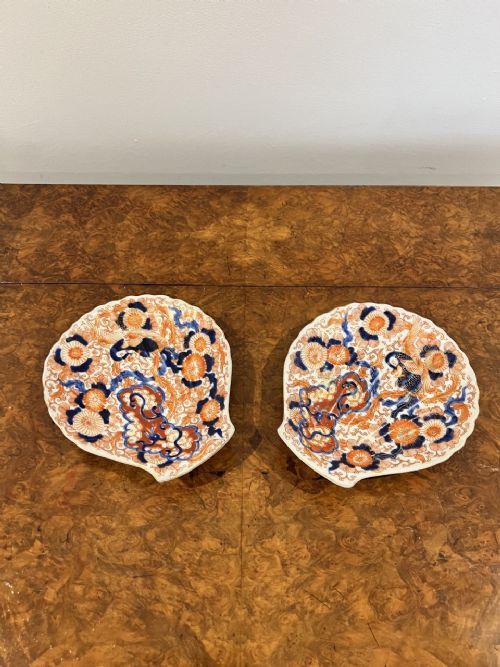
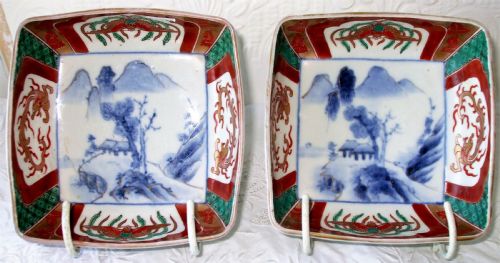
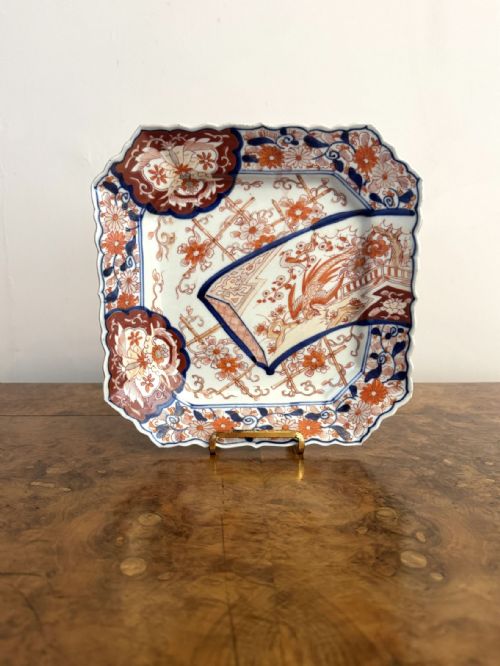
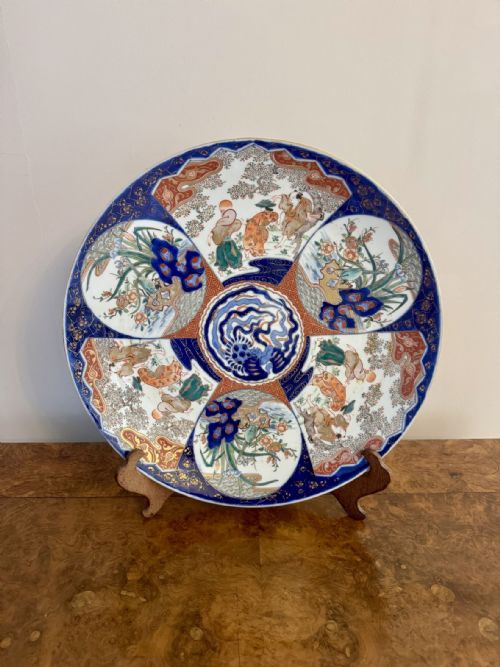
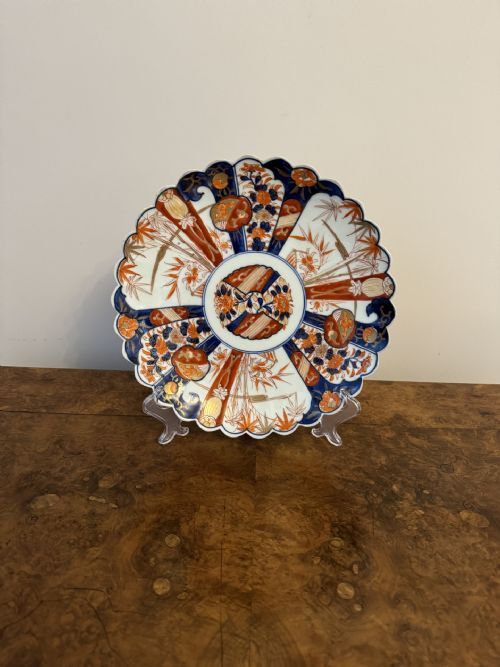
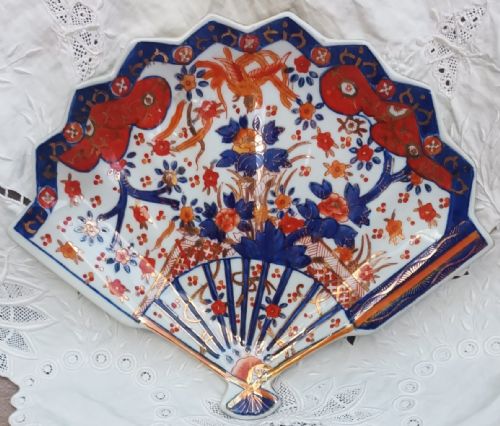
Most examples you meet take the form of circular plates with scalloped edges, alongside more unusual shapes like fish, shells, squares, and oval dishes. You also find pairs and larger sets, often decorated with floral and exotic bird designs intended for visual impact.
These items emerge from Japanese Arita traditions, representing the intersection of traditional craftsmanship and export demand. The selection ranges from standard round plates to substantial chargers designed for wall display or table centrepieces.
How they were made
The foundation of a meiji imari porcelain plate lies in hard-paste porcelain shaped by hand or mould, providing a sturdy base for subsequent decoration. Artisans applied cobalt underglaze to create deep blue motifs before the initial firing.
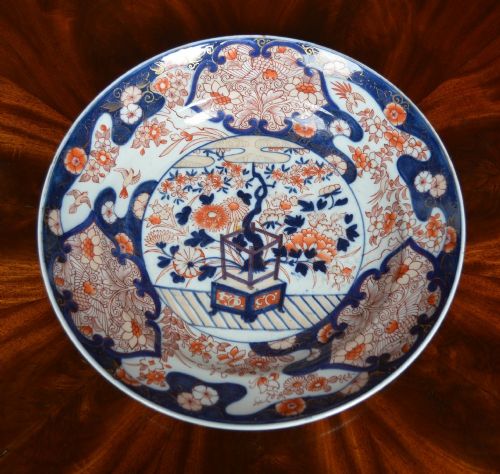
Overglaze enamels in iron red and other colours were added in a secondary firing, bringing richness to the surface design. Many pieces incorporate gold leaf, gilt, or gilding to highlight specific details within the painted floral and bird patterns.
Some plates abandon standard circles entirely to take the cheeky form of a swimming fish.
What varies in quality
The distinction between ordinary and exceptional pieces rests upon the precision of the hand-painted brushwork and the complexity of the design. Standard items display straightforward floral motifs, whereas superior examples incorporate detailed exotic birds and intricate geometric borders.
Unusual forms such as fish, shell, or square shapes require greater skill in moulding and trimming the porcelain before firing, lifting them above standard round plates. The controlled application of gold leaf and the depth of the cobalt underglaze further separate basic production from the finest output.
The Meiji Imari Porcelain Plate Glossary
- Imari
- A style of Japanese porcelain originating from Arita, traditionally characterised by a palette of cobalt blue, iron red, and gold. This aesthetic became popular for export during the Meiji period.
- Charger
- A large decorative plate or dish, typically measuring over thirty centimetres across. These substantial pieces were primarily manufactured for display on walls or sideboards rather than for dining.
- Cobalt Underglaze
- A blue pigment applied directly to the raw porcelain body before glazing and firing. This technique protects the colour beneath a glossy vitrified finish.
- Gilt
- A thin layer of gold applied to the surface of the porcelain as a decorative accent. It catches the light and complements the red and blue enamel colours.
- Scalloped Edge
- A curved, wavy rim detail shaped along the perimeter of a plate or dish. This technique softens the circular outline and adds texture to the silhouette.
Meiji Imari Porcelain Plate: Frequently Asked Questions
How were imari plates used?
These pieces served primarily as decorative items for display within the home, utilising large chargers and plates to add colour to rooms. Their striking patterns made them centrepieces for sideboards or walls.
Smaller dishes and sets were occasionally employed for dining or serving food, though many survived in pristine condition because owners treated them as ornamental art.
What is a charger?
A charger is a large decorative plate or dish that exceeds the dimensions of standard tableware. In this category, chargers offer a wider surface area for complex floral and bird compositions.
They were manufactured to be stood on plate rails or hung on walls, acting as focal points in a collection.
How do I date these ceramics?
Dating relies on stylistic markers and the historical periods associated with Japanese export wares, such as the Meiji period and the late nineteenth century. Records often point towards the decades around nineteen hundred.
Examining the weight of the porcelain, the tone of the cobalt underglaze, and the application of gilding helps place a piece within its era.
How do I care for my plate?
Display your porcelain securely using a stable plate stand or wall mount designed for heavy chargers. Keep pieces away from direct sunlight to preserve the vibrancy of the overglaze enamels.
Dust gently with a soft dry cloth and avoid harsh cleaning agents that might damage the delicate gold leaf and enamel surface.