

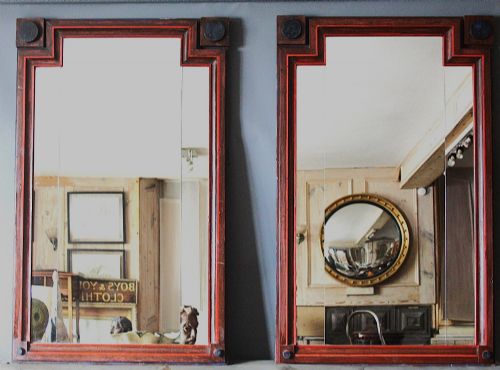
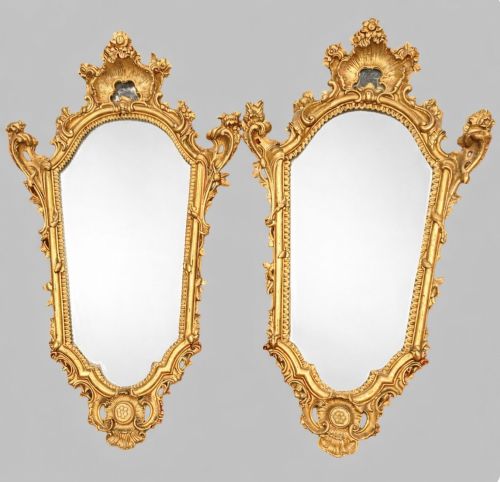


Matching Pair Mirrors
Matching pair mirrors bring symmetry and balance to a room, offering two identical glass surfaces that reflect light and double the sense of space.
Matching Pair Mirrors
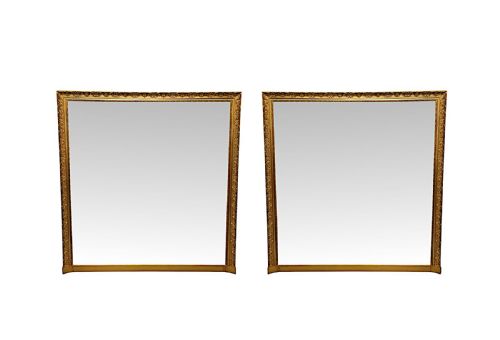
Matching pair mirrors are twin reflective pieces designed to hang together, bringing formal balance and symmetry to interior spaces. When searching for matching pair mirrors, buyers encounter an array of wall mirrors, overmantel mirrors, and pier mirrors originating from the nineteenth and early twentieth centuries. These pieces reflect historical design revivals spanning from George II and Louis XV manners through to Victorian, Edwardian, and Art Deco periods.
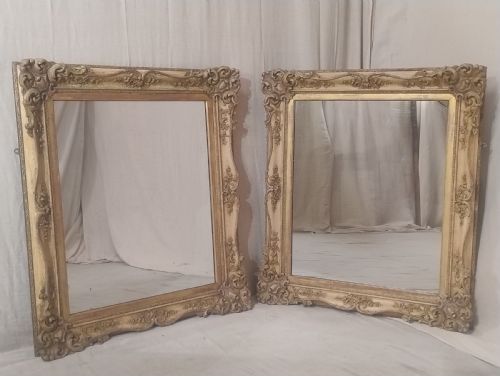
The selection ranges from grand giltwood overmantel examples to smaller oval wall mirrors framed in walnut or rosewood. Many pieces showcase elaborate carving and gesso work, while others present simpler profiles in painted wood or simulated finishes. Buyers are most likely to encounter Victorian and Edwardian timber gilt mirrors alongside pieces bearing French decorative influences.
Materials and construction
Makers constructed the frames of matching pair mirrors using traditional timber carcasses such as walnut, rosewood, and pine, often finished with applied gesso and gold leaf to create rich giltwood surfaces. Carved wood details required skilled handwork to shape floral motifs, scrolls, and classical architectural elements directly into the base material or onto applied plaster mouldings.
Glass production involved silvering techniques that created clear reflective panels held securely within the rebated frames. Parcel gilt treatments combined exposed wood grain with gilded highlights, while later twentieth-century examples introduced painted surfaces and simulated wood finishes.
Some nineteenth-century makers cleverly disguised timber joints beneath heavy gesso, letting generations admire solid gold until a stray knock revealed the honest pine beneath.
Factors that distinguish quality
Quality in matching pair mirrors rests upon the crispness of the hand-carved ornament and the depth of the gilding applied over the gesso ground. Finer examples display sharp definition in floral and scroll motifs where the artisan worked the plaster layers directly before applying gold leaf.
The integrity of the matching pair status also dictates value, as true pairs share identical dimensions, timber grain patterns, and frame construction details developed side by side in the workshop. The weight of the timber and the quality of the original glass plates further separate standard production pieces from master-carved decorative works.
Waring and Gillows
The Matching Pair Mirrors Glossary
- Giltwood
- Timber frames coated with gold leaf over a prepared gesso and bole ground. This technique provides a luminous surface that catches and reflects ambient room light.
- Gesso
- A plaster-like mixture applied to wood frames to create a smooth surface for subsequent carving, painting, or gilding. It allows artisans to render intricate low-relief ornamentation.
- Overmantel mirror
- Large horizontal mirrors designed specifically to be hung on the wall directly above a fireplace mantelpiece. They frequently feature grand proportions and elaborate architectural framing.
- Pier mirror
- Tall, narrow mirrors historically hung on the solid section of wall between two windows. Their vertical format maximises available light in dimly lit rooms.
- Parcel gilt
- A decorative treatment where parts of a wooden or painted frame are selectively highlighted with gold leaf while other areas remain exposed or painted. This creates contrast between the timber grain and the gilded ornaments.
- Cartouche
- An ornamental frame resembling a rolled-up scroll or shield, often found at the crest or base of decorative mirrors. It serves as a focal point for elaborate carving.
Matching Pair Mirrors: Frequently Asked Questions
Where should I hang matching pair mirrors?
Matching pair mirrors look best when hung symmetrically on either side of a fireplace, doorway, or large piece of furniture. This placement creates visual balance and enhances architectural symmetry within the room.
Positioning the mirrors opposite windows also maximises natural daylight, bouncing illumination deep into the living space.
How do I clean antique giltwood frames?
Antique giltwood frames require delicate care to protect the fragile gold leaf and underlying gesso layers. Dusting should be done gently using a soft, dry ostrich feather duster without applying pressure.
Avoid using water, chemical sprays, or abrasive cloths, as moisture and friction can permanently strip away the historic metallic finish.
Are these mirrors true matching pairs?
True matching pairs were constructed together in the workshop to share identical dimensions, carving details, and timber characteristics. Examining the frame construction, wood grain, and decorative motifs reveals whether the two pieces originated as a set.
Slight handmade variations in carving often confirm authenticity and age rather than indicating a mismatched assembly.
What periods do these mirrors come from?
The available pieces span the nineteenth and early twentieth centuries, encompassing Victorian, Edwardian, and Art Deco eras. Stylistic influences also reach back to earlier periods through revival designs mimicking George II and French Louis XV aesthetics.
Each period introduced distinct framing materials and decorative vocabularies, ranging from heavy giltwood overmantels to sleek rosewood pier glasses.