

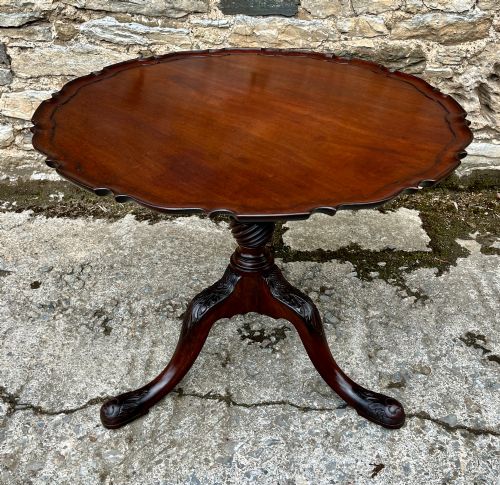
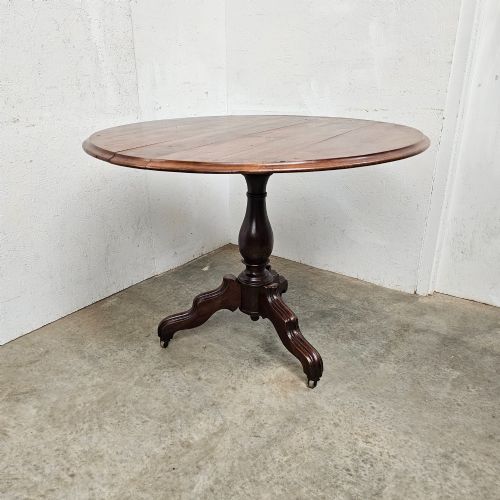


Mahogany Tripod Supper Table
When you search for a mahogany tripod supper table, you are looking at circular timber tables with three-legged bases designed to tilt and move easily.
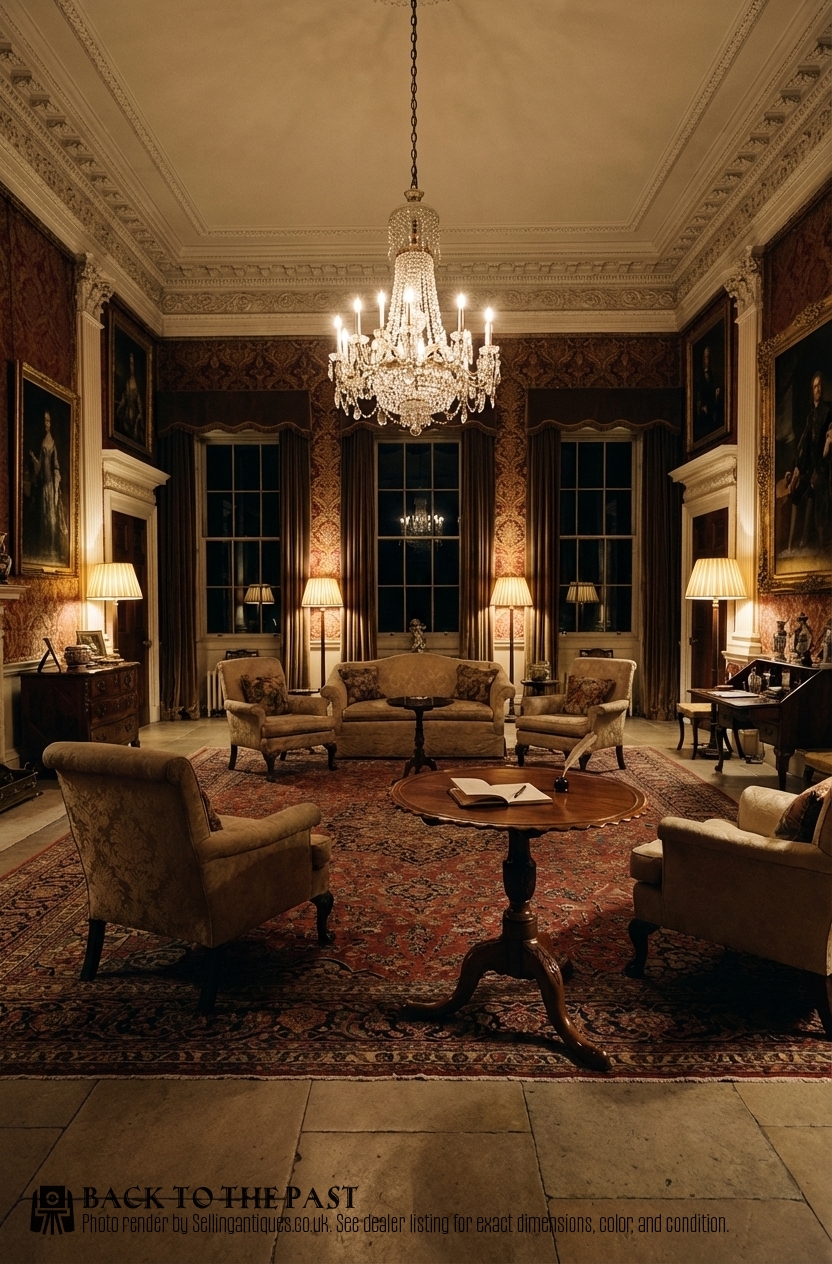
Mahogany Tripod Supper Table
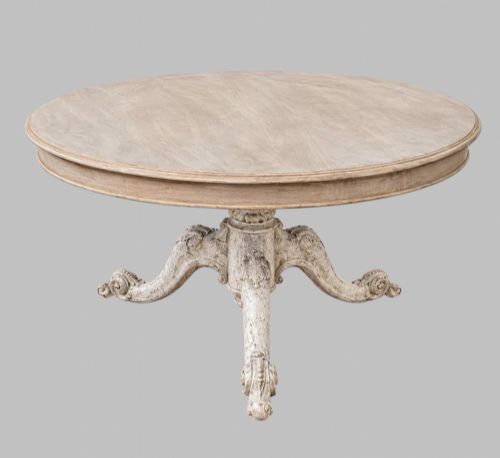
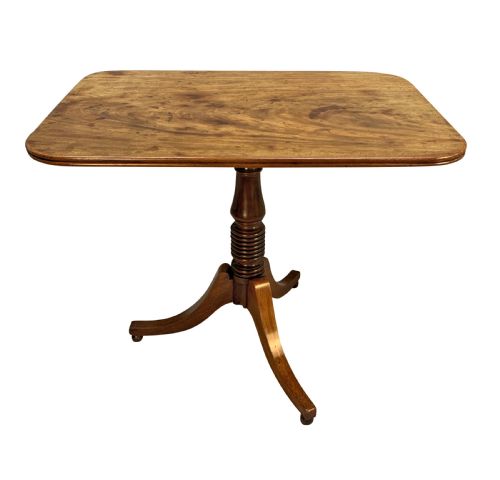
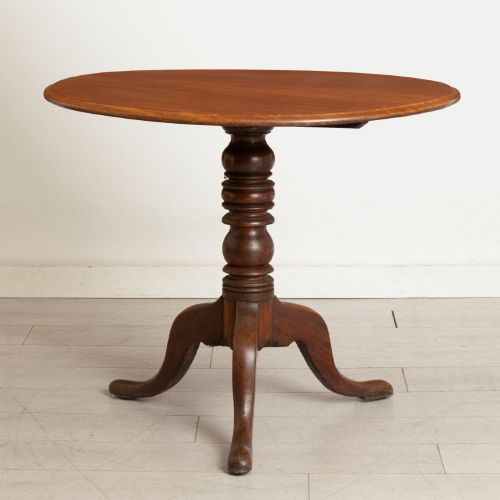
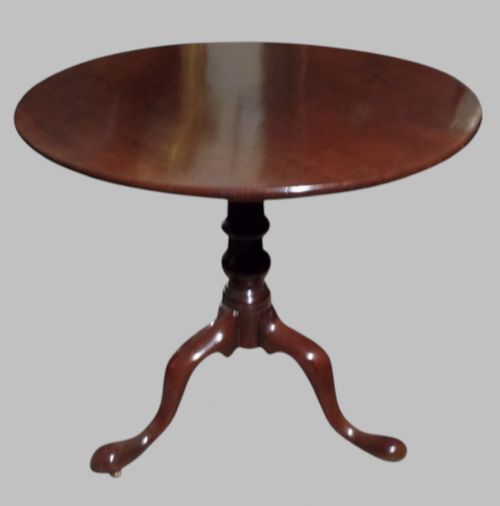
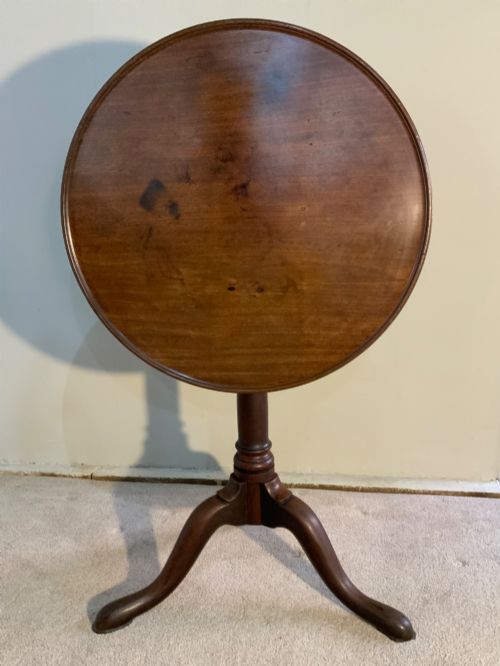
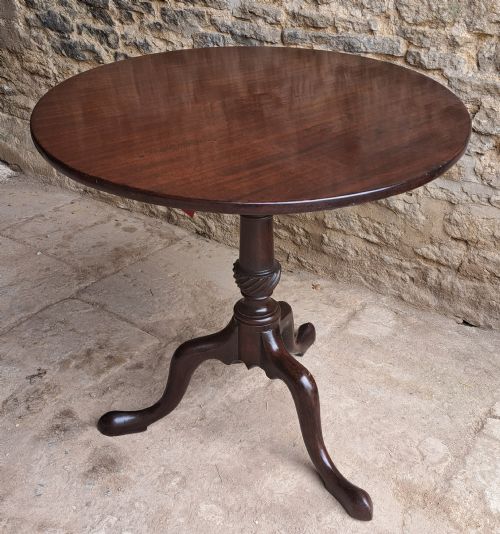
A mahogany tripod supper table is a circular table supported by a central pillar and three splayed legs, often featuring a mechanism that allows the top to tilt vertically when not in use. These pieces belong predominantly to the Georgian and Regency periods, spanning the eighteenth and nineteenth centuries.
The versions you are most likely to meet on this page date from the George II and George III eras, constructed with solid timber tops and tripod bases. Makers often shaped these tables to serve multiple domestic functions, including evening dining, tea service, and general parlour use.
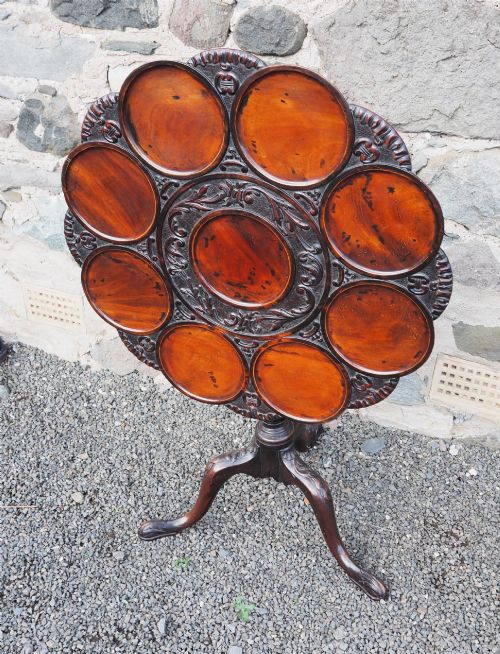
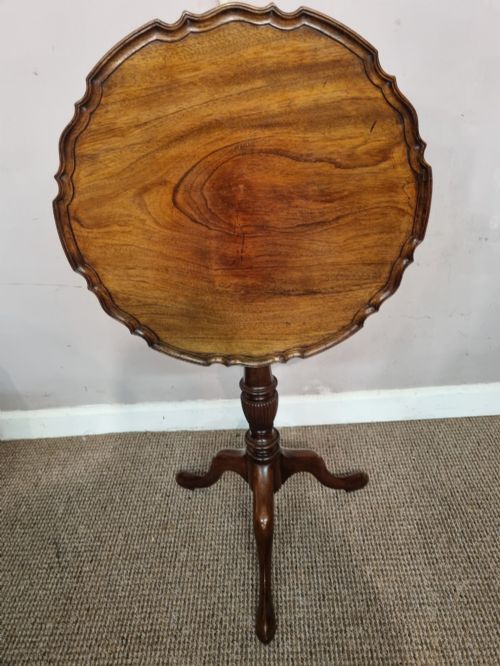
Beyond standard flat tops, many examples display moulded, tray, or piecrust edges paired with birdcage actions that allow the surface to rotate as well as tilt. Their lightweight construction meant servants could store them against walls to clear floor space after a meal.
How they were made
Cabinetmakers constructed these tables using dense timbers such as mahogany, Cuban mahogany, and occasionally walnut, paired with secondary woods for internal framing and blocks. Turning lathes shaped the central pedestals and leg profiles, while hand saws and chisels formed the cabriole legs and pad or claw-and-ball feet.
The tilting mechanism relied on a block and catch assembly, sometimes enhanced by a birdcage frame of small wooden spindles that permitted the table top to revolve horizontally. Tops were frequently fashioned from single wide boards of timber, fixed to the central pillar via a wooden box or spider bracket.
Edges were shaped by hand using moulding planes to create raised profiles like the piecrust rim, carved from the solid wood of the top rather than applied separately. Brass hardware, including hinges and catch plates, secured moving joints where necessary.
Listings feature timbers including Cuban mahogany, satinwood, and walnut across Georgian and Victorian periods.
What varies in quality
Quality in these tables rests on the selection of timber and the proportion of the parts, where dense Cuban mahogany with rich figuring commands greater regard than plain stock. Well-drawn examples display slender, graceful legs that curve harmoniously from the central pillar without appearing heavy or clumsy.
The complexity and execution of the carving distinguish finer pieces, particularly where acanthus leaves embellish the knees or claw-and-ball feet are deeply undercut. Additionally, the precision of the birdcage action and the flatness of a single-piece timber top reflect superior workshop standards.
John Bivins
The Mahogany Tripod Supper Table Glossary
- Tilt-top
- A tabletop hinged to the central pillar so it can pivot into a vertical position for storage. This feature saved valuable floor space in historic rooms.
- Birdcage
- A framework of small wooden posts and rings fitted between the tabletop and the pillar. It allows the surface to rotate smoothly in a horizontal circle.
- Piecrust edge
- A raised, undulating rim carved directly from the solid edge of the circular top. It resembles pastry work and prevents items from sliding off.
- Tripod base
- A support structure consisting of three radiating legs attached to a central pedestal. This design ensured stability on uneven historic floors.
- Snap top
- A spring-loaded or latched catch mechanism that locks a tilting tabletop firmly into the horizontal position. It prevents accidental tipping during use.
Mahogany Tripod Supper Table: Frequently Asked Questions
What was a supper table used for?
These tables served flexible dining and social functions in domestic parlours and dining rooms during the eighteenth and nineteenth centuries. Their round tops encouraged informal gatherings for evening meals and tea.
Because they could be tilted upright, owners pushed them against the walls when the room was needed for dancing or other activities.
How do I spot a birdcage action?
A birdcage action sits directly beneath the circular top as a small wooden box framework containing four or more turned spindles. It allows the table surface to revolve independently of the central column.
This sophisticated mechanism adds height and complexity, appearing most frequently on higher-status mid-eighteenth-century examples.
Are these tables stable on three legs?
Tripod bases are engineered to maintain firm contact with the floor even if the surface is slightly uneven. The three splayed legs distribute weight evenly outward from the central pillar.
This design prevents the rocking common in four-legged furniture on irregular historical flooring.
How do I tell Georgian from Victorian pieces?
Georgian examples generally display lighter framing, more refined carving on the knees and feet, and timbers with deep, rich patination. Their proportions tend to emphasise elegance and restraint.
Nineteenth-century and Victorian revivals often feature heavier pedestals, bolder turning, and occasionally different secondary woods or standardised machine-cut components.