
Mahogany Standing Cupboard
When you search for a mahogany standing cupboard, you are looking at substantial timber storage pieces designed to anchor a room.
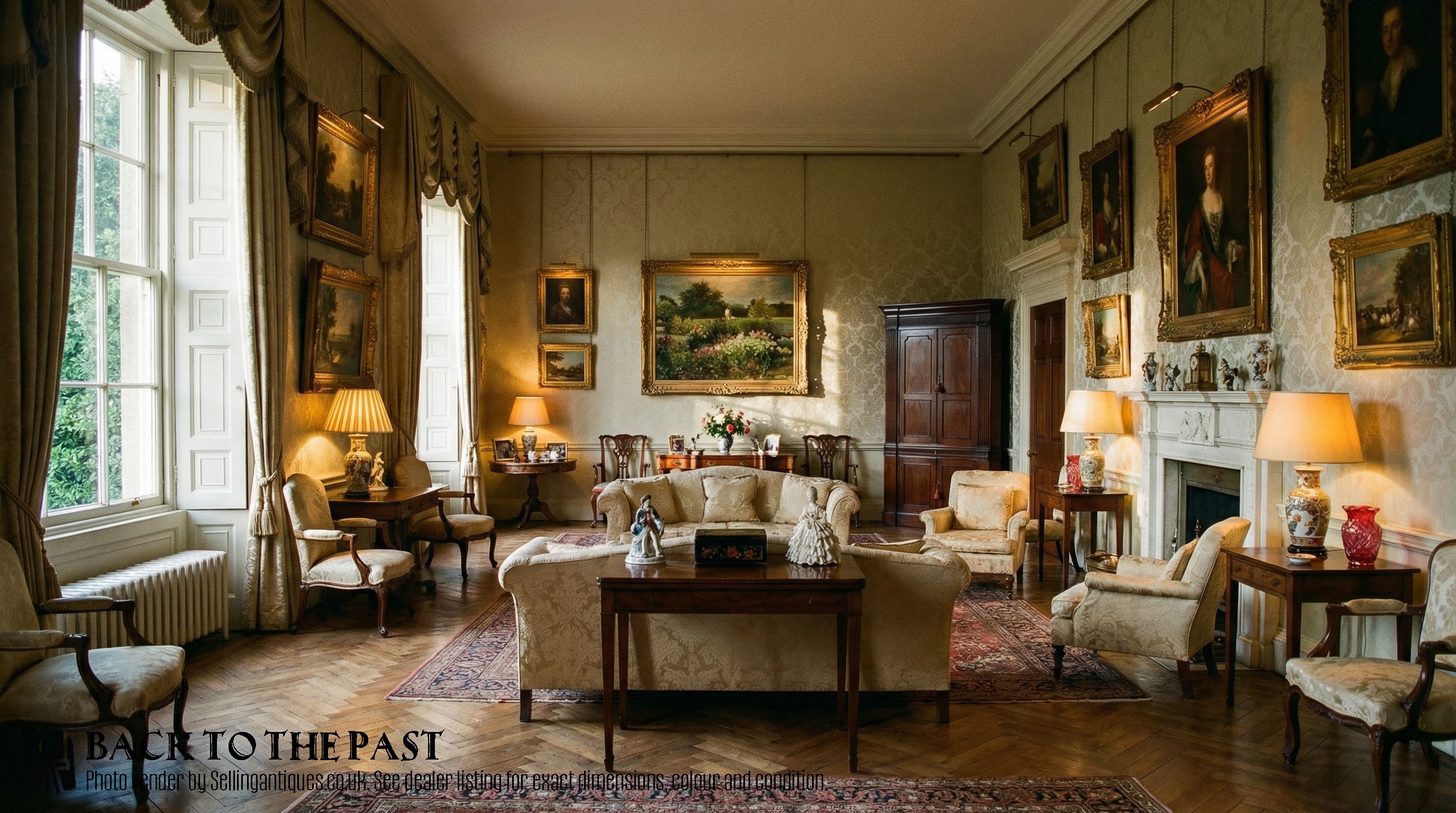
Mahogany Standing Cupboard
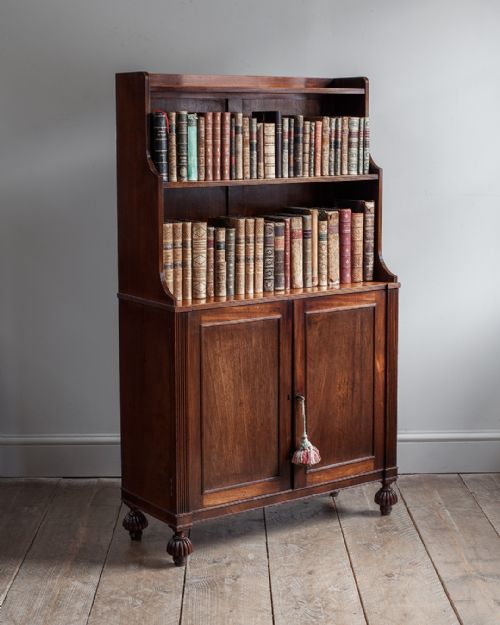
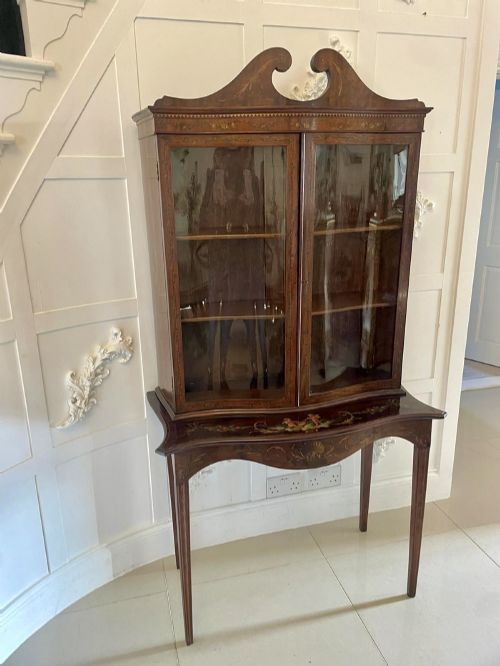
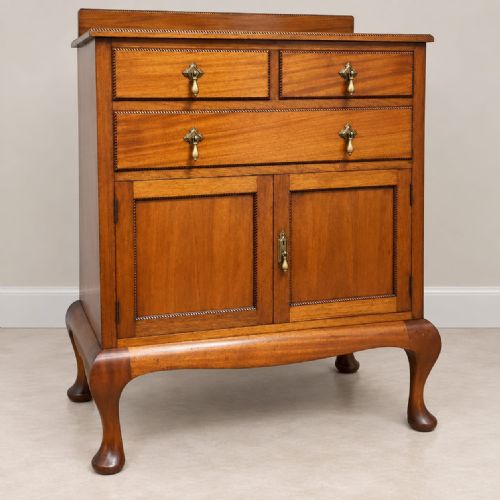
A mahogany standing cupboard encompasses floor-standing storage solutions ranging from tall corner cupboards and bookcase bases to side cabinets and display units. The pieces recorded span the Georgian, Regency, Victorian, and Edwardian periods, stretching from the late eighteenth century into the twentieth.
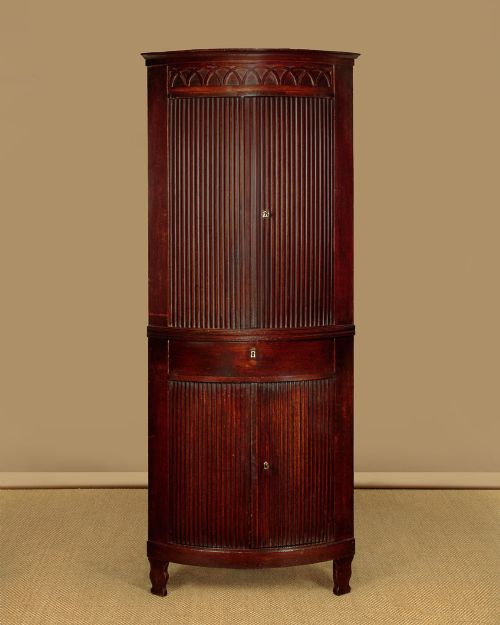
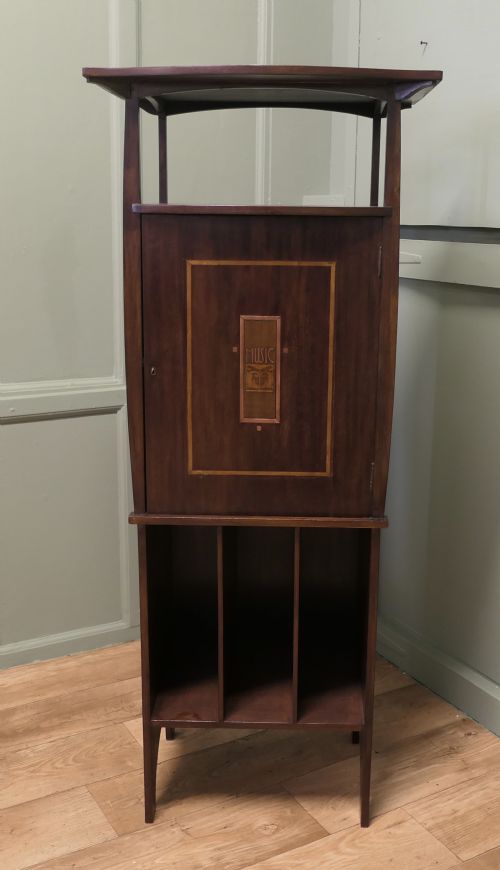
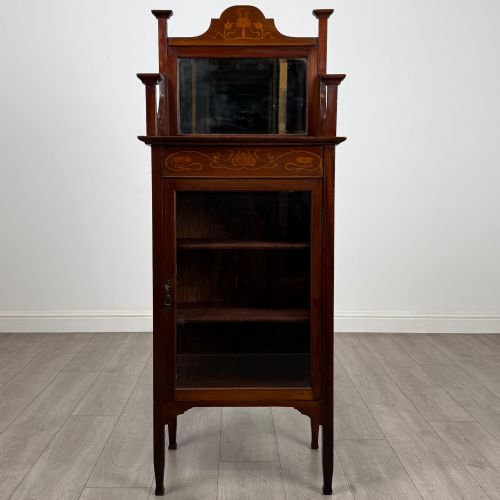
Corner variations appear frequently in the evidence, alongside libraries, music cabinets, and tallboys. Buyers routinely encounter Georgian floor-standing corner cupboards and Edwardian inlaid double-height display pieces upon this page.
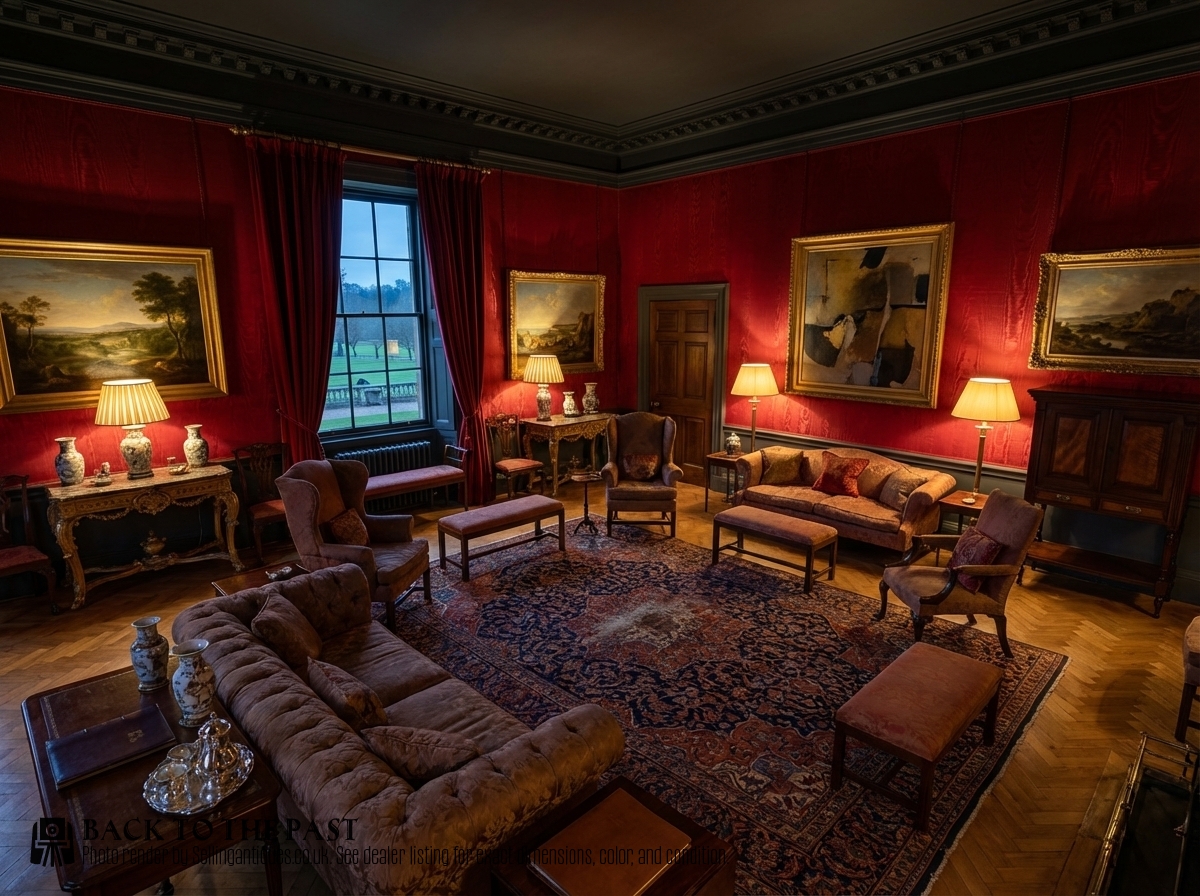
Materials and Technique
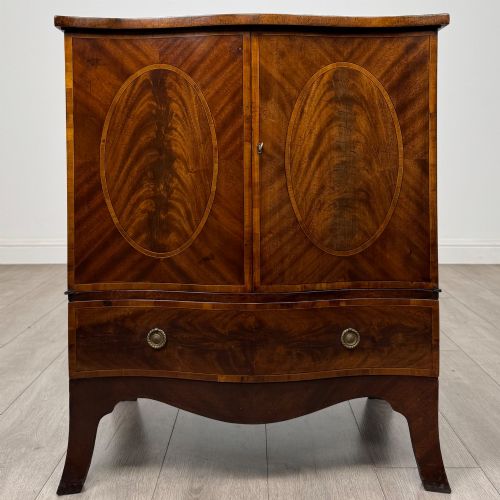
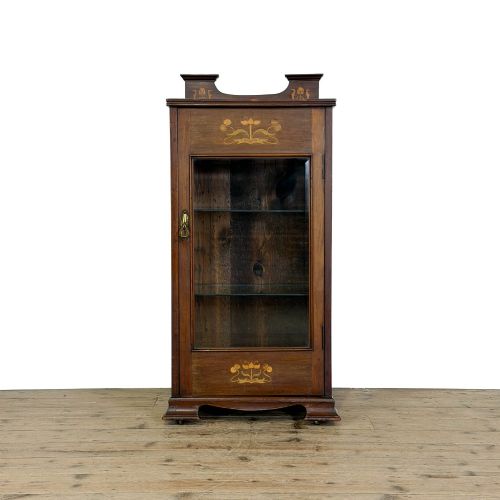
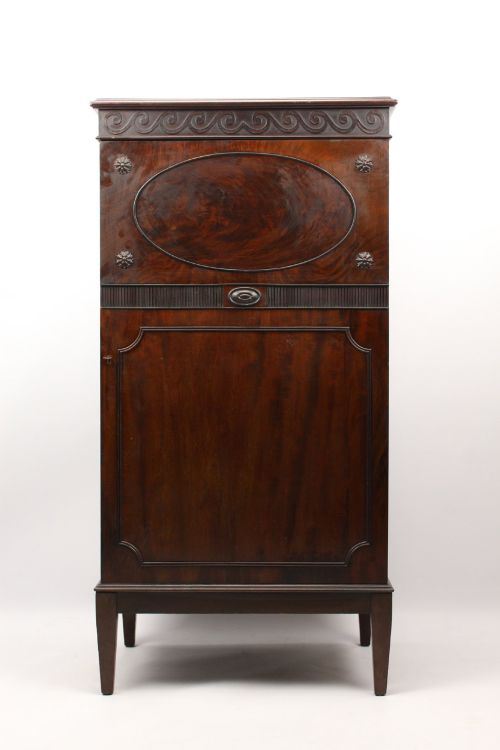
Makers utilised solid timber and veneers, frequently highlighting flame mahogany, plum pudding mahogany, and satinwood inlay across the surfaces. Glass panels, brass hardware, and painted decoration complete the construction of glazed and panelled doors.
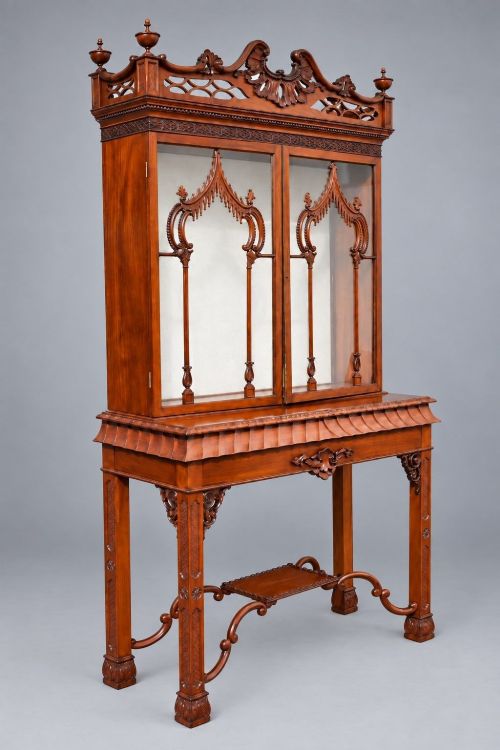
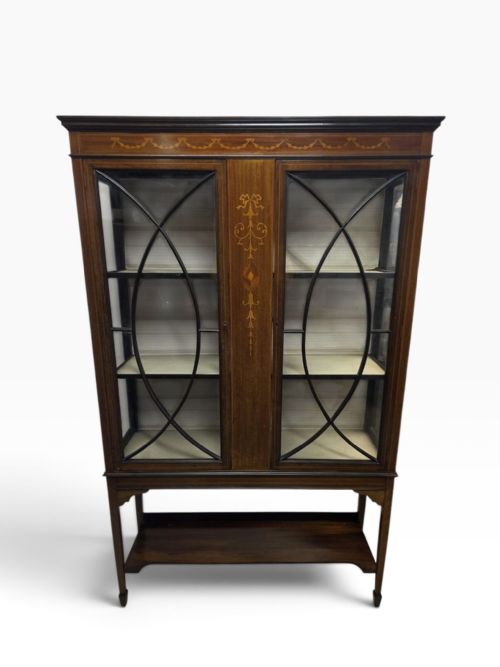
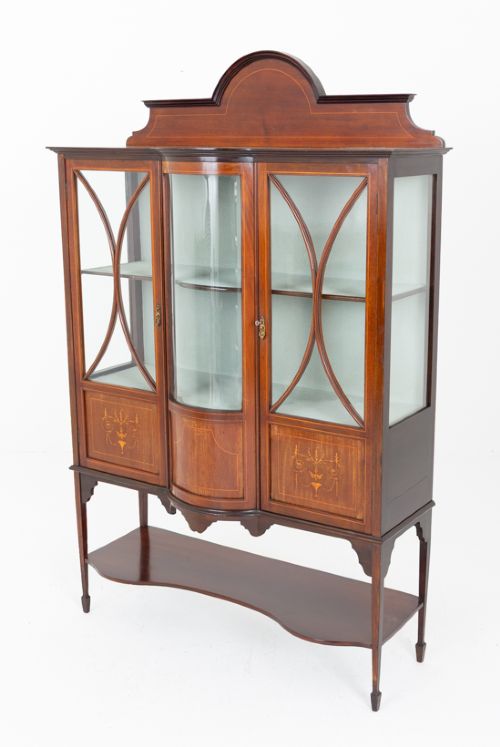
Cabinetmakers applied marquetry, astragal glazing bars, and carved detailing to elevate the exterior facades while maintaining structural integrity through fitted shelving and solid plinths.
Mahogany Standing Cupboard Retail Price Guide 2026
Typical asking prices for mahogany standing cupboard among the pieces listed under this phrase on Sellingantiques today, from the lower quarter to the upper quarter. They describe what is for sale here now, not the wider market.
Listings feature mahogany standing cupboards spanning the Georgian, Victorian, and Edwardian eras, incorporating glass, brass, and satinwood inlay.
Factors of Quality
The grading of these pieces rests upon timber selection and surface figuring, where rich flame or plum pudding grain commands greater attention than plain stock. Original brasses, intact glass, and untouched patination further separate standard storage from superior examples.
Design execution also defines the upper tier, seen in crisp marquetry inlay, well-proportioned cornices, and refined cabinetwork by established makers rather than mass-produced alternatives.
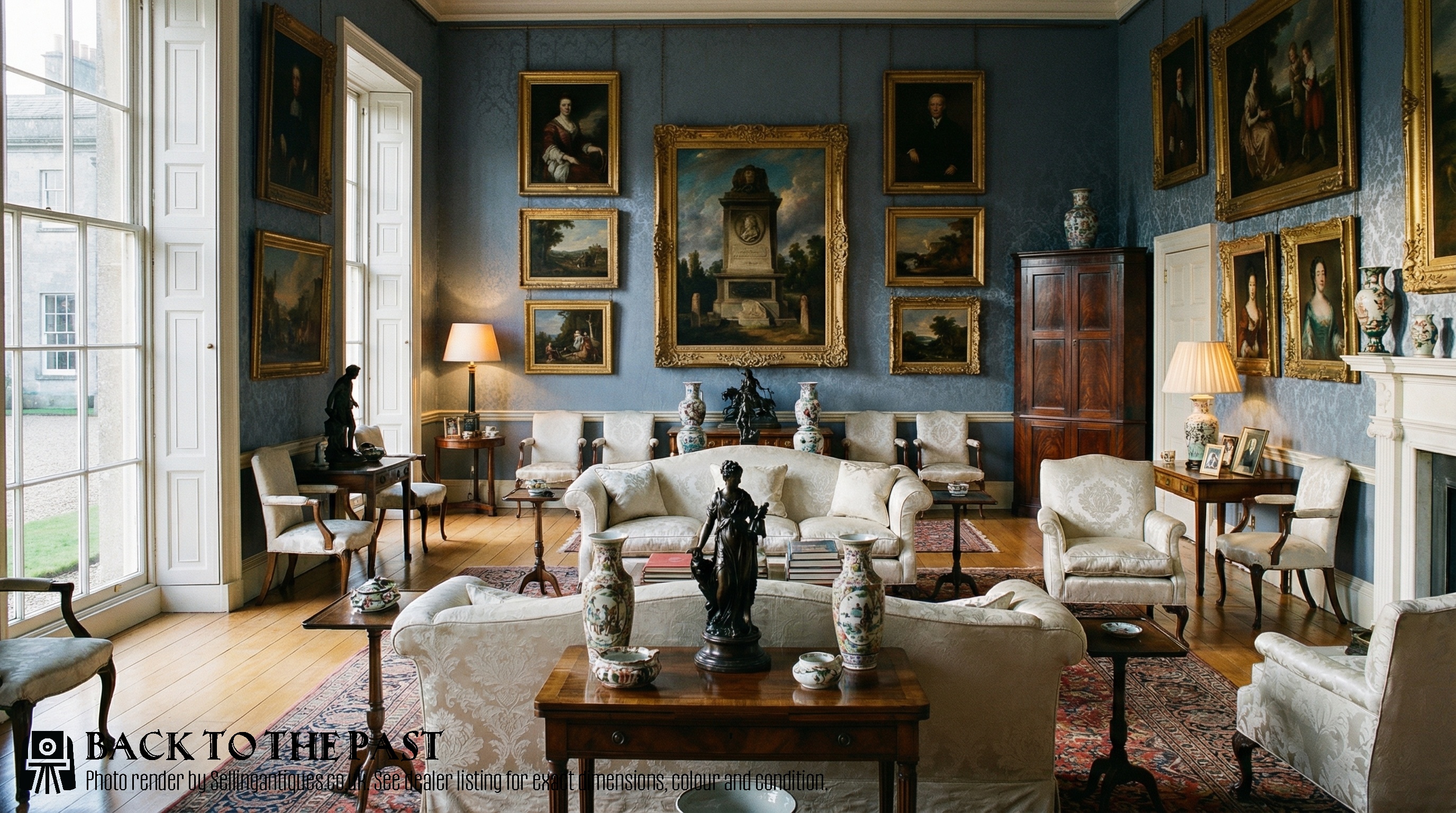
Edwards and Roberts·Denby and Spinks·GM Elwood for JS Henry
The Mahogany Standing Cupboard Glossary
- Astragal glazing
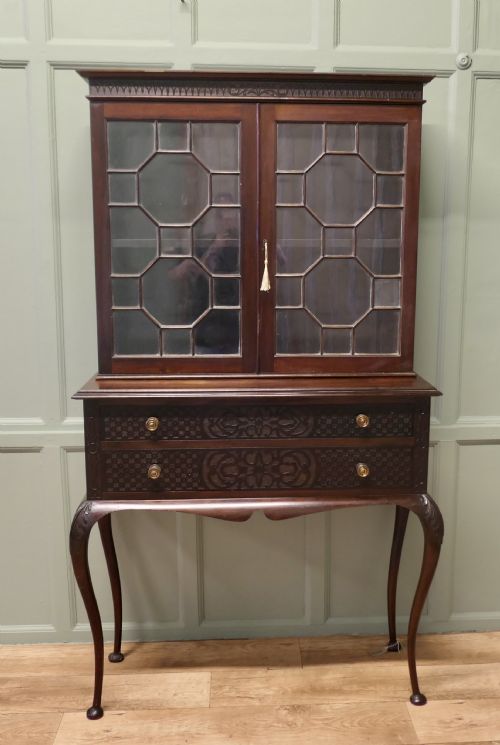
- Timber bars holding small panes of glass within a cabinet door. These delicate strips create geometric patterns across display sections.
- Standing cupboard
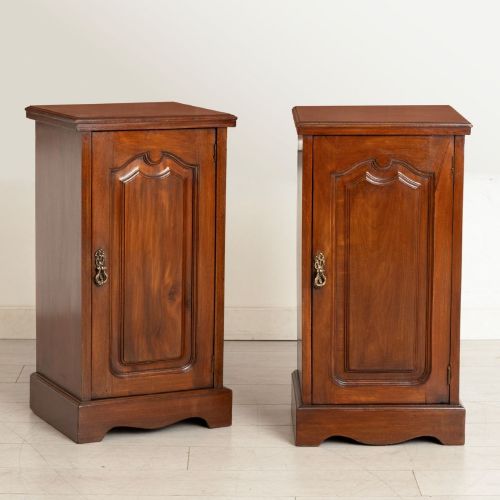
- A floor-standing storage unit with doors enclosing shelves. Unlike wall-hanging variants, these pieces rest directly upon the ground or a dedicated stand.
- Marquetry
- Decorative patterns formed by fitting contrasting veneers into timber panels. Craftsmen utilise satinwood and darker woods to render floral or geometric motifs.
- Waterfall bookcase
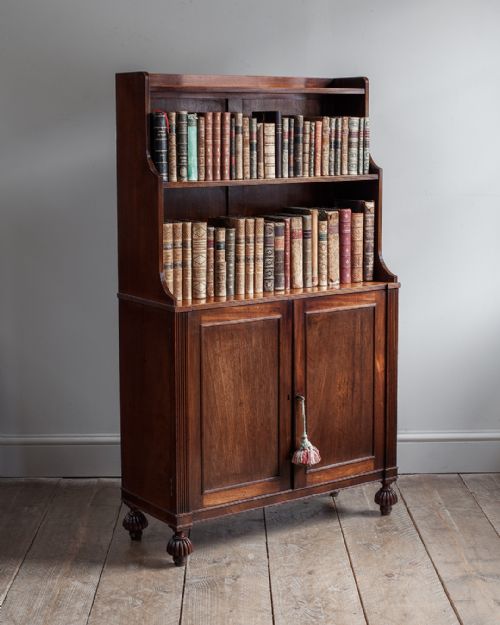
- A tiered open shelving unit with graduated depths stepping back toward the top. Surviving examples frequently integrate lower cupboard storage.
Mahogany Standing Cupboard: Frequently Asked Questions
What is a standing cupboard?
A standing cupboard is a floor-resting piece of furniture designed for enclosed storage, featuring doors that conceal internal shelves. These units differ from wall-hanging cupboards by relying on their own base or plinth for support.
Such furniture served various rooms, functioning as corner units, library bases, or display cabinets depending on the era and domestic requirement.
How do I date a mahogany cupboard?
Dating relies on architectural styling, timber choice, and construction methods visible in the carcass and door framing. Georgian pieces often display clean classical proportions, whereas Edwardian items incorporate refined marquetry and lighter inlay.
Examining the interior secondary woods and backboards provides further confirmation of the period of manufacture.
Where were corner cupboards placed?
Corner cupboards were built specifically to utilise awkward room angles, maximising storage without consuming central floor space. Georgian and Victorian dining rooms or parlours frequently housed these architectural units.
Standing variants bridged the gap between functional storage and display, anchoring otherwise empty wall junctions.
Can I use these for display?
Many standing cupboards feature glazed doors with astragal bars expressly intended for exhibiting china, books, or collections. Edwardian and Victorian iterations frequently combine glazed upper sections with panelled lower cupboards.
This dual configuration allows owners to display prized items above while concealing utility storage below.