
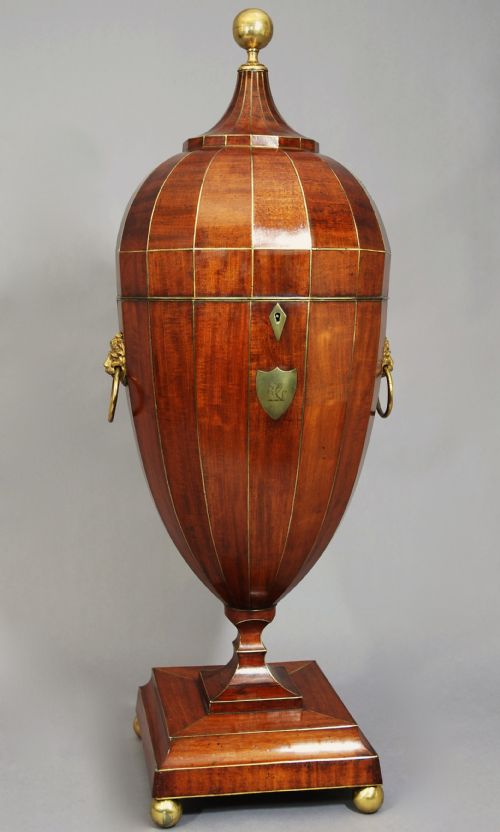


Mahogany Knife Urn
A mahogany knife urn brings classical architecture and disciplined dining to the sideboard.
Mahogany Knife Urn
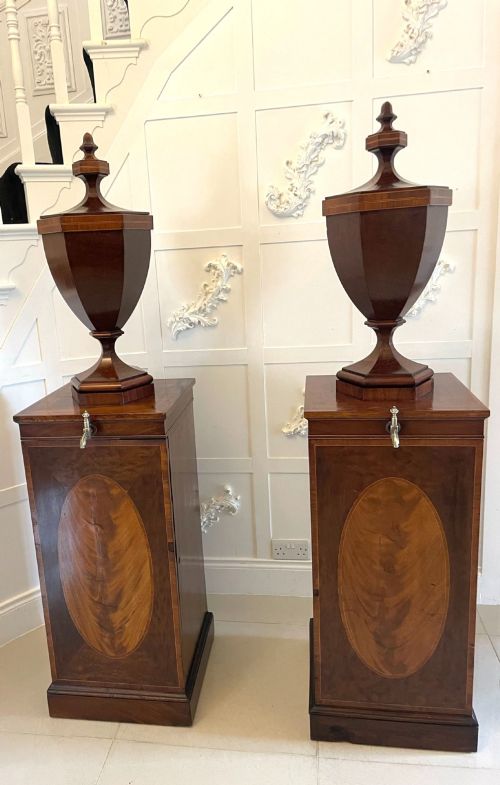
A mahogany knife urn is a formal dining accessory designed to hold cutlery during the Georgian and Victorian periods. These pieces stand upright on pedestals or sideboards, presenting a classical urn shape that conceals internal tiered slots for knives and forks.
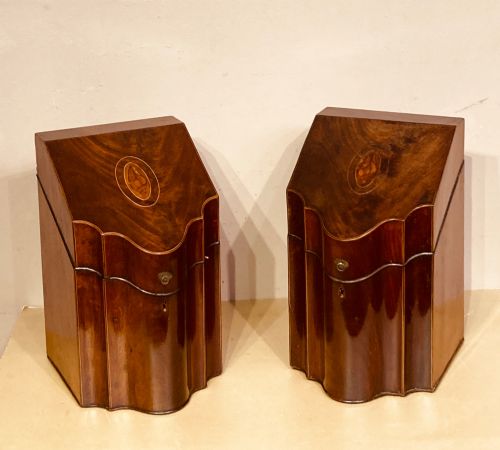
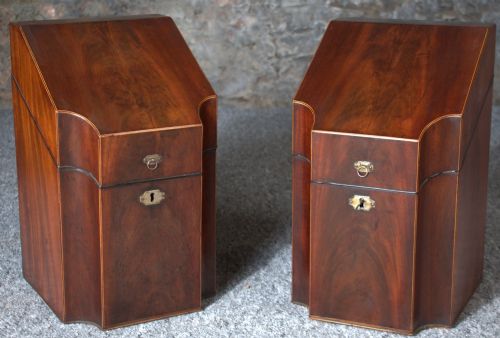
Buyers encountering this search phrase find classical vases and tapered urns alongside sloped front knife boxes. The selection spans the eighteenth century and the nineteenth century, utilising figured timber and classical silhouettes.
Most examples originate from the Georgian era, particularly the George III period, characterised by balanced proportions and architectural form. Victorian iterations also appear, maintaining the traditional silhouette with lidded compartments.
Materials and construction methods
Cabinet makers constructed these vessels primarily from solid mahogany and selected mahogany veneers, often enhanced by contrasting boxwood, satinwood, and ebony inlay. Timber selection prioritised figured grain patterns that caught the candlelight on grand dining tables.
Metal components played a structural and decorative role, featuring brass hinges, escutcheons, and internal locking mechanisms, occasionally complemented by solid silver mounts. Joinery techniques ensured the curved staves and tapered bodies remained stable through seasonal temperature shifts.
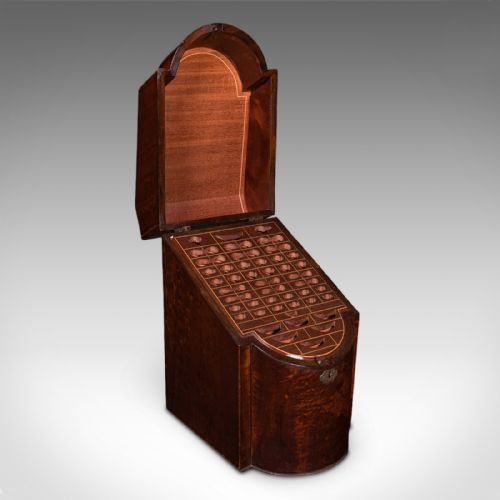
Many of these formal dining urns still retain their original miniature internal wooden shelves, meticulously bored to keep pristine silver blades apart.
Assessing quality in mahogany knife urn examples
Quality rests in the precision of the turning, the depth of the mahogany patina, and the crispness of any inlaid stringing or fan motifs. Superior vessels display symmetrical grain matching across the curved segments and retain their internal fitted tier blocks.
The integrity of the original brass hardware and the smoothness of the lidded mechanism distinguish high grade specimens from later adaptations. Proportion and the sharpness of the classical silhouette dictate the standing of each piece within the tradition.
The Mahogany Knife Urn Glossary
- Mahogany
- A durable tropical hardwood valued for its rich reddish brown colour and stability in cabinet making. It forms the primary body of these dining room receptacles.
- Inlay
- A decorative technique where contrasting woods like satinwood or boxwood are inserted into recesses in the mahogany surface. This creates geometric lines or classical motifs.
- Serpentine
- A gently undulating curved shape resembling a snake's movement, seen on the fronts of certain boxes and storage pieces. It adds visual rhythm to the cabinetwork.
- Escutcheon
- A small protective plate surrounding a keyhole, usually fashioned from brass. It prevents the wood from splitting around the lock mechanism.
- Patina
- The deep surface sheen and mellowed tone developed by timber over centuries of handling and exposure to light. It serves as an indicator of age and careful maintenance.
Mahogany Knife Urn: Frequently Asked Questions
What was a mahogany knife urn used for?
These vessels held dining cutlery such as knives and forks in dedicated internal slots on the sideboard before formal table service began.
Servants retrieved the silver and steel implements as needed, keeping the dining table clear of clutter until the meal commenced.
How do I care for antique mahogany furniture?
Keep the wood away from direct heat sources and strong sunlight to prevent the timber from drying out and the veneer from lifting.
Apply traditional beeswax occasionally to nourish the surface and maintain the deep patina without building up heavy chemical layers.
Are these urns sold as pairs?
Many examples survive as balanced pairs intended to sit symmetrically on either side of a dining room sideboard or central serving table.
Single pieces also appear frequently, reflecting the dispersal of original dining suites over the centuries.
How can I tell George III pieces apart?
George III examples date from the late eighteenth century and typically exhibit restrained neoclassical lines, fine string inlay, and architectural proportions.
Later Victorian versions often repeat these classical forms but utilise different internal block construction and distinct secondary timbers.