
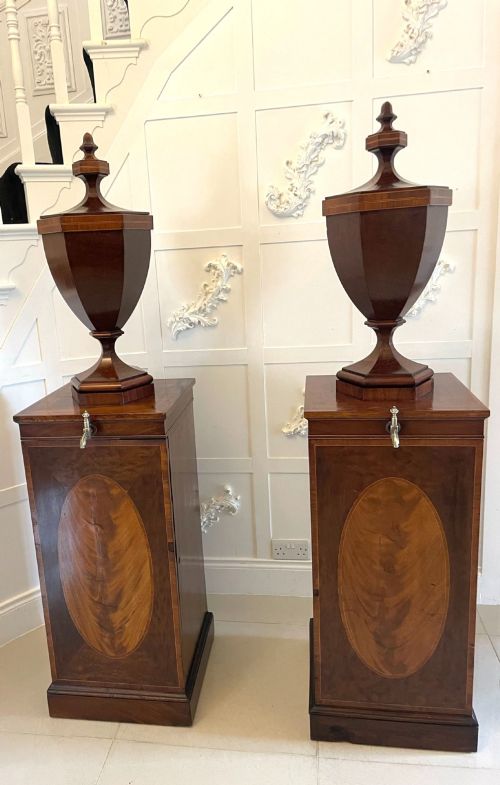
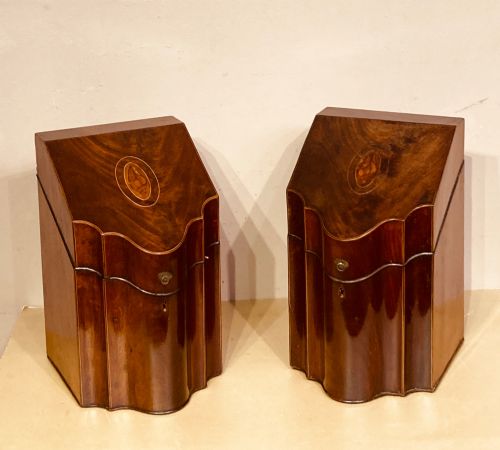
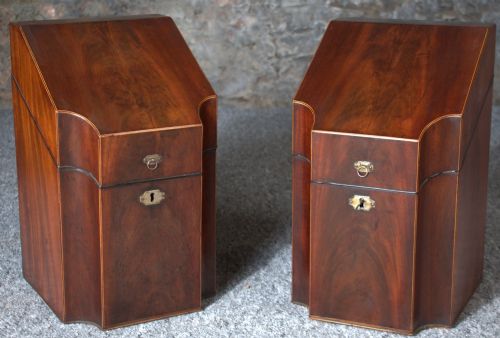


Pair Mahogany Boxes
These pair mahogany boxes are matched containers for the dining table and drawing room, prized for their figured timber and period joinery.
Pair Mahogany Boxes
When you search for pair mahogany boxes, you encounter matched sets designed for practical containment across the Georgian, Victorian, and Edwardian eras. The listings and archives show that knife boxes and cutlery urns dominate this category, alongside tea caddies, jewellery boxes, and snuff shoe boxes.
Beyond dining room accessories, the record includes occasional ottoman stools, display cabinets, and carved panelled settles formed of the same dense timber. Each pair demonstrates the symmetry demanded by period interior placement.
How they were made
Cabinet makers built these pieces using solid and veneered mahogany, frequently selected for rich grain patterns. Workshops integrated secondary timbers and applied boxwood or satinwood inlay to accentuate structural lines.
Mounts, escutcheons, and hinges of cast brass or solid silver provide functional reinforcement and visual contrast against the dark wood. Joinery relies on precise dovetailing to withstand the tension of lidded forms.
Listings demonstrate that mahogany is the primary timber, occasionally paired with brass, boxwood inlay, and silver mounts.
What varies in quality
The distinction between ordinary and superior examples lies in the selection of the timber and the crispness of the carving or inlay. Finer boxes display deeply figured mahogany veneers matched across both halves of the pair.
Proportion and surface finish dictate standing, with untouched patination and original metal mounts elevating an object. Heavy hand-cut dovetailing and retained interior fittings mark the work of skilled cabinet makers.
The Pair Mahogany Boxes Glossary
- Knife box
- A sloping lidded container designed in the eighteenth century to hold table cutlery upright. These pieces typically feature serpentine or bow fronts and fitted wooden interiors.
- Cutlery urn
- A vase-shaped vessel used for storing table silver during the Georgian period. Such pieces often stand on matching pedestal cupboards.
- Tea caddy
- A lidded box intended for the storage of dry tea leaves. Pairs of these containers often housed green and black tea varieties.
- Inlay
- A decorative technique where contrasting woods such as boxwood or satinwood are set into the mahogany surface. This method creates geometric borders or shell motifs.
- Patina
- The surface sheen and colour developed by aged mahogany through handling and wax polishing over centuries. This quality indicates genuine age and use.
Pair Mahogany Boxes: Frequently Asked Questions
What were pair mahogany boxes used for?
These matched containers served specific domestic functions in wealthy households, primarily holding cutlery, tea, or small valuables. Dining rooms utilised knife boxes and urns on sideboards to present tableware.
Drawing rooms accommodated tea caddies and jewellery boxes on tables for daily hospitality and personal use. Each pair provided symmetrical storage while displaying the status of the owner through fine timber.
How do I date a pair of mahogany boxes?
Dating relies on observing structural changes in the timber, hardware, and overall form across different periods. Eighteenth-century examples often feature serpentine contours, delicate string inlay, and hand-cut dovetails.
Later Victorian and Edwardian pieces show heavier proportions and machine-sawn elements. Comparing the interior fittings and brass mounts to known historical styles clarifies the era of manufacture.
How do I care for antique mahogany boxes?
Maintenance requires stable environmental conditions away from direct sunlight and sudden temperature shifts to prevent wood splitting. Natural beeswax polish applied sparingly preserves the historical surface without creating a synthetic buildup.
Handling brass mounts and silver hinges with clean hands prevents corrosion. Regular dusting with a soft, dry cloth protects the aged patina from abrasive particles.
Are these boxes always found as matching pairs?
Makers originally produced many of these containers in balanced sets to flank sideboards or fireplaces symmetrically. Surviving matched pairs are less common than single pieces due to centuries of separation.
Matched pairs on the market either retain their original association or represent assembled sets of matching form and timber. Examining the grain and construction confirms whether the two pieces originated from the same workshop.