

Mahogany Dining Room Sideboard
A mahogany dining room sideboard anchors a traditional dining interior, offering robust surface space and deep storage derived from Georgian, Victorian and Edwardian periods.
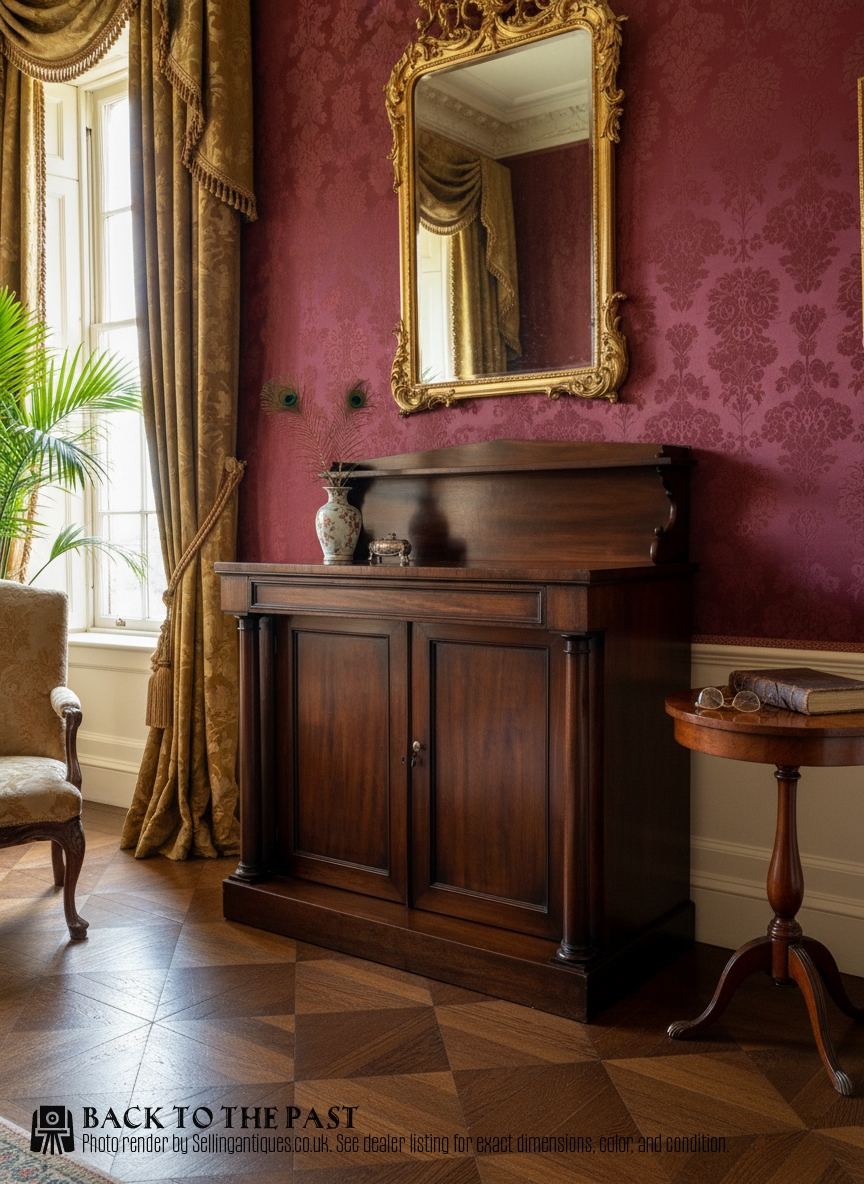
Mahogany Dining Room Sideboard
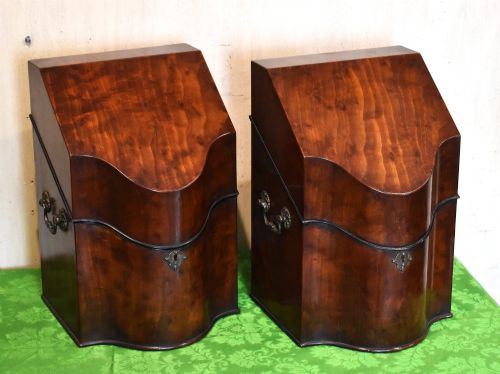
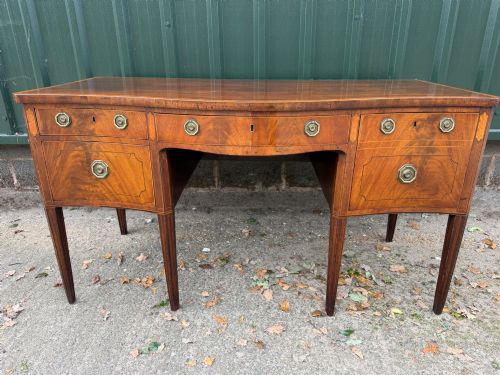
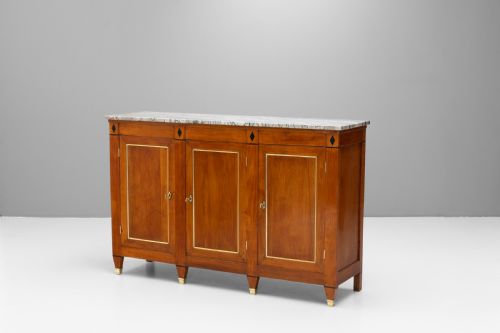
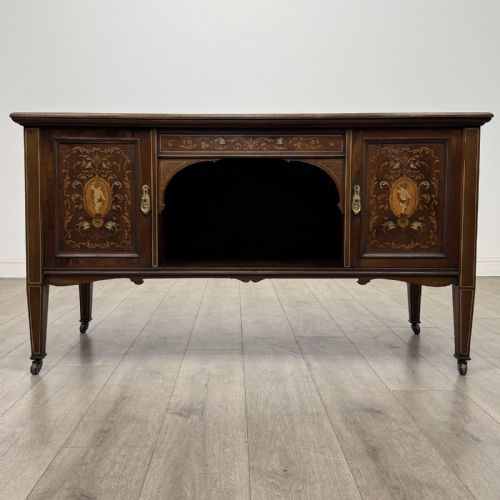
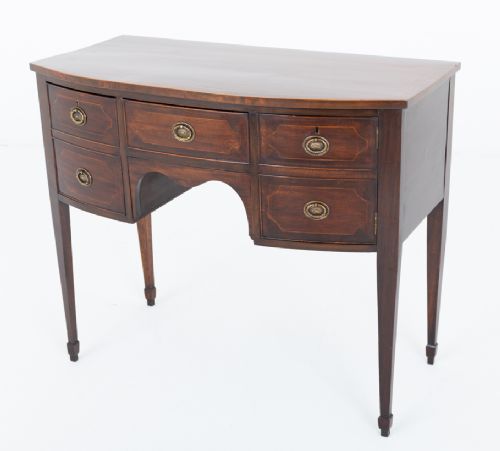
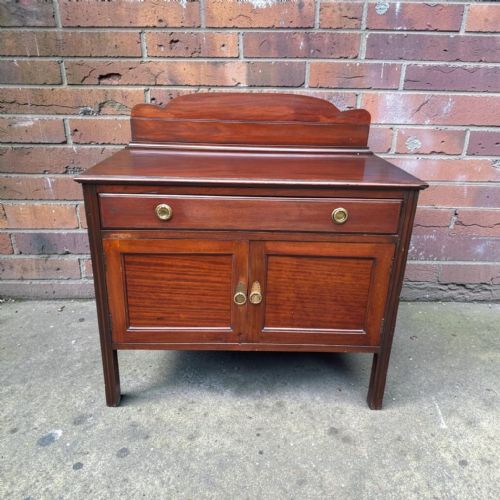
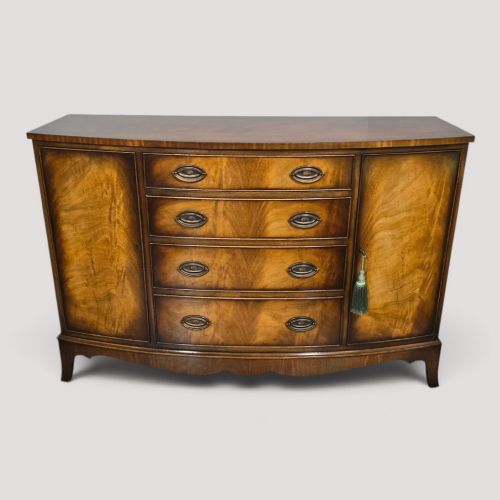
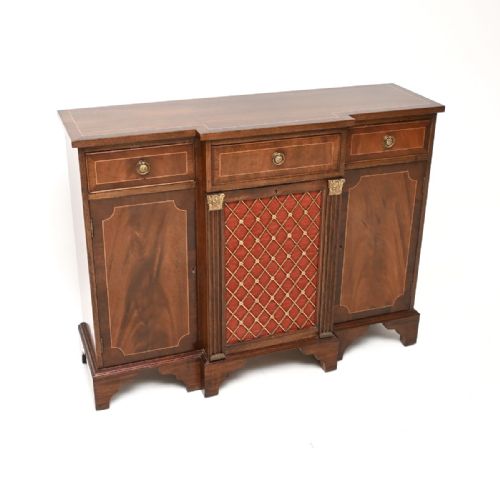
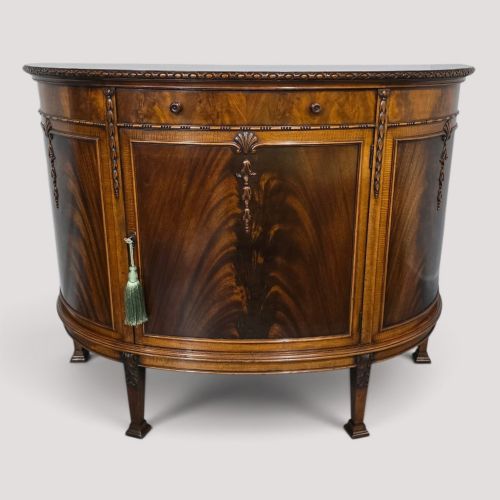
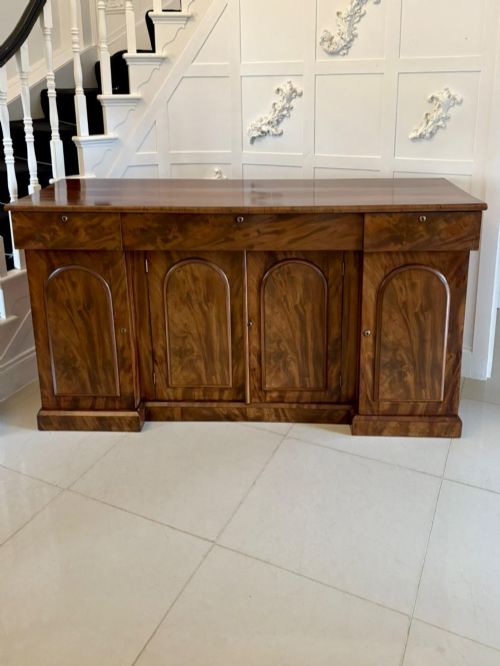
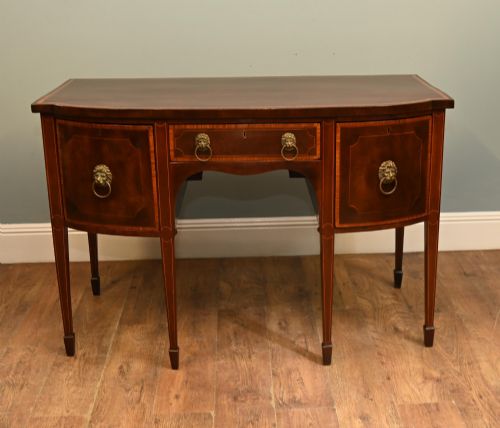
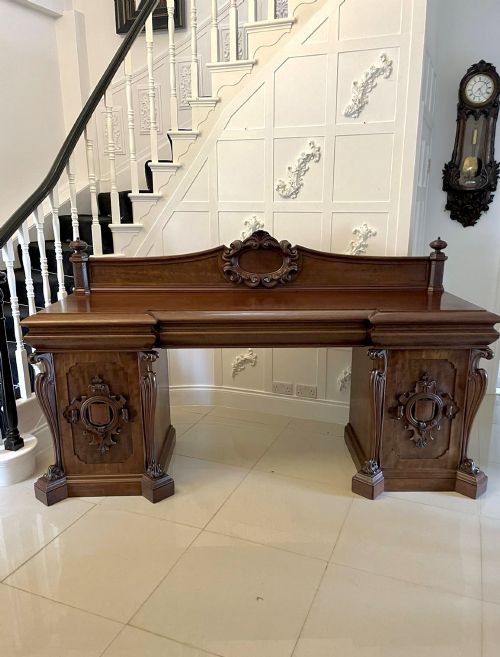
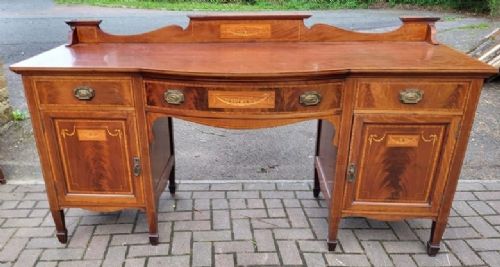
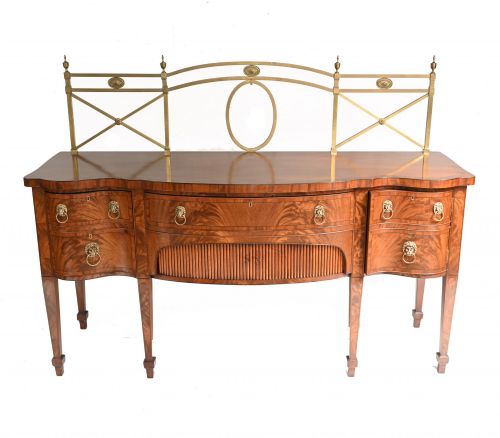
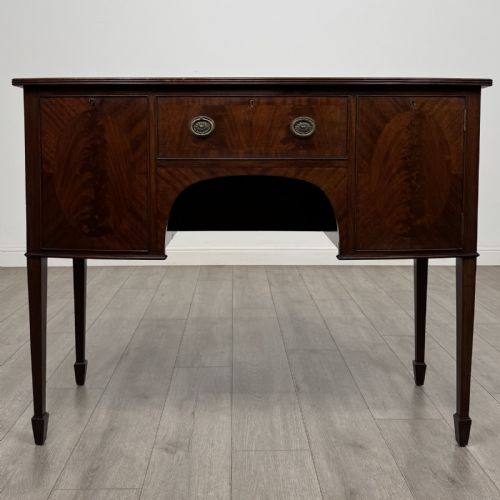
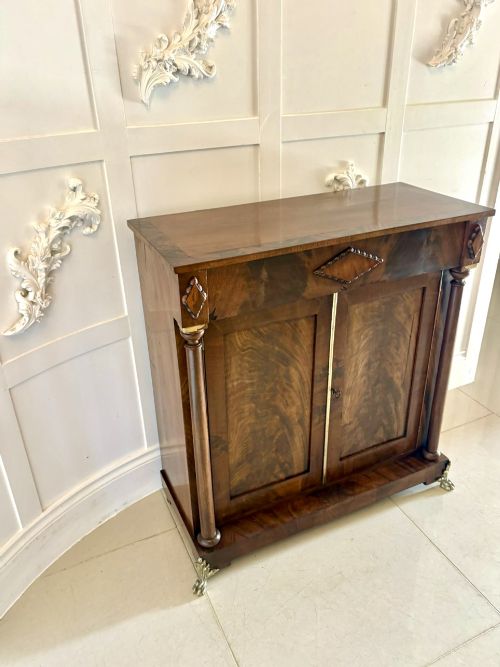
A mahogany dining room sideboard serves as a substantial storage and serving piece, appearing across Georgian, Regency, Victorian and Edwardian iterations on this page. Pieces range from serpentine serving tables and bow-front cabinets to pedestal designs and chiffoniers.
The most frequent examples present straightforward bow-front or straight-front profiles in solid mahogany or veneer, often equipped with deep cellarette drawers for bottles and central cupboards for table linen.
Origins span the eighteenth, nineteenth and early twentieth centuries, encompassing genuine period items alongside later revival pieces following George III and Hepplewhite designs.
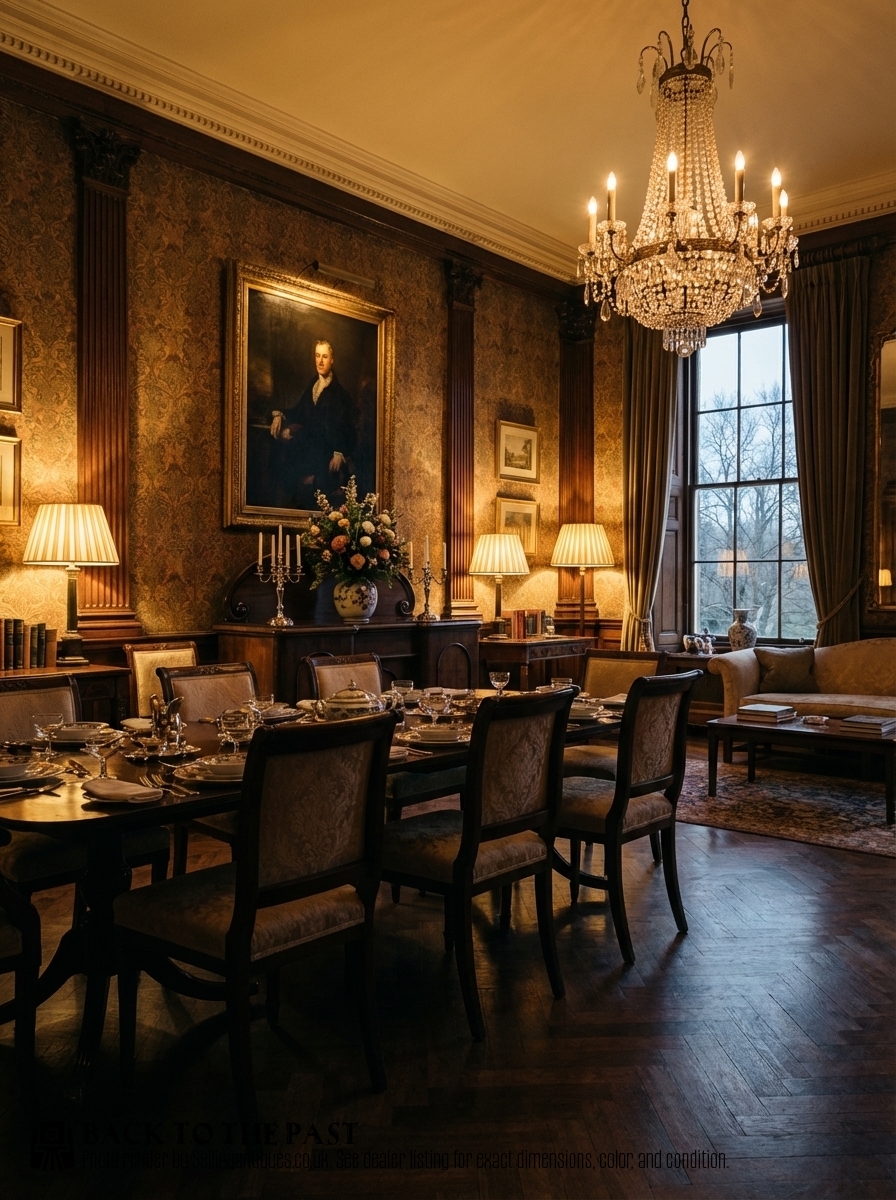
Materials and construction methods
Cabinet makers utilised solid mahogany and flame mahogany veneer applied to secondary woods, bringing out deep reddish-brown grain patterns across large drawer fronts and top surfaces.
Decoration often involved contrasting timber inlays such as satinwood and boxwood, alongside fine stringing, marquetry, and hand-carved brass drawer pulls or handles.
Structural forms rely on sturdy frame-and-panel construction, dovetailed drawer boxes, and sometimes turned or reeded legs supporting heavy pedestals and cupboards.
Mahogany Dining Room Sideboard Retail Price Guide 2026
Typical asking prices for mahogany dining room sideboard among the pieces listed under this phrase on Sellingantiques today, from the lower quarter to the upper quarter. They describe what is for sale here now, not the wider market.
Listings feature mahogany sideboards spanning the Georgian, Victorian and Edwardian eras alongside revival pieces.
Distinctions in craftsmanship
The gradation between standard examples and top-tier pieces rests on the choice of timber and the precision of surface ornament, such as symmetrical flame mahogany veneers and crisp boxwood stringing.
Superior items display subtle architectural details like serpentine fronts, carved brackets, and integrated pedestal layouts that require advanced cabinet-making skill.
Overall structural integrity, original brass hardware, and well-fitted drawer mechanisms separate exceptional workshop output from simpler utilitarian items.
Hewetsons London·M D Miller And Sons Nottingham
The Mahogany Dining Room Sideboard Glossary
- Bow-front
- A cabinet front that curves outward in a convex arc, softening the rigid angles of a room. This shape proves especially popular among Regency and Edwardian makers.
- Chiffonier
- A compact sideboard or low cupboard often featuring a raised shelf or back panel, designed for dining rooms and parlours. These pieces frequently include enclosed lower shelving.
- Serpentine
- A front contour characterised by a convex centre flanked by concave ends, creating a flowing wave effect. This demanding shape marks out finer Georgian furniture.
- Flame mahogany
- A veneer cut from the branch junction or fork of the mahogany tree, producing a distinctive flickering flame pattern. Cabinet makers used this figure on prominent drawer fronts to catch the light.
- Cellarette
- A deep drawer or dedicated compartment within a sideboard built to hold wine bottles upright. These internal sections often retain original lead or wooden dividers.
Mahogany Dining Room Sideboard: Frequently Asked Questions
How do I spot a Georgian sideboard?
Look for elegant proportions, tapered legs, and subtle stringing rather than heavy Victorian mouldings.
Many genuine examples incorporate subtle bow-front or serpentine shapes paired with brass ring handles.
What is a chiffonier sideboard?
A chiffonier is a smaller variation of the standard sideboard, frequently incorporating a raised back gallery or shelf.
These pieces suit compact dining spaces while retaining enclosed cupboard storage.
Are Edwardian sideboards authentic antiques?
Edwardian items date from the early twentieth century and often revive earlier Sheraton or Georgian aesthetics.
They combine older decorative vocabulary with the manufacturing standards of their own decade.
How should I clean mahogany furniture?
Maintain the timber using a traditional beeswax polish applied sparingly with a soft cloth.
Avoid commercial silicone sprays that can damage the antique finish over time.