
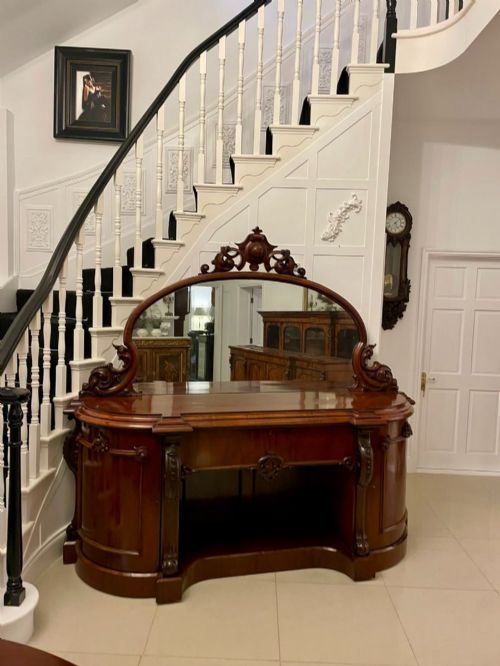
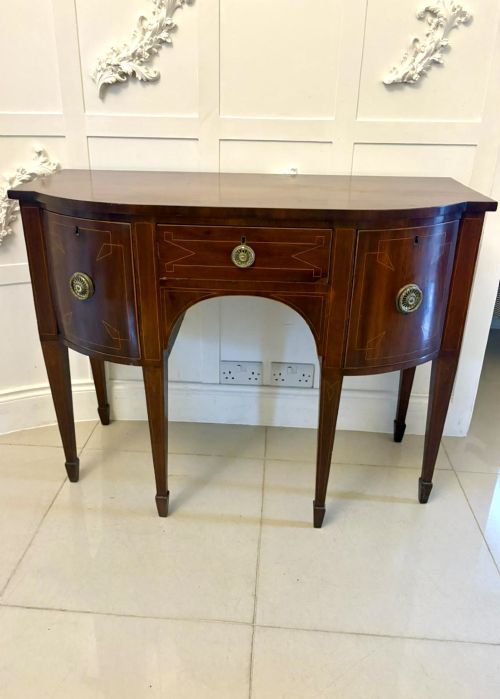

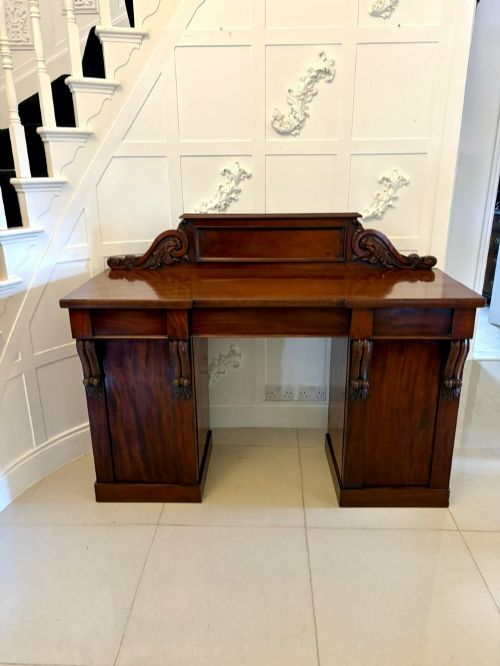
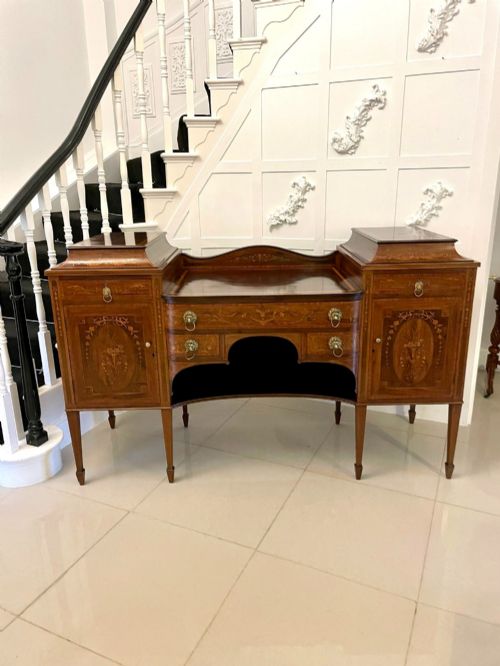
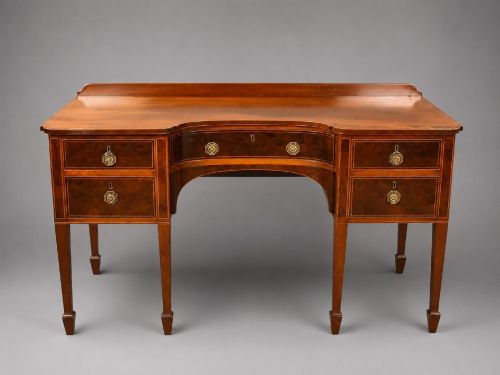
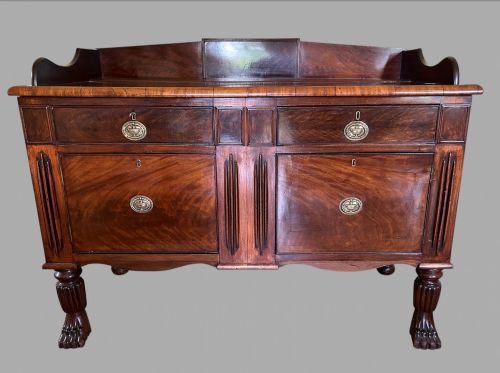
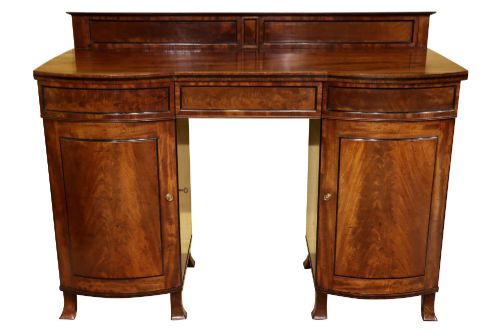
Mahogany Dining Room Credenza
A mahogany dining room credenza delivers substantial storage alongside timeless timber presence, anchoring a traditional dining space with functional grace.
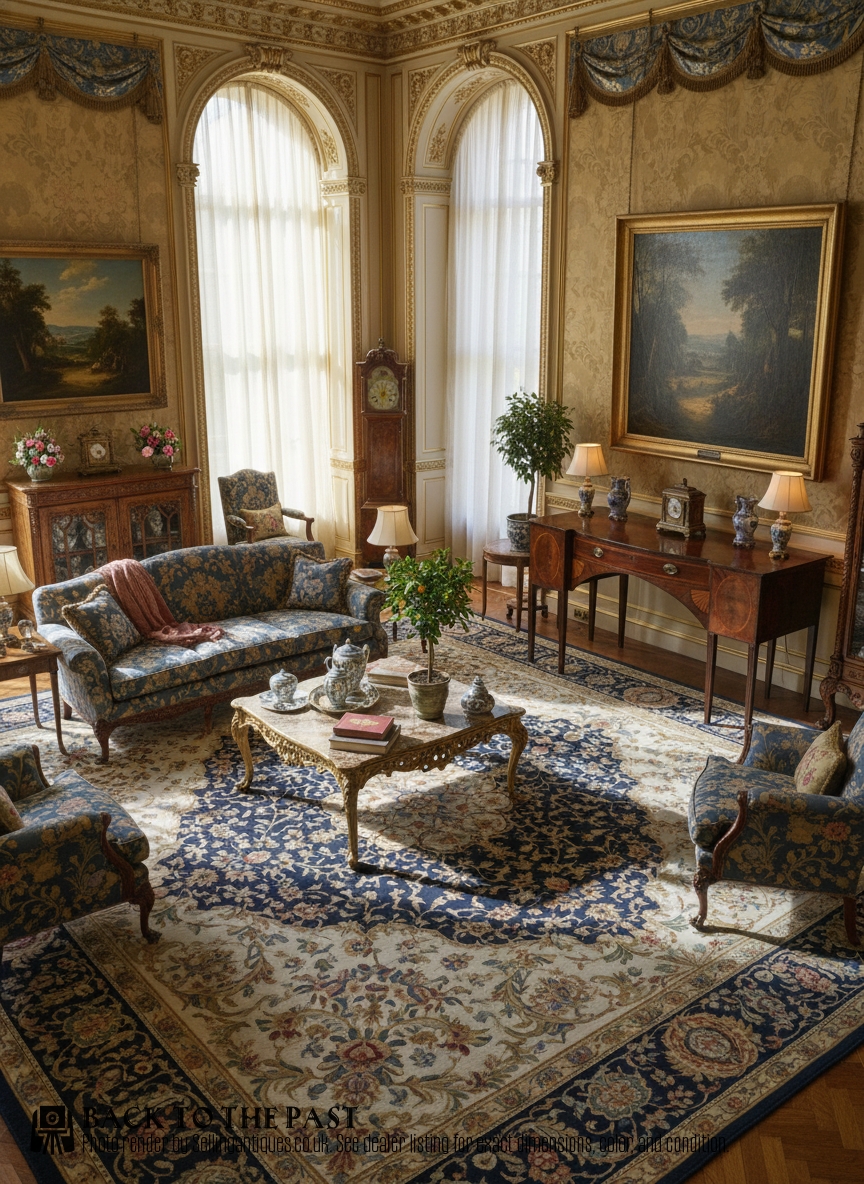
Mahogany Dining Room Credenza
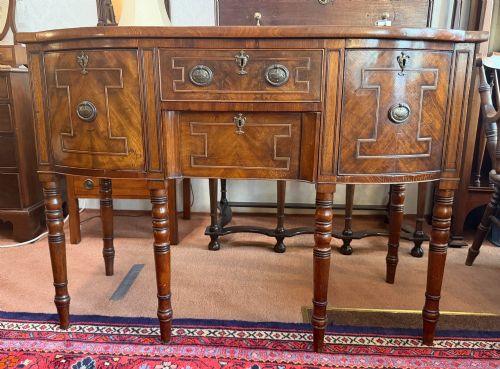
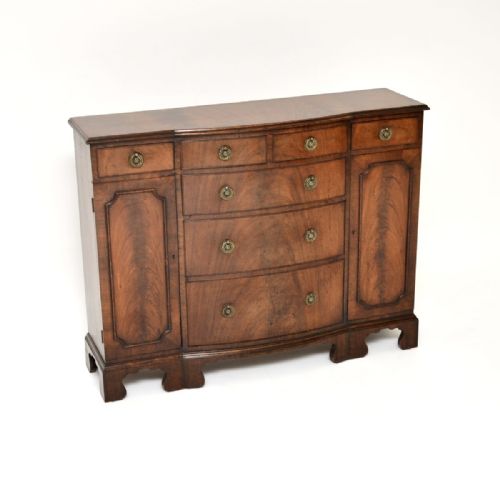
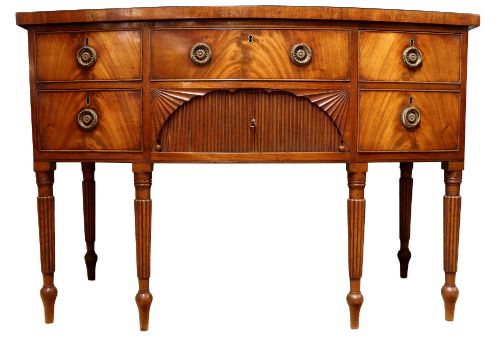
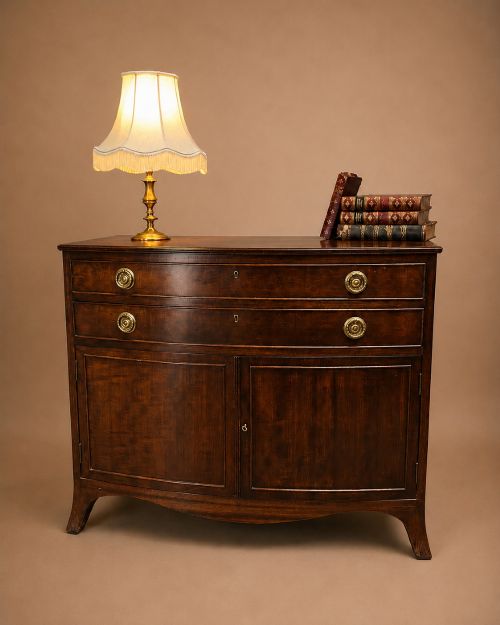
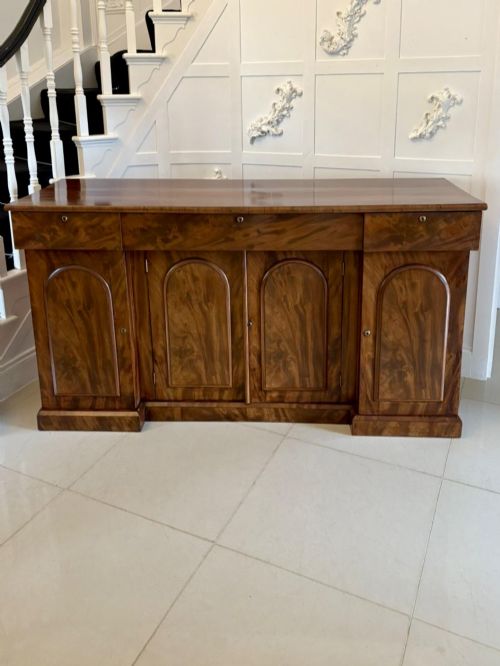
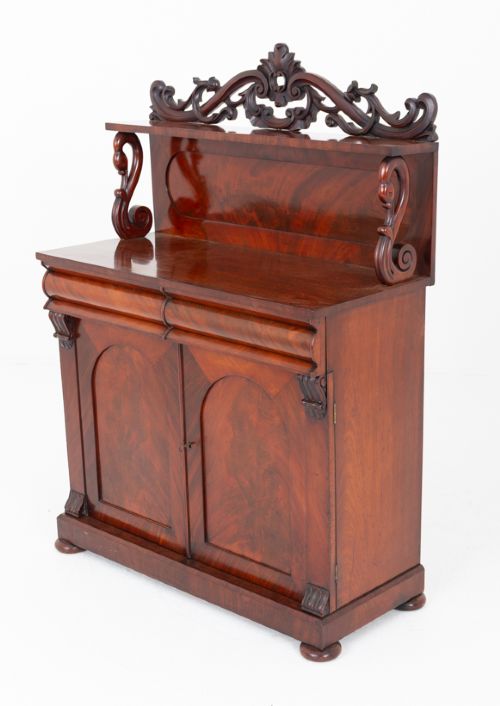
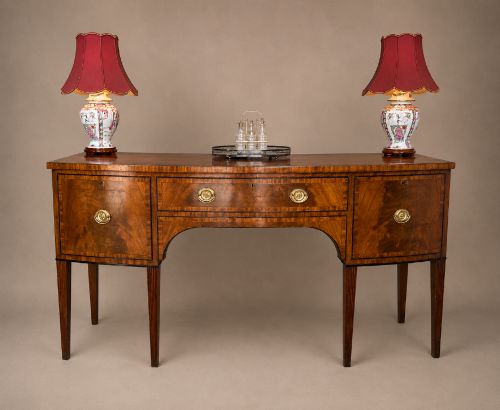
A mahogany dining room credenza encompasses versatile serving surfaces and cabinetry designed for the dining room, drawing from Georgian, Victorian, and Edwardian traditions. Buyers encounter bow-fronted sideboards, chiffoniers, and pedestals frequently across these listings.
The objects serve primarily to store tableware and display silver or porcelain while anchoring the room's proportions. Pieces range from grand 19th Century mirrors-backed sideboards down to neat Edwardian cabinets.
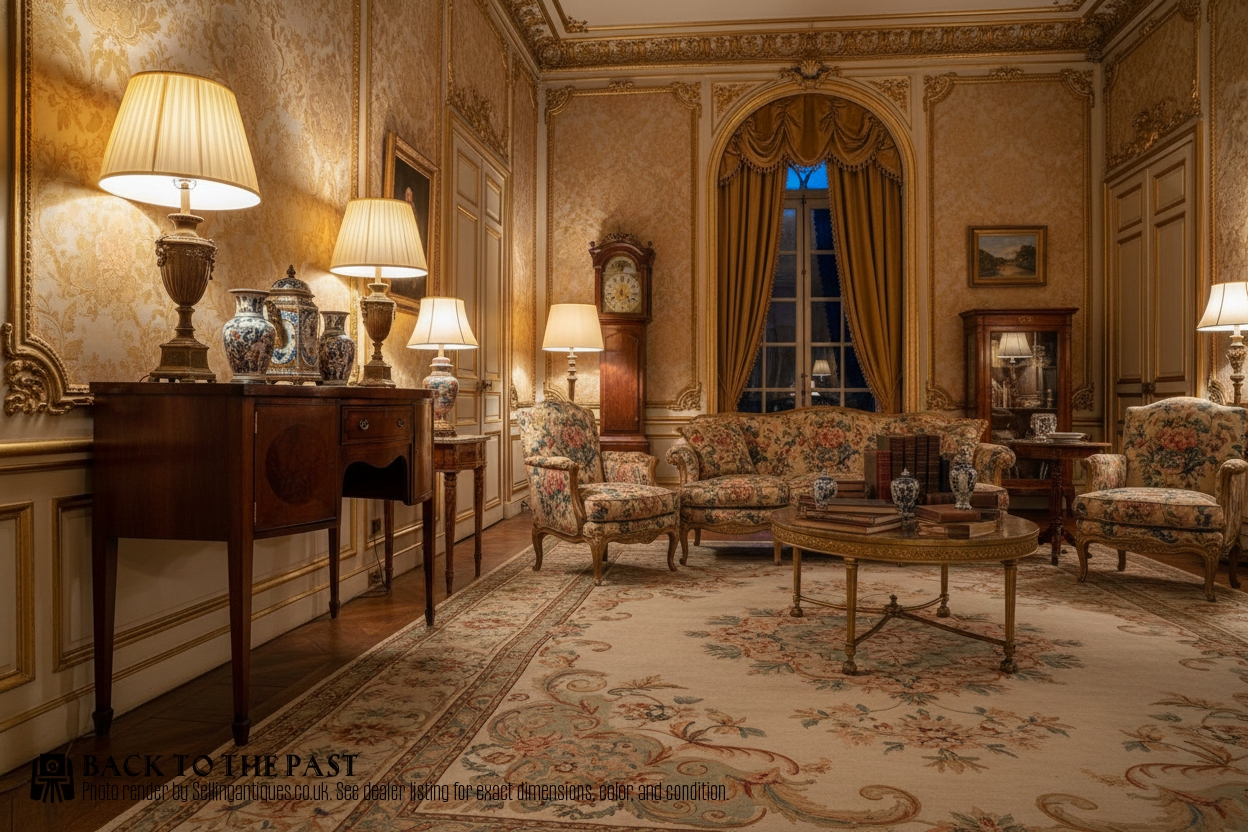
Materials and Construction
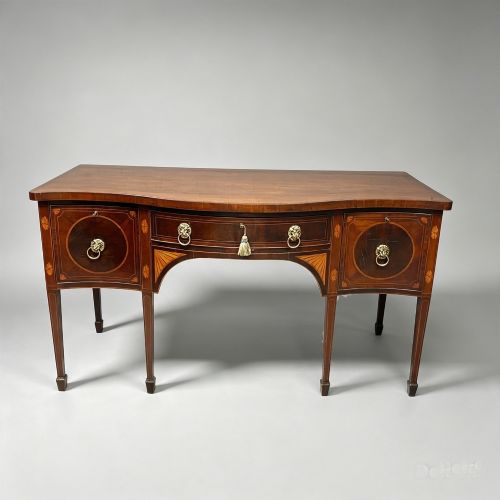
Workshops utilised solid mahogany alongside flame mahogany veneer to create deep, figured grain patterns on primary surfaces. Cabinetmakers accented these grounds with contrasting boxwood and satinwood inlay.
Structural elements incorporated brass handles, hinges, and occasional glass doors. Joinery methods matched the demands of heavy timber carcasses built to endure decades of domestic use.
Mahogany Dining Room Credenza Retail Price Guide 2026
Typical asking prices for mahogany dining room credenza among the pieces listed under this phrase on Sellingantiques today, from the lower quarter to the upper quarter. They describe what is for sale here now, not the wider market.
Victorian chiffoniers occasionally hide deep cellarette drawers designed to store wine bottles securely near the floor.
Judging Quality
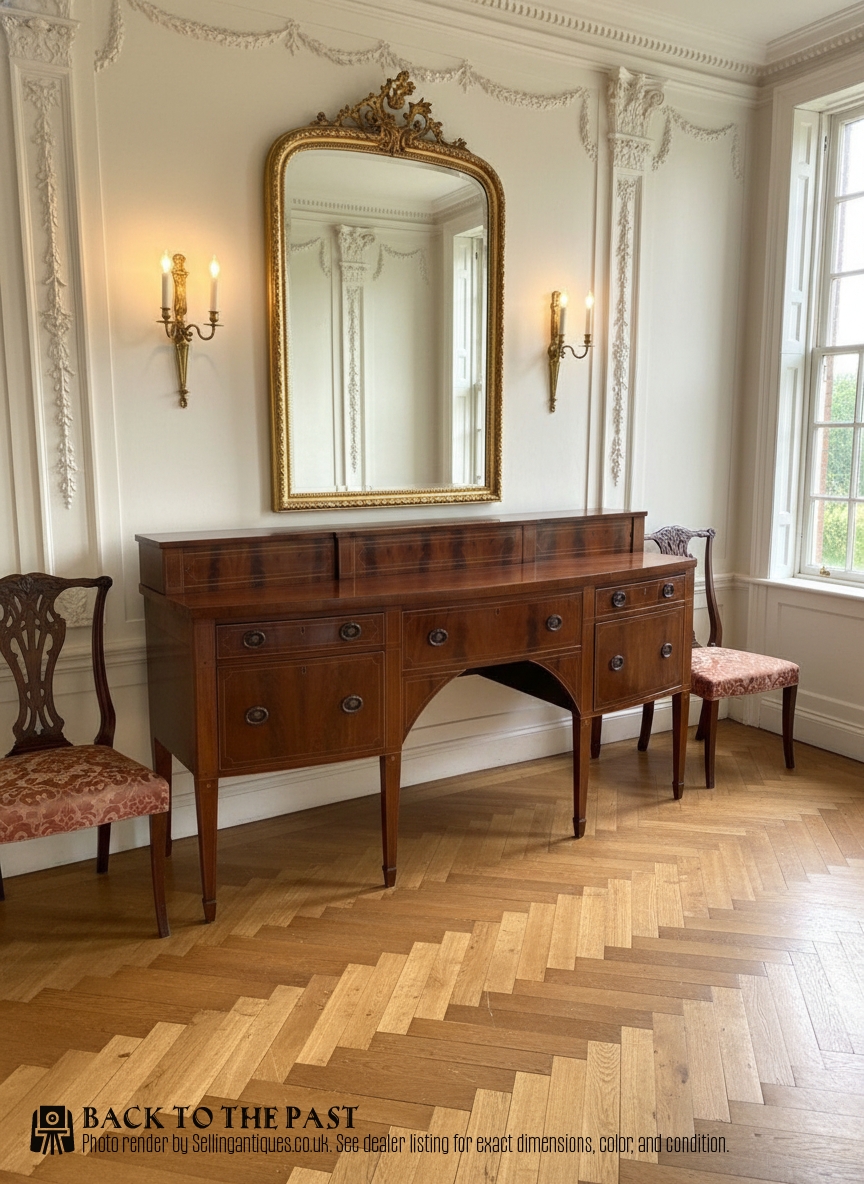
Superior examples demonstrate careful timber selection, where flame mahogany veneer runs harmoniously across drawer fronts and doors rather than appearing patched or mismatched. The crispness of inlaid satinwood and boxwood stringing also separates standard production from finer cabinet work.
Proportion and scale dictate the success of a piece, particularly in bow-front and serpentine forms where the curve must resolve cleanly. Maker attribution, such as signed work by Hewetsons or M. D. Miller & Sons, elevates historical interest.
Hewetsons London·M D Miller And Sons Nottingham
The Mahogany Dining Room Credenza Glossary
- Bow-front
- A convex curving cabinet front that projects outward in a smooth arc. This shape gained popularity during the Georgian and Regency periods to soften the room's geometry.
- Chiffonier
- A compact sideboard or low cabinet typically fitted with shelves enclosed by doors below. Victorian examples frequently incorporate a mirrored superstructure.
- Marquetry
- Decorative veneer work forming pictorial or geometric patterns using various coloured woods. Artisans applied this technique to elevate the ornamentation of drawer fronts and top panels.
- Serpentine
- A front design featuring a convex central section flanked by concave curves. This undulating profile requires advanced woodworking skill to execute properly.
- Flame mahogany
- Timber cut from the fork of the mahogany tree to produce a flickering, flame-like grain figure. Cabinetmakers reserved this prized veneer for prominent focal areas.
Mahogany Dining Room Credenza: Frequently Asked Questions
How do I date a mahogany sideboard?
Examine the timber selection, hardware, and structural style alongside any regional characteristics. Georgian pieces often display restrained cock-beading and tapered legs, while Victorian examples favor heavier carved ornament and mirror backs.
Secondary woods inside drawers also help determine age, as workshops shifted from oak and pine to mahogany linings over the course of the nineteenth century.
Where should I place a credenza?
Position the piece against a primary dining room wall where it can serve as a functional surface during meals. Ensure sufficient clearance for doors and drawers to open fully without obstruction from dining chairs.
Keep timber away from direct heat sources and strong sunlight to prevent the mahogany veneer from drying out or fading unevenly over time.
What is the difference between a sideboard and a chiffonier?
Sideboards generally offer a wider footprint designed primarily for dining rooms, featuring multiple drawers flanked by cupboards or pedestals. They provide broad serving space for food and tableware.
Chiffoniers are typically more compact cabinets, often associated with the Victorian era, and frequently include an upper shelf or mirror backed by a low timber gallery.
How do I maintain the finish?
Dust the timber regularly with a soft, dry cloth to prevent grit accumulation on the polished surface. Apply a quality beeswax periodically to nourish the mahogany and preserve the depth of the grain.
Avoid liquid polishes containing silicone, which can penetrate old finishes and create a hazy film that proves difficult to remove.