
Mahogany Dining Buffet
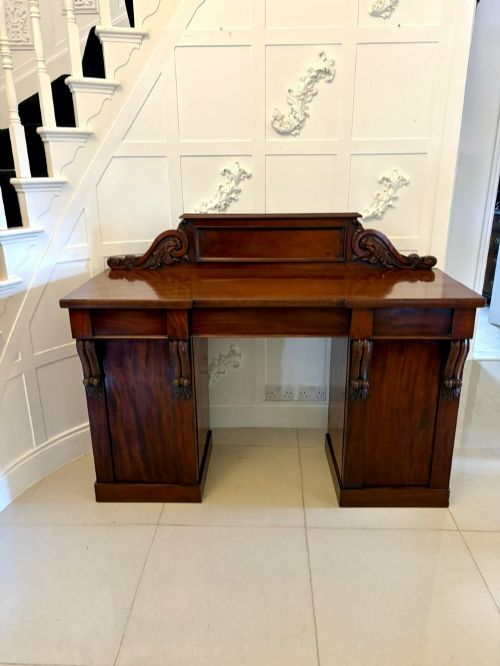
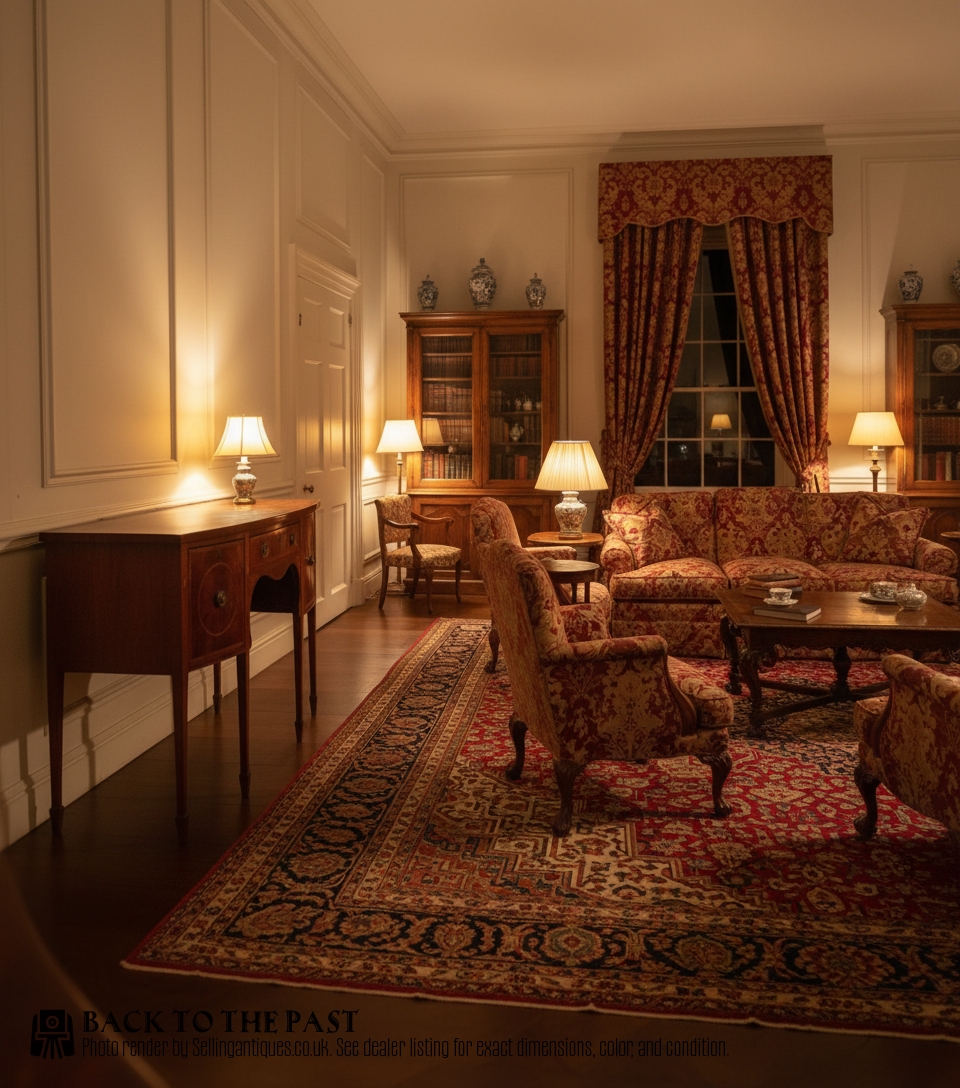
A mahogany dining buffet anchors a dining room with serious timber, practical surface space and centuries of cabinet-making craft.
Mahogany Dining Buffet
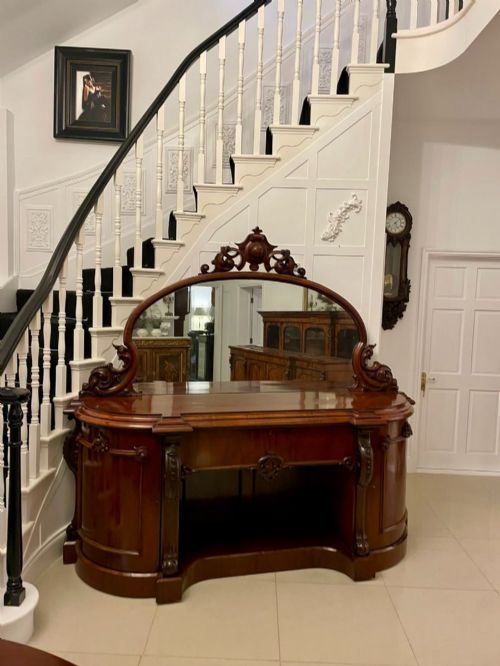
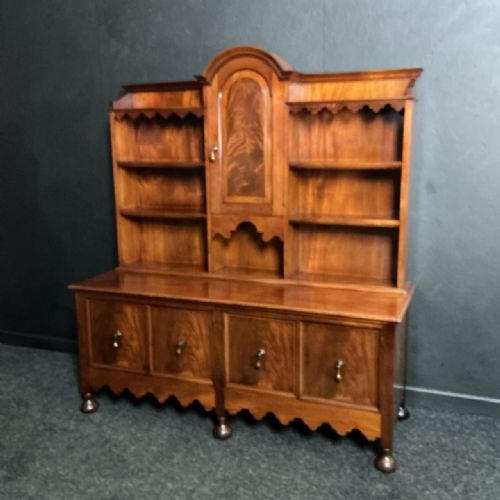
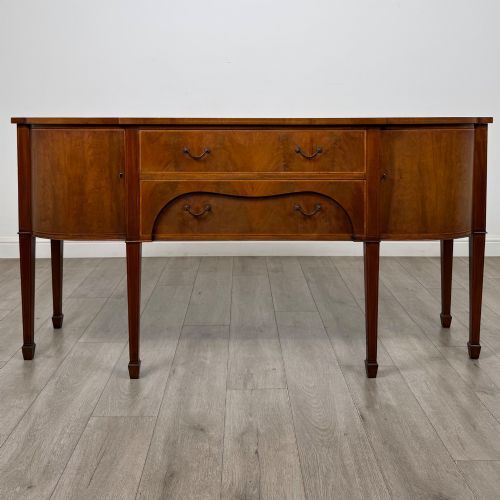
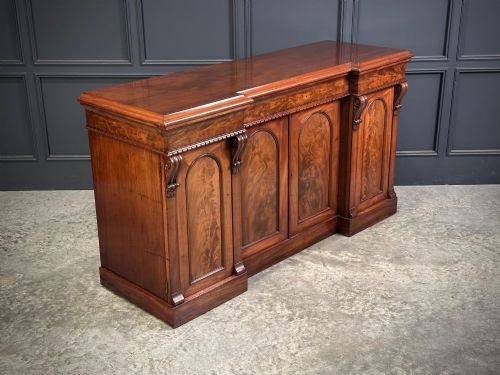
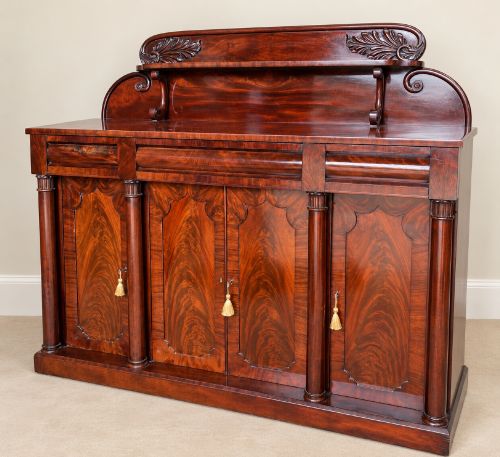
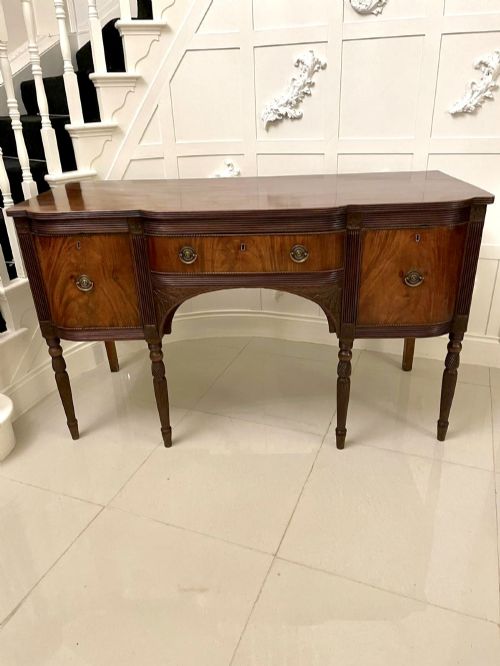
A mahogany dining buffet brings substantial storage and serving surface to a dining room, encompassing sideboards, chiffoniers, servers and breakfronts. When searching for a mahogany dining buffet, buyers encounter pieces stretching from the Georgian and Regency eras through the Victorian and Edwardian periods.
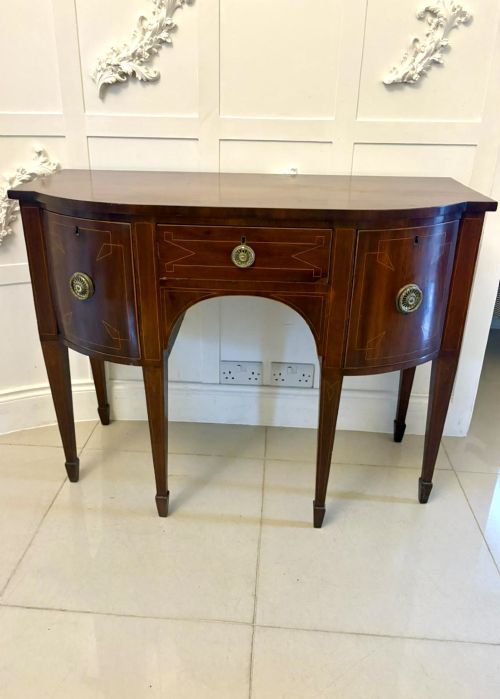
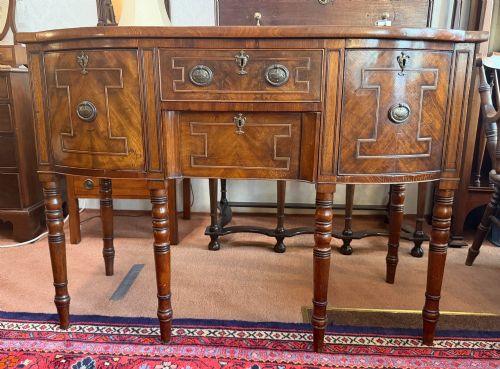
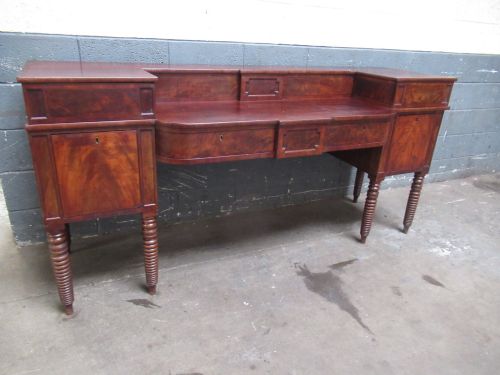
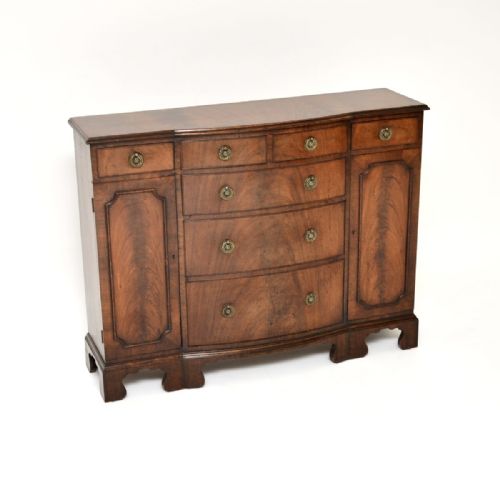
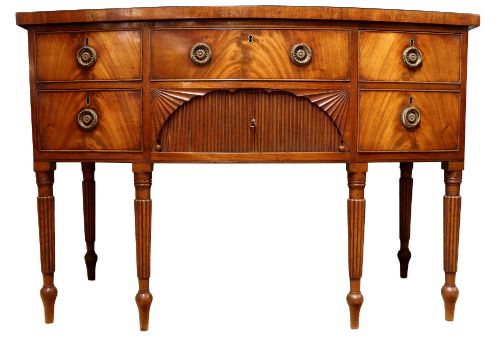
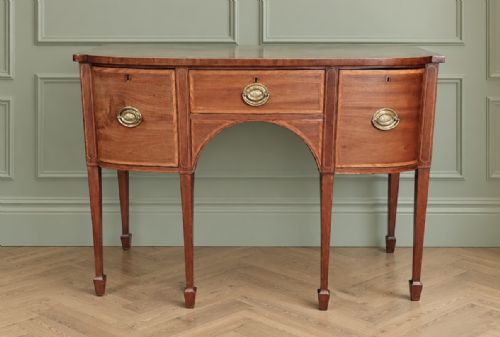
The version most commonly met on this page is the 19th-century bow-front or straight-front sideboard in solid mahogany and veneer. These forms range from compact early pieces to large breakfronts and pedestal designs with cupboards and drawers.
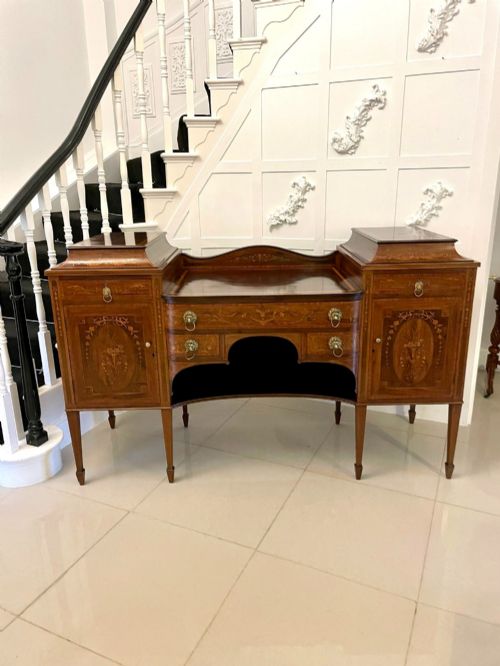
Origins span English workshops of the 18th and 19th centuries, alongside later Edwardian revivals drawing on Sheraton and Adam designs. Scottish makers also contributed robust regional variations in figured timber during the early 19th century.
Materials and Construction
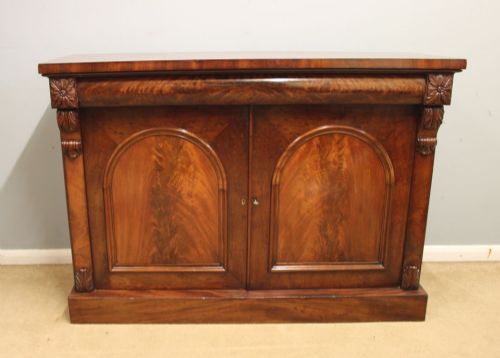
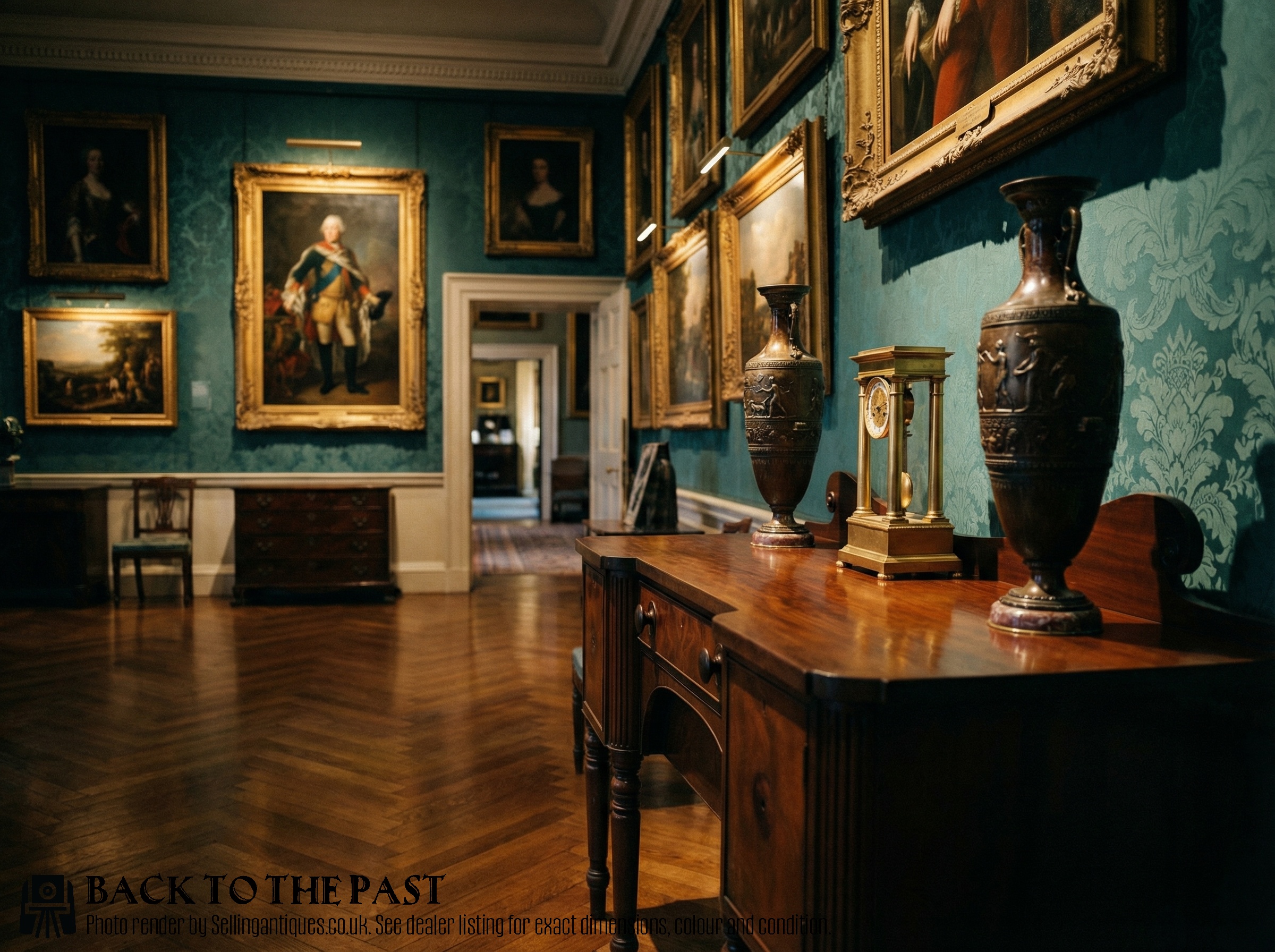
Makers utilised solid mahogany and flame mahogany veneer applied over secondary woods to create dramatic figuring on drawer fronts and doors. Cabinet makers selected timber with deep grain patterns, often enhancing the primary surfaces with contrasting stringing and banding.
Inlays of satinwood and boxwood provide sharp geometric and floral borders, while brass handles, mounts and occasional lion paw feet complete the hardware. Secondary decorative touches include marquetry panels and carved details executed directly into the solid mahogany framing.
Mahogany Dining Buffet Retail Price Guide 2026
Typical asking prices for mahogany dining buffet among the pieces listed under this phrase on Sellingantiques today, from the lower quarter to the upper quarter. They describe what is for sale here now, not the wider market.
Several pieces feature carved lion paw feet, letting fierce feline support anchor your dining room storage.
Assessing the Pieces
Quality rests primarily on the selection of the timber veneer and the crispness of the cabinet work. Pieces featuring heavily figured flame mahogany with symmetrical grain alignment stand apart from plainer, utility-grade equivalents.
The sophistication of the secondary inlays and the integrity of the structural joinery dictate the tier of the piece. Well-executed cockbeading around drawers and substantial original brass hardware indicate higher workshop standards.
Hewetsons London
The Mahogany Dining Buffet Glossary
- Breakfront
- A cabinet or sideboard whose central section projects forward from the flanking outer sections. This architectural arrangement creates depth and visual interest across the front elevation.
- Bow front
- A convex, curved front profile popular on sideboards and serving tables from the Georgian and Regency periods. It softens the linear geometry of the dining room.
- Serpentine
- A front contour that curves outward in the centre and inward toward the ends in a continuous wave line. This shape demands high skill from the cabinet maker.
- Flame mahogany
- A veneer cut from timber where the branch meets the trunk, producing a distinctive flickering flame pattern. It was favoured for principal drawer and door panels.
- Chiffonier
- A low sideboard or cabinet featuring enclosed shelving and sometimes a raised superstructure or mirror back. It serves as a compact alternative to the larger dining room sideboard.
Mahogany Dining Buffet: Frequently Asked Questions
What is the difference between a buffet and a sideboard?
A buffet and a sideboard both provide surface space and storage in a dining room, though historical naming conventions often overlap. Sideboards typically incorporate multiple drawers and cupboards designed for serving food and storing silver.
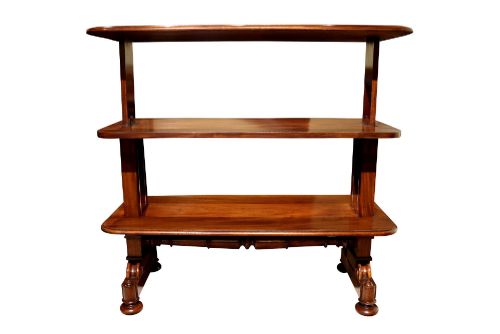
Buffets often emphasise lower surface tiers or serving areas, and some tiered examples include rise and fall mechanisms. On this page, both terms describe heavy timber dining furniture originating from the Georgian to Edwardian periods.
How do I identify a Georgian mahogany sideboard?
Georgian pieces, particularly those from the George III and Regency eras, display restrained classical proportions, elegant tapering legs or bracket feet, and crisp boxwood or satinwood inlay. The timber used is often dense, dark mahogany with a natural wax patina developed over centuries.
Look for hand-cut dovetails within the drawer construction and original brass drop handles or ring pulls. Later Edwardian revivals imitate these Georgian traits but generally exhibit machine-made elements and lighter interior timbers.
Where should I place a large breakfront buffet?
A large breakfront buffet requires a principal wall in a dining room or spacious hallway where its projected centre section can be viewed without obstruction. Because these pieces often span significant lengths, measure your floor space to allow adequate clearance for opening cupboard doors and drawers.
Keep the timber away from direct heat sources and strong sunlight to protect the mahogany veneer and polish from fading or drying out over time.
How do I care for antique mahogany furniture?
Care for antique mahogany involves regular dusting with a soft, dry cloth and occasional application of traditional beeswax to nourish the timber finish. Avoid modern silicone sprays, which can penetrate the polish and damage the underlying wood over the long term.
Maintain a stable room humidity level to prevent the solid mahogany and applied veneers from warping or cracking across seasonal temperature changes.