
Mahogany Credenza Table
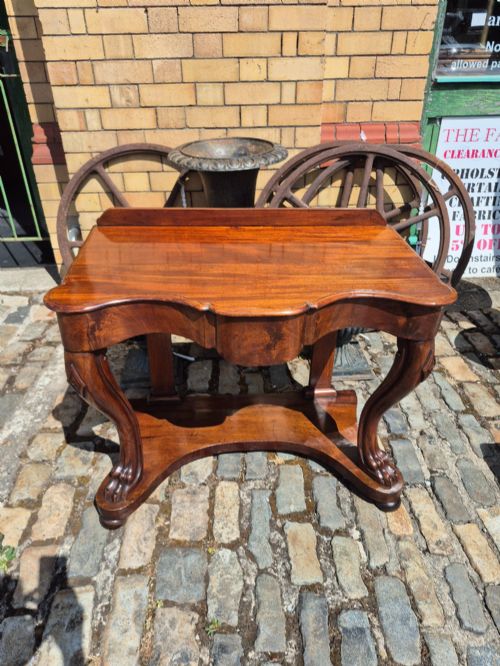
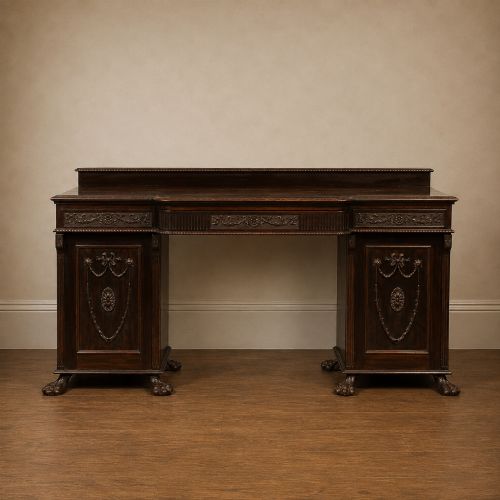
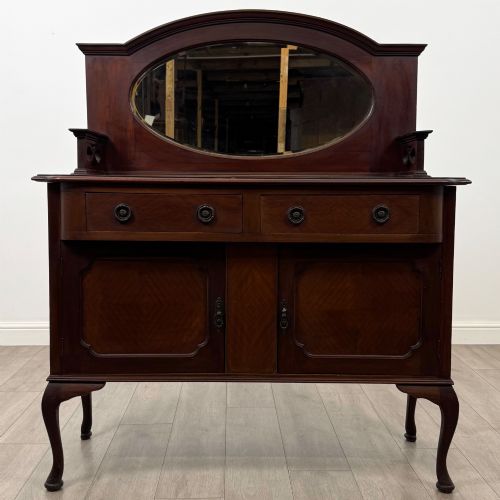
These mahogany credenza table selections span centuries of fine cabinet-making, offering generous storage and stately surfaces for the formal dining room or hall.
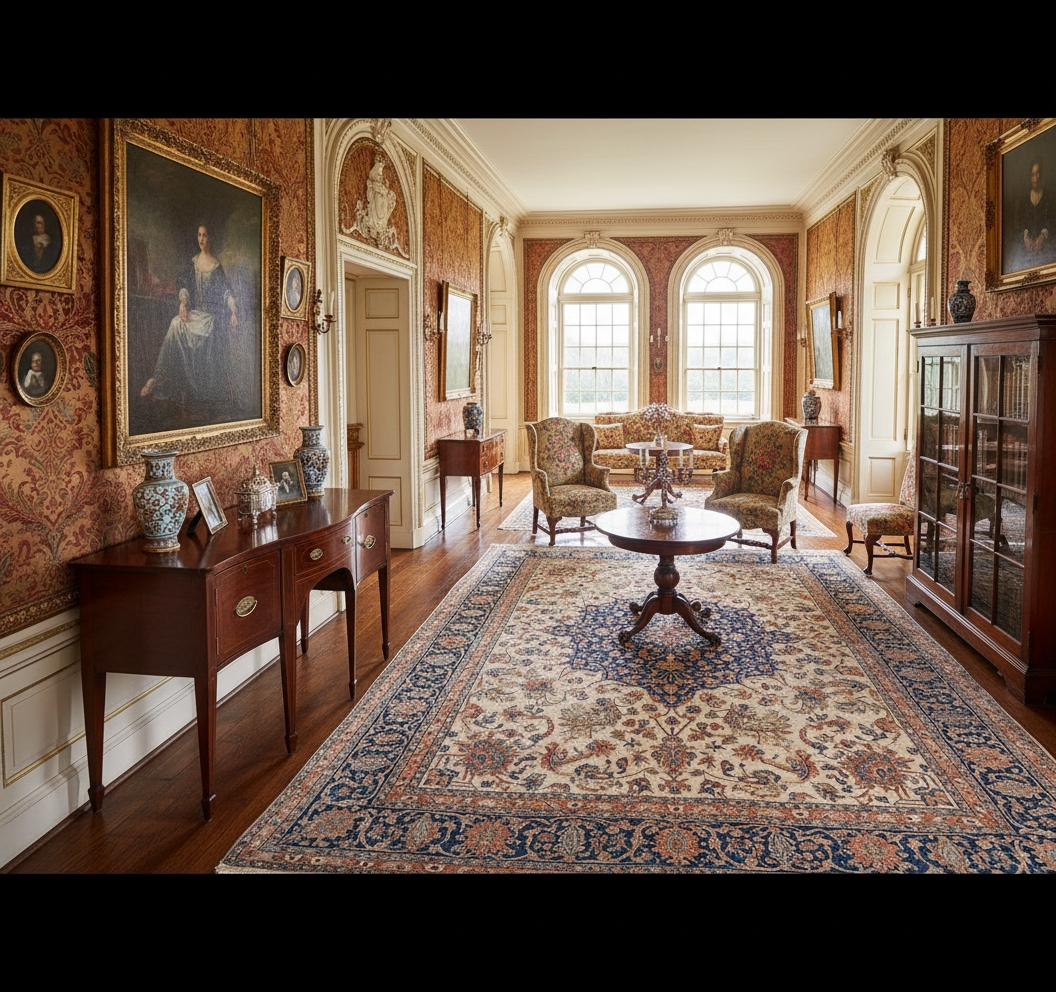
Mahogany Credenza Table
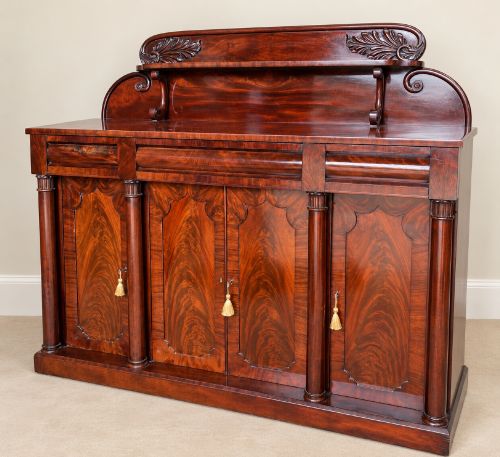
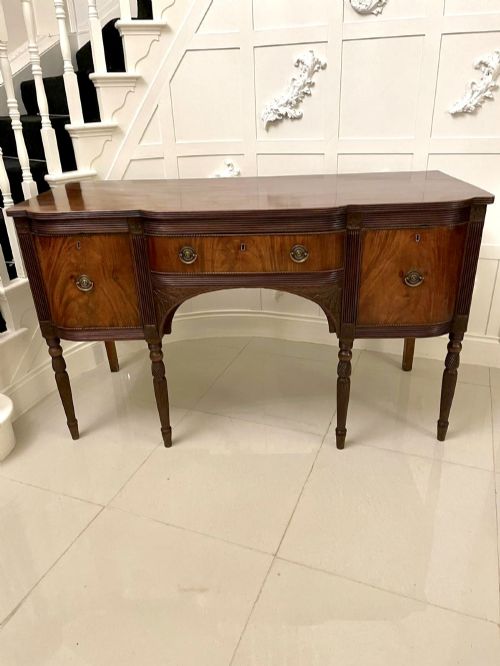
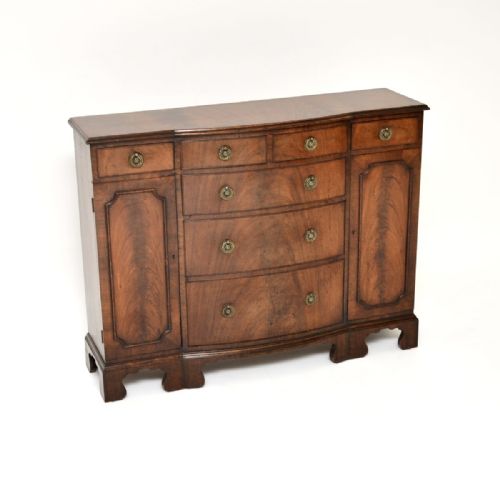
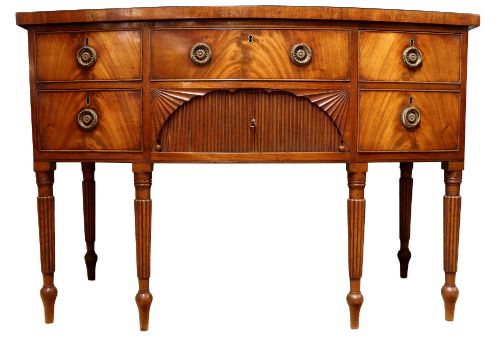
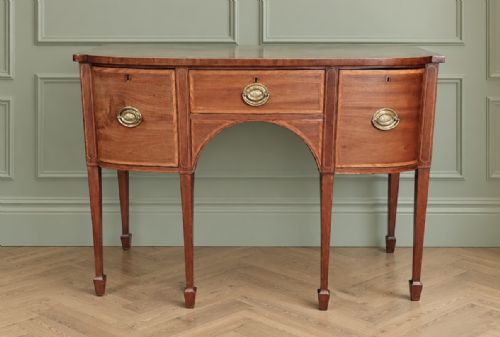
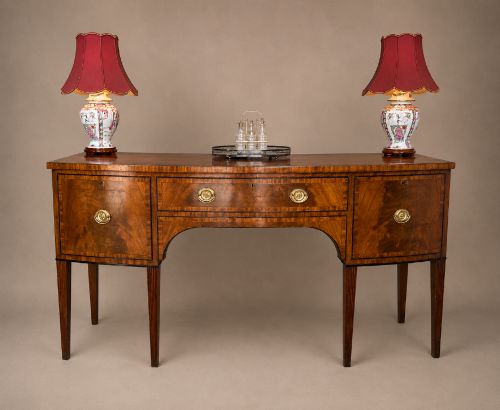
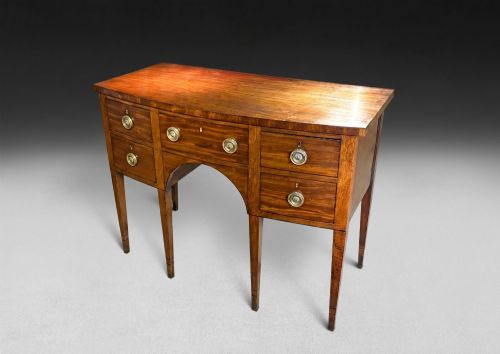
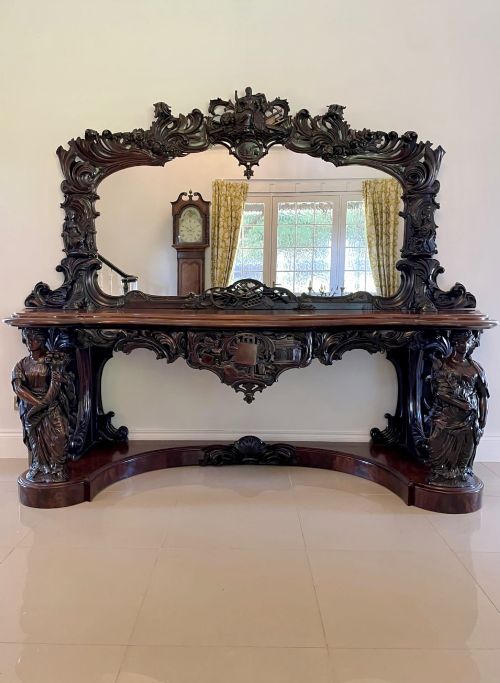
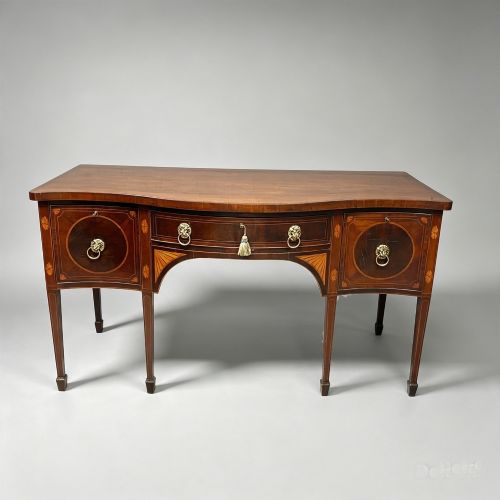
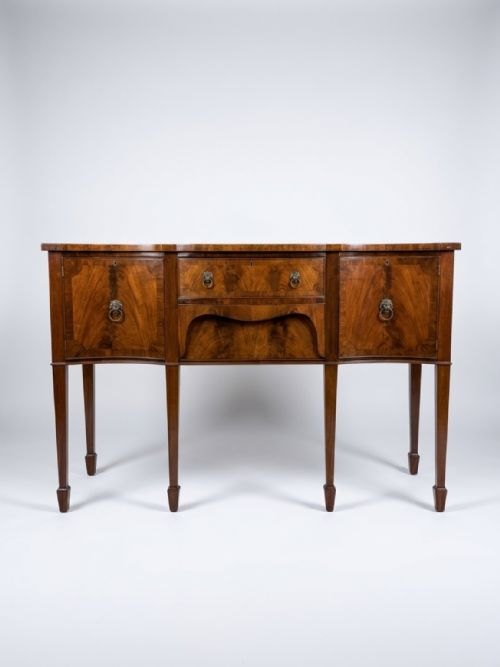
When searching for a mahogany credenza table, buyers encounter a robust selection of historic sideboards, servers, and console forms originating primarily from the Georgian, Regency, and Victorian eras. These foundational dining room pieces provide long, low surfaces paired with deep cupboards and drawers designed originally for service and storage.
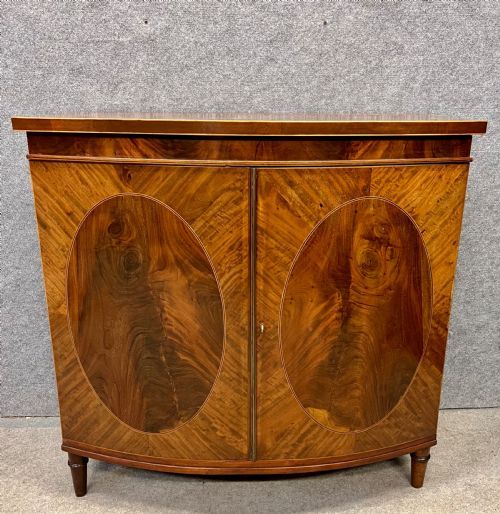
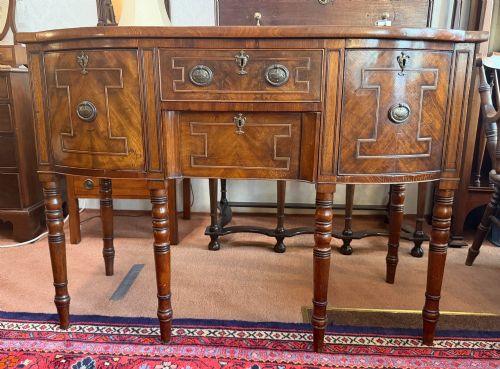
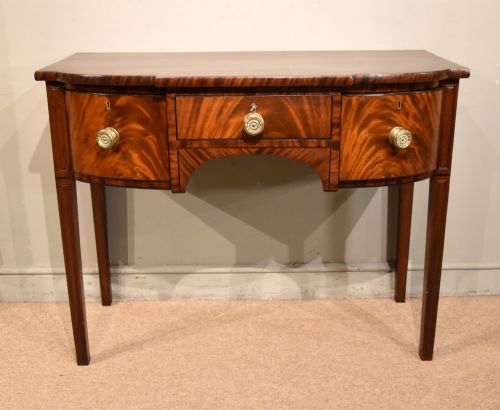
The versions most frequently met on this page date from the late eighteenth century through the nineteenth century, encompassing George III serpentine shapes, bow-front designs, and later Edwardian interpretations. Makers constructed these items to anchor large rooms, frequently employing breakfront facades and shaped demi-lune profiles that bring architectural presence to an interior.
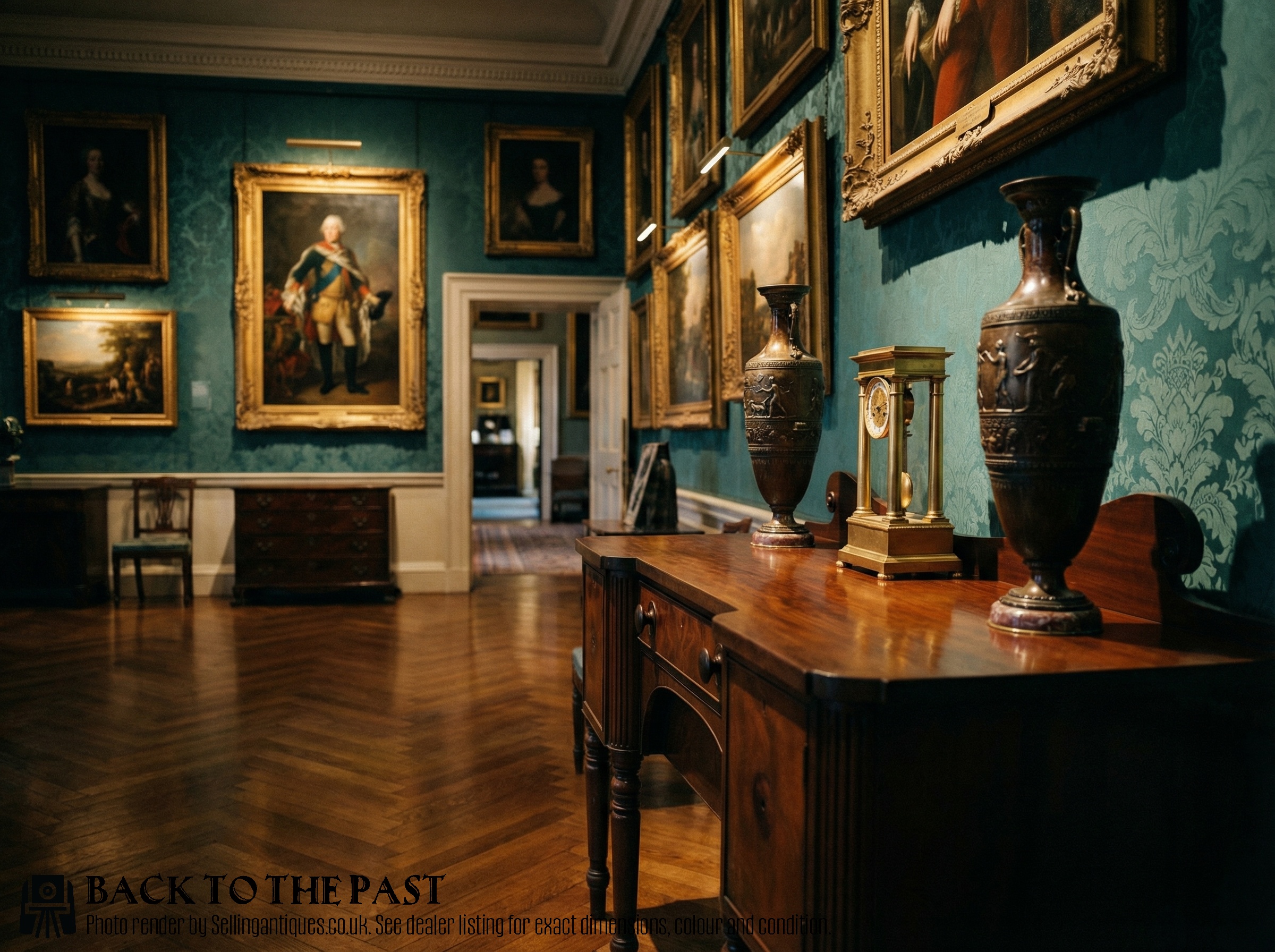
What varies in quality
The distinction between standard commercial output and exceptional exhibition quality rests heavily on the selection of timber and the precision of the cabinet-maker's joinery. Superior examples display perfectly matched flame mahogany veneers and intricate, hand-cut satinwood inlay that follows complex serpentine or breakfront contours without distortion.
Structural integrity and originality dictate the upper tier of the market, where pieces retain their original brass hardware, internal shelving, and backboards without later alterations. Finer pieces demonstrate meticulous hand-carving on details such as reeded legs, paw feet, and stage-backs, executed with sharp relief that cheaper vernacular workshops omitted.
The listings on this site span eight distinct periods, from 18th Century Georgian pieces to 20th Century Edwardian reproductions.
George Hepplewhite·M. D. Miller and Sons
The Mahogany Credenza Table Glossary
- Serpentine
- A front contour that curves outward in the centre and inward toward the ends, demanding immense skill from the cabinet-maker to shape accurately. This sweeping line defines some of the most sought-after Georgian dining room furniture.
- Bow-front
- A convex curved front profile that projects outward in a smooth arc. This form softens the linear rigidity of a traditional dining room while maximising internal storage depth.
- Crossbanding
- A narrow strip of veneer laid across the grain of the primary panel to form a contrasting border. Cabinet-makers used this technique to frame drawer fronts and tabletops.
- Breakfront
- A cabinet or sideboard facade where the central section projects forward from the recessed flanking wings. This architectural arrangement creates a strong shadow line and varied storage depths.
- Demi-lune
- A half-moon shape featuring a flat back edge designed to stand against a wall and a curved front. These pieces suit narrower hallways and smaller reception spaces.
Mahogany Credenza Table: Frequently Asked Questions
How do I identify a George III sideboard?
George III pieces typically exhibit understated classical proportions, premium figured mahogany timber, and restrained stringing rather than heavy Victorian carving. Look for tapered spade feet, fine boxwood inlay, and hand-cut dovetail joints within the drawer construction.
These eighteenth-century items prioritize architectural balance, often featuring disciplined serpentine or bow fronts designed to serve formal dining spaces without excessive ornamentation.
Where should I place a mahogany server?
A mahogany server or sideboard suits dining rooms, large hallways, or spacious living areas where its long surface and storage capacity can be fully utilised. Because many historic pieces are finished primarily for placement against a wall, positioning them in primary reception rooms highlights their decorative front facades.
Ensure the room maintains stable humidity and keep the timber away from direct heat sources to preserve the polished mahogany finish and prevent veneer movement.
What is the difference between a sideboard and a credenza?
Traditional sideboards generally feature a combination of central drawers flanked by deep cupboards designed specifically for dining room storage and service. Credenza forms historically incorporate low, enclosed cabinet doors across their entire front without the prominent drawer tiers typical of formal dining servers.
On this page, the terms frequently overlap as cabinet-makers and later cataloguers adapted regional terminology for similar large-scale storage furniture.
How do I care for antique mahogany furniture?
Maintain antique mahogany by dusting regularly with a soft, dry cloth and occasionally applying traditional beeswax to nourish the timber grain. Avoid using modern silicone sprays or placing the piece in direct sunlight, which can fade the rich reddish-brown colour over time.
Maintaining stable indoor temperatures prevents the solid mahogany and delicate satinwood veneers from drying out or splitting.