



Georgian Revival Buffet
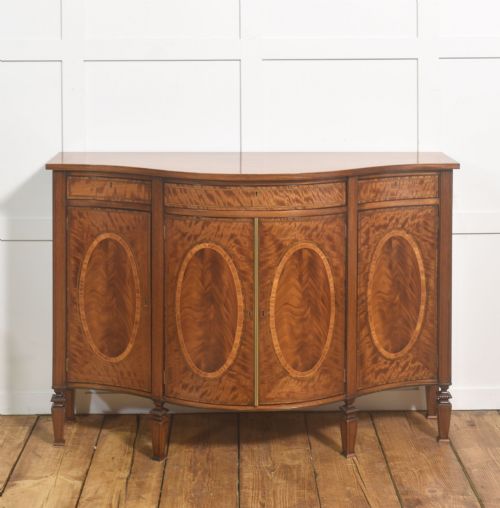
A georgian revival buffet brings grand dining room presence into a modern home through fine mahogany, satinwood inlay, and classic bow-front or breakfront shapes.
Georgian Revival Buffet
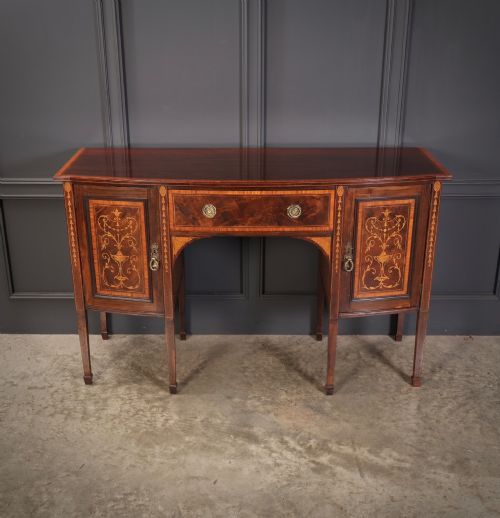
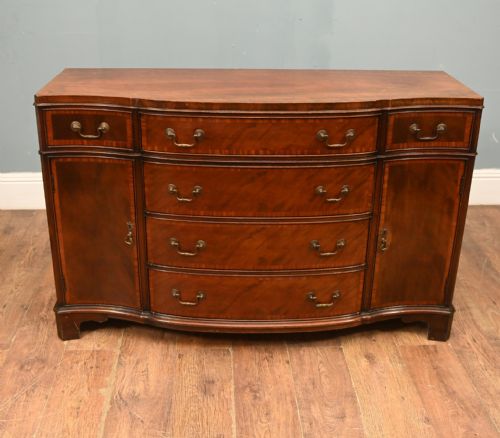
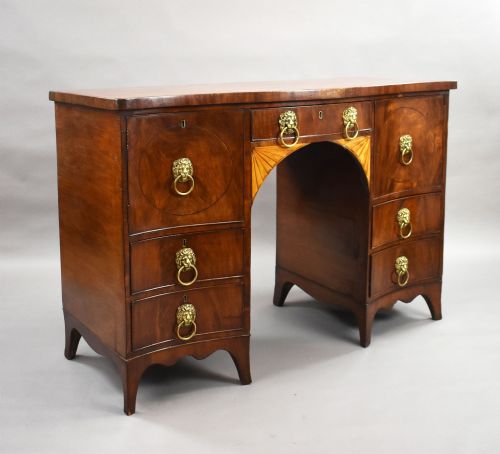
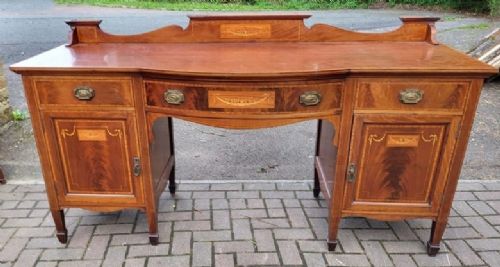
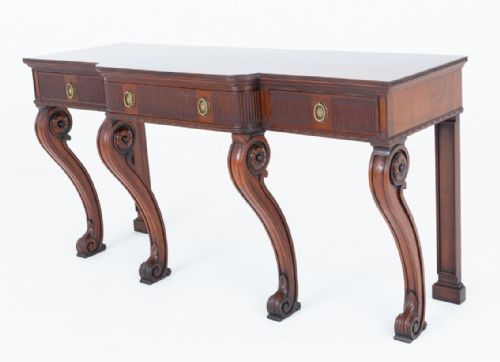
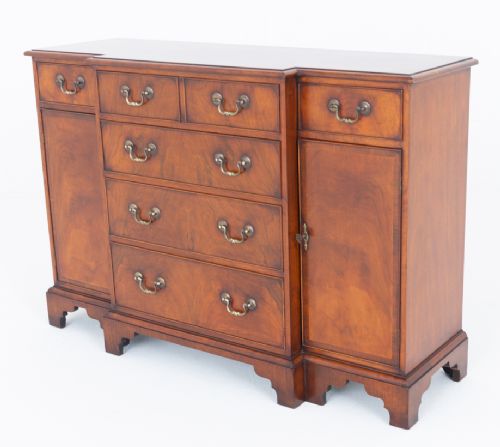
A georgian revival buffet serves as a substantial storage and serving piece in the dining room, taking the form of sideboards, side cabinets, and serving tables. These pieces emerge chiefly from the Edwardian era and the late nineteenth and early twentieth centuries, drawing direct design inspiration from earlier eighteenth-century masters.
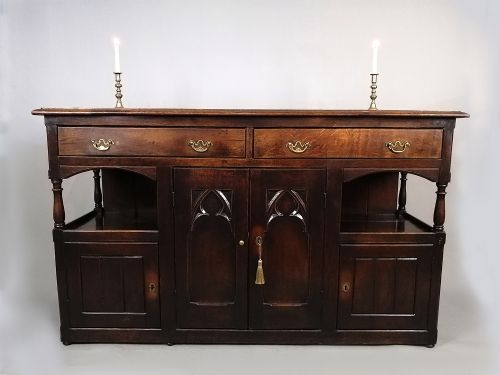
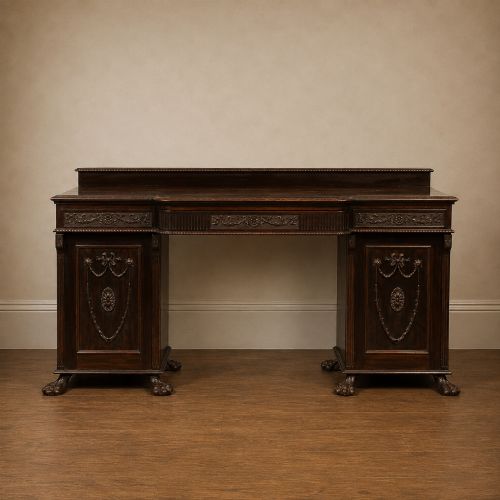
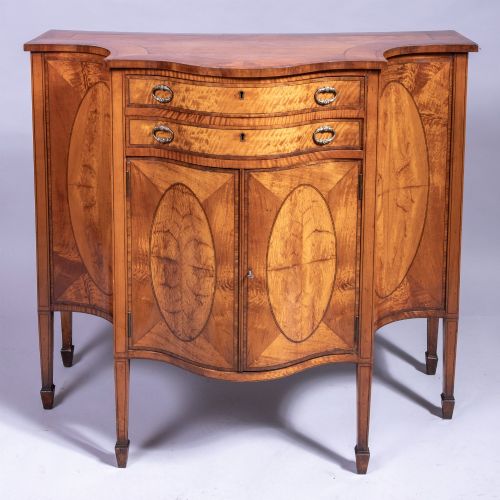
Buyers will most frequently encounter mahogany sideboards featuring bow-front or serpentine shapes, alongside satinwood models ornamented with detailed woodwork inlay. The selection also includes breakfront forms supported by paw feet, as well as serving tables and occasional oak pieces echoing earlier George III styles.
Distinguishing quality across the range
Quality rests heavily on the crispness and complexity of the inlay work, where fine satinwood and boxwood details demonstrate superior hand-craftsmanship. The choice of timber grain, particularly the depth of flame mahogany and the smooth execution of curved serpentine or bow fronts, marks out the finer examples.
Structural refinement also separates the standard productions from the exceptional pieces, seen in substantial breakfront proportions, well-cast brass hardware, and carefully integrated stylistic references to Adam or Sheraton designs.
Listings feature mahogany, satinwood, and oak timbers alongside brass hardware across Edwardian and nineteenth-century periods.
Howard And Sons
The Georgian Revival Buffet Glossary
- Bow-front
- A convex, curved cabinet front that projects outward in a smooth arc. This shape softens the room and creates deeper central storage space.
- Serpentine
- A concave-convex-concave undulating front shape popular in finer eighteenth-century and revival dining furniture. It requires considerable skill from the cabinet-maker to execute properly.
- Breakfront
- A large piece of furniture where the central section projects forward past the flanking side cabinets. This layout adds visual weight and architectural presence.
- Cross-banding
- A narrow strip of veneer applied across the grain border of a drawer front or table top, often in a contrasting timber such as satinwood.
- Marquetry
- Decorative patterns formed by fitting together small pieces of coloured wood veneer onto a solid background. It frequently depicts floral or neoclassical motifs on revival pieces.
Georgian Revival Buffet: Frequently Asked Questions
How do I style a georgian revival buffet?
Position the buffet against a primary dining room wall where its length and polished timber top can anchor the room.
Use the surface to display silver serving pieces, candlesticks, or ceramic bowls, keeping the lower cupboards practical for storing table linens and tableware.
What is the difference between a buffet and a sideboard?
While the terms are often used interchangeably in modern listings, sideboards traditionally feature deep cupboards and drawers for storage.
Buffets and serving tables frequently emphasise a lighter stance, occasionally featuring open lower shelving or dedicated serving surfaces.
How can I date a revival buffet?
Look to the overall construction methods, timber selection, and revival style cues to determine the likely era of manufacture. Pieces bearing these specific revival traits commonly date from the Edwardian period or the late nineteenth and early twentieth centuries.
Check the drawer linings, backboards, and hardware style for period-consistent manufacturing techniques that distinguish them from modern reproductions.
Are these pieces suitable for smaller dining spaces?
While many breakfront examples are large and commanding, the selection also includes compact bow-front side cabinets and serving tables.
Selecting a smaller serpentine or bow-front model allows you to enjoy the rich mahogany grain and classical inlay without overwhelming a modest room.