
Breakfront Dining Credenza
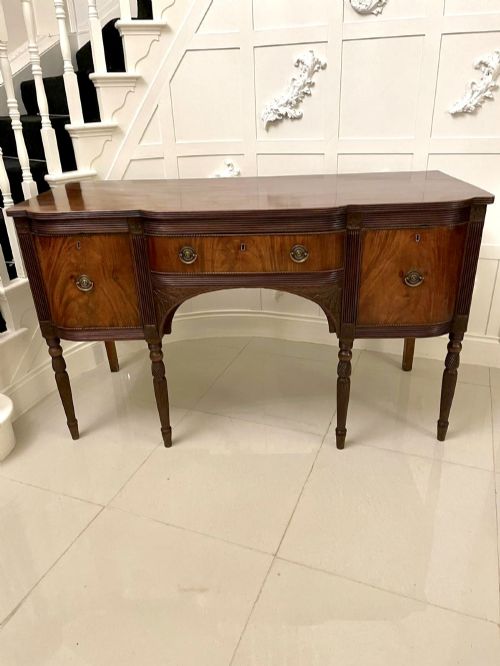
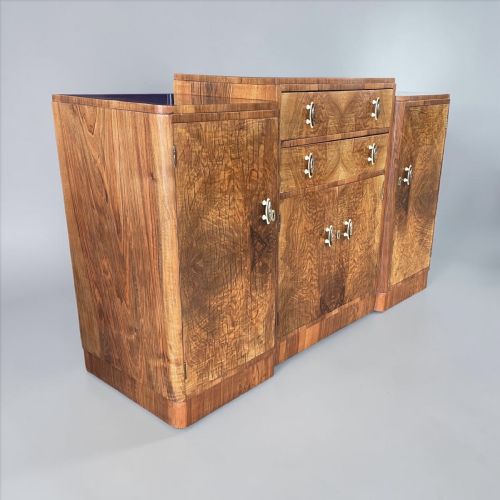
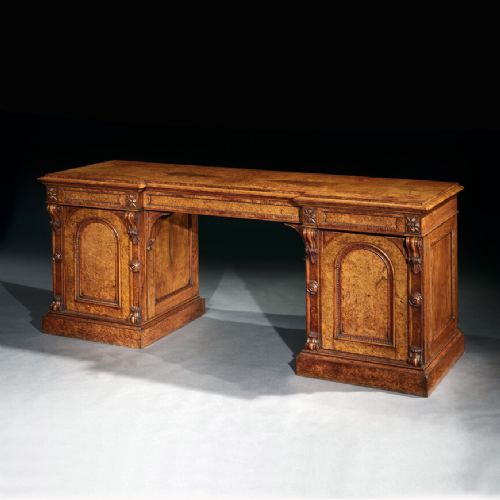
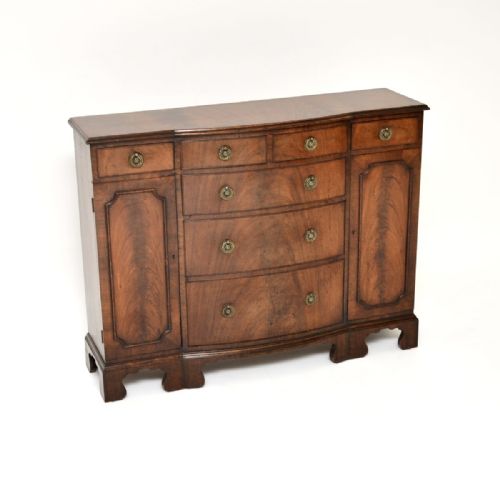
These breakfront dining credenza pieces are substantial dining room timber cabinets built to anchor a formal interior.
Breakfront Dining Credenza
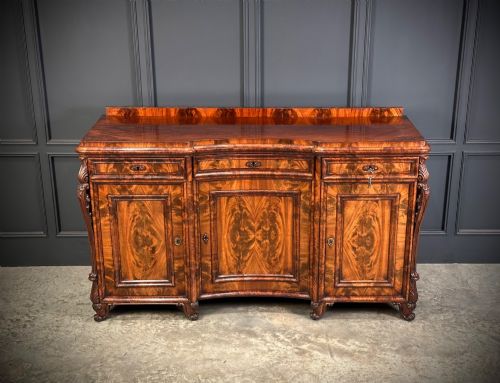
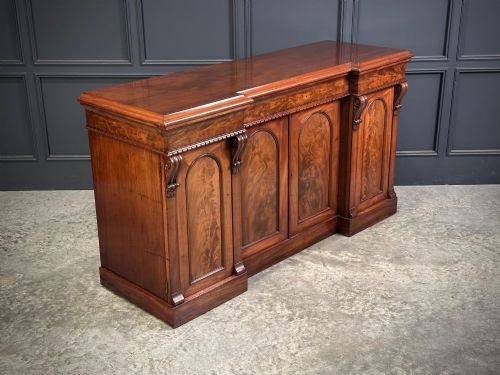
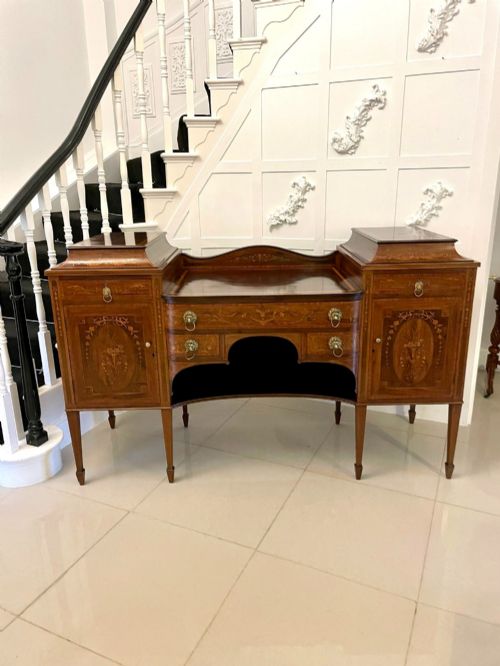
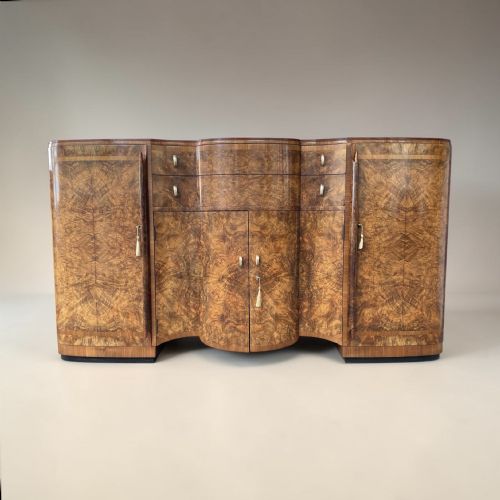
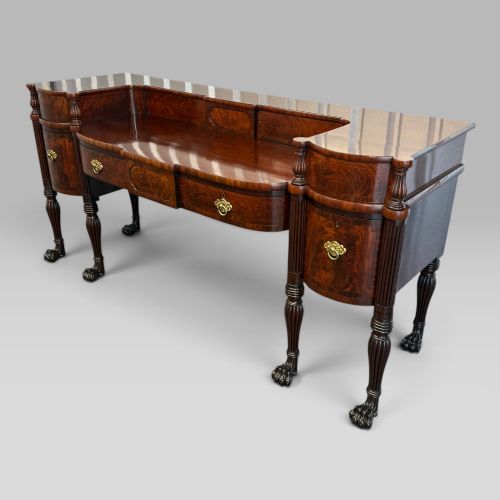
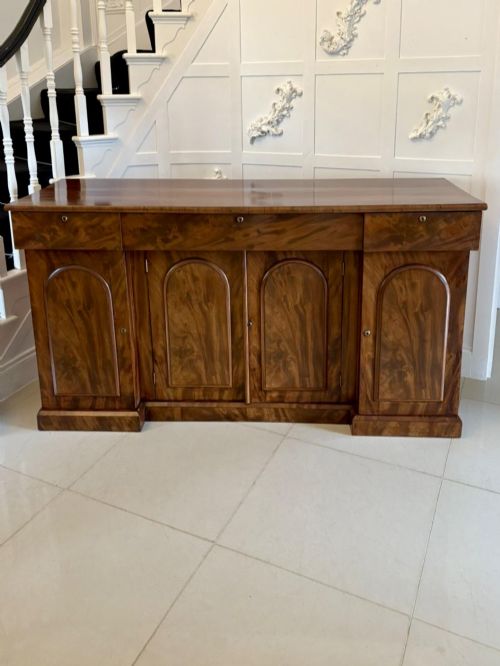
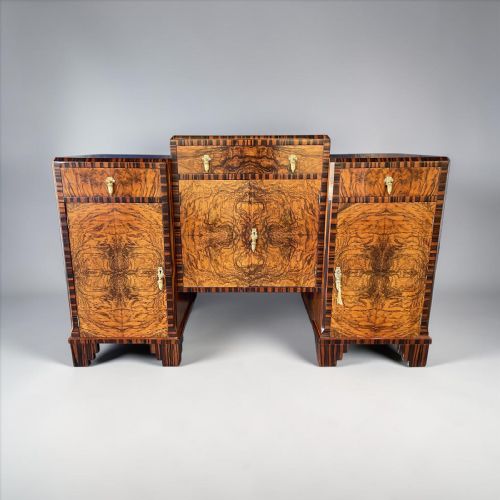
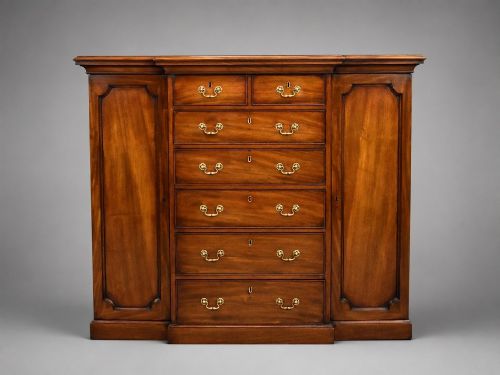
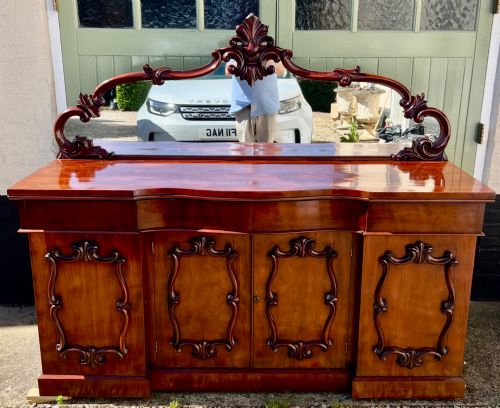
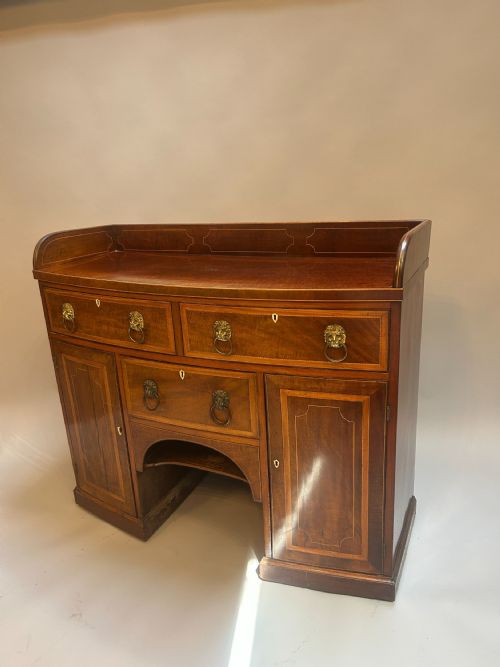
When you search for a breakfront dining credenza, you encounter large timber storage furniture designed primarily for the dining room. The pieces appearing here span George III, Regency, Victorian, Edwardian and Art Deco periods, encompassing various forms of sideboards, credenzas and chiffoniers.
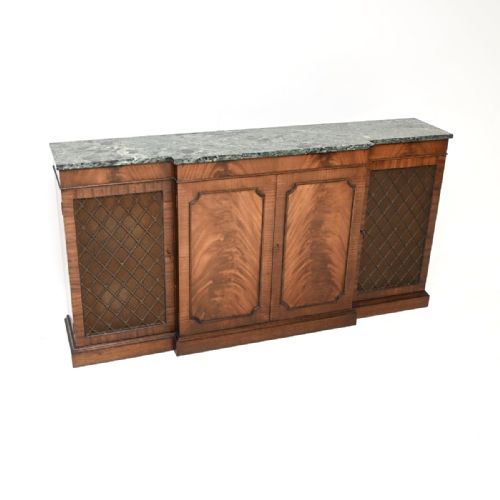
You meet examples featuring prominent projecting central sections, multi-door configurations, and decorative elements such as mirror backs and marble tops. The material palette relies heavily on mahogany, flame mahogany veneer, walnut, burr walnut and satinwood.
Materials and construction methods
Cabinet makers utilised solid timbers alongside figured veneers like flame mahogany and burr walnut to create patterned surfaces across the main facades. Structural framing frequently relied on mahogany, while decorative enrichment incorporated brass inlay, satinwood stringing and marquetry.
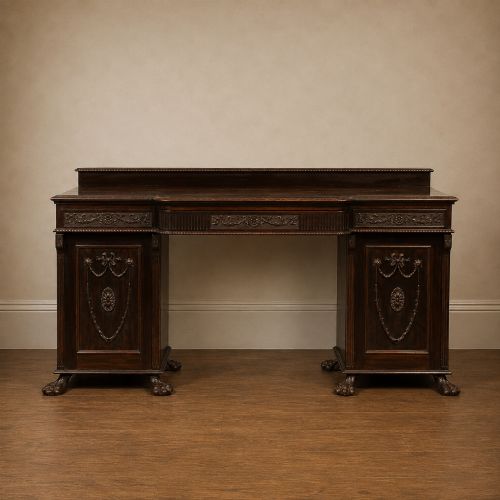
Carved details such as lion paw feet and classical motifs appeared on specific Regency and Victorian iterations. Additional functional elements included glass doors, brass grilles and inset marble tops.
Listings feature mahogany, burr walnut, rosewood and pollard oak alongside decorative elements like brass grilles and marble tops.
Distinguishing quality levels
The standard of execution rests on the selection and matching of timber veneers across large expanses like doors and drawer fronts. Superior cabinet work shows precision in inlay, marquetry patterns and the integration of carved mounts.
Proportion and architectural balance dictate the overall success of the piece, particularly where the central section projects forward from the flanking cabinets.
Hewetsons London·Maurice Adams·Liberty of London
The Breakfront Dining Credenza Glossary
- Breakfront
- A cabinet construction where the central section projects forward from the flanking sections. This architectural arrangement creates depth and shadow across the front elevation.
- Flame mahogany
- A veneer cut from timber where the grain creates a flickering, flame-like pattern. Makers selected this figure for its visual impact on prominent cabinet doors.
- Marquetry
- Decorative veneer work forming pictures or geometric patterns using various woods. Craftsmen cut contrasting timbers to fit precisely into prepared backgrounds.
- Credenza
- A low dining room cabinet or sideboard used for serving and storage. The term frequently overlaps with sideboard and chiffonier in nineteenth-century listings.
- Satinwood
- A pale, lustrous timber utilised for stringing, banding and inlay work. Its golden tone contrasts sharply against darker woods like mahogany.
Breakfront Dining Credenza: Frequently Asked Questions
What is a breakfront dining credenza?
A breakfront dining credenza is a large timber storage cabinet designed for the dining room, featuring a central section that projects forward from the sides.
These pieces typically provide substantial cupboard and drawer space for dining room items while serving as a prominent decorative anchor in the room.
How do I date a sideboard?
Dating a sideboard involves examining the secondary timbers, construction methods, hardware and stylistic details such as veneer choices and leg shapes.
Pieces range from eighteenth-century George III examples through Regency, Victorian and Edwardian revivals to twentieth-century Art Deco designs.
Where should I place a credenza?
A credenza belongs against a large dining room wall where its length and projecting central facade can be fully appreciated.
Ensure adequate clearance around the piece so that doors and drawers can open fully without obstruction from dining chairs.
What is flame mahogany?
Flame mahogany is a highly figured veneer derived from specific cuts of timber that produce a distinctive, undulating pattern resembling flickering flames.
Cabinet makers used this veneer to create striking symmetrical patterns across the doors of nineteenth-century pieces.