
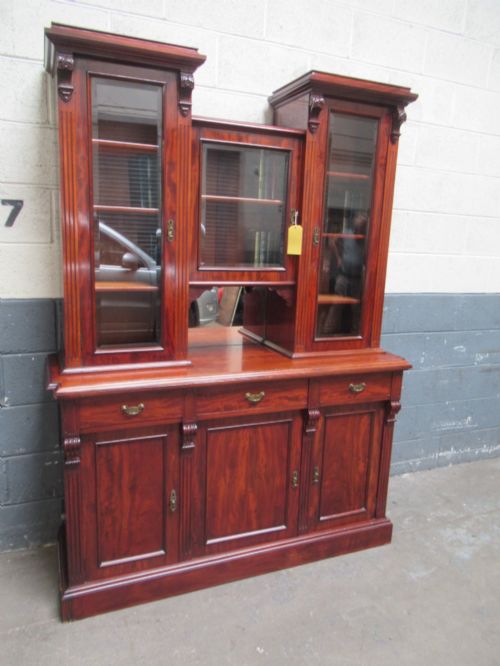
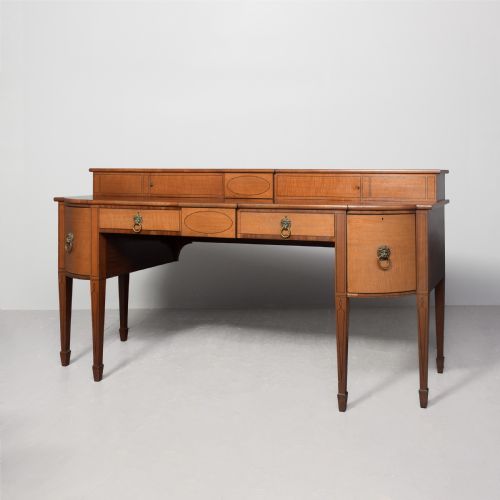

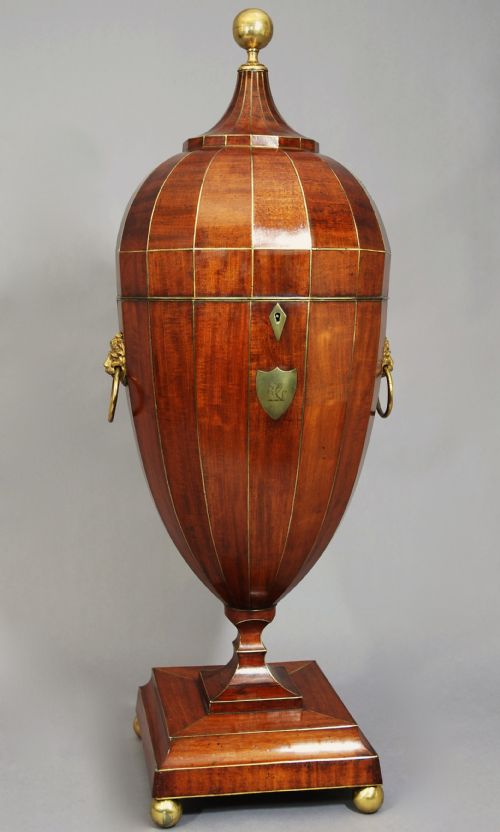
Large Mahogany Sideboard
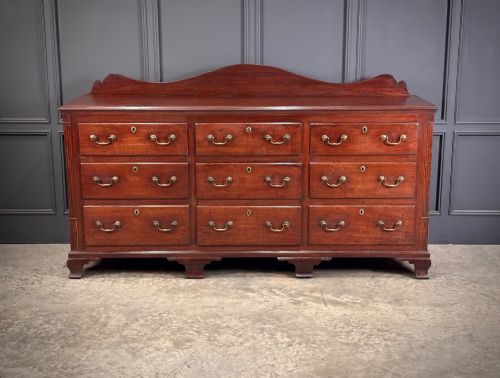
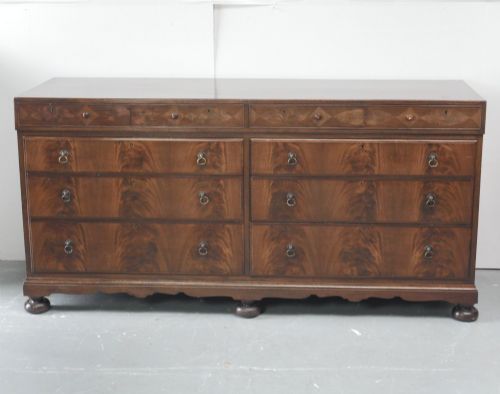
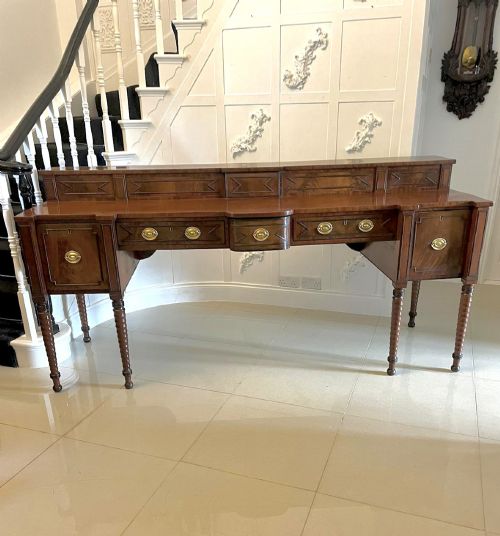
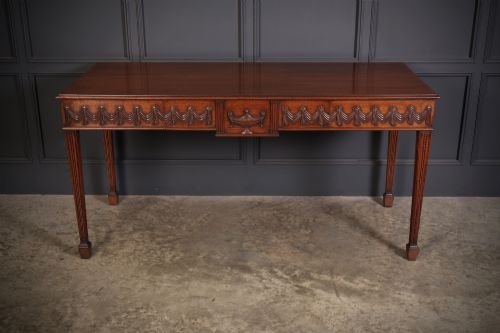
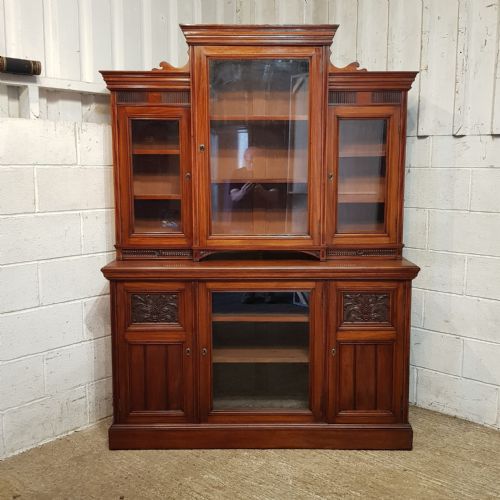
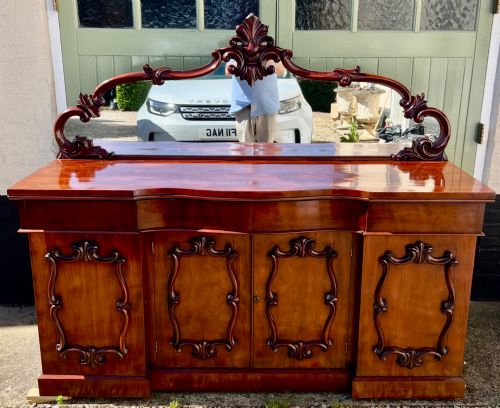
A large mahogany sideboard commands a dining room with its substantial presence, offering deep storage and a grand stage for serving food.
Large Mahogany Sideboard
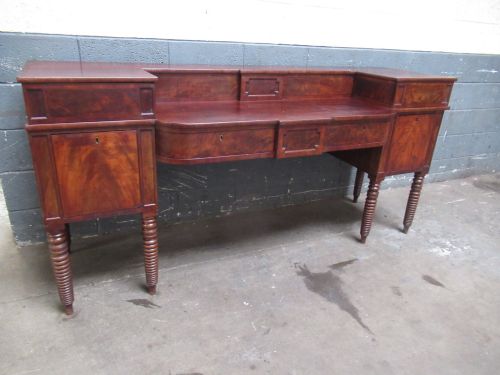
When searching for a large mahogany sideboard, a buyer encounters substantial dining room furniture originating primarily from the eighteenth and nineteenth centuries, spanning Georgian, Regency, and Victorian periods.
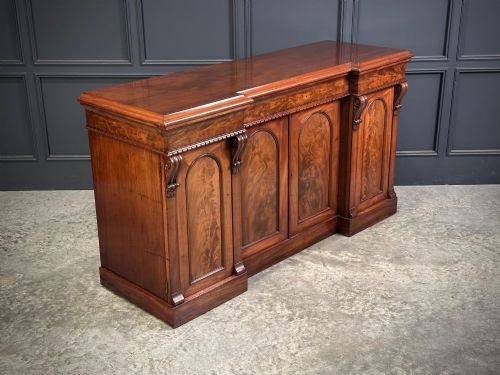
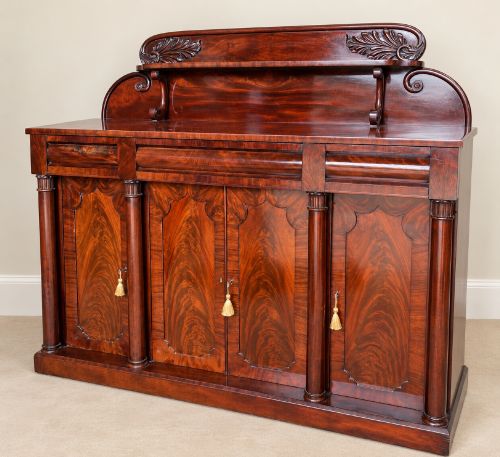
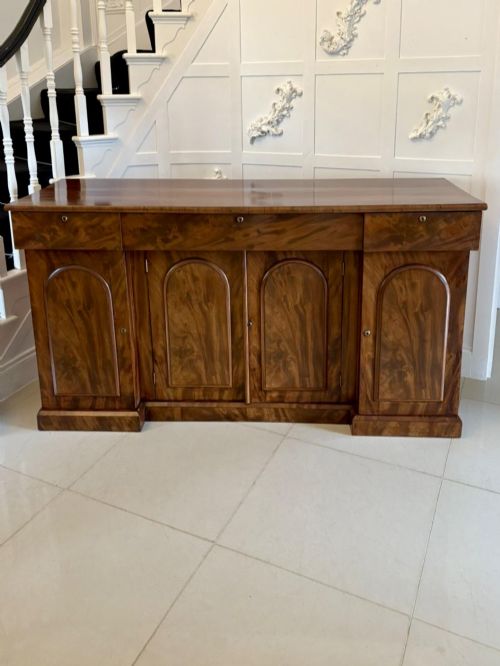
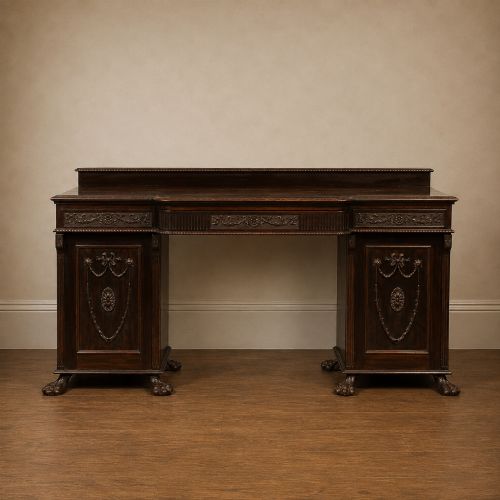
The most common forms on this page are breakfront and pedestal sideboards, alongside serving tables and chiffoniers that provide deep cupboards and drawers for dining silver and linen.
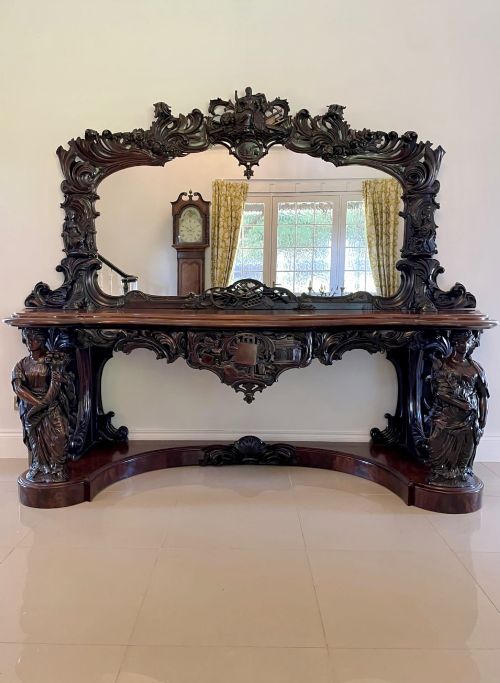
Originating largely from English and Scottish workshops, these pieces range from austere country house servers to elaborate exhibition pieces with carved details and mirror backs.
Materials and construction methods
Cabinetmakers built these large frames using solid mahogany alongside flame mahogany veneers, often selecting figured timber to create striking grain patterns across broad drawer fronts and cupboard doors.
Inlay and stringing incorporate contrasting timbers such as satinwood and boxwood, while secondary woods like oak appear in drawer construction.
Brass fittings, handles, and occasional glass elements complete the structural and decorative assembly of these substantial dining room pieces.
Materials span solid mahogany and flame mahogany veneers, accented with brass hardware, glass panels, satinwood, and oak.
Distinctions in craftsmanship and design
The upper tier of pieces displays exceptional selection in flame mahogany veneers, where grain patterns mirror each other symmetrically across large expanses.
Carved elements show greater depth and precision in superior examples, moving beyond standard production work into crisp acanthus foliage or paw feet.
Structural integrity relies on the quality of internal oak framing and the retention of original brass hardware, which elevates the standing of a piece.
Whytock and Reid·Gillows
The Large Mahogany Sideboard Glossary
- Breakfront
- A cabinet design where the central section projects forward from the flanking outer sections. This configuration creates visual depth on large dining room pieces.
- Flame mahogany veneer
- A thin slice of timber cut from where branches join the main tree trunk, producing a distinctive flickering flame pattern. Cabinetmakers laid these veneers over stable secondary woods.
- Pedestal sideboard
- A form featuring heavy side cupboards connected by a central serving surface or recessed table. These designs emerged during the Regency and William IV periods.
- Serpentine
- A curved front shape that undulates outward in the centre and inward toward the ends. This profile requires considerable skill to construct in solid mahogany.
- Stringing
- Thin lines of contrasting wood inlaid into grooves on drawer fronts and table edges. Boxwood and satinwood provide the pale contrast against dark mahogany.
Large Mahogany Sideboard: Frequently Asked Questions
Where did people place these sideboards?
Dining rooms and large hallways served as the primary locations for these substantial pieces, where they functioned as serving stations during meals.
Servants used the deep cupboards and drawers to store heavy silverware, porcelain, and fine linens close to the dining table.
How do I spot a Georgian piece?
Georgian examples often feature straight or serpentine fronts with delicate satinwood stringing and tapered legs rather than heavy cupboards.
Cabinetmakers working in this eighteenth-century style relied on proportion and fine veneer selection rather than heavy carved ornamentation.
What is a pedestal sideboard?
A pedestal sideboard consists of two massive side cupboards joined by a central table section, creating a heavy architectural facade.
This form became popular during the Regency and William IV periods, replacing earlier designs with slender legs.
How do I care for flame mahogany?
Polishing the timber with traditional beeswax maintains the deep lustre of the wood without sealing it with modern synthetic finishes.
Keeping the sideboard away from direct sunlight and heat sources prevents the mahogany veneer from drying and lifting.