

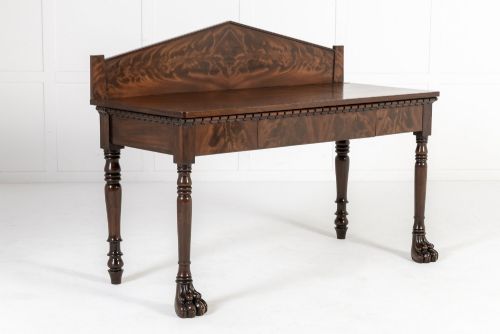


Carved Paw Feet Sideboard
A carved paw feet sideboard brings architectural weight and classical authority to a dining room or hall.
Carved Paw Feet Sideboard
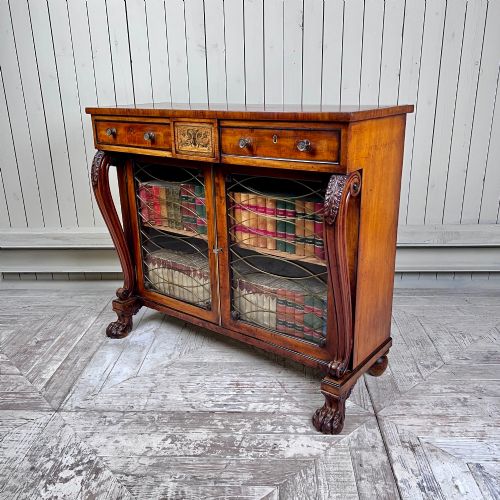
A carved paw feet sideboard stands as a substantial piece of dining room or hall furniture, designed for serving and display across the Regency, Victorian, and Edwardian periods. When you search for carved paw feet sideboard, you encounter formal serving tables, chiffoniers, and breakfront buffets rooted in classical antiquity.
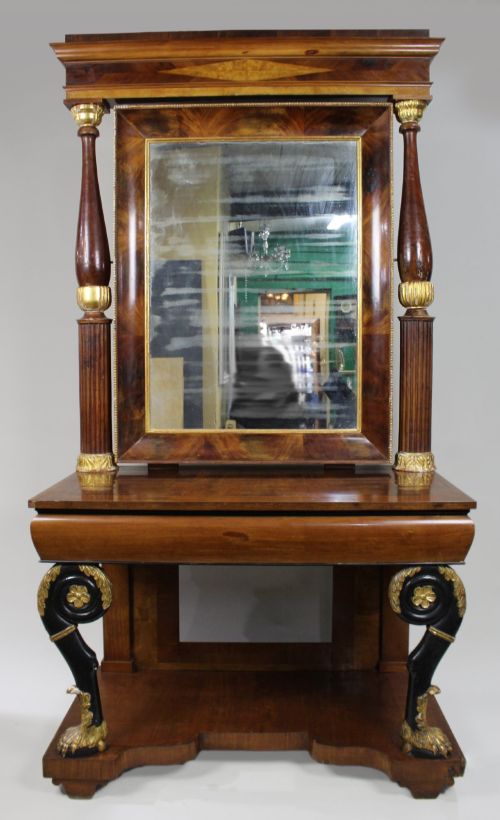
The pieces meeting this description on this page span the Regency, William IV, and Edwardian eras, alongside broader nineteenth-century examples. Mahogany predominates as the primary timber, frequently enhanced by flame mahogany veneer, brass inlay, and parcel gilt details.
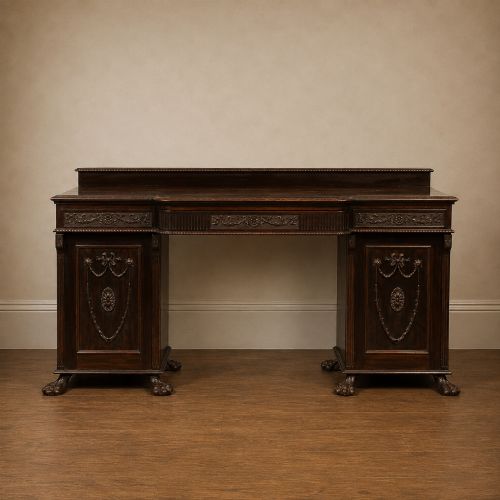
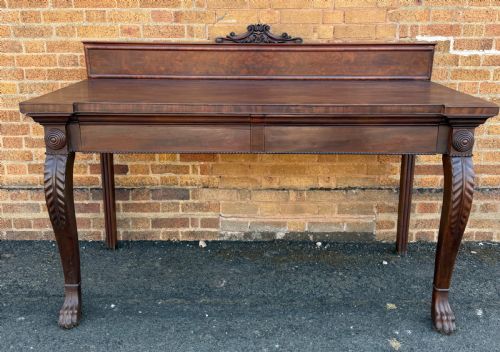
Forms range from simple console and serving tables to elaborate chiffonier bookcases and twin pedestal sideboards. You most often meet grand Regency and late nineteenth-century interpretations that combine robust proportions with finely carved animalistic supports.
Materials and construction
Cabinet makers relied primarily on solid mahogany and rich flame mahogany veneer to construct these large serving pieces. Timber selection drove the visual impact, with figured grain chosen for drawer fronts and primary display surfaces.
Structural embellishments frequently incorporated contrasting materials such as ebony, brass inlay, and glass components. Carved wooden paw feet anchor the heavy frames, sometimes complemented by parcel gilt highlights or marble tops.
Mahogany is the dominant timber across these listings, frequently enhanced with flame mahogany veneer, brass inlay, and parcel gilt.
Evaluating craftsmanship and design
The standard of a carved paw feet sideboard rests on the depth and crispness of the timber carving, particularly around the animal feet and structural mounts. Superior examples demonstrate confident proportions and harmonious integration of decorative elements like brass inlay and parcel gilt.
The selection of timber grain, such as highly figured flame mahogany veneer, separates standard utility pieces from masterworks of the Regency and William IV periods. Attribution to prominent workshops or distinct regional origins, such as Irish manufacture, further elevates the standing of an individual sideboard.
Gillow·George Smith
The Carved Paw Feet Sideboard Glossary
- Chiffonier
- A low sideboard or cabinet featuring shelves or a superstructure, popular during the Regency and Victorian periods. It evolved from a small sideboard into a multifunctional piece for dining rooms and drawing rooms.
- Breakfront
- A cabinet or sideboard whose central section projects forward from the flanking cupboards or pedestals. This configuration creates strong architectural shadows and emphasises the scale of the furniture.
- Parcel Gilt
- Partial gilding applied to specific carved details or mouldings to highlight design elements against a dark wood background. It contrasts brightly with polished mahogany.
- Flame Mahogany Veneer
- A thin layer of timber sliced from the fork of a mahogany tree to produce a distinctive, flamy, and undulating grain pattern. Craftsmen laid this veneer over stable secondary woods.
- Pedestal
- A structural support beneath the main body of a sideboard or serving table, frequently housing enclosed cupboards. Twin pedestal designs distribute visual weight to the outer edges.
Carved Paw Feet Sideboard: Frequently Asked Questions
What periods do these sideboards come from?
The pieces originate predominantly from the Regency and nineteenth century, with occasional Edwardian revivals. Styles range from strict classical Regency to heavy William IV and Adam Revival designs.
Craftsmen built these items to serve formal dining spaces, utilising dense tropical hardwoods and classical architectural motifs that reflect changing aesthetic preferences through the Victorian era.
How were these serving tables used?
Dining rooms utilised these heavy tables for presenting dishes, holding silver service, and storing dining linens during formal meals. Chiffoniers and buffets often incorporated shelving above the main surface for displaying ceramics.
In grand houses, they functioned as central stations for service staff before the widespread adoption of fitted dining room furniture. Their robust proportions allowed them to bear the weight of heavy silver and serving platters.
What timber is most common?
Mahogany forms the structural core of nearly every piece listed, frequently paired with flame mahogany veneers to create striking visual patterns on drawer fronts and doors. Subsidiary details incorporate ebony and brass.
Cabinet makers selected mahogany for its structural stability and deep reddish-brown colour, which deepened with age and polishing. Lighter accents of parcel gilt were occasionally added to emphasise carved details.
How do I spot a Regency example?
Regency pieces typically display strict classical proportions, architectural pilasters, and restrained brass inlay inspired by ancient Greek and Roman furniture. The carving on the paw feet remains sharp and anatomically defined.
Later Victorian interpretations often increase the scale and ornamentation, while Edwardian pieces revive earlier Adam motifs. Examining the joinery and secondary timbers helps confirm the period of manufacture.
Where should I place a large sideboard?
A substantial serving table or breakfront sideboard requires a generous wall space in a dining room, high-ceilinged hallway, or drawing room. Their deep proportions mean they extend further into a room than standard console tables.
Pairing a sideboard with a matching pier mirror or placing it opposite a principal window allows the polished mahogany and brass details to catch natural light effectively.