
Mahogany Buffet
A mahogany buffet brings solid timber presence and formal utility into a dining room, offering deep drawers and surface space for serving.
Mahogany Buffet
A mahogany buffet appears across multiple periods including George III, Regency, Victorian, and Edwardian eras. Buyers search this phrase to find serving furniture, sideboards, pedestal tables, and multi-tiered dining room pieces designed for heavy service.
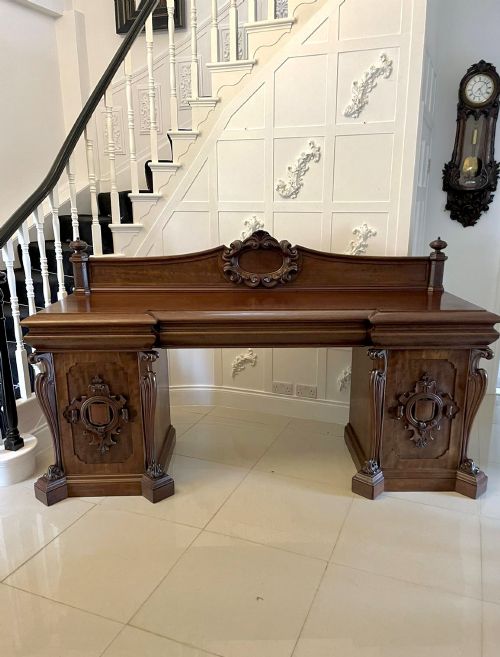
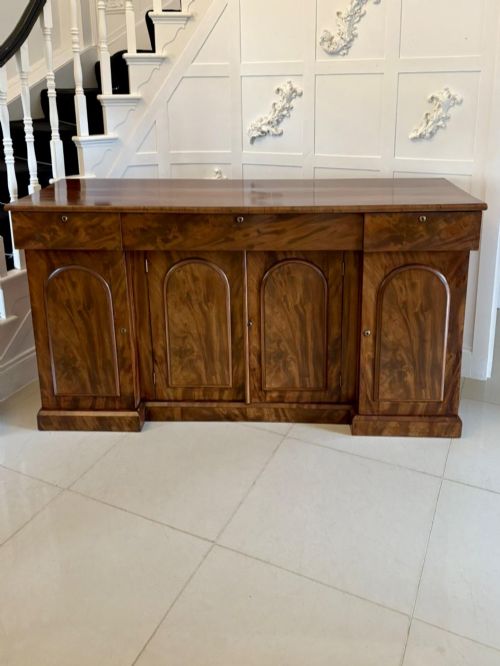
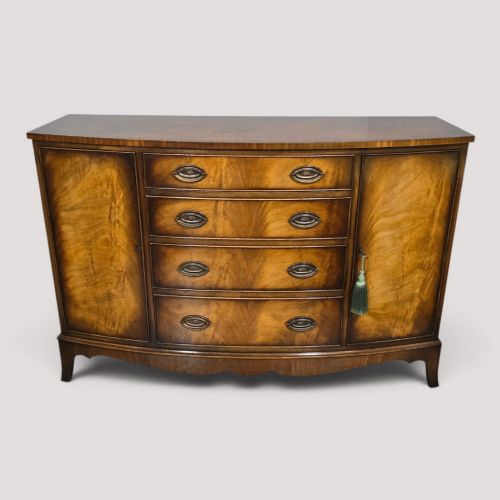
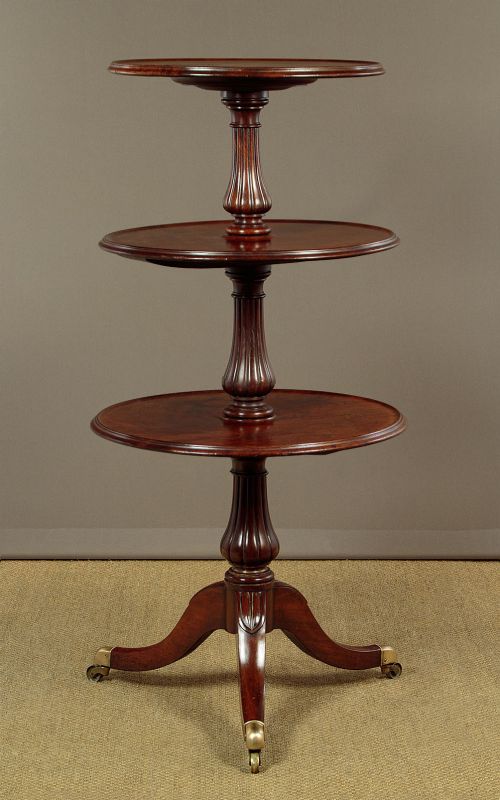
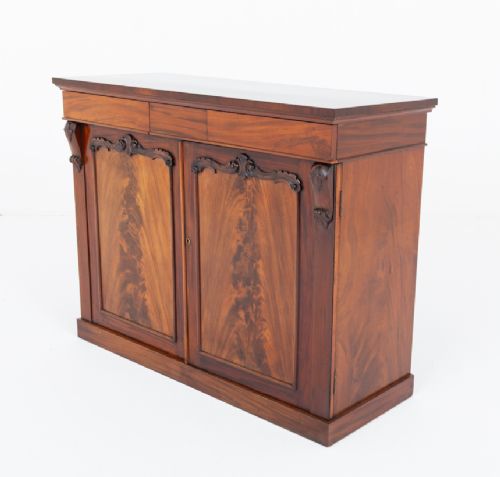
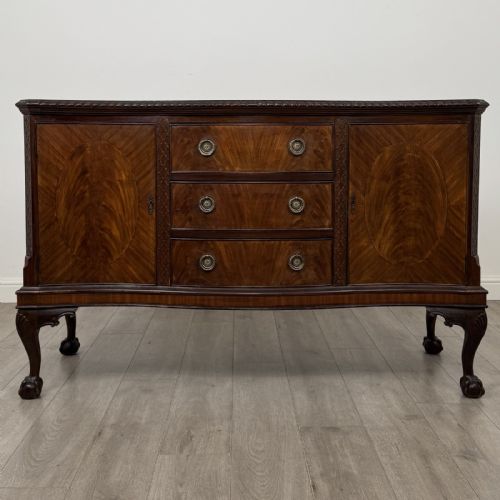
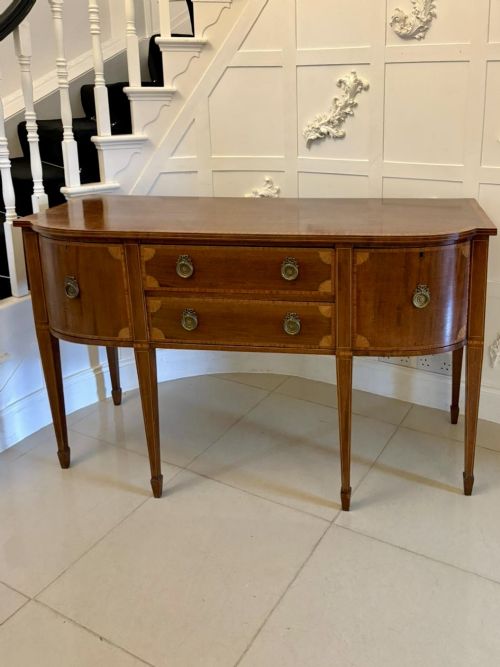
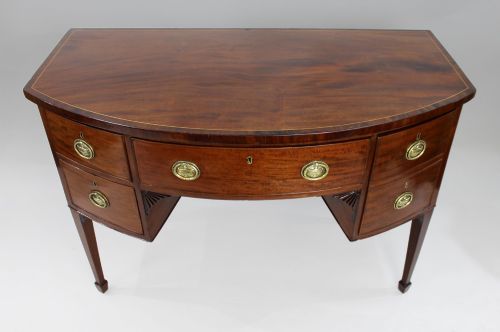
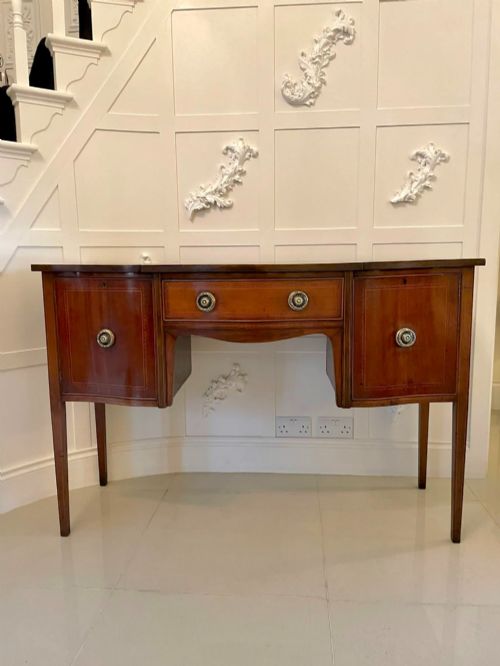
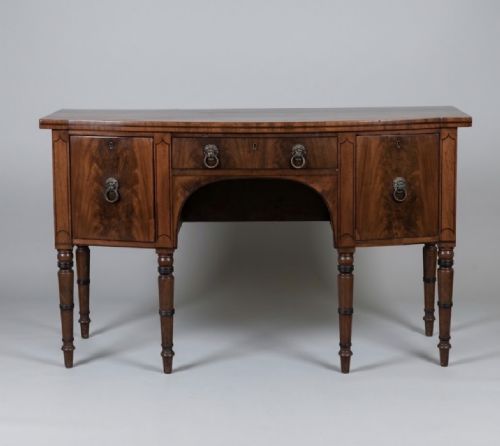
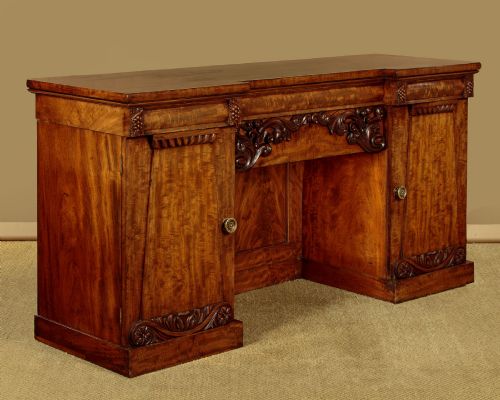
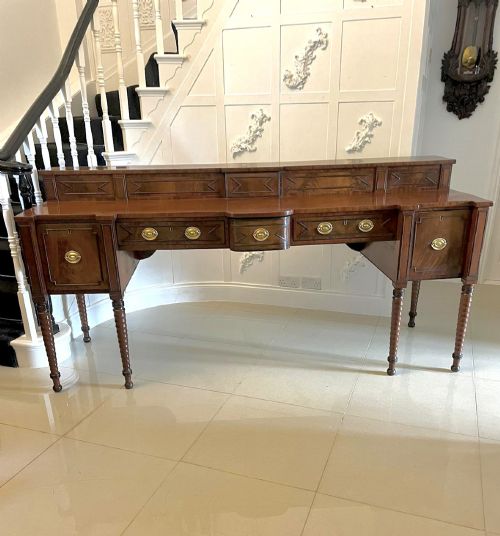
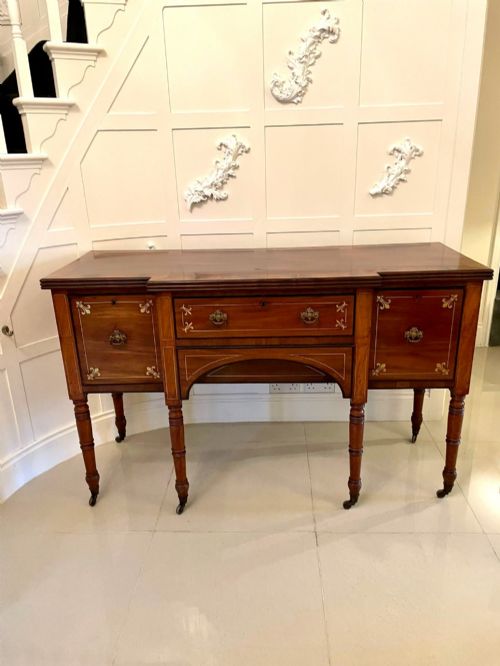
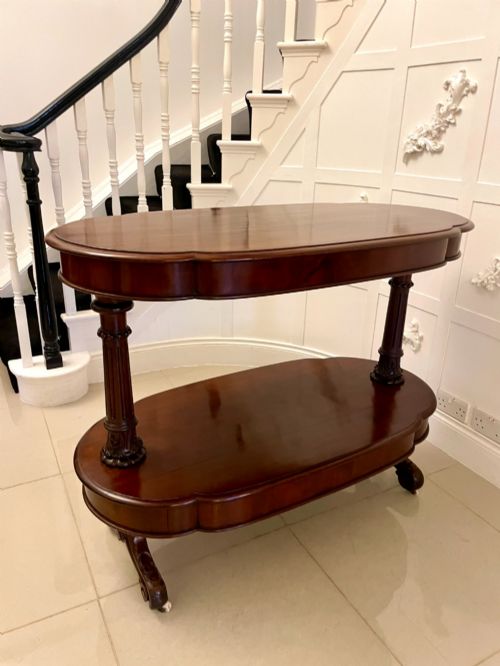
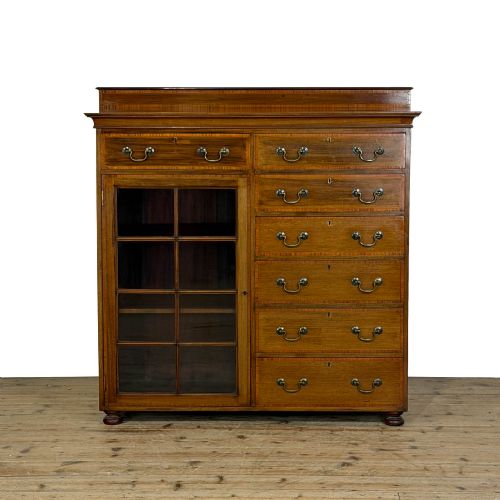
The pieces on this page span straight-front, bow-front, breakfront, and serpentine shapes alongside specialised forms like three-tier dumb waiters and chiffoniers. Workshops constructed these items primarily as dining room servers or side cabinets.
Originating from 18th-century roots through to 20th-century revival work, the listings show both British craftsmanship and continental influences such as Biedermeier design. Each variation fulfills a specific storage or display role within domestic spaces.
Distinctions in construction and material grade
Quality separates standard utilitarian storage from master cabinetwork through the selection of timber figures and veneer matching. Pieces featuring book-matched flame mahogany, crisp boxwood stringing, and precise brass marquetry demonstrate superior workshop execution.
Structural integrity also divides the range, visible in the thickness of solid timber drawer linings and the sharpness of hand-carved details like lion paw feet or neoclassical ornamentation. Original hardware, intact bevelled glass, and undisturbed surface patination elevate a piece above standard domestic output.
Some dining pieces feature rise and fall tiers designed to keep food out of reach until needed.
Hewetsons London
The Mahogany Buffet Glossary
- Breakfront
- A piece of furniture where the central section projects forward from the flanking outer wings. This architectural layout creates visual depth on large sideboards.
- Serpentine
- A front contour shaped with a convex centre flanked by concave curves, requiring high skill to veneer and fit. It adds fluid movement to case furniture.
- Crossbanding
- A narrow strip of veneer laid perpendicular to the surrounding grain to form a decorative border. Cabinetmakers used contrasting timbers like satinwood for this framing effect.
- Dumb waiter
- A tiered serving stand fitted with rotating or fixed circular shelves on a central column. These pieces held dishes and glassware beside the dining table.
- Marquetry
- The art of forming decorative patterns using fitted pieces of various coloured veneers. Craftsmen assembled pictorial or geometric designs into the primary surface.
Mahogany Buffet: Frequently Asked Questions
What is a mahogany buffet used for?
These pieces served historical dining rooms as functional storage stations for heavy china, silver, and linens. They provided a solid surface for laying out food and drinks during formal meals.
Today, they function effectively in modern dining spaces or hallways, offering deep drawer capacity and surface display space. Their sturdy timber construction handles heavy everyday use while maintaining a formal presence.
How do I date a mahogany buffet?
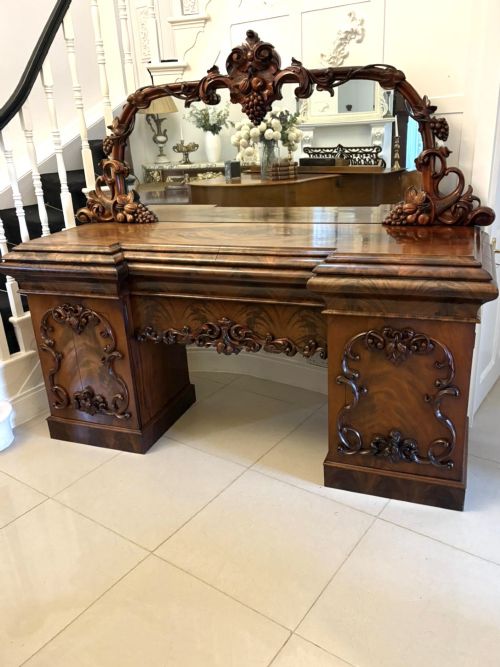
Dating relies on examining construction techniques, hardware, and stylistic details. Earlier pieces from the Georgian and Regency periods feature hand-cut dovetails and subtle brass work, while Victorian items often incorporate heavier carving and mirror backs.
Timber choice also aids identification, as early work utilised dense solid mahogany before flame veneers became widespread in the 19th century. Comparing foot styles, such as lion paws or bracket feet, links pieces to specific design decades.
How do I care for mahogany furniture?
Maintenance requires keeping the timber away from direct heat sources and strong sunlight to prevent veneer lifting and fading. Regular dusting with a soft dry cloth protects the polished surface from abrasive particles.
Applying a traditional beeswax polish occasionally feeds the timber and maintains the natural lustre. Avoid chemical sprays or excessive moisture which can damage historic finishes.
Where should I place a buffet?
A buffet requires adequate wall space and clearance to allow cabinet doors and deep drawers to open fully. Dining rooms remain the traditional location, positioning the piece near the main table for serving access.
They also sit well in large hallways or living rooms as console storage units. Ensuring stable floor placement prevents rocking on older legs and feet.