
Edwardian Dining Buffet
When searching for an edwardian dining buffet, collectors find substantial timber serving furniture built to hold dining room service.
Edwardian Dining Buffet
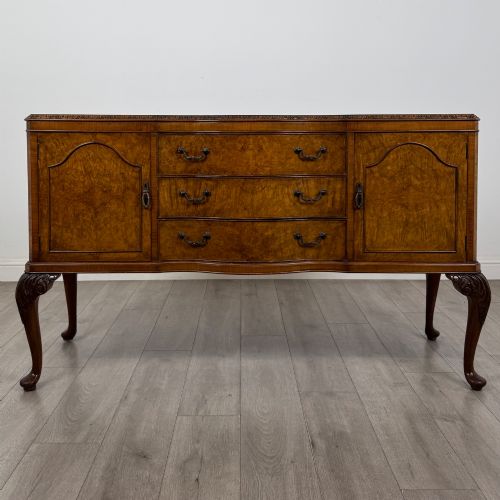
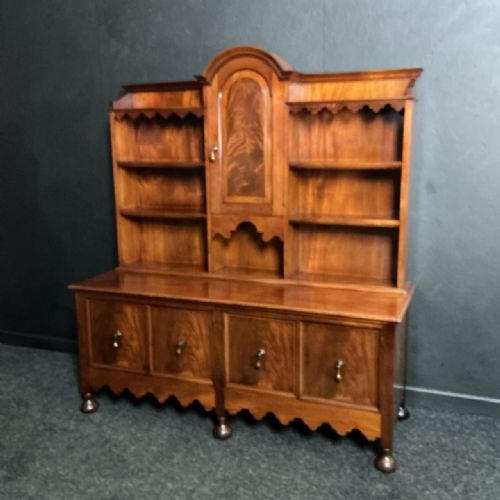
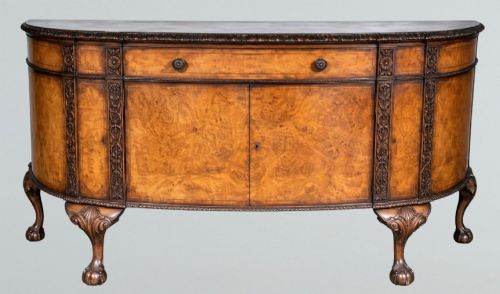
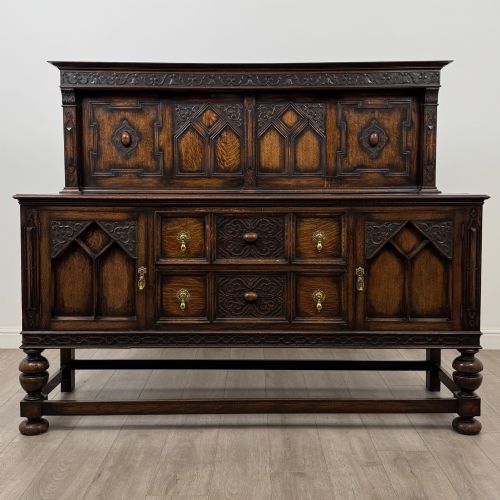
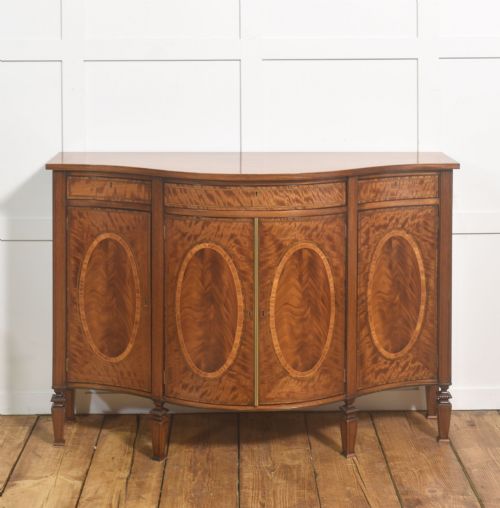
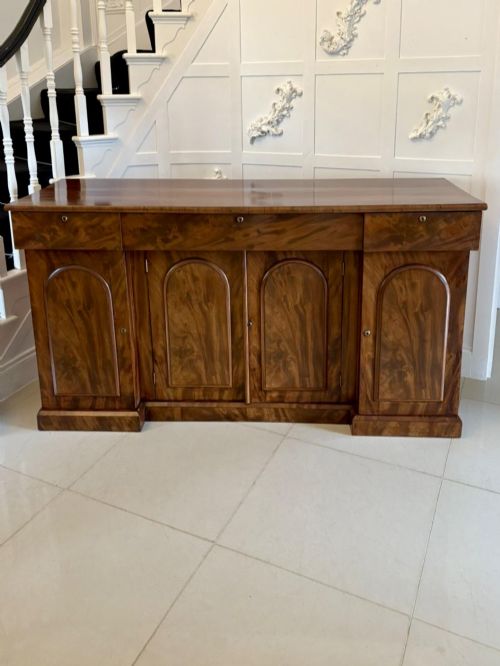
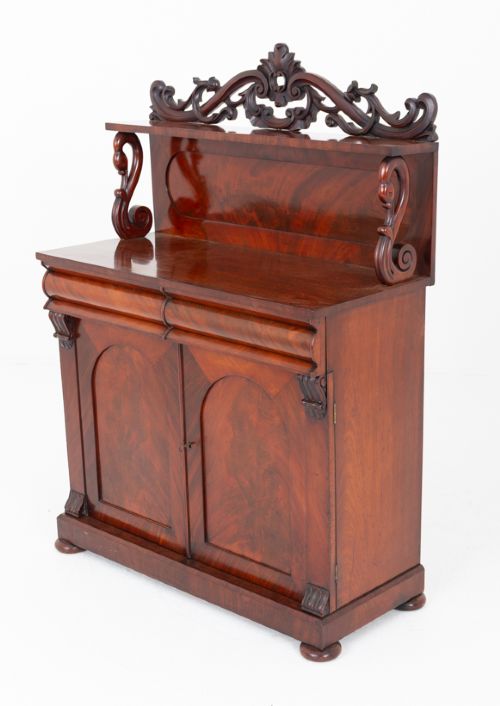
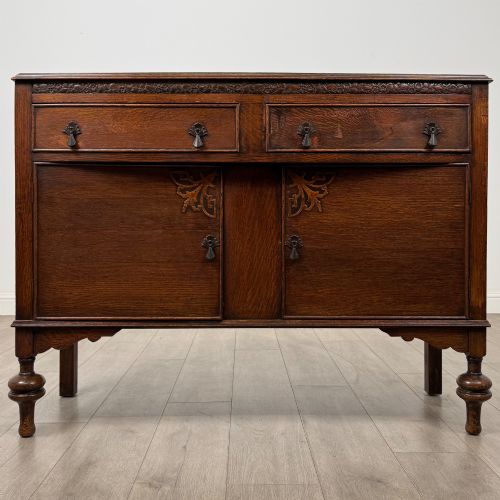
The edwardian dining buffet encompasses large timber sideboards, servers, and cupboards designed for formal dining rooms during the early twentieth century. These pieces function as serving surfaces and storage cabinets for cutlery, linen, and china during meals.
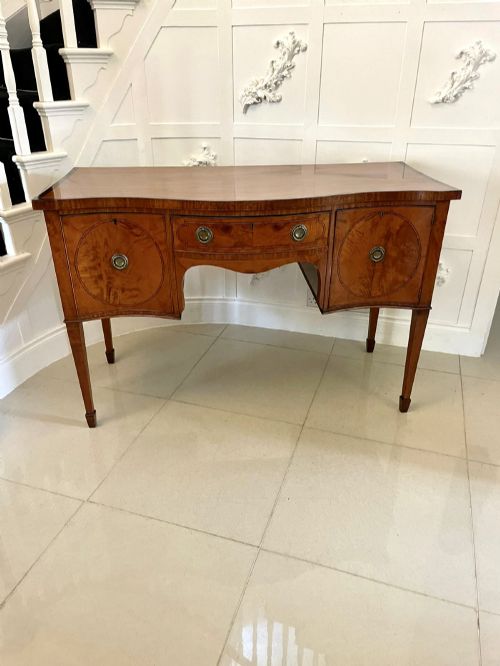
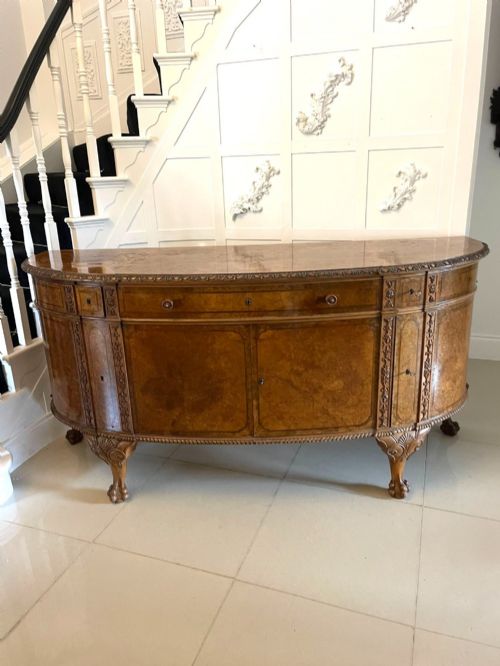
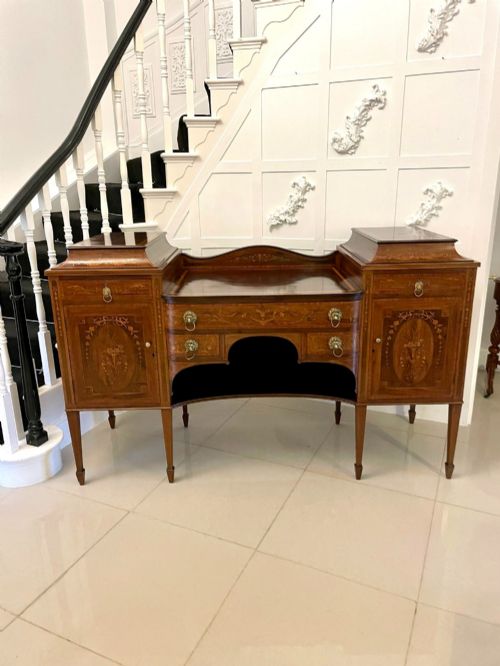
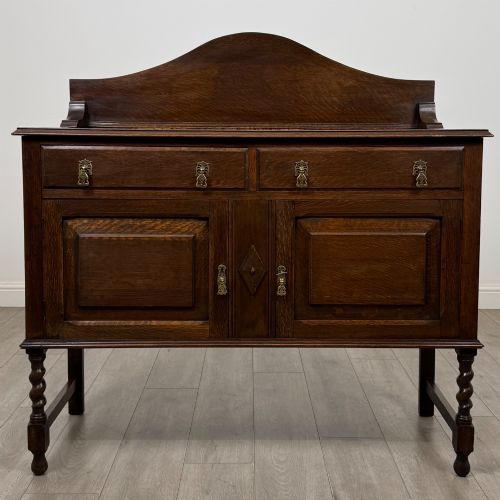
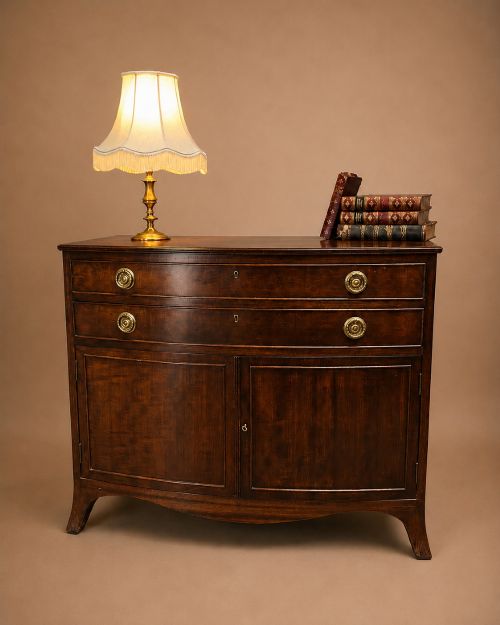
Mahogany and oak dominate the forms seen on this page, often decorated with satinwood crossbanding, boxwood stringing, or marquetry inlay. Many examples reflect revival styles such as Sheraton Revival and Jacobean Revival alongside simpler Edwardian designs.
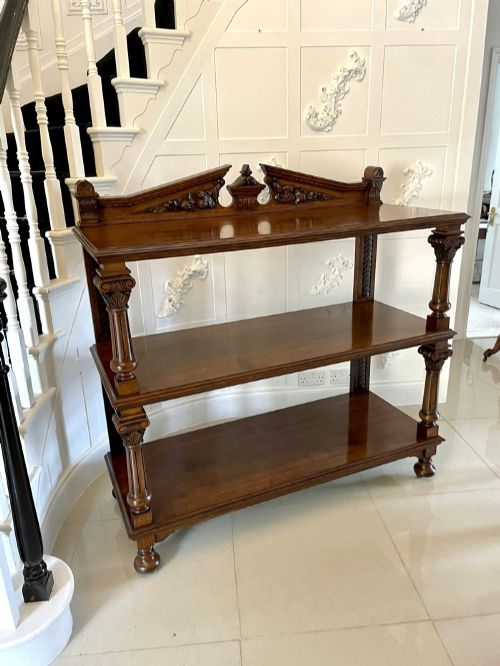
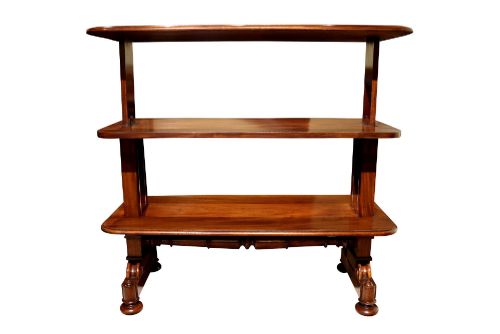
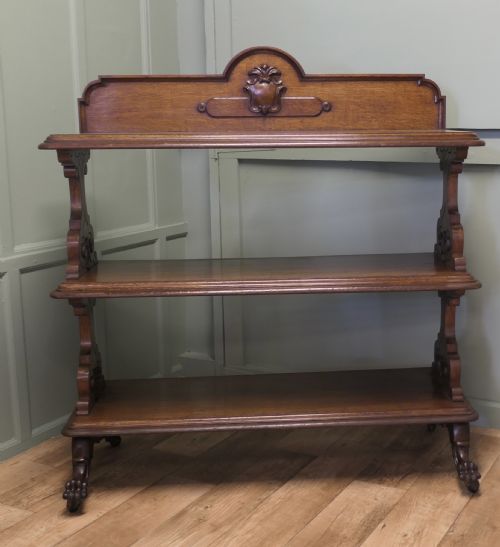
The standard format ranges from bow-fronted and breakfront cabinets to pieces featuring raised top shelves, dumbwaiters, and serving tables. They provide heavy, practical storage while anchoring the dining room interior.
How they were made
Cabinetmakers constructed these pieces primarily from solid mahogany and oak, frequently incorporating burr walnut, satinwood, and pollard oak veneers to create rich surface patterns. Timber selection determined the visual weight and grain movement of each buffet.
Decorative details rely on precision wood inlay, marquetry, and carved elements including barley twist legs and paw feet. Brass hardware, handles, and occasional glass panels complete the structural and ornamental assembly.
Listings feature solid oak and mahogany constructions alongside decorative satinwood, burr walnut, and pollard oak veneers.
What varies in quality
Quality rests in the selection of figured timbers and the precision of the cabinet work, particularly around curved bow-fronts and breakfront mouldings. Superior examples demonstrate matched veneer grains and fine marquetry inlay rather than printed or stamped decoration.
The integrity of internal framing, drawer construction, and the retention of original brass handles distinguish standard production from exceptional workshop output. Makers operating in London and provincial towns applied varied degrees of carving depth and finishing polish.
Hewetsons London·M D Miller And Sons Nottingham
The Edwardian Dining Buffet Glossary
- Bow front
- A convex curved cabinet front that projects outward in an arc. This shape gained popularity in the late eighteenth century and returned during the Edwardian period.
- Crossbanding
- A narrow strip of veneer applied perpendicularly to the main grain of a surface. It creates a contrasting border around drawer fronts and table tops.
- Marquetry
- The art of applying decorative pieces of veneer to a structure to form pictorial or geometric patterns. Craftsmen utilised various coloured woods to achieve contrast.
- Breakfront
- A cabinet facade where the central section projects forward from the flanking outer sections. This architectural arrangement creates depth and visual division on large sideboards.
- Dumbwaiter
- A piece of tiered serving furniture designed to hold dishes and cutlery near the dining table. It allowed diners access to food without immediate servant attendance.
Edwardian Dining Buffet: Frequently Asked Questions
What is an edwardian dining buffet used for?
These large timber pieces served as functional surfaces for dishing up meals and holding heavy serving dishes in the dining room.
They also provided internal storage space behind doors and inside drawers for keeping table linen, silver cutlery, and glassware close at hand.
How do you identify an edwardian piece?
Edwardian dining furniture typically displays lighter timber tones than heavy Victorian pieces, frequently combining mahogany with satinwood crossbanding or boxwood inlay.
Design motifs often draw inspiration from earlier Sheraton and Georgian styles, maintaining proportions suited to spacious Edwardian homes.
Are these pieces made of solid wood?
Construction combines solid structural timbers like oak and mahogany with decorative wood veneers applied to carcases and drawer fronts.
Figured woods such as burr walnut and flame mahogany appear as veneers to showcase complex grain patterns across large flat surfaces.
How do you care for a wood buffet?
Keep wooden furniture away from direct heat sources and sudden temperature changes to prevent timber splitting and veneer lifting.
Apply traditional wax polish occasionally to nourish the surface and maintain the natural sheen of the polished wood.