


Figured Mahogany Buffet
A figured mahogany buffet offers rich timber grain and substantial presence, making these sideboards a commanding choice for formal dining rooms.
Figured Mahogany Buffet
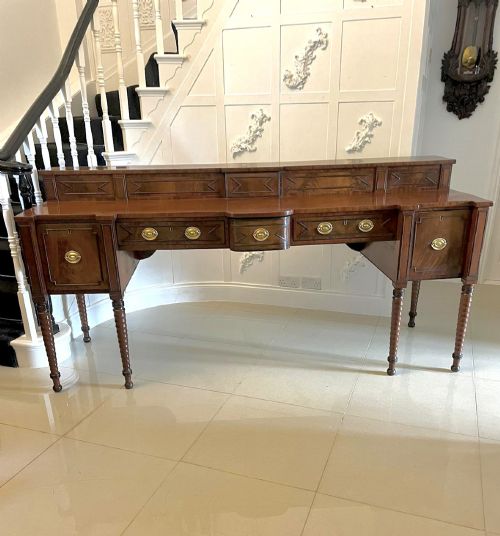
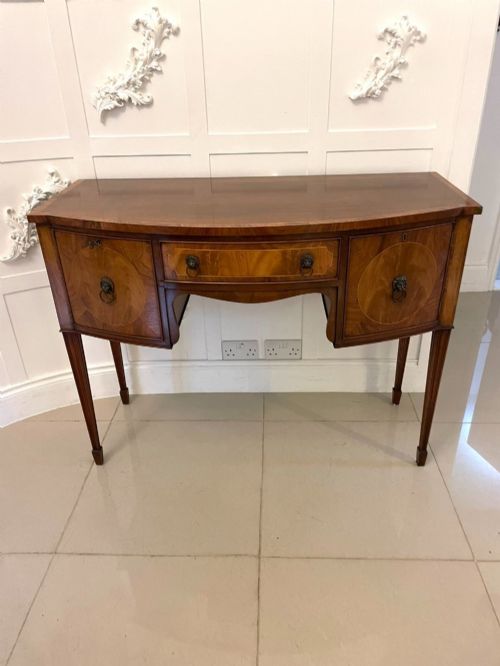
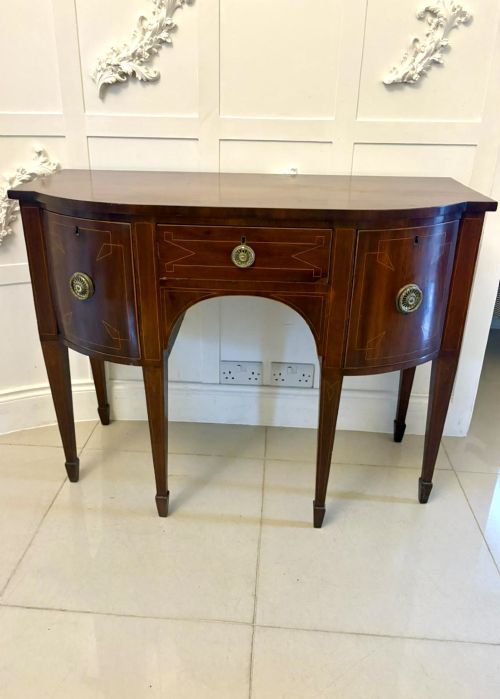
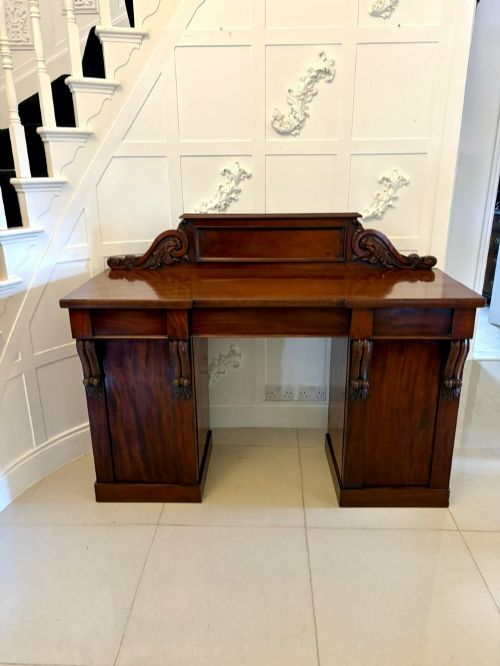
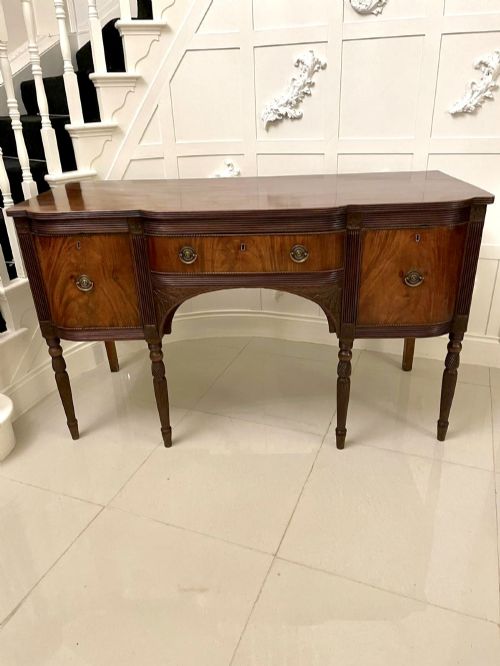
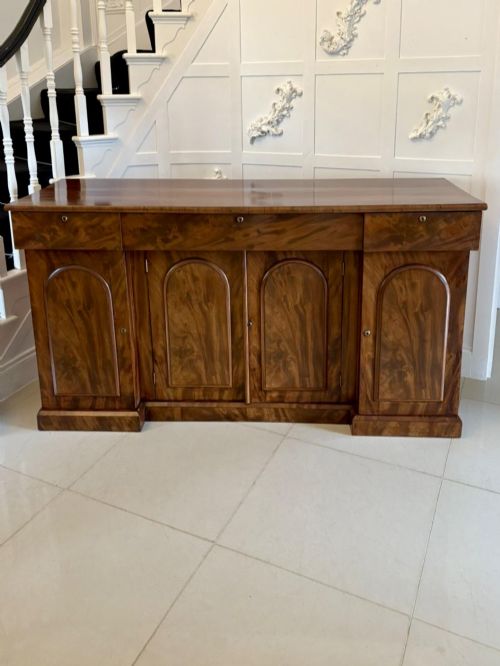
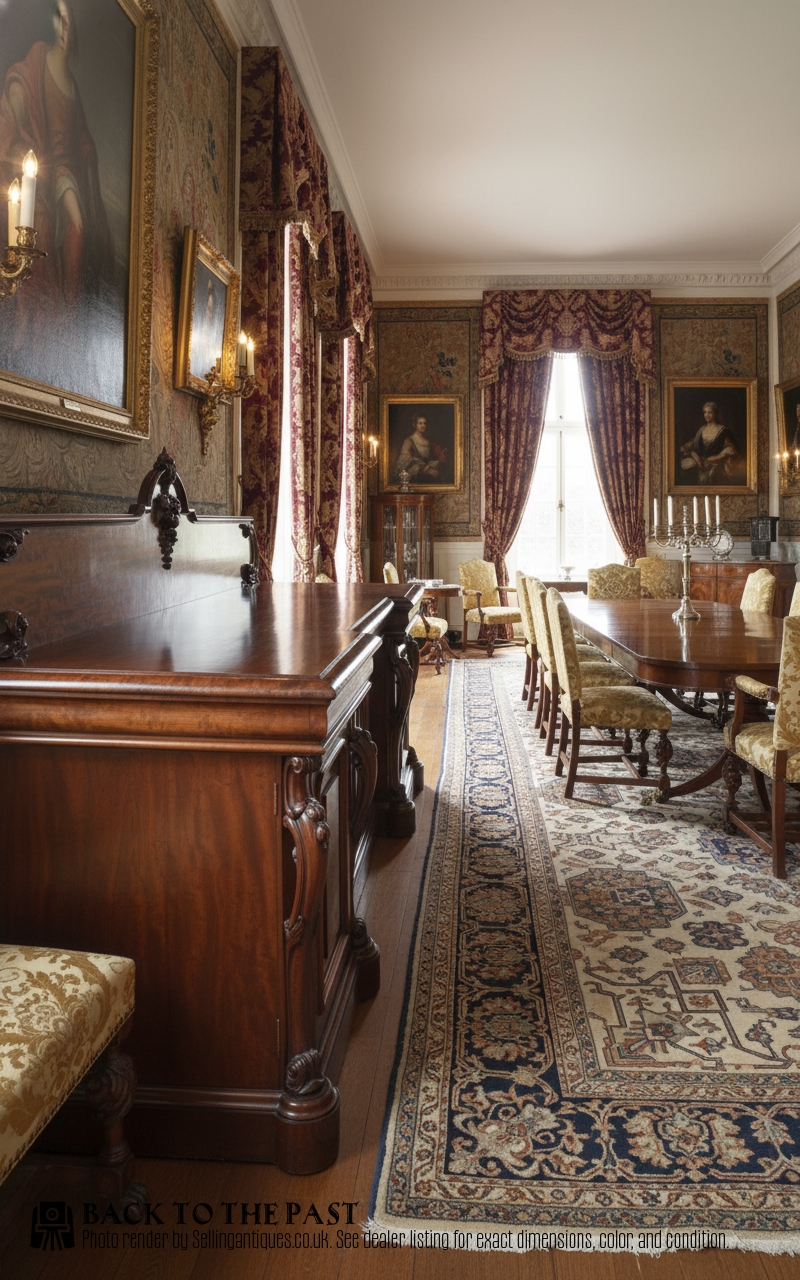
A figured mahogany buffet primarily takes the form of a sideboard or credenza designed for dining spaces. These pieces span George III, Regency, William IV, and Victorian periods, alongside later 20th-century interpretations.
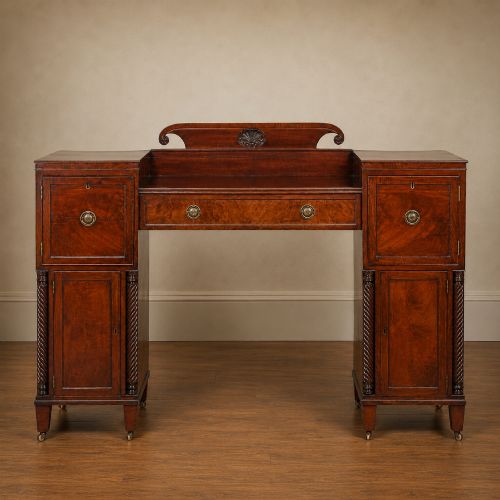
The most common formats met on this page include large breakfront sideboards, pedestal sideboards, and bow-fronted configurations. They combine practical storage with strong period character.
How they were made
Cabinet makers utilised solid mahogany and applied flame mahogany veneer to achieve striking grain patterns across large surfaces. Boxwood stringing and brass details frequently accent the primary timber.
Construction methods relied on traditional joinery to build robust carcases that support heavy timber tops and multiple doors or drawers.
Some pedestal sideboards offer secret cellarette drawers designed to keep wine bottles cool near the dining table.
What varies in quality
Quality rests primarily in the selection of the wood veneer, where symmetrical and highly figured flame patterns command greater visual depth. The finesse of carved detailing and the integration of secondary timbers like boxwood set finer examples apart.
Proportion and scale also dictate value, with balanced breakfront and pedestal designs demonstrating superior architectural design compared to plain carcases.
Bowman Brothers
The Figured Mahogany Buffet Glossary
- Figured mahogany
- Timber featuring distinctive, undulating grain patterns such as flame or fiddleback. This decorative wood is sliced into veneers to ornament prominent surfaces.
- Breakfront
- A cabinet design where the central section projects forward from the flanking wings. This architectural arrangement creates shadow and depth.
- Pedestal sideboard
- A form featuring two pedestals flanking a central section, popular during the Regency and William IV periods. They provide substantial internal storage.
- Bow front
- A convex, outwardly curved front facade common in Georgian and later sideboards. This curve softens the rectangular profile of the furniture.
- Boxwood stringing
- Thin inlay lines of pale boxwood set into contrasting darker timbers to outline drawers and panels. It creates a crisp, linear border.
Figured Mahogany Buffet: Frequently Asked Questions
What is a figured mahogany buffet?
A figured mahogany buffet is a heavy timber sideboard or credenza built to store dining silver and linen. These pieces rely on decorative wood veneers to create striking visual patterns across the front.
Most examples date from the Georgian, Regency, and Victorian eras, offering generous proportions and deep storage compartments behind multiple doors.
How do I date a sideboard?
Dating depends on architectural style, leg forms, and construction methods. George III and Regency pieces often feature tapered legs or pedestal bases, while Victorian versions are typically heavier and more carved.
Examining the secondary timbers inside drawers and the cut of the veneer also helps determine the exact period of manufacture.
Where should I place one?
These large sideboards suit dining rooms, wide hallways, or spacious living areas where their length and depth can be fully appreciated. Ensure you measure the floor space and wall length carefully before positioning.
Keep them away from direct sunlight and heat sources to protect the polished mahogany surface and delicate veneers from drying out.
What are breakfront sideboards?
Breakfront sideboards feature a central section that steps forward from the recessed left and right cabinets. This configuration creates a tripartite facade that adds architectural dignity to the room.
Cabinet makers used this layout on larger pieces to break up long expanses of figured mahogany and display superior veneer matching.
How do I care for mahogany?
Maintain the finish by dusting regularly with a soft, dry cloth and applying quality beeswax occasionally to nourish the timber. Avoid silicone sprays and excessive moisture.
Protect the top surface from hot dishes and liquids by using coasters and mats to prevent staining the polished wood.