


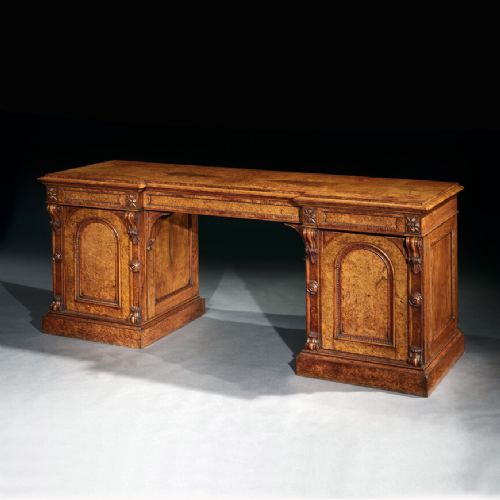
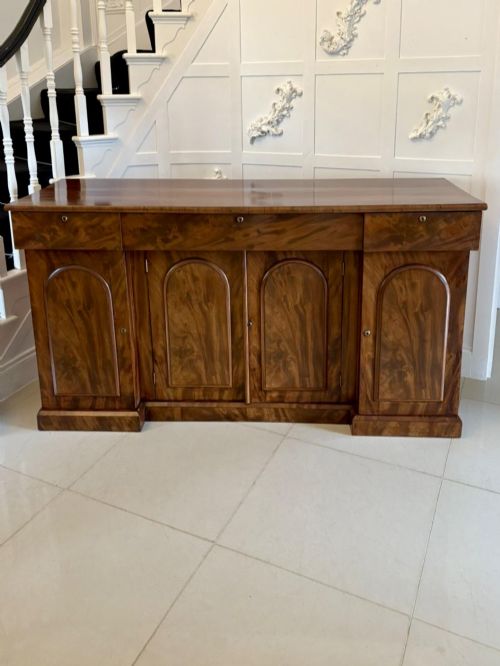
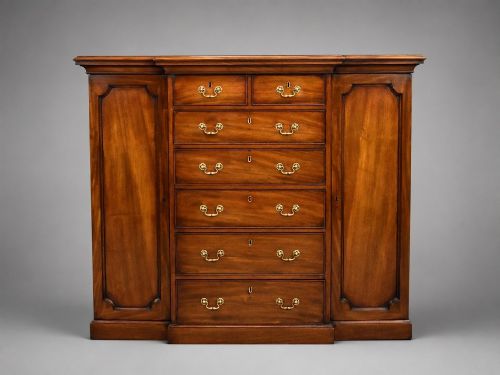


Victorian Pedestal Credenza
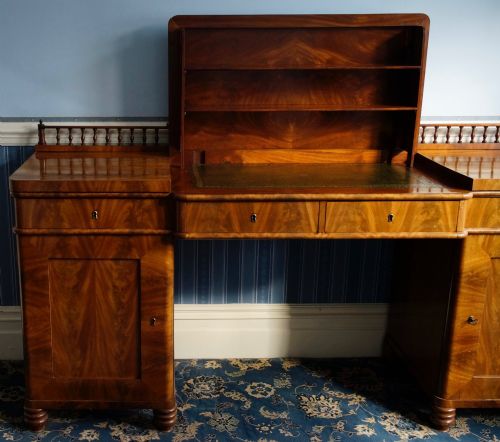
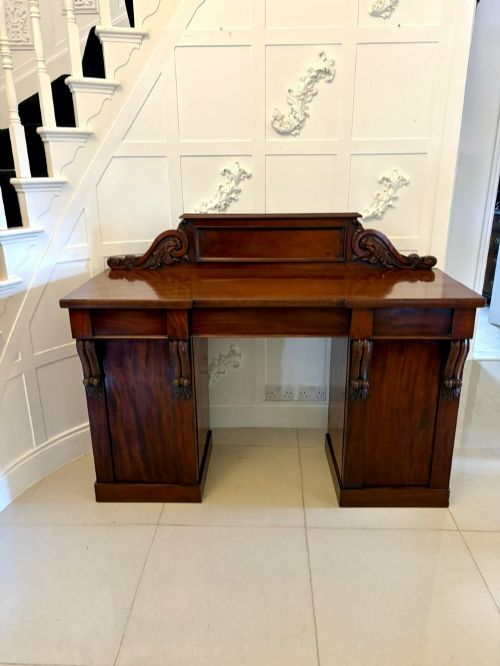
A victorian pedestal credenza is a substantial nineteenth-century storage piece offering grand proportions and disciplined timber work.

Victorian Pedestal Credenza
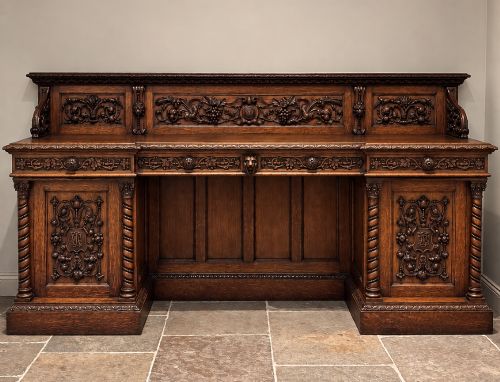
When searching for a victorian pedestal credenza, buyers encounter nineteenth-century mahogany and oak sideboards featuring large cupboards flanking central sections, often with mirror backs or carved details.
The selections span early Victorian to later decades, including variants labelled as chiffoniers or side cabinets alongside traditional pedestal forms.
Most examples rely on deep mahogany or figured timbers, built on a heavy scale suited to formal dining rooms.
How they were made
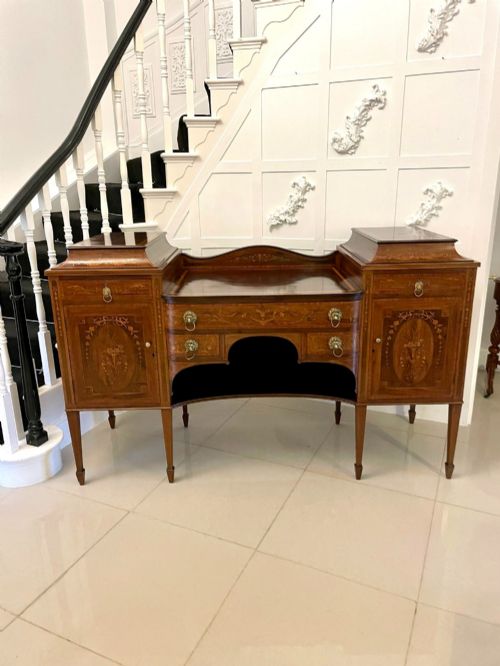
Cabinet makers built these pieces using solid mahogany, oak, and rosewood over secondary softwoods, applying flame mahogany veneers to create rich grain patterns across large cabinet doors.
Brass hardware, leather accents, and glass elements appear alongside intricate hand-carvings and inlaid marquetry executed in satinwood.
Several heavy oak and mahogany sideboards come equipped with mirror backs designed to reflect candlelight across nineteenth-century dinner parties.
What varies in quality
Quality rests in the selection of figured timbers and the depth of the hand-carving applied to the plinths and mirror frames.
Superior examples display precise joinery in the pedestal doors and well-figured veneer panels that remain stable across expansive surfaces.
Hewetsons London
The Victorian Pedestal Credenza Glossary
- Pedestal
- A structural base supporting the main cupboards on either side of a sideboard or credenza. These upright sections provide substantial enclosed storage.
- Credenza
- A low dining room cabinet or sideboard, originating from Italian forms and adopted by Victorian cabinet makers for display and storage.
- Chiffonier
- A compact sideboard or cabinet featuring shelves or a small superstructure, common in Victorian parlours.
- Marquetry
- Decorative woodwork where pieces of contrasting veneer form intricate pictorial patterns on the cabinet surface.
- Flame mahogany
- Timber cut to accentuate the flickering, wave-like grain patterns beneath a polished finish.
Victorian Pedestal Credenza: Frequently Asked Questions
What is a pedestal credenza?
A pedestal credenza is a large nineteenth-century storage cabinet featuring flanking cupboards beneath a surface top, built for dining rooms.
These pieces provide substantial enclosed space while serving as a display ledge for silver or ceramics.
How do I style a Victorian sideboard?
Position the piece against a large dining room wall where its deep mahogany or oak tones can anchor the space.
Keep surrounding furniture simple to balance the heavy proportions and carved details of the timber.
What woods were used?
Cabinet makers predominantly utilised mahogany, flame mahogany veneer, and oak, supplemented by rosewood, padouk, and satinwood.
Secondary woods like pine often appear in the internal drawer linings and cabinet carcasing.
How do I identify a Victorian piece?
Look for characteristic nineteenth-century proportions, deep timber tones, and revival styles such as Gothic or Renaissance details.
Construction methods typically involve hand-cut dovetails and heavy brass or wooden hardware.