




Walnut Breakfront Sideboard
When you search for walnut breakfront sideboard, you find substantial timber furniture designed to command a room with architectural presence.
Walnut Breakfront Sideboard
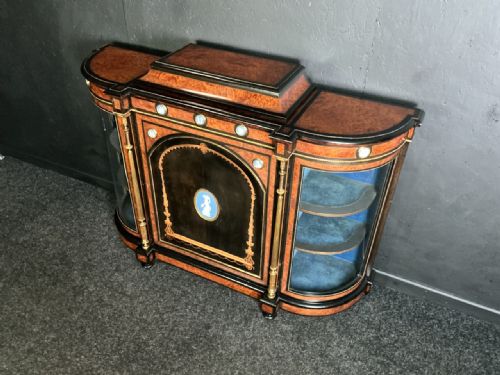
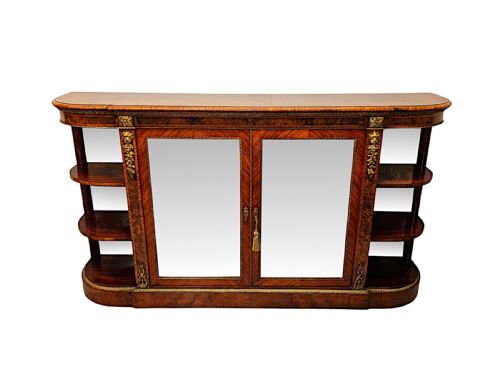
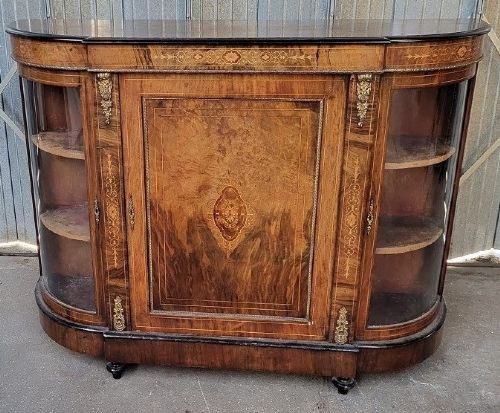
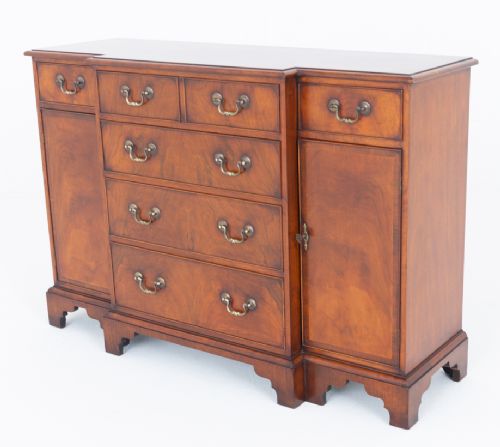
A walnut breakfront sideboard sits within a lineage that includes credenzas, display cabinets, and bookcases found across the Victorian, Edwardian, and Art Deco periods. These pieces often feature a central section that projects forward from the flanking cupboards or shelving, creating the characteristic breakfront profile.
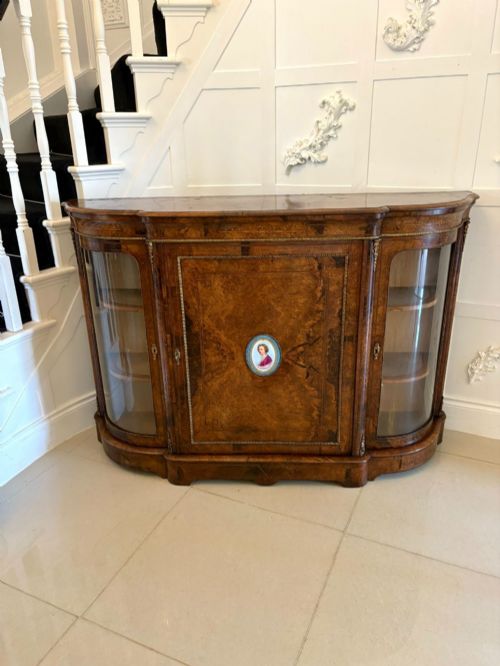
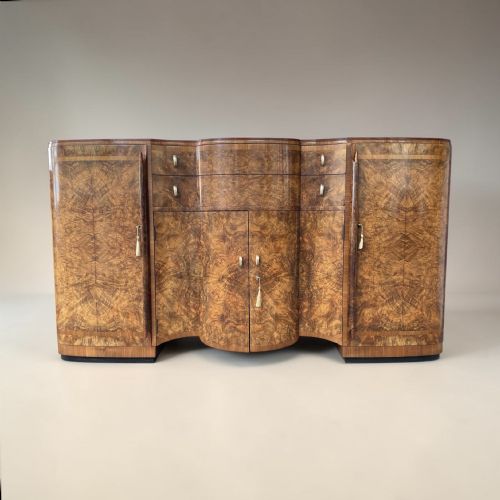
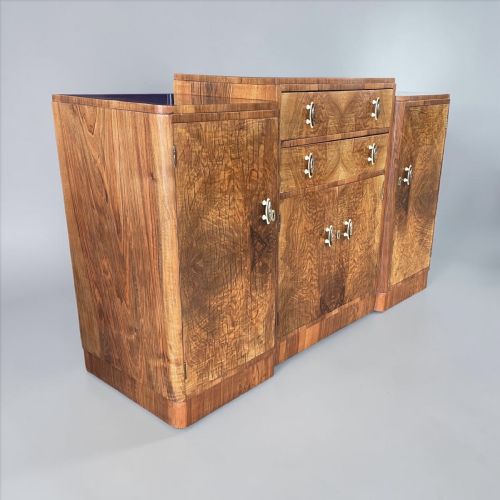
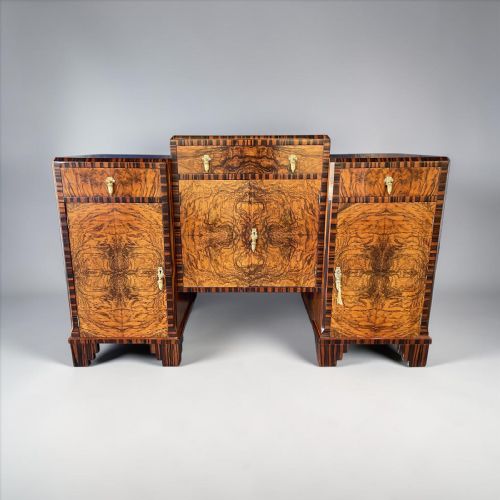
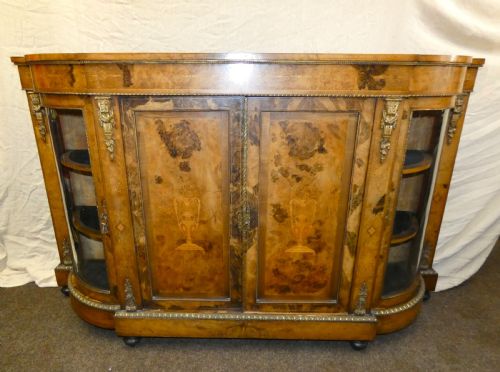
The version most commonly met on this page is the Victorian burr walnut credenza or sideboard, frequently dated through the mid-nineteenth century up to nineteen-thirty. Alongside these English examples, the record holds Georgian Revival pieces and streamlined Art Deco sideboards from nineteen-thirty.
Makers recorded in the archive and current listings include Gillows, Maurice Adams, and Maple and Co, showing that workshops both large and small shaped these forms. Functionally, these cabinets served to display porcelain and store dining wares, combining utility with rich timber surfaces.
Materials and Techniques
Makers utilised figured timber veneers, predominantly burr walnut and plain walnut, applied over solid secondary woods to create complex grain patterns across the wide expanses of doors and drawer fronts. Boxwood inlay, satinwood, and cross-banding frequently border these panels to define the geometric lines of the breakfront structure.
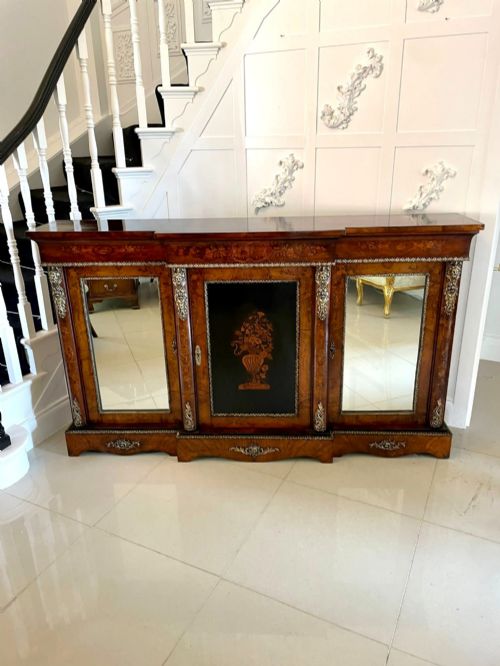
Metal mounts in ormolu and brass provide structural accents around glazed doors, plinths, and pilasters, while inset porcelain plaques and Sevres panels add colour to the timber ground. Glass panels enclose display sections, and specialised internal fittings such as fitted secretaire drawers utilise traditional joinery.
Marquetry and Tunbridgeware inlay techniques introduce pictorial or geometric motifs into the walnut carcase, requiring precise hand-cutting of contrasting woods. French polishing seals the wood, deepening the natural warmth and figuring of the burr walnut surfaces.
Listings span the eighteenth century to the twentieth century, featuring styles from Neoclassical and Regency to Art Deco and Aesthetic Movement.
Gradations of Make
Quality separates through the selection of the timber veneer, where densely figured burr walnut with matching book-leaf patterns commands greater regard than plain or patchy grain. The complexity of the marquetry and the precision of the boxwood inlay further distinguish high workshops from standard production.
Mounts play a significant role in establishing the grade of a piece, with heavy, finely chased ormolu and genuine porcelain plaques indicating superior manufacture compared to stamped or unadorned metal fittings. Furthermore, documented attribution to makers like Gillows or Maple and Co elevates a piece through verified provenance.
Internal joinery, such as secret drawers, dovetailed carcases, and original glazed panels without modern replacements, indicates the integrity of the original construction. The balance of proportions across the breakfront shape determines how successfully the timber and brass elements cohere.
Maurice Adams·Gillows·Maple and Co
The Walnut Breakfront Sideboard Glossary
- Breakfront
- A cabinet facade where the central section projects forward from the flanking sections. This architectural arrangement creates shadow and depth across the front of a sideboard.
- Credenza
- A low cabinet, frequently associated with the Victorian era, designed with central doors and often curved glass side compartments. They commonly incorporate ormolu mounts and porcelain plaques.
- Burr Walnut
- Timber taken from the warted growth on a walnut tree, yielding swirling, knotty grain patterns highly prized for veneering. It forms the primary decorative surface on many nineteenth-century pieces.
- Marquetry
- The art of applying thin pieces of wood veneer to a structure to form decorative patterns or pictures. Craftsmen use contrasting timbers like boxwood and satinwood to achieve tonal variation.
- Ormolu
- Gilt bronze mounted onto furniture as decorative feet, escutcheons, or framing elements. It provides a metallic contrast to the dark walnut timber.
- Secretaire Drawer
- A pull-out drawer fitted with a drop-front revealing small internal compartments and writing surfaces. It conceals utility within the main body of the sideboard.
Walnut Breakfront Sideboard: Frequently Asked Questions
What is a breakfront sideboard?
A breakfront sideboard is a large cabinet featuring a central section that steps forward from the flanking doors or shelving. This configuration breaks the flat line of a wall and creates distinct display zones.
These pieces typically combine cupboards, drawers, and glazed compartments to serve both storage and display functions in a dining room or parlour.
Where were these sideboards used?
These cabinets were primarily designed for dining rooms, formal reception rooms, and libraries to store silver, linen, and glassware. The glazed sections allowed families to exhibit fine porcelain and decorative objects.
Today, they function well in similar living spaces where their substantial proportions provide both a surface for display and enclosed storage.
What is the difference between an Art Deco and a Victorian sideboard?
Art Deco sideboards from nineteen-thirty favour streamlined, geometric forms with smooth veneers and minimal ornamentation, reflecting modernism. In contrast, Victorian pieces lean towards ornamentation with elaborate marquetry, ormolu mounts, and classical revival motifs.
Victorian cabinets often display intricate burr walnut figuring and curved glass doors, whereas Art Deco examples prioritize clean horizontal or vertical lines.